
Adjunct Assistant Professor Zhongwei Huang, Dr. Paula Benny and Ms. Hui Wen Tam emphasize the need for a shift in perspectives on menopause, which could improve public understanding of reproductive health and assist women in achieving a healthier longevity
In every woman’s health journey, the transition to menopause is gradual, universal, yet often misunderstood. Menopause is a natural part of ovarian ageing, in which the depletion of ovarian follicles over time results in a decline in ovarian function and a reduction in hormone (estrogen, progesterone) production. Menopause marks the end of the reproductive life stage and is diagnosed after 12 consecutive months without menstruation, typically occurring around the age of 50, and is a driver of age-associated disorders, including osteoporosis, sarcopenia, and metabolic diseases. (1) In this last article of a four-part series, we delve deeper into the importance of recognizing menopause as a natural physiological process rather than a pathological condition. (2-4) In addition, the conventional stereotype of reproductive health as solely associated with fertility is currently changing. It has been shown that reproductive health is tightly linked with overall health in both men and women. (5-10) This paradigm shift of viewing menopause as a normal life stage worthy of active health management would significantly improve personal and public perceptions of managing reproductive health towards healthy longevity.
Menopausal experiences
Menopausal symptoms arise largely from the effects of a hypoestrogenic environment (due to a decline in ovarian follicles, granulosa cells, and hormones) and are associated with a wide range of symptoms rather than a single defining change. (11) Estrogen exerts direct and indirect effects on multiple organ systems, ranging from the brain to musculoskeletal and cardiovascular health to skin ageing. For example, estrogen supports neuronal growth and cognitive function by regulating neurons critical for memory. A decline in estrogen affects all these functions and disrupts menstrual cycles.
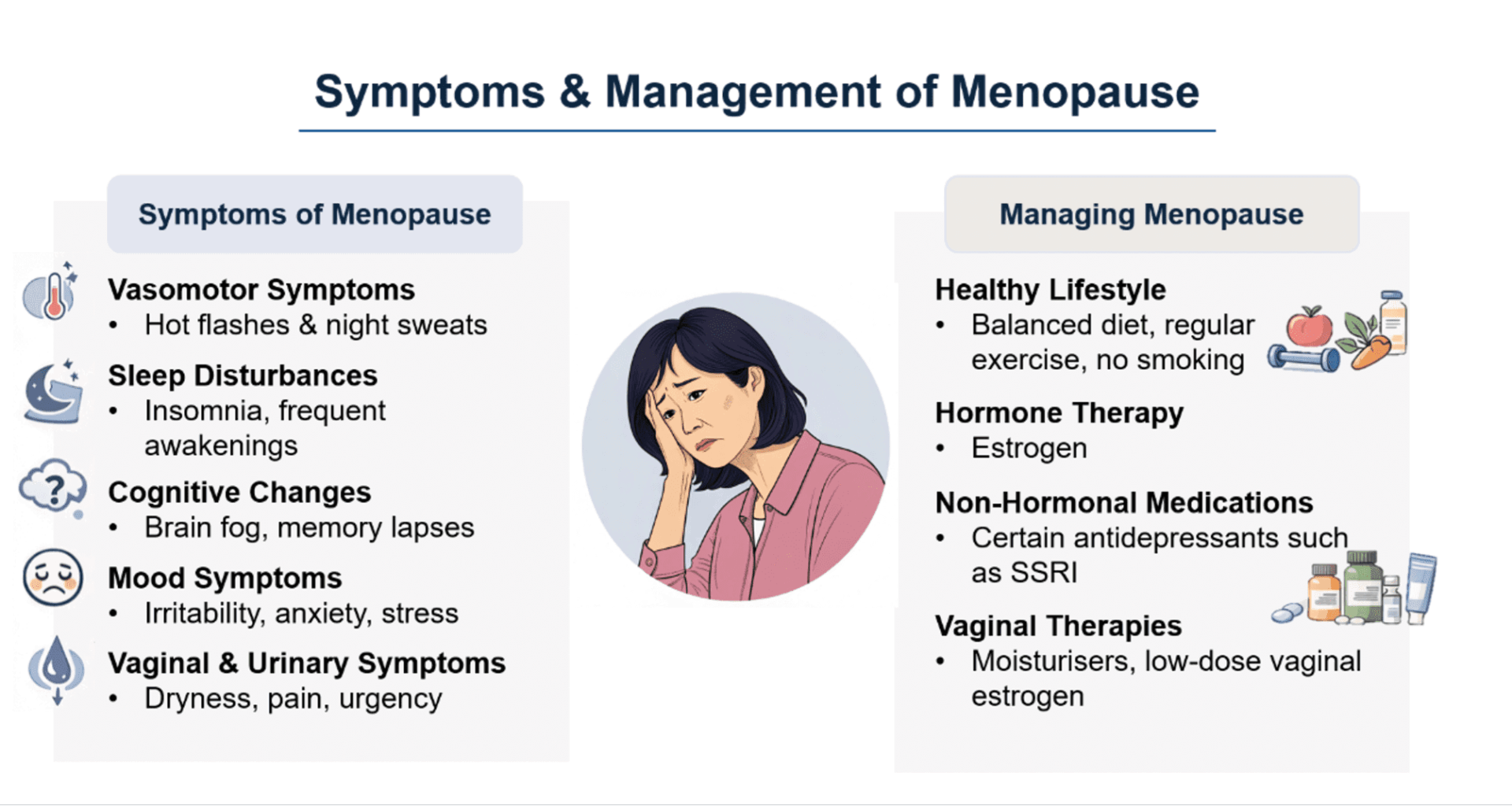
Vasomotor symptoms (VMS), including hot flashes (heat sensations), night sweats and flashing (lasting up to five minutes), are the most characteristic symptoms of menopause, affecting at least 80% of women. Hot flashes occur due to estrogen fluctuations, which affect the hypothalamus, destabilize the ‘thermostat’ region that disrupts body temperature, and can even affect sleep architecture. (12,13) VMS-associated sleep problems affect approximately 52% of post-menopausal women and are also a source of mood, fatigue, and cognitive complaints. (14) Should these issues remain unaddressed, downstream effects tend to arise, such as weight gain, hypertension, and subsequently reduced healthy longevity.
Cognitive complaints, colloquially known as ‘brain fog’, are also frequently reported by women during the menopausal transition. Women may experience absent-mindedness, difficulty concentrating, or impaired word retrieval. It is essential to note that current evidence does not suggest a direct link between cognitive impairment and dementia. (15) Symptoms of anxiety and depression are prevalent, as hormonal changes can increase emotional stress, poor sleep, and irritability. Importantly, future research should examine how psychological and reproductive health interact to promote healthy longevity in women. (16)
Genitourinary Syndrome of Menopause (GSM), another unique condition afflicting women going through menopause, encompasses a spectrum of symptoms affecting the vaginal and urethral tissues. This results from estrogen-dependent tissue atrophy, which causes dryness, discomfort during intercourse, urinary urgency, and recurrent urinary tract infections. Hence, it is crucial for women to seek early interventions, as these symptoms can impact relationships and affect quality of life.
In addition, women tend to experience musculoskeletal pain and metabolic shifts during menopause. With a decline in estrogen during menopause, the risk of osteoporosis and fractures increases, highlighting the importance of the menopausal transition as a critical window for preventive health rather than relegate menopause to an inconsequential reproductive endpoint.
Managing menopause
Understanding the various menopausal symptoms provides insight into approaches to alleviate discomfort, promote healthy ageing, and support overall quality of life during this physiological transition.
Aspiring towards a healthy lifestyle through lifestyle modifications builds the foundation of menopausal care. Regular exercise improves mood and maintains muscle mass, while a balanced diet and adequate intake of calcium and vitamin D reduces the risk of cardiovascular disease and preserves bone density. (17) Hormone replacement therapy remains an effective approach to treat menopausal symptoms, including VMS and GSM, and can improve sleep quality. (18) Non- hormonal therapies that target psychological wellbeing, such as cognitive behavioural therapy, may help to relieve stress and improve mental health for certain women. Non- hormonal pharmacological alternatives, such as selective serotonin reuptake inhibitors (SSRIs) and certain antidepressants, have been shown to provide relief for hot flashes, while vaginal estrogen moisturisers effectively relieve urogenital symptoms. In addition, it has recently been shown that neurokinin-3-receptor antagonists are effective in relieving VMS in women contraindicated for HRT. (19, 20)
Future directions
As the ovaries are the first organ to age, research at the NUS Bia-Echo Asia Centre for Reproductive Longevity and Equality (ACRLE) focuses on ovarian ageing as a novel strategy to support healthy ageing. (21) With life expectancy increasing and more women contributing to the global workforce, maintaining ovarian health would have beneficial effects on the individual, families, societal impacts, and a nation’s economic productivity. Menopause should not be dismissed nor be a condition to be endured. The key to successful menopause management is timely intervention with personalized care and supportive networks, which would improve women’s health and overall healthy longevity.