
Formula 1 cars are incredibly reliable now, but there have been plenty of drivers robbed of victory over the 75 years of the world championship and we’ve decided to pick out the best unrewarded drives.
We’ve prioritised those performances in which the driver was denied through no fault of their own. The circumstances of the defeat and how late the drama occurred have also been considered, as well as the overall quality of the drive itself and the significance of the failure.

Watch: Top 10 great lost F1 wins | Autosport Retro
For this list, we’ve excluded races decided after the chequered flag by post-race penalties. So you won’t find the 1982 Brazilian GP, 1989 Japanese GP or 2008 Belgian GP in this 10…
We’ve also stuck to the world championship, so there’s no 1962 BRDC International Trophy, but you can find that here.
10. Jean-Pierre Jarier: 1975 Brazilian GP
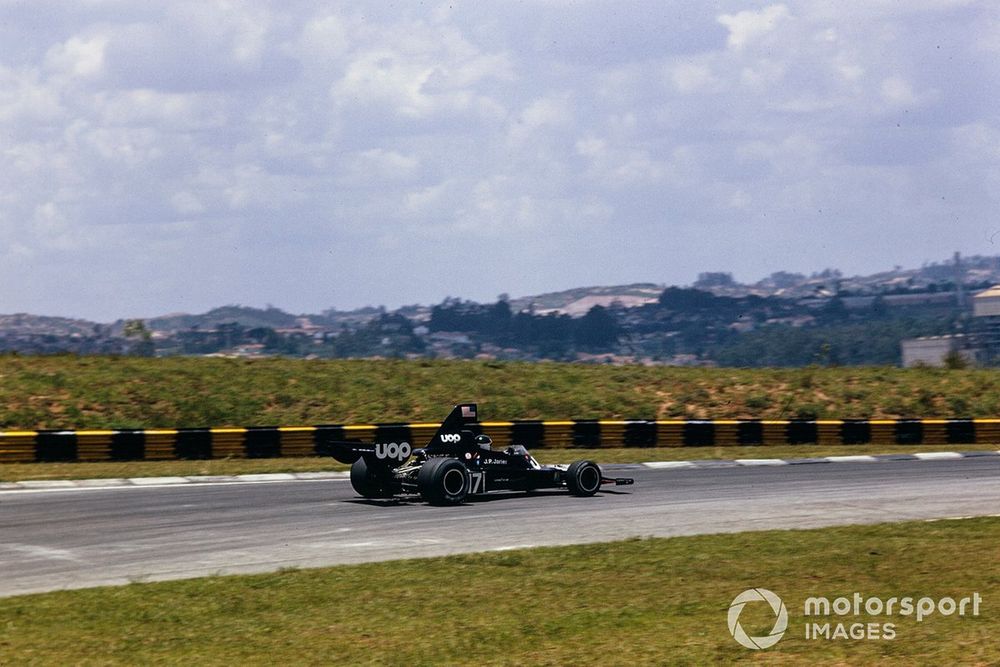
What could have been: Jarier failed to win from any of his 135 grand prix starts
Photo by: Motorsport Images
Lost the lead: Lap 33 of 40
Result: Retired
Jean-Pierre Jarier is one of the finest F1 drivers never to have scored a world championship victory and the Shadow DN5 is one of the great cars not to chalk up a success. Those facts contribute to the race making this list.
Read Also:
Jarier had already been denied a chance to start from pole in Argentina’s 1975 opener thanks to a transmission failure when he again qualified on pole for round two in Brazil. He was 0.8s faster than home hero Emerson Fittipaldi’s McLaren and, once he had dealt with the fast-starting Brabham of Carlos Reutemann, Jarier took control of the race.
“He simply vanished into the distance,” reported Autosport’s Pete Lyons, Jarier building a lead of more than 25s.
The only thing that could stop him (and Shadow) from winning for the first time was unreliability. And that’s what bit, the cam arm of his fuel metering unit seizing with just eight laps to go, leaving Jarier stranded.
“Disconsolately, stunned in fact, he had to sit on a tyre and watch his race being won by Carlos Pace,” said Lyons.
Jarier would be denied one more time. Stepping into the all-conquering Lotus 79 following Ronnie Peterson’s death, the Frenchman looked set to win the 1978 Canadian GP from pole when forced out with no oil pressure.
9. Nigel Mansell: 1987 Hungarian GP
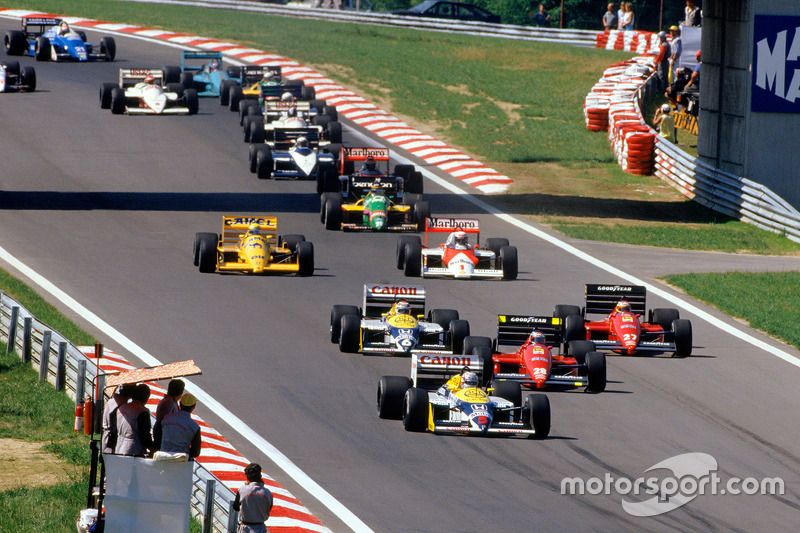
The race was sown up, until a wheelnut had other ideas
Photo by: Williams F1
Lost the lead: Lap 71 of 76
Result: 14th
Nigel Mansell’s last-lap disaster at the Canadian GP in 1991 was more dramatic, but he contributed to that by allowing the revs to fall too low – though Williams did respond by using a larger battery thereafter. So, if we’re talking great performances that go unrewarded, his run at the Hungaroring four years earlier edges it.
Not only was Mansell’s failure to win nothing to do with him, but it was also more costly in the championship. Mansell took pole – two spots and 1.7s faster than Williams team-mate and title rival Nelson Piquet – and then held off the rapid Ferrari of Gerhard Berger in the early stages.
The Ferrari soon retired with differential failure and, even when Piquet finally made it into second on lap 29 of 76, Mansell looked in control – and there were no pitstops to worry about. He allowed Piquet to edge closer before putting in new fastest laps. Piquet picked up a tyre vibration and decided to settle for second so that Mansell was 16.9s ahead with six laps to go of the 76.
“The car was perfect,” said Mansell. Until, that is, the right-rear wheel wobbled as its wheelnut prepared to part company. As Mansell parked up, Piquet went by to extend his championship lead.
“A sad and unsatisfactory end to a monumentally dull afternoon,” opined Autosport’s Nigel Roebuck. “One had the feeling last weekend that if Nelson had fallen from his hotel’s top floor, there would have been a truck full of foam rubber passing by at the time.”
8. John Watson: 1977 French GP
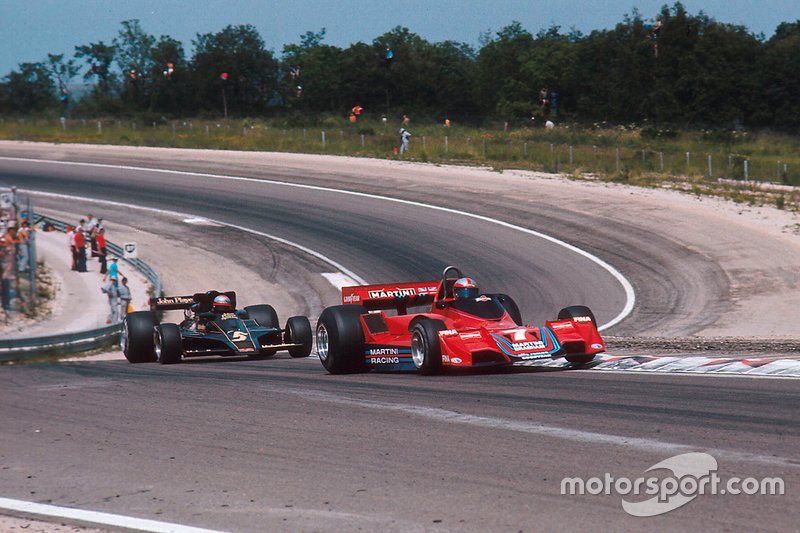
John Watson was incredibly unlucky in 1977
Photo by: Motorsport Images
Lost the lead: Final lap
Result: 2nd
Mario Andretti could make a case for losing more deserved wins in 1977 than anyone else, given the failures that prevented a true title tilt with the ground-breaking ground effect Lotus 78. But he did win a race that John Watson feels should have been his.
The Brabham-Alfa Romeo BT45B was rapid in 1977, misfortune keeping it off the top step. And the French GP at Dijon was the closest it got to winning.
Read Also:
Watson qualified fourth but made a fine start to jump to second. He then overtook James Hunt’s McLaren for the lead on lap five of 80 before pulling away.
The Brabham built a lead of over 5s before Andretti forged a way past Hunt on lap 17. It took a while for Andretti to start chipping away at the gap, but the Lotus started closing after half-distance. With just under a quarter of the race to go, Andretti finally arrived on Watson’s tail, but the Northern Irishman remained resolute.
“The Lotus was more nimble, but when the Brabham got to the straight I was able to stretch my legs and pull away,” recalls Watson. “It must have been very frustrating for Mario – tough!”
Watson had a better run through traffic but Andretti kept the pressure on. Watson seemed to have all the answers until the Alfa engine briefly spluttered on the final lap, allowing Andretti to get alongside. They rubbed wheels but the Lotus was through, going on to win by 1.6s.
The fuel-feed issue remained a mystery and would hurt Watson again next time out at Silverstone, but the Dijon defeat really was cruelly late.
7. Mika Hakkinen: 2001 Spanish GP
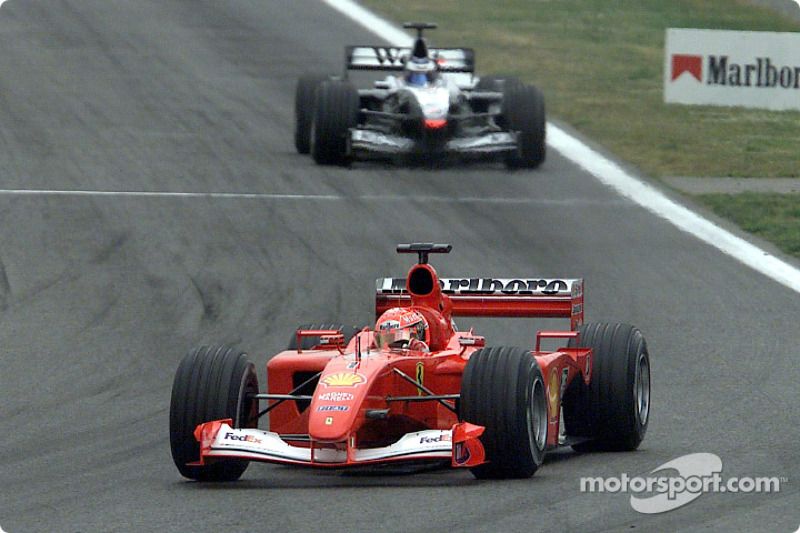
Schumacher even admitted that he shouldn’t have won this race
Photo by: Ferrari
Lost the lead: Final lap
Result: 9th
Mika Hakkinen had a couple of near misses before breaking his F1 ‘jinx’, notably at the 1997 Luxembourg GP due to a McLaren-Mercedes engine failure, but even by his standards the 2001 Spanish GP was harsh.
While Ferrari’s Michael Schumacher and McLaren’s David Coulthard arrived for round five of the 2001 season tied at the top of the table, Hakkinen’s miserable start to the campaign had yielded a best of fourth. Schumacher largely set the pace in qualifying, but a late effort from Hakkinen brought him to within just 0.085s of pole at Barcelona.
The reigning world champion duly held the lead at the start, as traction and launch control returned to F1, with Hakkinen chasing. They drew away from the field, Schumacher unable to fully escape the Finn but the McLaren not in a position to truly challenge for the lead.
The status quo remained after the first pitstops and the Ferrari had built a 4.8s lead by the time of the second stops. Schumacher pulled in for fuel at the end of lap 43 but Hakkinen stayed out for seven more, pumping in his best laps of the race.
His pace was enough to keep the lead after his own final stop. Hakkinen then pulled away, with Schumacher unable to respond thanks to a vibration. Going onto the 65th and final lap, the Ferrari was 42.6s behind.
But Hakkinen knew he had an issue; his clutch had started to slip. He slowed at the start of the final tour and tried to continue before the McLaren spectacularly stopped completely.
Schumacher cruised past to take a fortunate victory as Hakkinen was classified ninth. “I don’t feel like a real winner,” said a sympathetic Schuey. “This is not the way you like to win. Mika was the fastest driver at the most important time of the race.”
6. Dan Gurney: 1964 Belgian GP
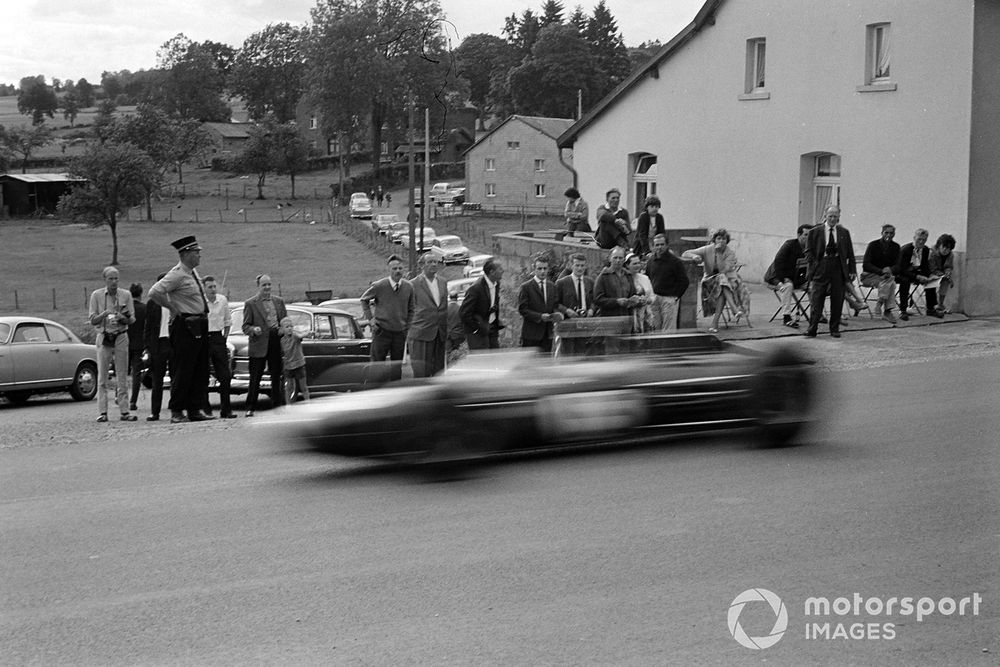
“One of the most dramatic races” is how Autosport summed it up at the time
Photo by: David Phipps
Lost the lead: Lap 30 of 32
Result: 6th
Dan Gurney was a special talent, his four world championship wins being a poor reward for his efforts. And the 1964 Belgian GP was perhaps his most egregious loss.
Read Also:
The American was on scintillating form at the old, 8.8-mile, high-speed Spa. He outqualified 1963 polesitter Graham Hill by 1.8s and team-mate Jack Brabham by 1.9s.
Once he’d dealt with an early challenge from John Surtees, Gurney stamped his authority on the race, lapping “at express speed, driving with superb judgement and looking immensely safe”, reported Autosport.
After just seven of the 32 laps, Gurney led a tight battle for second by 17s. He smashed the lap record several times, and with seven laps to go was 35s ahead of Hill and 40s ahead of reigning world champion Jim Clark’s Lotus.
But Gurney shot into the pits for fuel on lap 30 and lost the lead. His team wasn’t ready, so he went out again. He decided to risk it and set off after Hill and Bruce McLaren.
On an incredible final lap, Gurney’s Climax engine ran dry, Hill’s BRM fuel pump packed up and McLaren’s Cooper ran out of fuel within sight of the flag. A surprised Clark shot by on the downhill run to the line to win.
“One of the most dramatic races in the world championship,” reckoned Autosport founding editor Gregor Grant but all agreed it should have been Gurney’s race.
5. Jack Brabham: 1970 British GP
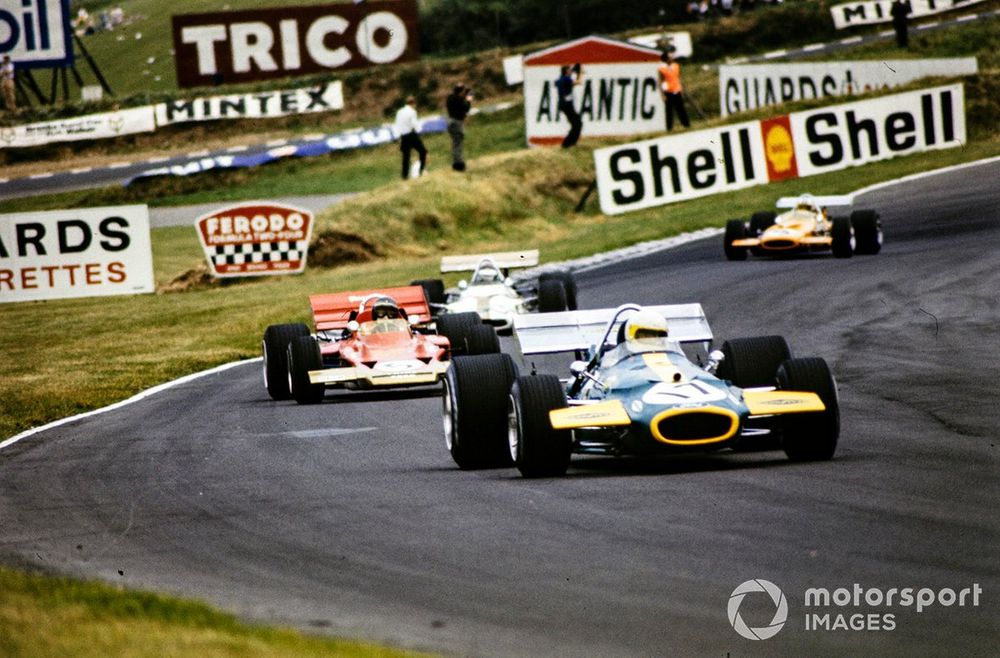
Brands Hatch 1970 featured a thrilling battle between Brabham and that year’s champion, Rindt
Photo by: Rainer W. Schlegelmilch / Motorsport Images
Lost the lead: Final lap
Result: 2nd
Jack Brabham’s last-corner gaffe at the 1970 Monaco GP is one of F1’s famous lost wins but that was driver-induced, whereas the Australian was faultless two months later in the British GP. And whereas in Monte Carlo Brabham had only hit the front following problems for Jackie Stewart, at Brands Hatch he was in the thick of it from the start.
Jacky Ickx’s Ferrari led early on, chased by Brabham and the Lotus of Jochen Rindt. As the Ferrari’s differential failed at Paddock Hill Bend on lap seven of 80, Rindt dived by Brabham, setting up a duel that lasted for much of the two-hour contest.
The 44-year-old harassed the 28-year-old’s Lotus 72 until Rindt missed a gear with less than 12 laps to go. Brabham’s BT33 shot by and quickly pulled away from the highly rated Austrian in one of F1’s greatest cars, only to stutter out of fuel on the final lap. The mixture had been set too rich and Rindt swept through to win as Brabham coasted home second.
“Of all the disappointments in my racing career, maybe that one hurt more than most,” recounted Brabham in his autobiography When the Flag Drops.
PLUS: The forgotten F1 car that could have been champion
Read Also:
4. Jim Clark: 1967 Italian GP
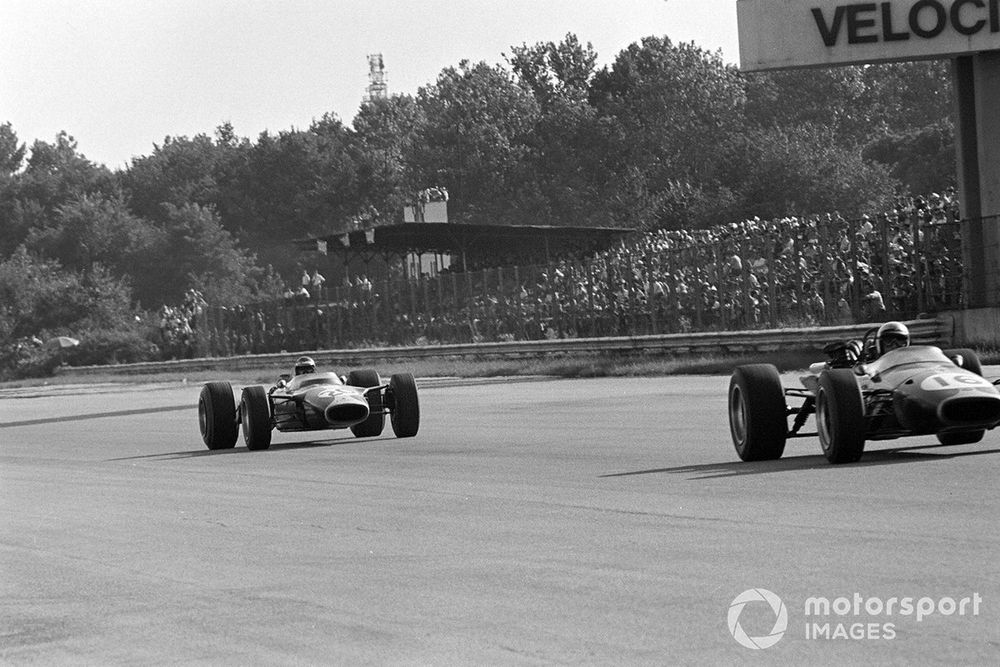
A fuel problem stopped Clark from completing an incredible comeback drive
Photo by: Motorsport Images
Lost the lead: Final lap
Result: 3rd
Which race to choose for Jim Clark? The failures that put him out of the 1962 South African and 1964 Mexican GPs cost the Scot world titles, but his greatest lost victory was probably his comeback drive at Monza in 1967. Though the man himself was fairly underwhelmed by his efforts in the 1967 Italian GP, most others were not.
Read Also:
The Lotus 49 invariably set the pace in its first season and Clark duly took pole.
Slipstreaming battles were king at pre-chicane Monza and the early stages featured the 49s of Clark and Hill disputing the lead with the Brabhams of Denny Hulme and Jack Brabham. All four led at one time or another.
On lap 13 of 68, Clark was forced to pit with a puncture, falling a lap behind and rejoining behind the lead fight. Clark caught and passed the trio, with Hill tucking into his slipstream and then storming away from the Brabhams.
With less than 10 laps to go, Hill lost a near-certain victory when his Cosworth DFV failed. Clark overtook the Honda of Surtees at almost the same time and was suddenly second, closing on new leader Brabham.
Clark, who had matched his pole time during his charge, retook the lead on lap 61, having made up an entire lap in 48 tours. Surtees moved into second and chased after Clark, but the Lotus was still over a second clear going onto the final lap.
Incredibly, Clark was denied by fuel starvation and slipped to third, setting up a thrilling finish as Surtees beat Brabham on the run to the line by less than a car’s length.
The only things stopping this race going higher are the sheer pace advantage of the Lotus 49 and the fact that it was only Hill’s retirement that allowed Clark to get back into the lead. But this would still have been one of F1’s great comeback victories.
3. Chris Amon: 1972 French GP
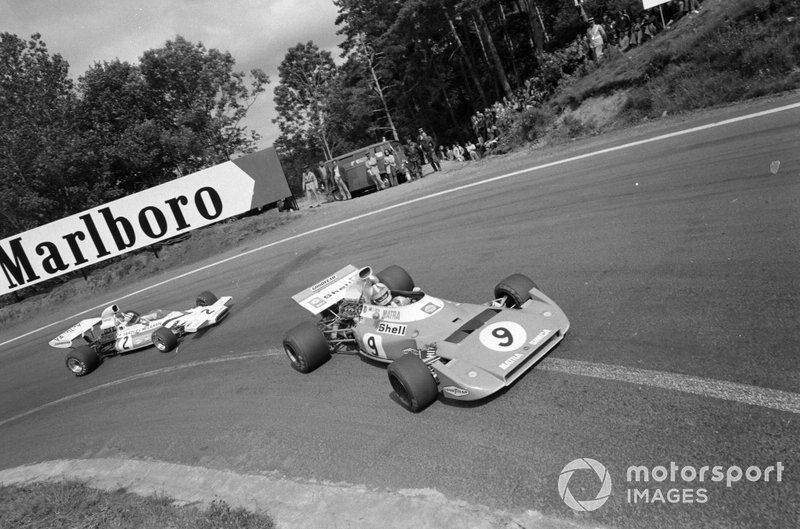
Chris Amon is arguably the greatest driver to never win a grand prix
Photo by: Motorsport Images
Lost the lead: Lap 20 of 38
Result: 3rd
Chris Amon’s near misses are part of F1 folklore, the New Zealander having almost enough candidates to fill this list! The 1968 Canadian GP (where he led 72 of the 90 laps and was 58.4s clear when his transmission failed) and 1969 Spanish GP (38.2s ahead when his Ferrari’s engine broke) stand out, but the man himself reckoned the 1972 French GP was his best drive.
Read Also:
It was the first race for Matra’s MS120D, fitted with a sportscar version of the V12 engine he thought was better, and Amon scorched to his fifth world championship pole by 0.8s around the challenging Clermont-Ferrand circuit.
Despite having to carry more fuel compared to the Cosworth DFV runners thanks to the V12’s thirst, Amon held off early challenges from Hulme and Stewart before edging away. He looked in control when the loose stones that littered the track caused a puncture at half-distance.
Matra’s pitstop was not the best and Amon rejoined in eighth. “From that point I just went for it,” he told Autosport in 2011. He charged to third, having taken 40s out of winner Stewart, and set the fastest lap by 0.5s after repeatedly breaking the lap record.
“At the insistence of the crowd, Amon accompanied Stewart on the lap of honour,” reported Autosport.
“I really felt nobody could touch me that day,” concluded Amon, who would never again lead a GP. He remains the greatest F1 driver never to score a world championship race victory.
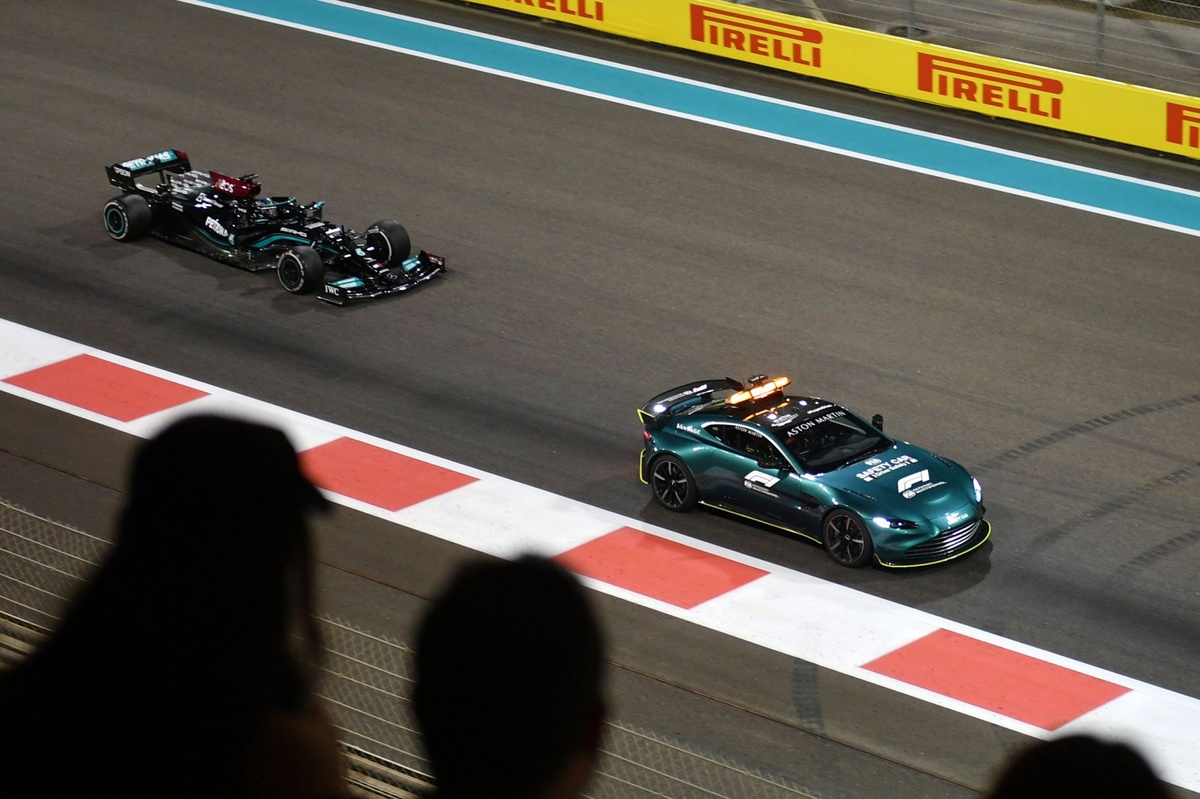
2. Lewis Hamilton: 2021 Abu Dhabi GP
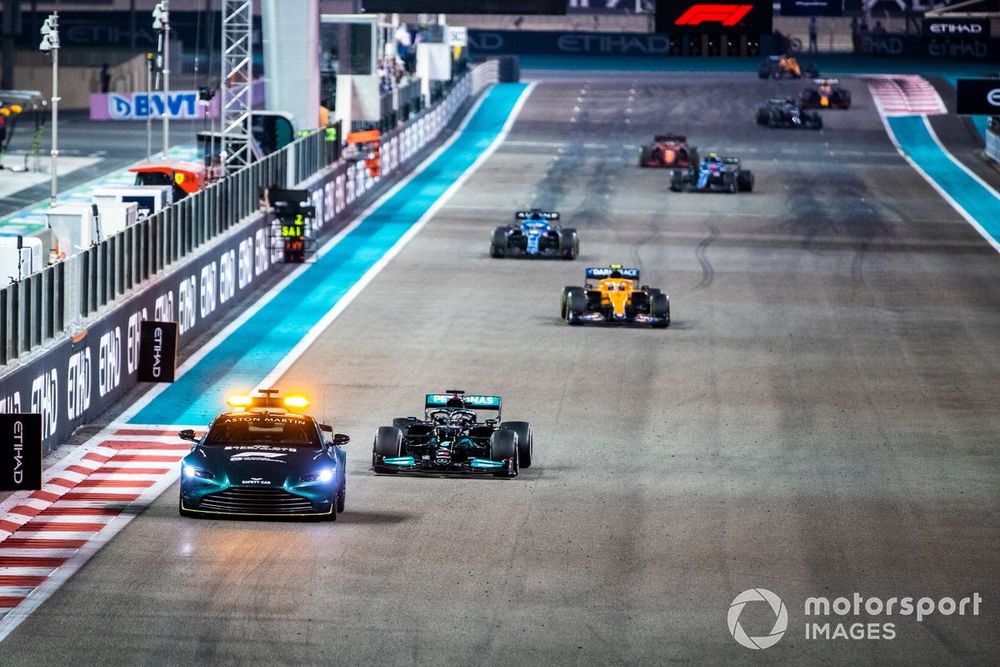
Hamilton was a lap away from a record-breaking eighth world title
Photo by: Sam Bloxham / Motorsport Images
Lost the lead: Final lap
Result: 2nd
We don’t want to get into a debate about the bizarre race control decisions that dictated the outcome of the 2021 world championship, but Lewis Hamilton’s performance on the day deserves to be on this list. In what was perhaps the last we saw of peak Hamilton, he did everything required to defeat title rival Max Verstappen under immense pressure.
The Dutchman’s Red Bull comfortably beat Hamilton to pole but lost out at the start. Verstappen, who would be champion if neither scored, knew he could afford to be aggressive and dived down the inside at Turn 6. Hamilton turned out of the impending accident and took to the run-off but cleverly avoided a penalty by backing off slightly as he rejoined – still leading.
Thereafter, the Mercedes edged away. Verstappen closed after their pitstops thanks to some great defence by team-mate Sergio Perez against Hamilton but just didn’t seem to have enough pace, even after a second Red Bull stop during a virtual safety car to get fresh rubber. With just six of the 58 laps to go, Hamilton was 11.9s ahead.
Then Nicholas Latifi crashed his Williams, leaving enough mess to require the safety car. Red Bull brought Verstappen in again – for softs – while Mercedes regarded a stop as too risky given it had track position.
Having initially said he wouldn’t allow lapped cars to be waved through, race director Michael Masi did allow the five cars between the two title contenders (and only them) to pass Hamilton, and he then allowed the race to restart over one lap.
On his 43-lap-old hard tyres, Hamilton had no chance against soft-shod Verstappen, who dived down the inside at Turn 5. Hamilton tried to fight back but it was no use and he lost the race – and title – by 2.3s. It was surely more painful than his 2016 Malaysian GP engine failure.
Read Also:
1. Damon Hill: 1997 Hungarian GP
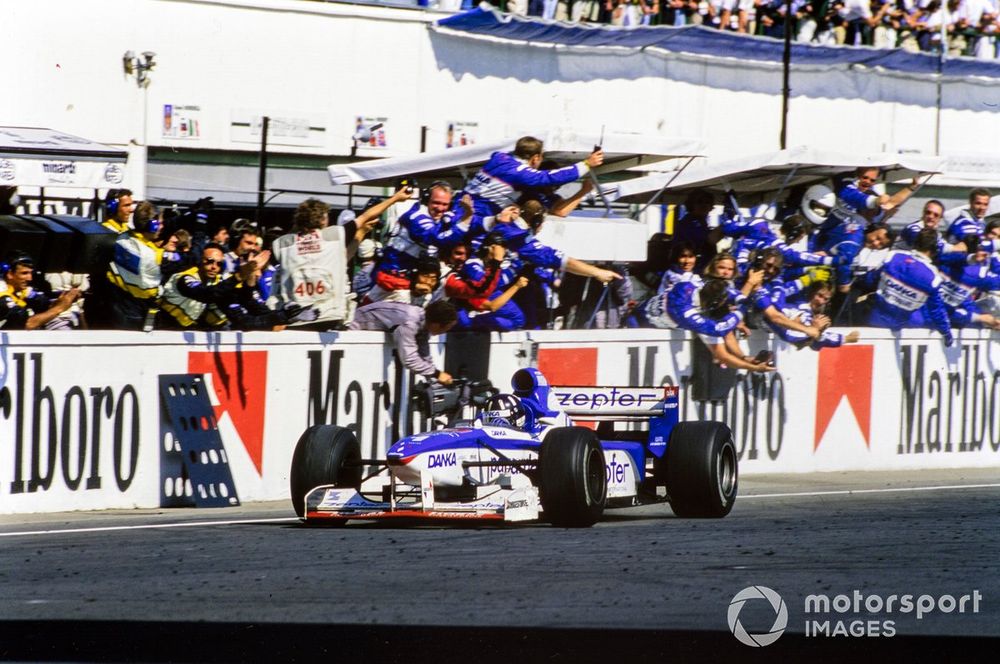
The Arrows team celebrates as Damon Hill, Arrows A18 Yamaha, crosses the finish line to take a podium finish
Photo by: Motorsport Images
Lost the lead: Final lap
Result: 2nd
At least Hamilton and Mercedes had numerous other successes to look back on after their biggest disappointment. But for Arrows, arguably the greatest F1 team never to take a world championship race victory, there was no such solace.
Hill had several candidates for this list, including the British and German GPs in 1993 and the 1996 Monaco GP. The latter was an emotional one to lose given his father Graham’s record in the principality, but the Hungaroring weekend the following year edges it here.
Having been dumped by Williams, the reigning world champion joined Arrows for 1997. The A18 was 5.4s off the pace at the Australian opener and broke down before the start, but development pushed the car forward – and in Hungary, Bridgestone tyres were the things to have when most frontrunners were on Goodyears.
Hill, often quick around the Hungaroring, qualified third and snatched second from Jacques Villeneuve’s Williams from the off. Leader Schumacher soon blistered his soft Goodyears, leading to the extraordinary sight of an Arrows diving past a Ferrari for the lead…
Heinz-Harald Frentzen, the man who had replaced Hill at Williams, was the only real threat because he was the only Goodyear frontrunner on the harder compound. But his fuel tank connector failed and, with no way of refuelling, had to stop.
Hill looked home and dry. With just three laps to go he was a whopping 34s ahead of Villeneuve and 54s clear of third-placed Johnny Herbert’s Sauber.
Then a hydraulics leak started causing gearbox and throttle issues. Hill pressed on but slowed and was powerless to stop Villeneuve sweeping by with two miles to go. Hill had led 62 of the 77 laps and shown he could win a GP without Williams, but second was a scant reward.
Hill would at least get to score Jordan’s first world championship success the following year, but Arrows never got as close to breaking its duck before its demise in 2002.
Read Also:
We want to hear from you!
Let us know what you would like to see from us in the future.
– The Autosport.com Team