
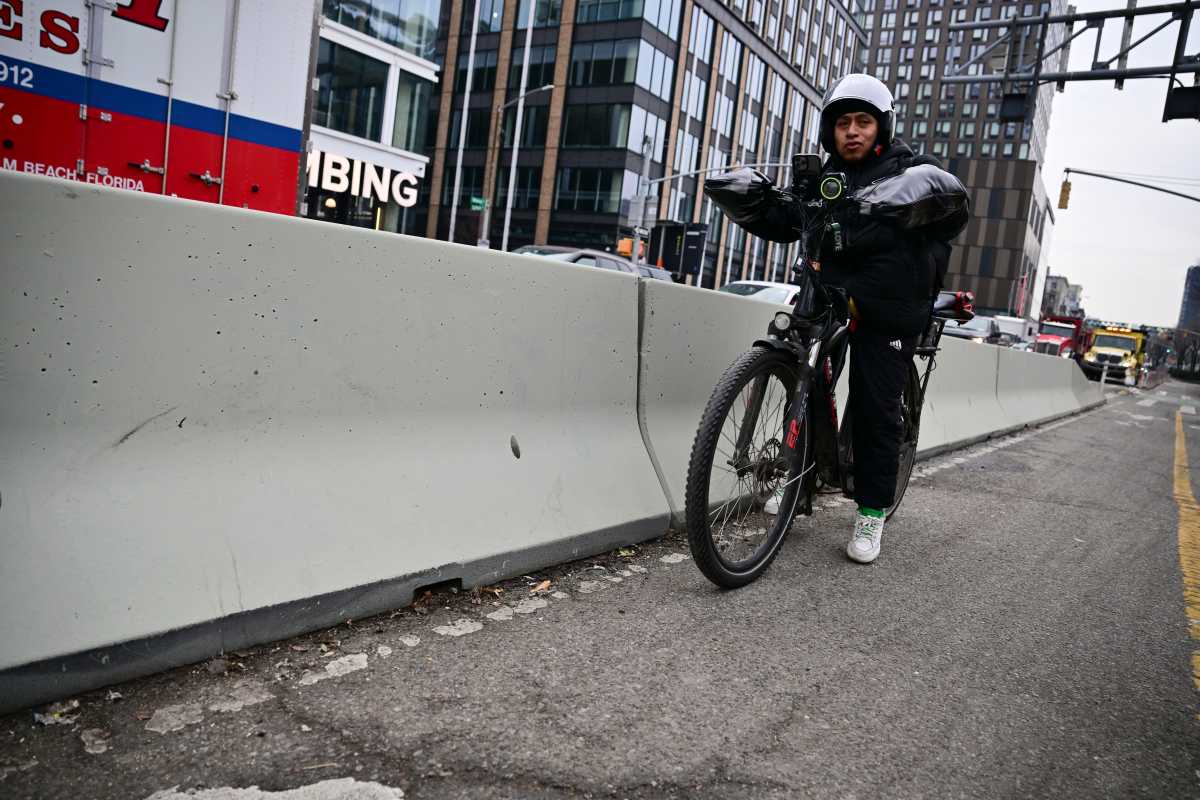
An e-bike rider on Delancey Street in January 2026.
Photo by Lloyd Mitchell
Mayor Zohran Mamdani’s office announced on Wednesday that the NYPD will discontinue before the end of this month its practice of slapping bicyclists and e-bike riders with criminal summonses for minor traffic violations.
On March 27, the NYPD will abandon the policy and replace it with the same civil summons process used for drivers accused of low-level traffic infractions, City Hall said.
“Every New Yorker on our roads, whether driving or biking, deserves to be treated fairly,” the mayor said in a statement. “By ending criminal summonses for low-level traffic offenses, we’re ensuring cyclists and e-bike riders — including those who deliver our food and groceries — are treated like others on the road.”
The practice Mamdani is rolling back was established last April by his predecessor, former Mayor Eric Adams, and current NYPD Commissioner Jessica Tisch, whom Adams appointed and he retained. Tisch said at the time and has continued to insist that the policy was a “quality-of-life” measure intended to address community complaints about unsafe e-bike rider behavior.
Mamdani also announced a raft of measures designed to address the “root causes” of the dangerous e-bike riding that the criminal summonses were purportedly intended to stem. Those include establishing a city Department of Transportation-run safety training program for bike-mounted delivery workers, a partnership with Citi Bike-owner Lyft to discourage unsafe riding, and introducing City Council legislation to regulate how delivery-app companies.
“In partnership with the City Council, we’ll strengthen safety standards, hold app companies accountable, and expand training for delivery riders,” Mamdani said. “This balanced approach supports riders while protecting pedestrians and motorists — and moves us closer to making our streetscape the envy of the world.”
Among the legislation Mamdani said he would introduce is a measure to mandate app companies provide DOT with real-time trip data on “deliveries, worker penalties and safety incidents,” as well as another allowing the city to establish delivery safety standards and regulate the penalties firms impose on workers.
The risks cyclists ran
Under the ending policy, cyclists would have to appear in criminal court for low-level offenses, such as running red lights or failing to halt at a stop sign. Those who decline to show up in court risk being hit with a bench warrant for their arrest.
Although the NYPD mostly issued criminal summonses to e-bike riders, many cyclists also faced criminal charges, according to published reports.
Bicycling advocates, who fiercely opposed the policy, celebrated its demise on Wednesday.
“Finally, Mayor Mamdani is ending the previous administration’s wrongheaded and bizarre targeting of New Yorkers on bikes,” said Ben Furnas, executive director of the group Transportation Alternatives.
“We’re happy that criminal summonses are finally ending for bike riders, and the era of punishing bike riders criminally, while just giving drivers traffic tickets for the same infraction, has come to an end,” he added.
The policy also drew widespread backlash from immigrant advocates, who feared it put undocumented delivery workers into the crosshairs of federal immigration authorities.
Advocates have long argued that delivery apps preasure workers to ride in unsafe ways and break traffic laws in order to make timely deliveries.
“The end of criminal enforcement for minor traffic offenses for cyclists and e-bike riders is a major step forward,” said Ligia Guallpa, executive director of the delivery worker advocacy group Los Deliveristas Unidos, in a statement.
“For too long, app delivery companies have built business models that push workers to speed, work long hours and ride in unsafe conditions — making delivery one of the most dangerous jobs in New York City,” she continued. “One in five delivery workers has been injured on the job, and half have experienced accidents while working,”