
Get the best of Vancouver in your inbox, every Tuesday and Thursday. Sign up for our free newsletter.
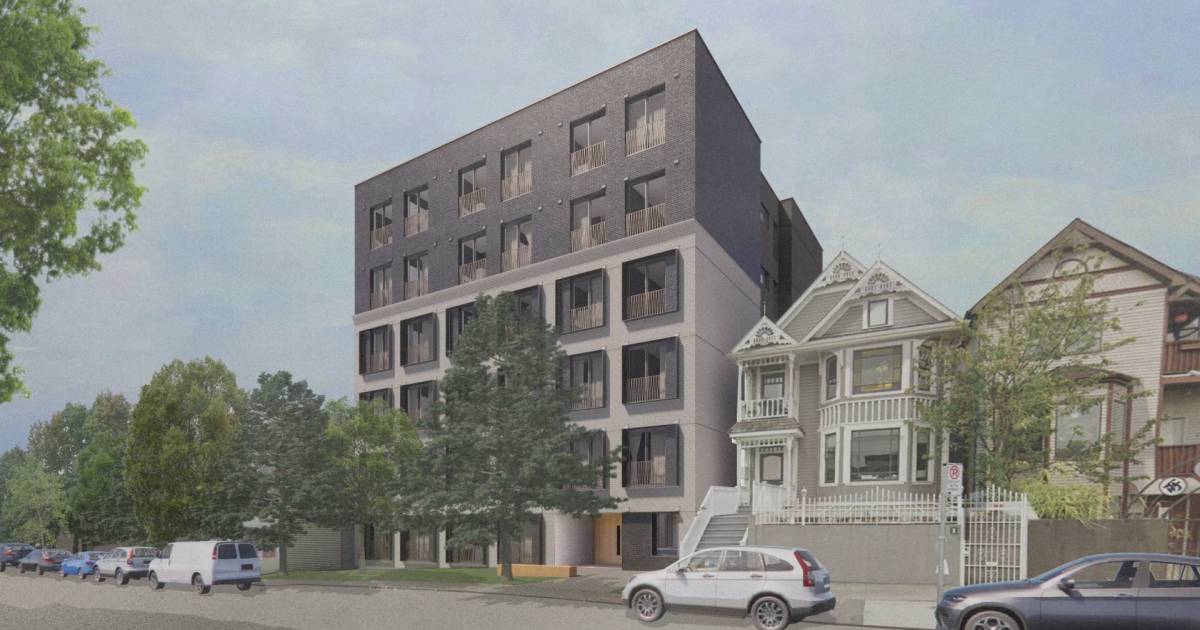
Like many recent developments that have gone up for rezoning in city council, PACK Buildings & Technology’s Powerhouse X, a six-storey social housing building meant to provide 55 affordable units, faced opposition.
At its public hearing last month, a handful of residents showed up to voice their concerns about the development, citing that it was yet another building meant for low-income residents in an area that is bearing the brunt of that work compared to the rest of the city.
The project also had its supporters, though, who pointed out that affordable housing is still so needed in every corner of Vancouver.
Among those supporters was councillor Sean Orr, who hasn’t been in favour of every development application that has come to council but has prioritized lower-income housing. Orr moved the unanimous motion to approve the project.
“I had a friend that was an architect for this project a year and a half ago,” recalls Kevin Liu, CEO of PACK. “There was a non-profit organization that was proposing to purchase the site. They couldn’t close the transaction, so we came in, believing in the affordable housing vision, and took on the risk.”
That risk is mitigated somewhat with the “technology” part of PACK’s name. The company uses prefab and steel construction to build homes at a much faster rate and a lower cost than traditional construction.
According to PACK, the homes at 441 East Pender are intended for low- to moderate-income residents, including local workers, modest-income households, and seniors. Eligibility will reportedly be income-based and consistent with city guidelines and government housing programs.
“I definitely hear the concerns and opinions from the neighborhood,” says Liu about the concerns voiced by residents. “At the same time, we believe we’re adding a valuable asset and affordable housing to the neighbourhood. We’re hoping that it’s a good fit for the long-term growth of the community.”
Liu also points out that social housing and supportive housing, though often conflated, are very different things. Supportive housing is permanent, subsidized rental housing paired with on-site support services for people experiencing or at risk of homelessness, particularly those with mental health, addiction, or physical challenges. Last year, the ruling ABC party voted to pause supportive housing in the city of Vancouver until other jurisdictions carry their weight on the matter.
“Most of the time, social housing is focused on affordability,” says Liu. “There’s no particular program associated with it. The residents are mostly independent, working, or senior people. All they need is affordability to make sure they have a great place to live and they can afford it. All the stakeholders have a clear understanding of it. It’s an important piece to align.”