
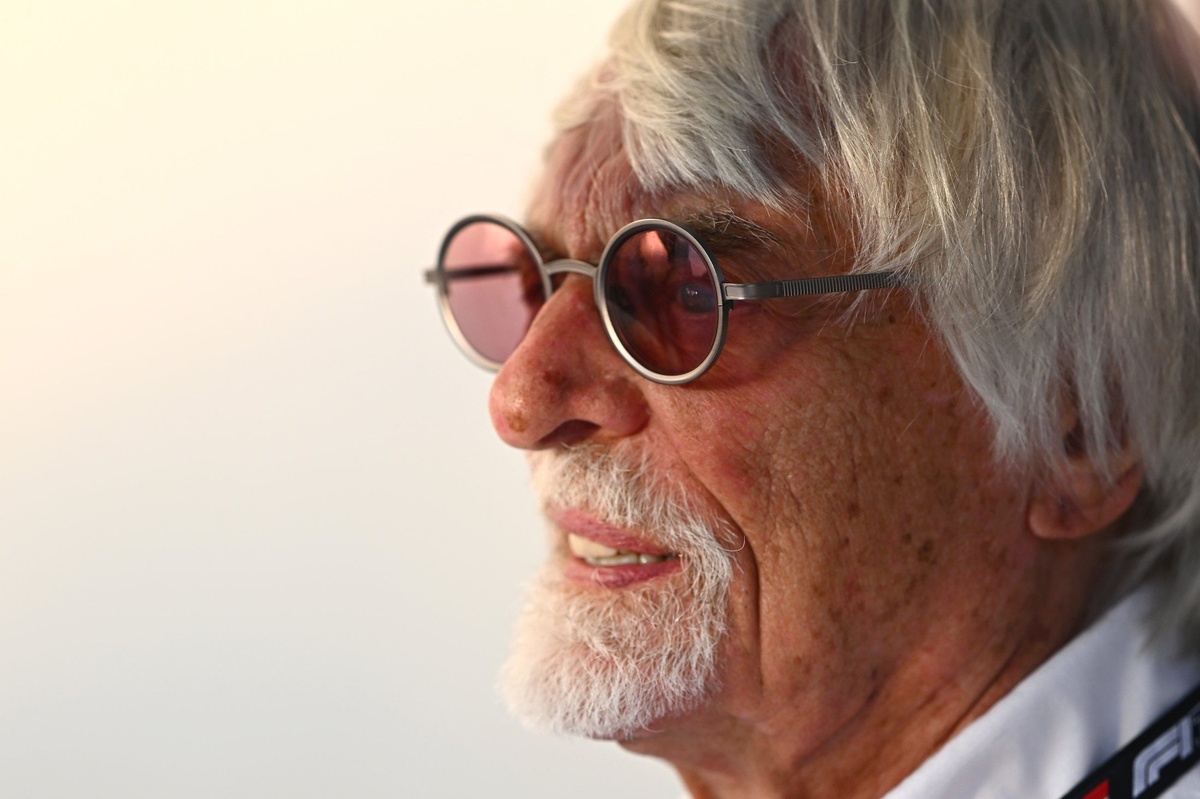
On 19 March 1998, British Prime Minister Tony Blair came under fire once again over his ties with Formula 1 boss Bernie Ecclestone, after it emerged that he had failed to declare a hospitality gift worth £1,500 to the British Parliament.
Blair had attended the British Grand Prix at Silverstone with his family as a guest of Ecclestone, at the time the dominant commercial force behind Formula 1. According to the rules of the House of Commons, all gifts worth more than £215 must be registered. This had not been done in this case.
The breach was identified by Sir Gordon Downey, the parliamentary ethics watchdog. Blair acknowledged the mistake and promised to adhere strictly to the rules from then on. In itself, it seemed a relatively minor incident, but the political impact was significant – particularly given the broader context in which it occurred.
Aftermath of a bigger F1 row
The furore surrounding the donation did not stand alone, but was part of a much larger controversy that erupted in late 1997. And that centred on money, political influence and a crucial decision for Formula 1.
Earlier that year, Ecclestone had donated £1 million to the Labour Party, just before Blair’s election victory. Shortly afterwards, he visited Downing Street, where he lobbied for an exemption for Formula 1 from a proposed European ban on tobacco advertising.
That ban posed a direct threat to the sport. In the 1990s, tobacco sponsors – from Marlboro to Rothmans – were the financial backbone of many teams. An immediate ban would have had major economic consequences.
Remarkably, the British government initially opted for precisely such an exemption for Formula 1, whilst other sports were denied one. That combination – a million-pound donation coupled with a politically favourable decision – led to accusations of a conflict of interest.
Both Ecclestone and the government denied that there was any connection. Ecclestone insisted that he had “never asked for a favour”, whilst Downing Street emphasised that the decision had been taken on economic grounds, partly due to potential job losses.
However, the pressure became so great that Labour eventually decided to return the donation. In doing so, the government attempted to defuse the crisis, but the damage to its reputation had already been done.
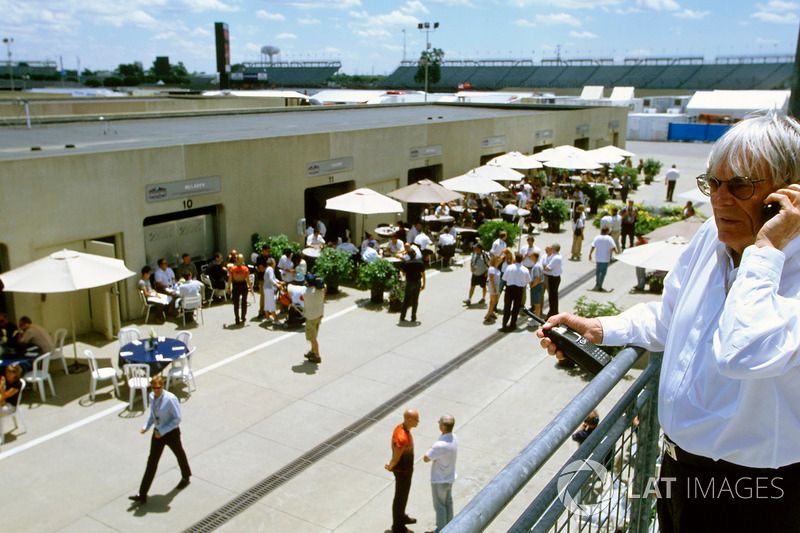
Whereas Ecclestone was still a Labour supporter in 1997, he later turned publicly against Blair.
Photo by: Motorsport Images
A sensitive issue
In that light, the unreported donation of £1,500 also took on added significance. What would normally have been an administrative error was now seen as part of a pattern: an overly close relationship between the political leadership and the most powerful man in Formula 1.
Especially as Blair was personally present at Silverstone as Ecclestone’s guest, transparency was crucial. The affair highlighted just how vulnerable the government had become to any new revelations concerning that relationship. Strikingly, the relationship between the two men deteriorated sharply in the years that followed. Whilst Ecclestone was still a Labour supporter in 1997, he later turned publicly against Blair.
In 2000, the Formula 1 boss lashed out and accused the Prime Minister of betrayal. He claimed that he had agreed with the party to keep quiet about the donation, but that Blair had not kept to that agreement.
“I told those clowns: if someone puts a machine gun to my head, I won’t confirm or deny anything about the donation,” said Ecclestone. “They said they would do the same. A short while later, Blair started talking. It’s third-rate behaviour.”
The remarks made clear just how explosive the issue had become, even years on.
A case that kept resurfacing
The Ecclestone affair developed into one of the first major integrity issues of the New Labour era. For a government that had been elected on the very promise of putting an end to political “sleaze”, this was particularly painful.
The forgotten gift of 19 March 1998 was only a small part of it, but one that laid bare the heart of the problem: the awkward and sometimes opaque relationship between the world of Formula 1 and British politics.
To this day, the affair is regarded as one of the most high-profile intersections between sport and politics in modern F1 history.
Read more:
We want to hear from you!
Let us know what you would like to see from us in the future.
– The Autosport.com Team