
This is Part II of a three-part Bamberger Briefly series that explores different aspects of a phrase no golfer wants to say but most golfers eventually will: Can’t play today — my back went out. This series culls nuggets and insights from a recent GOLF.com interview with Dr. Tom LaFountain, PGA Tour director of chiropractic services, who over the past 27 years and counting has seen some of the most famous backs in golf up close and personal.
Part I: Explosive Swings + Exploding Purses = Exploding Backs
Coming tomorrow . . . Part III: Your Back, Your Choice
***
Justin Thomas didn’t make his first Tour start this year until early March, at Bay Hill. That’s because last November he underwent a microdiscectomy procedure to alleviate pain caused by damaged disk in his lower back. If you know this term of surgery, it might be because Tiger Woods has had four microdiscectomies since 2014. The micro part might make it sound like a cute little you’re in, you’re out procedure.
Thomas didn’t play for 10 weeks. No Silly Season events. No TGL. No West Coast Signature events. Dr. Tom LaFountain, PGA Tour director of chiropractic services, wasn’t surprised to see Thomas, two-time winner of the PGA Championship and who has logged a lot of rounds with Tiger Woods, sidelined like that, because he’s not surprised when any player gets placed on the IL with back issues.
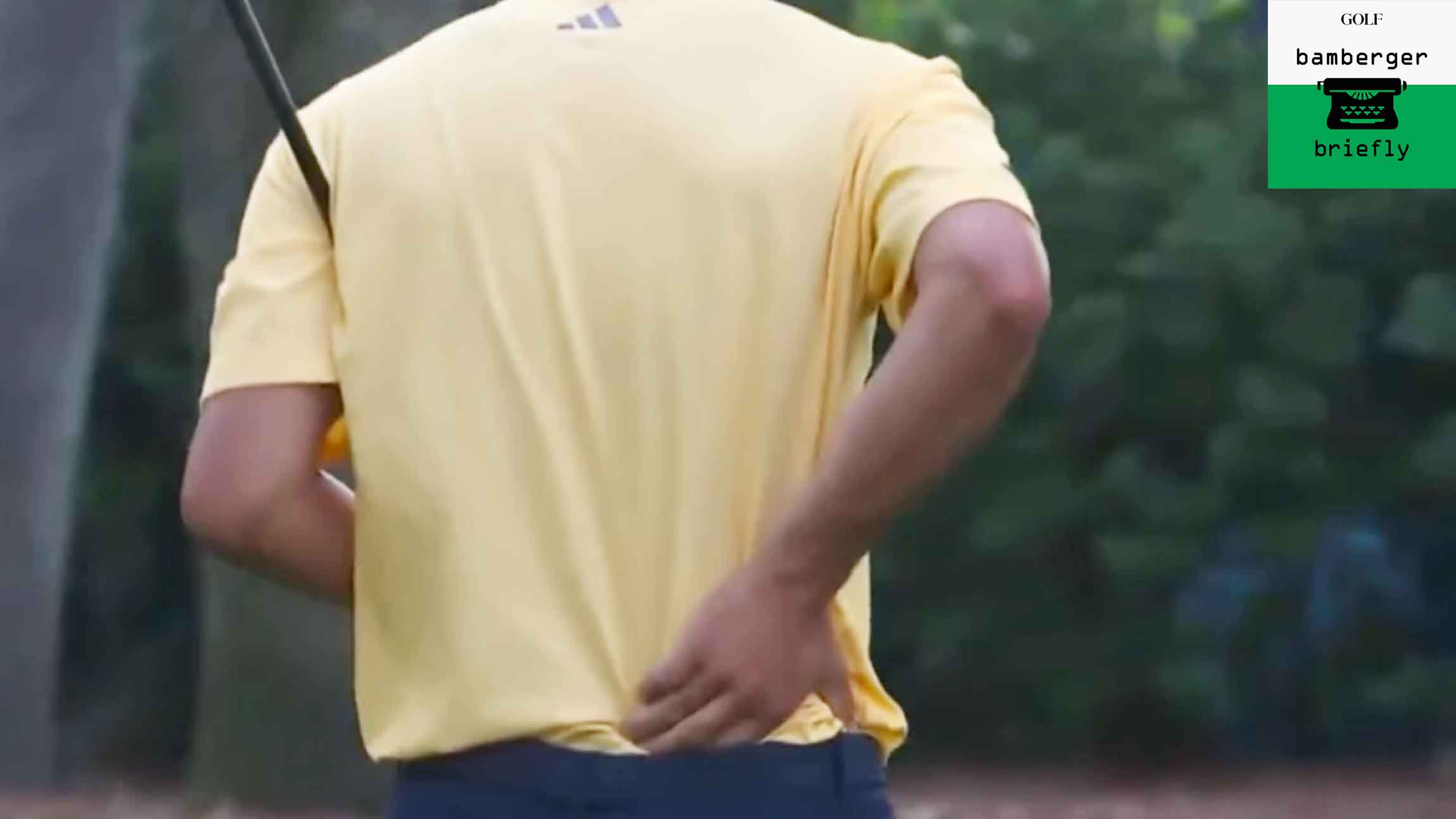
Rory McIlroy pulled out of the Arnold Palmer Invitational after one round after tweaking his back. When he played the following week at the Players Championship, he was not his normal self. Collin Morikawa did the same thing in the first round of the Players Championship, courtesy of a practice swing. You could see Morikawa putting his hands on his back and it was obvious that he was writhing in pain. No player would fake an injury like that, not when you’re playing for a first-place check of $4.5 million. But when you have the Masters coming in April, the PGA Championship in May, the U.S. Open in June and the British Open in July, you’re more than willing to give up a week to improve your chances of being ready for golf’s four most prestigious events.
“You can see a really fit, strong, slender player like Collin and think, ‘Oh, nothing’s going to happen to him,’ but you really can’t know,” LaFountain said in a recent interview. “You don’t know what the player’s lower-back strength is like. You don’t know what their strength and flexibility training is like. And you don’t know about their genetics, their family history for back issues. Did mom or dad have bad backs? Because that’s a major factor.
“Guys will see pictures of John Daly,” LaFountain continued. “He’s way overweight. Eats everything, has serious health issues, but his back is fine. And they say, ‘Why me and not him?’” Genetics is a huge component.
Thomas had his microdiscectomy surgery at the Hospital for Special Surgery in New York City. Per the HSS website, the surgery involves “the removal of the fragment of herniated disc tissue that is causing the patient’s symptoms. Because most patients will recover from a herniated disc without surgery, microdiscectomy is recommended only after conservative treatment, including physical therapy, cortisone and other medication have been tried for a period of at least six to 12 weeks, without bringing relief.”
On the HSS website, among other places, you’ll see the surgery described as being “minimally invasive.” In other words, it’s not heart transplant surgery. But LaFountain makes the following observation: “Anytime you’ve had a surgery, you’ve been cut into, your body is not the same afterward. You have a different body. You will have to make adjustments. The players want to be 100 percent the same. That will not happen. The surgeries have never been better, but you’ve still altered the normal tissue mechanics.”
If you accept that as an essential and logical truth, no professional golfer is ever going to treat any surgery as something casual. Thomas did what he did because he was out of options. Tiger Woods has said essentially the same thing after each of his seven known back surgeries over the years.
LaFountain says there’s another element contributing to back issues that has been around forever but is more prevalent now, with modern equipment that allows the player to swing harder and harder: “These guys are athletes. They have egos. They don’t want to be left behind. They see another player doing something to get an extra 10 yards, they’re going to do the same thing.”
Are faster swings, fatter purses escalating back injuries on PGA Tour? This expert thinks so
By:
LaFountain points out Sam Snead, Jack Nicklaus, John Daly, Phil Mickelson all had incredibly long backswings with driver in hand, so much so that the driver head, when they were at the peak of their powers, was below the beltline on the top of their backswings. On their downswings, they had loads of time to build speed gradually. If anything, they were across the line at the tops of their swings. That is, for the righthanded golfer, the shaft pointing to first base.
Nobody swings like that today. But with much shorter swings that often are laid off at the top (righthander pointing toward third base), players still are able to generate astonishing speed, regardless of their body type. It’s hard to think of skinny lefthanded Akshay Bhatia creating the same kind of swing speed that renowned left-hander Phil Mickelson, with his wide stance and huge arms and legs and Gumby-like flexibility, once did. But he does.
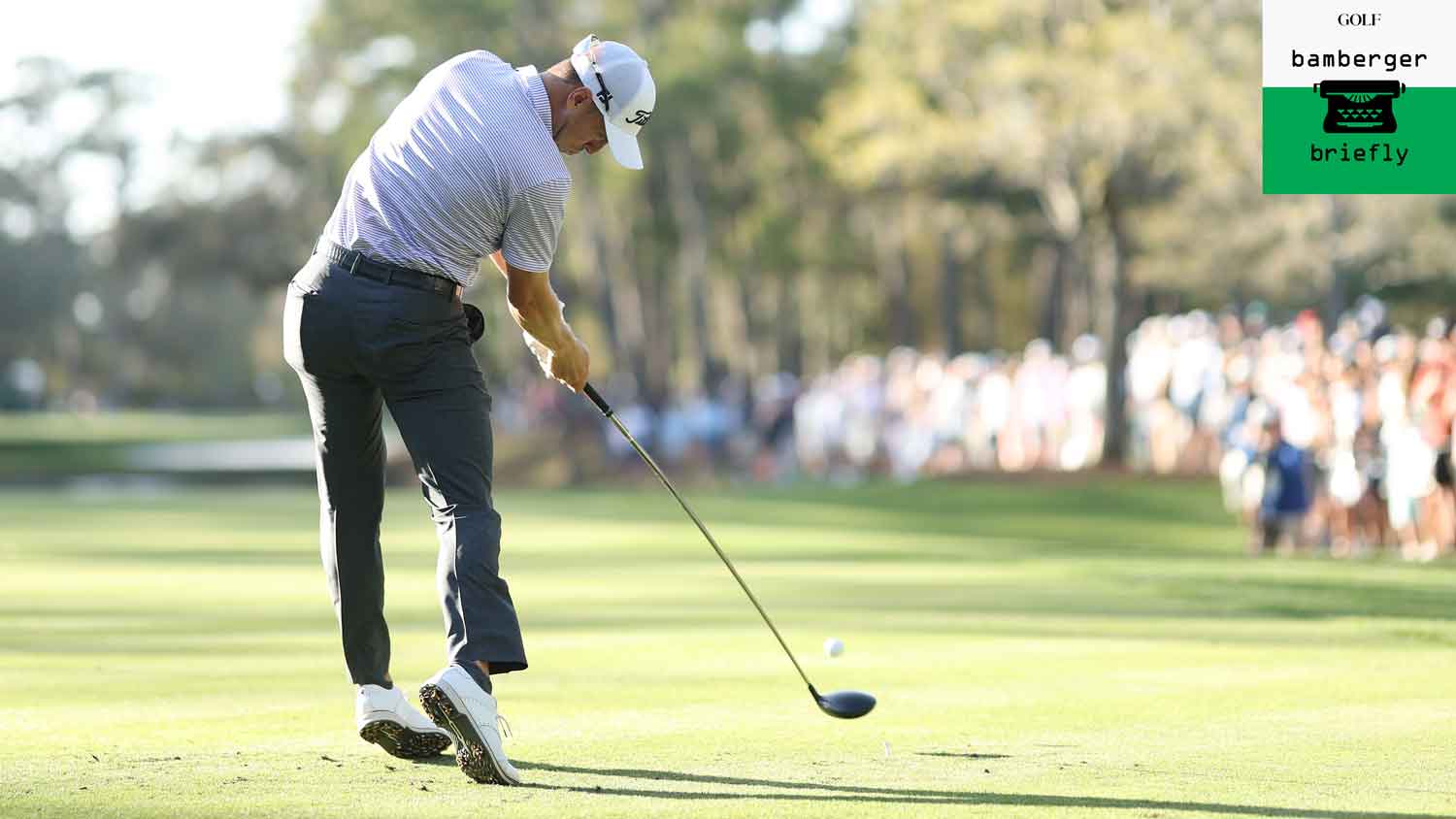
Bhatia has figured out a way to keep up with barrel-chested Rory McIlroy and Brooks Koepka, with his linebacker’s build. If you look at Bhatia just before contact with driver, his chest is pointing at the target and his hips are right there with them, his back is severely bent and his head is about a foot closer to the ball than it was at address. His back foot is almost off the ground and he looks like he’s ready to make a giant leap. Is he a candidate for back issues?
“They all are,” LaFountain says.
Mickelson wore heavy leather golf shoes that seemed to weigh about 30 pounds each. He was the most sedentary of golfers. He won a PGA Championship at 50 and was virtually never sidelined with anything.
But Tiger Woods didn’t swing that way and the elite golfers that came up on him didn’t swing that way, either. Tiger went down after that golf ball, and at impact and immediately afterward had a violent thrust north. You have to see it in slow motion to really appreciate it, but it was there for all to see. He had all those surgeries, sure — but also $120 million is Tour winnings, the lion’s share coming of it from his 82 PGA Tour wins.
Michael Bamberger welcomes your comments at Michael.Bamberger@Golf.com