
Paul MacDonald, CFA, president & co-chief investment officer at Harvest ETFs, joins BNN Bloomberg to provide a spotlight on ETFs.
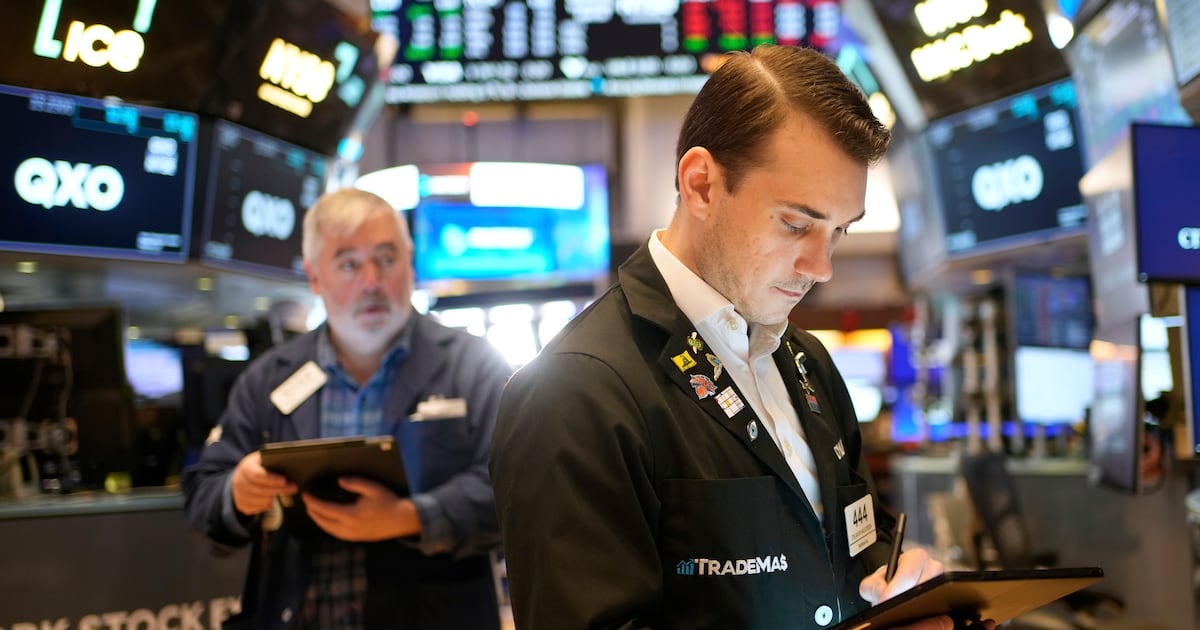
Markets are undergoing a correction with valuations easing, even as earnings remain resilient and geopolitical risks weigh on sentiment.
BNN Bloomberg spoke with Paul MacDonald, president and co-chief investment officer at Harvest ETFs, about how investors can position portfolios using ETFs and where opportunities are emerging.
Key TakeawaysMarkets are experiencing a valuation-driven correction rather than a structural breakdown, with earnings still holding up.Geopolitical risks, particularly tied to the Middle East, remain a key uncertainty shaping investor sentiment.A barbell approach combining defensive sectors with selective growth exposure is seen as effective in current conditions.Utilities and healthcare provide stability and consistent income, making them key defensive allocations.Technology stocks are becoming more attractive after recent valuation compression despite ongoing volatility.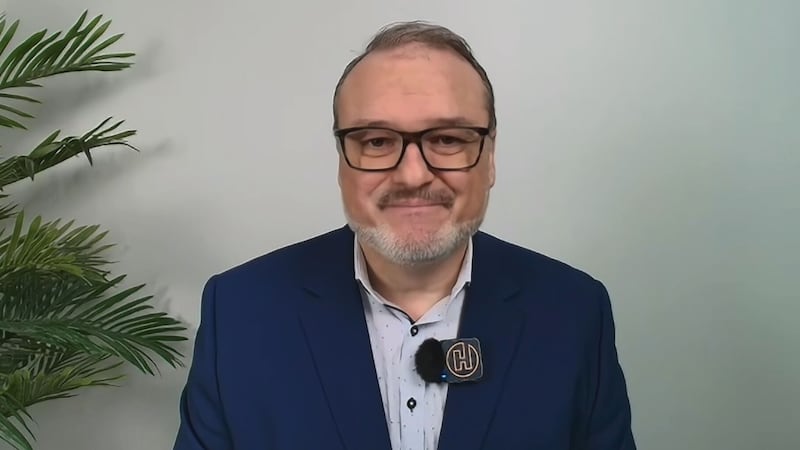 Paul MacDonald, CFA, president & co-chief investment officer at Harvest ETFs Paul MacDonald, CFA, president & co-chief investment officer at Harvest ETFs
Read the full transcript below:
LINDSAY: It is time now for the ETF report. Our next guest has three picks for us, but first, let’s get his perspective on the markets. Joining us now is Paul MacDonald, CFA, president and co-chief investment officer at Harvest ETFs. Good morning. Thanks for joining us.
PAUL: Thanks for having me. Great to be here.
LINDSAY: What is your take on the direction of the markets today, particularly what we’re seeing with the TSX? It’s interesting to see that sharp selloff in the metals sector.
PAUL: It is not unprecedented. When we look back at historical liquidity events, when people are getting very nervous, we do see some of the golds tend to sell off, even though the commodity price remains very high and the miners are making great cash flow at these prices. When we take a step back at the broader markets, it’s been a very challenging time. Everybody knows — everybody’s an expert in the Strait of Hormuz now. The duration of the war is unknown. Its implications are unknown. But when we look at where we’ve been over the past 18 months, there’s been a lot of geopolitical risk in the marketplace — trade wars, wars in Eastern Europe and the Middle East — but even our own sovereignty has been questioned. Yet markets have moved to new highs during that period.
When we look at what’s happened over the past six to eight weeks, we’ve seen prices correct meaningfully. Earnings are still resilient. There is uncertainty, but in general, when we look at U.S. markets in particular, we’ve seen significant corrections in valuations. Markets don’t bottom simply on valuation declines, but we are seeing attractive entry prices in some areas that were elevated as recently as last fall.
LINDSAY: Many are saying this resiliency could be hurt if the conflict in the Middle East drags on. Do you agree with that assessment, or are there other factors that could hurt resiliency?
PAUL: The duration of this war could absolutely have an impact. It is a tail risk at this stage. We don’t know how long it will go on or how much it will escalate. We’re seeing that fear reflected in volatility and in valuations pulling back. So yes, there is that risk. We think it has the potential to be relatively short-lived with a return to normalcy, but there is always the risk that it continues longer.
Because of that, we want to make sure we have defensive anchors in portfolios — areas that have proven over cycles to generate consistent cash flow, whether it’s healthcare or utilities. At the same time, this pullback presents opportunities in some technology names in particular.
LINDSAY: How does what we’re seeing now make for a good entry point into ETFs?
PAUL: The best time to invest is when you have capital to invest. In the current environment, deploying capital looks like a good opportunity. If we look even beyond the next quarter, higher-growth areas are supported by infrastructure spending in the U.S. and the AI buildout. This is not speculative — it’s an unprecedented level of capital expenditure that is filtering through the broader economy.
We’ve already started to see that, with equal-weight indices and tech indices beginning to outperform. Within our suite, the tech achievers ETF, HTA, is a good example. It provides a basket of 20 large-cap tech stocks with an options overlay and a healthy distribution. In volatile markets, when valuations pull back — as we’ve seen recently — we see opportunity in that space.
LINDSAY: Let’s go through your picks, starting with the Harvest Equal Weight Global Utilities Income ETF. What do you like about this one?
PAUL: We like the consistency of the cash flow. Utilities, telecoms and pipelines tend to be more defensive in nature. Having that as an anchor, generating consistent and growing cash flow over time, makes sense in this environment.
We also have exposure to North America and Europe. With the AI infrastructure buildout and accelerating power demand, that exposure is important. Over the short, medium and longer term, that has been a key driver of performance, and we don’t expect that to change. It’s 30 equal-weight holdings across utilities, telecoms and pipelines — a defensive way to get exposure, while still benefiting from growth tied to AI.
LINDSAY: Lastly, your HHL ETF focused on healthcare — tell us about that one.
PAUL: HHL is the largest healthcare ETF in Canada. It has a 10-year track record of consistent monthly distributions. Until about six or seven weeks ago, healthcare had been performing relatively well. The recent pullback hasn’t been driven by specific policy or company issues — it’s largely been part of the broader market move.
The long-term drivers — aging populations, technological innovation and developing markets — remain intact. Many of the policy concerns from last summer have eased. Healthcare is a non-cyclical sector — demand remains in both strong and weak economies. So we believe it is a strong defensive addition to portfolios.
LINDSAY: Paul MacDonald, CFA, president and co-chief investment officer at Harvest ETFs. Appreciate your time today. Thanks for joining us.
—
This BNN Bloomberg summary and transcript of the March 19, 2026 interview with Paul MacDonald are published with the assistance of AI. Original research, interview questions and added context was created by BNN Bloomberg journalists. An editor also reviewed this material before it was published to ensure its accuracy and adherence with BNN Bloomberg editorial policies and standards.