
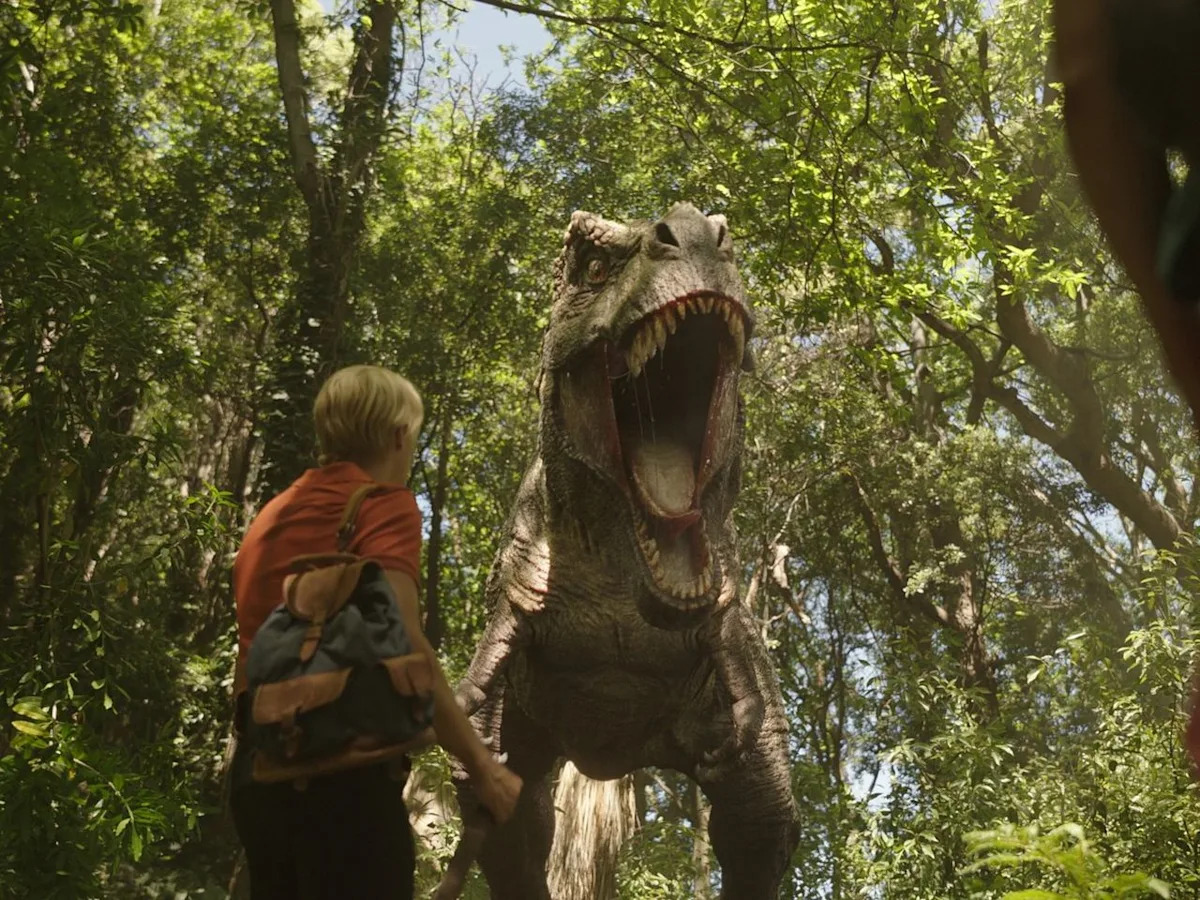
If a smile crosses your face when you see the brontosaurus in season two of Netflix’s hit series One Piece bat its enviable eyelashes, you can thank Vancouver’s Eyeline VFX studio for that.
The series, adapted from the hit Japanese manga written and illustrated by Eiichiro Oda, follows the adventures of a hungry young pirate Monkey D. Luffy (Iñaki Godoy) and his Straw Hat crew, as they search for the mythical treasure known as the “One Piece.”
“I love the brontosaurus,” said Eyeline VFX producer Gayle Munro. “I call her ‘she’ because she has the most beautiful eyelashes.”
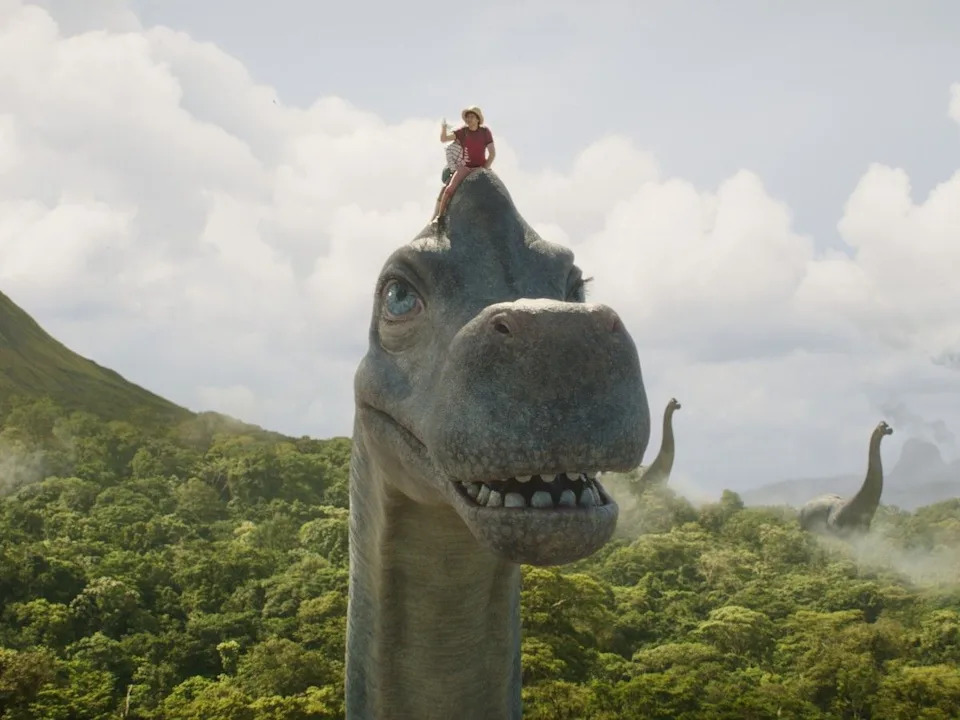
The big beautiful eyelashes of the brontosaurus in the Netflix series One Piece go a long way to make the massive creature more cuddly than frightening. The brontosaurus is the work of Vancouver’s Eyeline VFX studio.
The cute eyelash game is key to creating a character that is gargantuan without being scary, as the young characters in the film bond with it and ride it.
“We spent a lot of time trying to make a brontosaurus face that wasn’t threatening, despite its scale,” said Munro. “The eyes are the window to the soul, so we spent a lot of time on the eyes. Those cute eyelashes, I think, (are) a cherry on top for selling that this is nice creature and it is their friend.”
The gentle giant is just one of the creatures, including a spectacular giant goldfish and a fierce T-Rex, the Eyeline team of about 180 people produced for the series that premiered on March 10, and almost immediately made its way to No. 1 on the Netflix Global Top 10 TV list.
“It makes a crew who worked really hard on it, super proud to see that,” said Munro about the second season topping the Netflix charts. “A lot of the reviews have specifically called out visual effects, so that makes the hard work even more worthwhile.”
The series, which also topped the Netflix charts during its first season run, is currently shooting season three in South Africa where are the live-action filming is done.
“I just think it’s like an old-fashioned, fun journey,” said Munro when asked about the popularity of One Piece. “It’s like you get caught up and swept along for the ride. Despite how fantastical and believable the story arcs are, it still feels real because everything was done well.”
Mixing live action with VFX is definitely a team effort. Munro explained that the VFX team takes their lead from the live-action production and, from there, they work in unison to meld technology with performance.
“We sent them blueprints of our Brontosaurus and they built to that,” said Munro about the scale dinosaur head the actors sat on in front of a blue screen. “It helps their performance, because they feel like they’re sitting on a Brontosaurus. We get the movement from the rig. We also get natural shadows. We get good lighting. Like, it may look silly and like a lot of work, but it also saves a tremendous amount of work at the back end, having that onset stuff.”
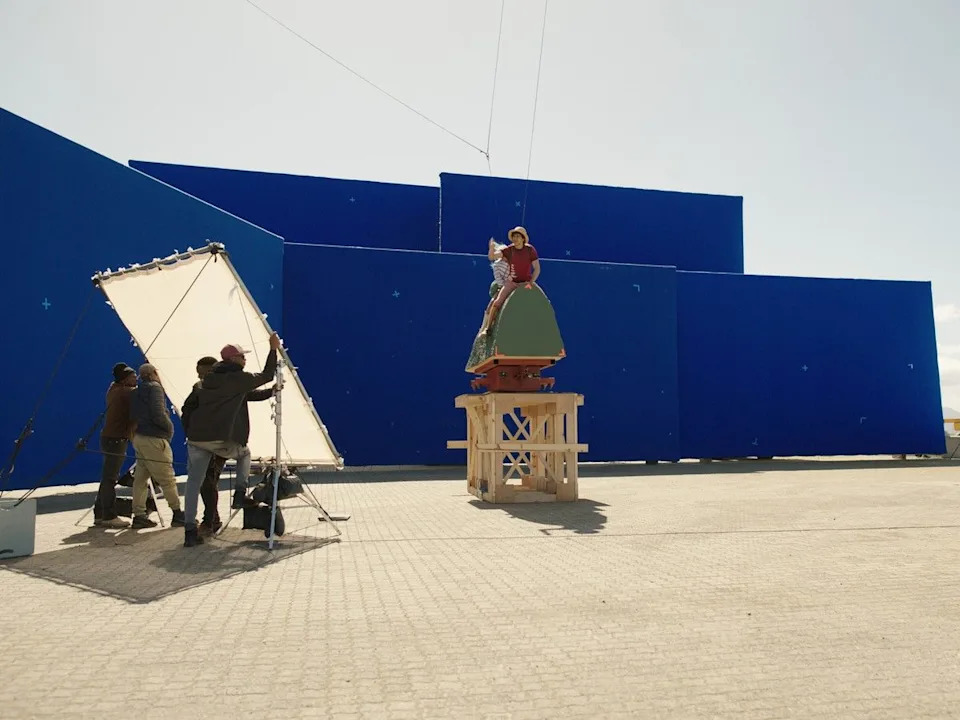
Actors in the Netflix series One Piece are seen here on set in South Africa on a model of the head of brontosaurus that they end up riding in the show. Once the scene was shot Vancouver’s Eyeline VFX studio delivered the digital magic and brought the massive dinosaur to life.
Munro says it took more than nine months to create the eight-episode second series. Every day, Munro adds, she has been impressed and excited by what the Eyeline team can do.
“I still get surprised on a daily basis when I see someone’s work pop up, you know, and I’m like, ‘oh my God, where does that come from? That’s amazing!’” said Munro. “I never get tired of it, to be honest.”
Munro’s job as the producer on the series is to oversee every step.
“I get to see everything along the way, from concept to the final shot, to watching on TV. And that never grows old,” said Munro. “You say goodbye to your children and you send them off to college.”
Munro says the Vancouver VFX team is currently working on 23 TV shows and films across many studios, and that busy schedule points to a very healthy VFX industry here in Vancouver. Major players in the local VFX community include ILM Studios, which was part of the team that worked on the film Avatar: Fire and Ash that recently won the Academy Award for visual effects.
“I’m feeling that it’s reached a really good, stable point,” said Munro about the local industry that has become a major VFX hub. “It seems everyone’s busy, and we know this because when we’re crewing up, it becomes harder to get crew … Between COVID and strikes and things, it was very volatile for a patch. But I really feel that we’re back to normal now, and the work is coming in. I’m seeing everyone looking for crew locally, so I think that’s a really good sign for a healthy industry.”
Looking for more titles to add to your 2026 viewing list? Check out our guide to B.C.-shot movies and shows to watch HERE.
Related