
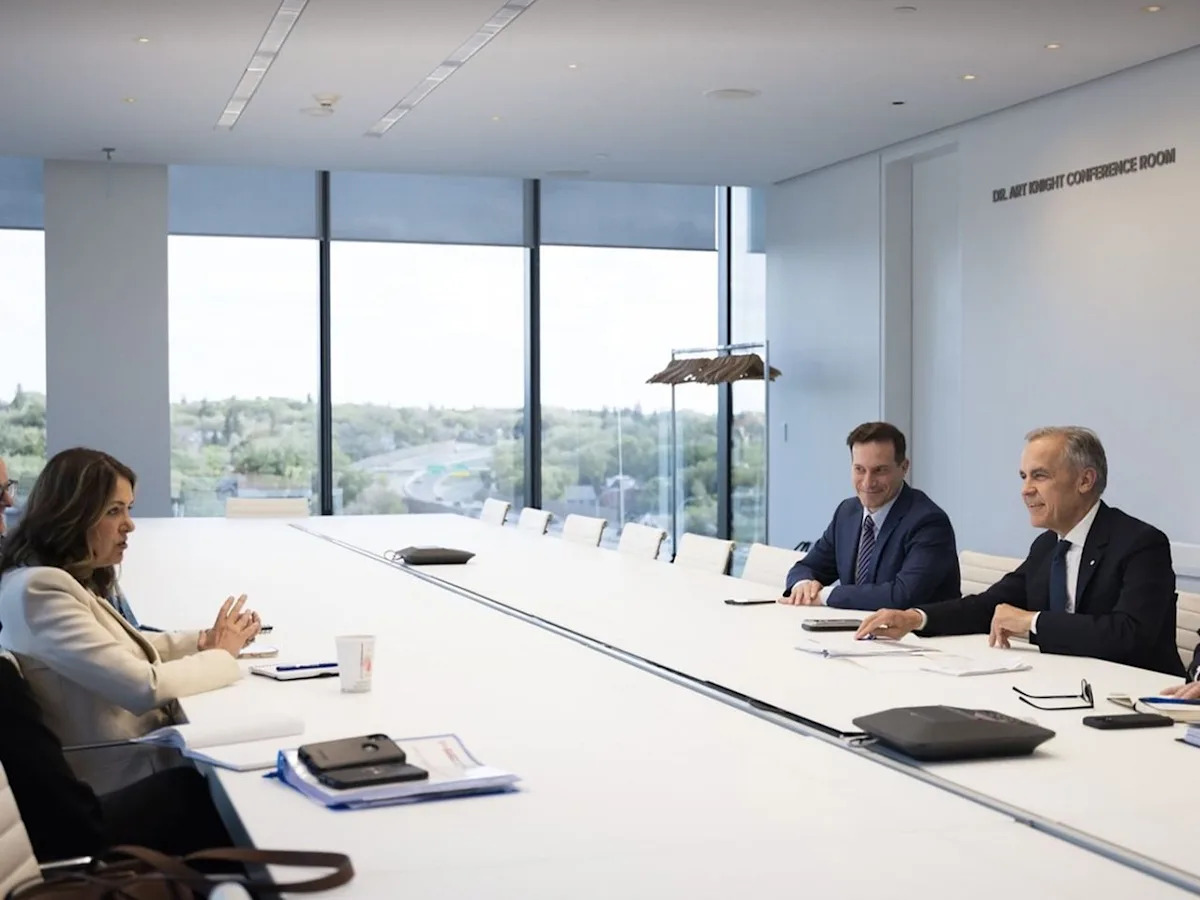
One down, three to go and just 11 days remaining.
The deadline to reach key agreements in the landmark Alberta-Canada energy memorandum of understanding (MOU) is rapidly approaching.
By April 1, the two sides aim to strike deals on an array of outstanding issues — industrial carbon pricing in Alberta, a new methane reduction deal and a proposal to develop one of the world’s largest carbon capture networks.
It’s a lot of heavy lifting on some intricate files in a short amount of time, but the next milestone could come as early as next week — potentially announcing a methane equivalency agreement — and knocking off another key item from the initial MOU to-do list.
Government sources said the sides are “very close” if not finalized on the methane policy in the deal, which set out the target of reducing industry methane emissions by 75 per cent from 2014 levels by 2035.
On Wednesday, Premier Danielle Smith noted federal and provincial officials were meeting this week.
“I know we’re getting close to that April 1 deadline, but it won’t be too much longer,” Smith said.
“I don’t think it’s in anybody’s interest to drag this along, because the sooner everybody knows how the table is set and the rules of the game, then the sooner we can get on to submitting our (pipeline) proposal.”
Earlier this month, the provincial and federal governments announced the first deal reached under the larger energy MOU umbrella, an agreement in principle over environmental and impact assessments for major projects, aiming to reduce duplicate project reviews.
On the issue of a methane agreement, talks between the governments have been continuing.
In December, the federal government estimated that its previously announced enhanced methane regulations would lower oil and gas methane emissions in Canada by 72 per cent below 2012 levels by the end of this decade.
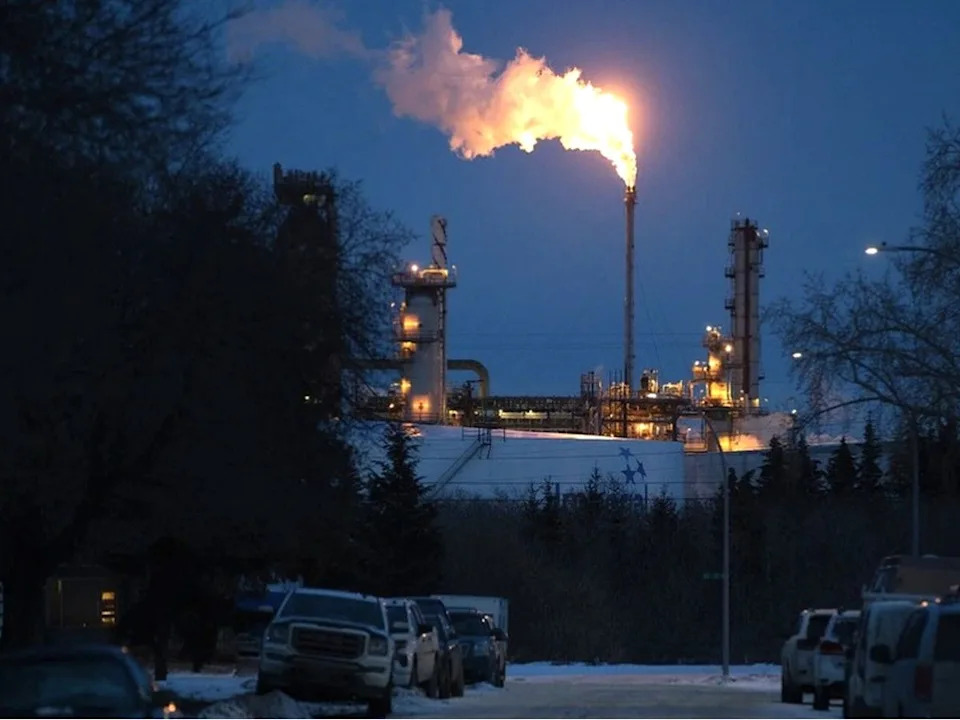
Flaring at the Imperial Oil, Canada Fuels Operations Aviation Terminal, 3014 101 Avenue is visible from a neighbourhood in east Edmonton.
“I would hope to see something that’s pragmatic . . . It’s a matter of how you get there, and that can be hundreds of millions, if not billions, of dollars in difference to get the exact same outcome,” Tristan Goodman, president of the Explorers and Producers Association of Canada, said Friday.
“It’s very important the province maintains the authority to get to the agreed outcome of methane reduction within that time frame of 2035.”
Another element to be reached by April 1 involves Alberta’s industrial carbon pricing system, known as the Technology Innovation and Emissions Reduction (TIER) framework.
The two sides said Alberta will increase its industrial carbon price applied to heavy emitters to an effective price of $130 per tonne. The upcoming understanding is expected to address key issues such as the date for reaching this price.
Another agreement with an April deadline — one that could take the longest as it involves the most parties — strives to reach a trilateral deal between both governments and the Oil Sands Alliance on the proposed Pathways carbon capture and storage network.
The decarbonization project has been worked on by the group of major oilsands producers — Suncor Energy, Canadian Natural Resources, Imperial Oil, Cenovus Energy and ConocoPhillips Canada — for more than five years.
If approved, it would see a new 400-kilometre pipeline built to connect multiple oilsands facilities to an underground CO2 storage hub near Cold Lake.
A final investment decision has not been made and the producers have said they need more government incentives to proceed with the $16.5-billion development.
The federal government previously created an investment tax credit that could cover up to half of a project’s capital expenses, while Alberta is providing a 12 per cent grant to carbon capture developments.
Officials with the Oil Sands Alliance said Friday that negotiations are ongoing between industry and government.
Meanwhile, Alberta’s aspirations to see a new bitumen pipeline built to the B.C. coast — a key component of the broader MOU — remains mutually dependent on the Pathways project moving ahead to help decarbonize oilsands output.
“We’re going to continue working toward that April 1 target date. It might take us a little bit longer on the particulars around the agreement with Pathways,” Smith added.
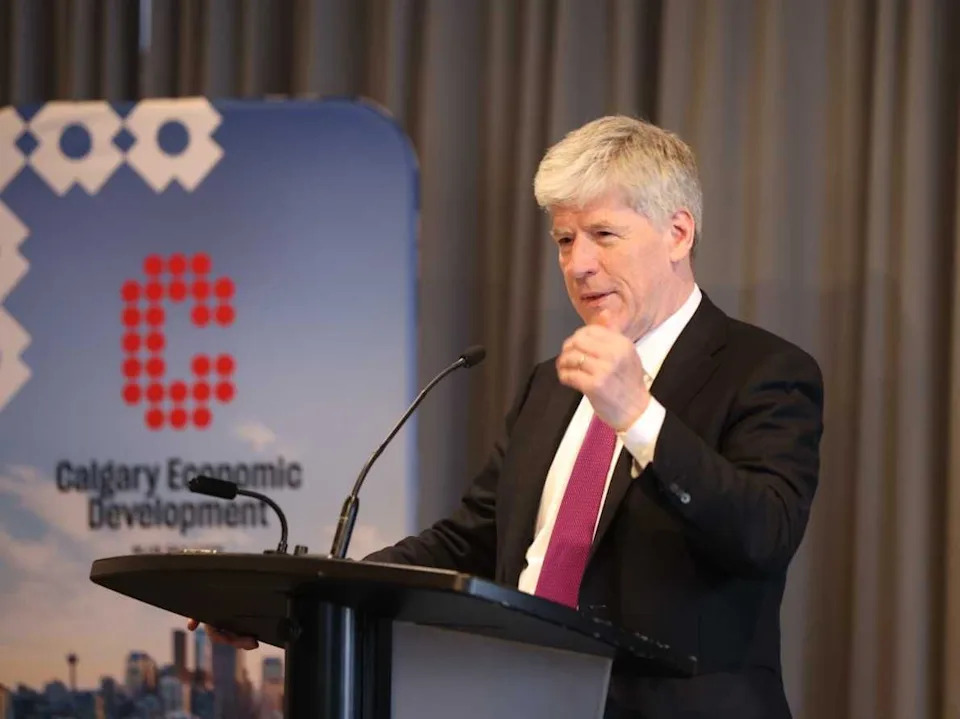
Canada’s Minister of Energy and Natural Resources, Tim Hodgson speaking in Calgary on Feb. 13, 2026.
Speaking in Calgary last month, federal Natural Resources Minister Tim Hodgson said the government has “every intention of hitting those deadlines.”
The landscape for energy has also shifted dramatically since the MOU was signed in late November.
These changes include the U.S. bringing more Venezuelan oil to the U.S. Gulf Coast, and the ongoing war in the Middle East. On Friday, West Texas Intermediate crude closed at US$96.56 a barrel, while global LNG prices have been soaring.
“Everybody — the provincial governments, the federal government, the industry — should be very clear that Canada has an obligation now to step up and provide more energy to the world,” said Richard Masson, former CEO of the Alberta Petroleum Market Commission.
“We are not going to be able to help them very quickly, but we certainly can do a lot to help in the medium term, if we allow ourselves to do that. And that’s what the MOU should be focused on.”
While talks between the industry, Ottawa and the province continue, it’s not a major worry if the agreements aren’t all inked within the next two weeks.
“All of the timelines in the MOU are incredibly ambitious, and I think that speaks to the parties want to capitalize on the momentum they created,” said Gitane De Silva, former CEO of the Canada Energy Regulator and the principal of GDStrategic.
“You’ve got to hit that sweet spot where you’re moving, you’re showing continued progress, because the market needs certainty if it’s going to invest. They want to know what the rules are.”
Chris Varcoe is a Calgary Herald columnist.