
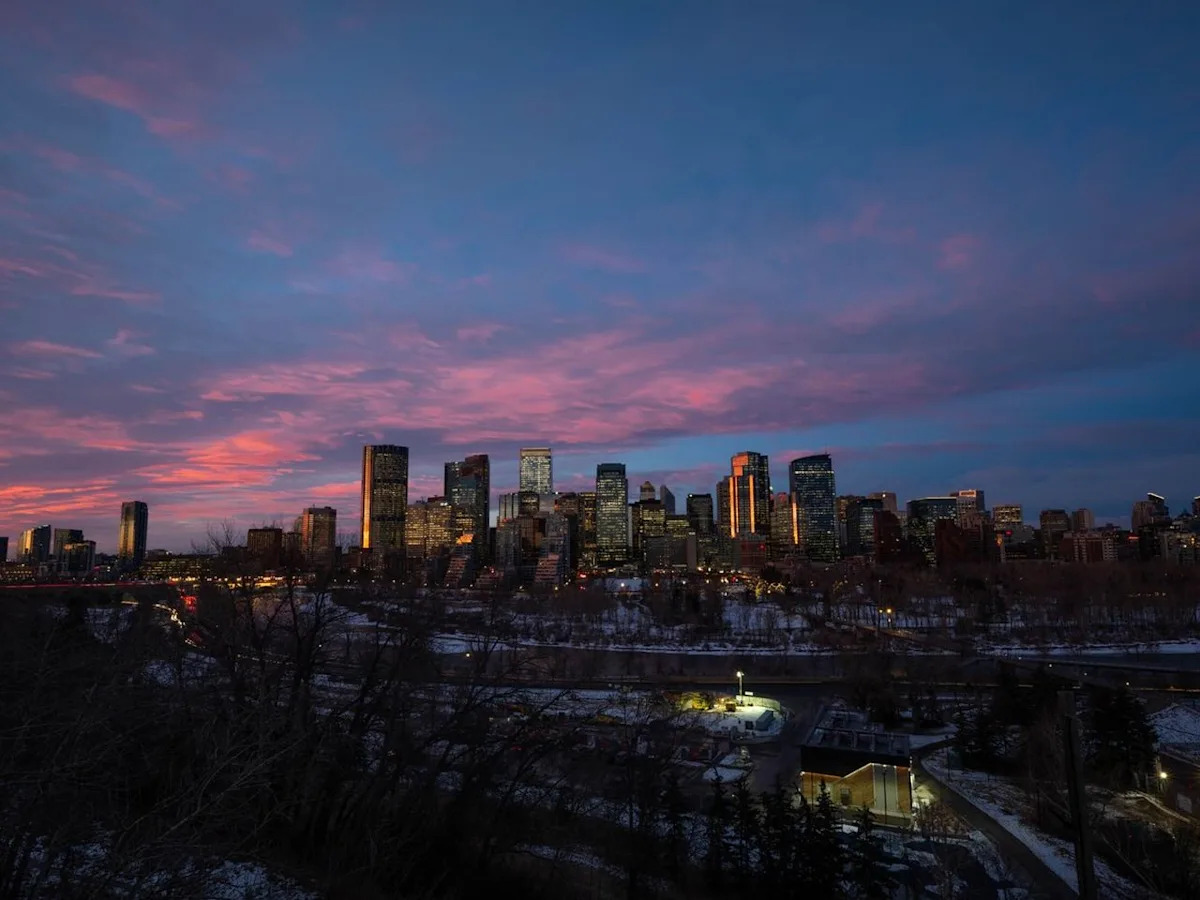
Two million people. Let that number breathe for a moment.
They came from Manila and Kinshasa, from Beirut and Kabul, from Delhi and Tanta. They didn’t stumble here. They chose here — passed over other cities, other countries, other futures — and decided that this particular patch of prairie, with its impossible winters and its relentless optimism, was where they wanted to build a life.
That is not a census statistic. That is a declaration.
And Calgary has earned it. The cranes on the skyline are not accidents. The new communities rising on the city’s edges, the deliberate push to diversify an economy once held hostage by oil prices, the investment in tourism and culture and sport and technology — these are the decisions of a city that refused to be defined by a single industry and dared to imagine something larger. Calgary at two million is the result of years of hard, unglamorous work. It deserves every bit of celebration it gets.
But here is what I keep coming back to — the thing no infrastructure report quite captures.
I remember my first Calgary winter. My car was buried in snow — the kind of snow that makes you question every decision you have ever made. Before I could even reach for my phone, my neighbour was already there. I had never spoken to her. She didn’t know my name. She pulled my car free with a smile so warm it made the cold feel almost irrelevant.
I think about the doctor who held my hand when my son Kareem was born at seven months. He looked at me — a stranger, frightened, far from everything familiar — and said, quietly and with complete certainty: he’s going to be fine. And he was.
I think about Captain Calvin, who coached my son Abdullah’s basketball team. When Abdullah was injured and afraid to play again, Calvin didn’t just coach him back onto the court. He stayed with him, talked with him, held space for his fear until it became confidence. That is not in any job description. That is character.
And I think about my professor Melissa, who would linger after every lecture — long after she was required to — giving me notes on my writing, pushing me harder than I asked to be pushed, treating my ambition as something worth her time.
And then there is my daughter Raneem, who came to me one evening with a stack of business proposals — her eyes bright with the kind of pride that needs no explanation. She had been running a volunteer program at the University of Calgary, helping newly arrived immigrant women build their first small businesses. She wanted me to review the applications. I did. And I remember thinking: this city didn’t just welcome us. It taught our children to welcome others.
None of these people appear in any city planning document. None of them is a line item in a budget. But they are, to me, the truest measure of this city.
The infrastructure is impressive. The economic diversification is real. The cultural investments — Glenbow reimagined, Werklund Centre rising, a downtown that is finding its soul again — matter only if they carry the same instinct as my neighbour in the snow: to show up before you’re asked. I have lived in cities with world-class museums and empty streets. I have visited places with spectacular skylines and no warmth at the ground level. What makes a city magnetic is not what it builds. It is what it carries inside.
Calgary’s greatest competitive advantage is its people — their instinct to help, their ease with strangers, their particular brand of openness that feels neither performative nor political. It is simply who they are.
And that is precisely why two million is not only a milestone to celebrate. It is a question to answer.
Can a city scale its soul? Can the warmth that defines Calgary at one million survive the weight of two? History gives us mixed signals. Some cities grow and deepen. Others grow and dilute — becoming efficient, prosperous, and somehow hollow.
The answer, I believe, lies in the choices we make right now. Not the big choices — the stadiums, the transit lines, the international routes — but the quieter ones. Whether our museums tell the stories of the neighbour who pulled a stranger’s car from the snow. Whether our cultural institutions make room for the doctor from Kinshasa, the engineer from Kabul and the writer from Tanta. Whether we build, deliberately and with intention, the spaces and the experiences that transmit this city’s spirit to the million people who are already on their way here.
Two million people chose Calgary. The next challenge — the most important one — is making sure Calgary chooses them back.
Not just with opportunity. With belonging.
Osama Elemary is a Calgary-based writer originally from Tanta, Egypt.
As part of our special Postmedia Calgary series Countdown to 2 Million, we created a virtual think tank of three dozen community leaders who are sharing their thoughts on how to build the best Calgary. Find more columns and related videos at calgaryherald.com/countdown-to-2-million .
We’d like to hear and publish your ideas, too. What should Calgarians be doing and thinking about, as our city’s population heads towards 2 million? Email us at reply2@calgaryherald.com .