
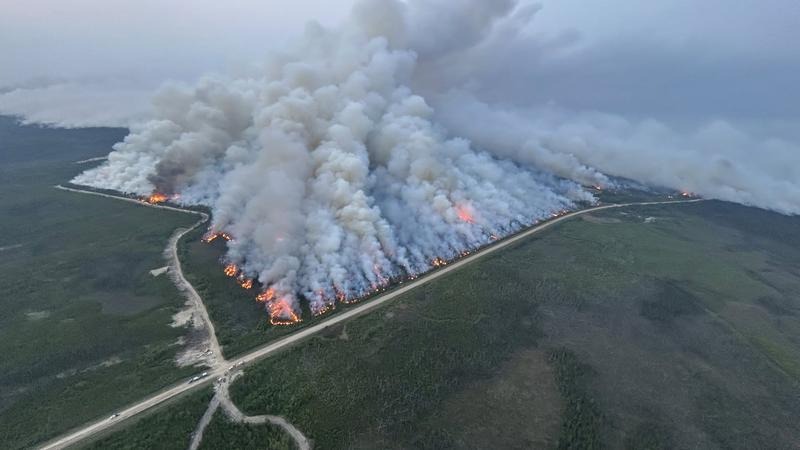
“It’s always difficult with those kinds of things,” he said. “It’s essentially a bit of a status quo, with an increase. There’s another new plane coming online – water bomber coming online – so there’s an increase in that regard… But hopefully we don’t have the kind of year we did last year.”

The fire department at Candle Lake helped respond to wildfires at East Trout Lake last summer, where many structures were damaged in the fires.
Arnold said he hoped to see more funding for prevention, education and equipment to help communities to fight flames and prevent fires from breaking out in the first place.
“Things like fire breaks around communities, things like having enough sprinkler protection to protect communities,” he said. “Honestly, we need to put way more money into preparing for wildfires rather than fighting wildfires.”
Arnold said he would like to see more funding to going towards forestry management, thinning out trees and dead wood that can fuel flames.
Tax credit for volunteer first responders doubled
Aaron Buckingham, president of the Saskatchewan Volunteer Firefighters Association, said many people left their jobs to fight flames during last year’s devastating wildfire season.
In recognition of the sacrifices made by volunteers, the provincial budget doubled the volunteer first responders’ tax credit from $3,000 to $6,000.
“None of us do it for the money. None of us do it to be reimbursed. None of us do it to be recognized,” Buckingham said.
“This is a nice thing the government is doing for us.”
The federal government previously raised its version of the tax credit for volunteer first responders to $6,000, and Arnold said he wasn’t surprised to see the province do the same.
“Giving the tax incentives allows volunteer firefighters to retain the people they’ve got, and perhaps give the incentive enough to bring in new firefighters,” Arnold said.
“It’s tough to get volunteer firefighters. It really is.”
by Gillian Massie – 650 CKOM