

Formula 1 has spent the past two decades building what it believed was the perfect global model. A championship that globe-trots, taps emerging markets, attracts sovereign wealth and sells itself as the pinnacle of technology and sport. It has worked, but that model has now collided with a geopolitical reality it cannot control. The cancellations of the Bahrain and Saudi Arabian Grands Prix are not just a calendar adjustment.
They are a structural shock that exposes a deeper vulnerability at the core of the sport. Formula 1 cannot operate above geopolitics, and right now the geopolitical landscape is dictating terms in a way the sport cannot ignore.
The 2026 season was meant to underline Formula 1’s dominance with a record 24-race calendar and expanding global reach. Within days, that narrative cracked as Bahrain and Saudi Arabia dropped off the schedule. The calendar fell to 22 races, and a five-week gap opened between Japan and Miami, breaking early-season continuity.
Momentum has been lost and the illusion of control has been exposed. Formula 1 prides itself on precision, structure and global coordination, yet this disruption highlights how fragile that system becomes under external pressure. The sport’s carefully engineered calendar is not immune to events beyond its control.
Safety is the official explanation and it is entirely justified. You cannot send teams, drivers and thousands of personnel into a region facing missile strikes, drone attacks and widespread airspace shutdowns. However, focusing purely on safety avoids addressing the deeper issue of structural exposure.
Formula 1 has attracted big investment from the Gulf in just on two decades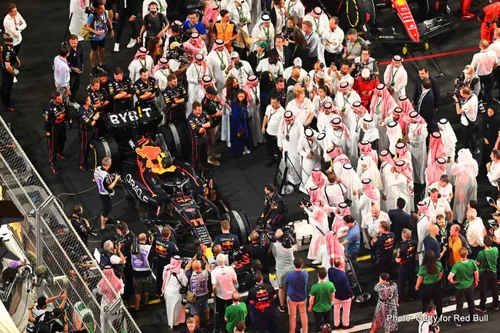
Formula 1 has spent years embedding itself into the Middle East through ownership, sponsorship and infrastructure. The region is no longer just a destination on the calendar, it is a core pillar of the sport’s commercial and operational model. That level of integration carries inherent risk.
Bahrain’s sovereign wealth fund owns McLaren while Abu Dhabi capital is tied into that same structure. Saudi Aramco is a global partner and a key backer of Aston Martin, while Qatar funds Audi’s future through Sauber and supports the championship through Qatar Airways. This is deep financial integration.
The Gulf also anchors the calendar itself. Bahrain has become a season opener, Saudi Arabia delivers a premium night race, Qatar adds commercial weight and Abu Dhabi hosts the finale. Formula 1 has not just expanded into the region, it has built a significant part of its structure around it.
This relationship has always been framed as mutually beneficial. Gulf states gain global visibility, tourism growth and economic diversification, while Formula 1 gains funding, infrastructure and some of the highest promoter fees on the calendar. It is a powerful partnership that has driven recent growth.
However, it is also a fragile one, and that fragility is now exposed. When the war escalated, it did not just threaten individual race weekends. It disrupted the entire operational backbone required to stage a Formula 1 event.
Transport and travel plans will need serious revising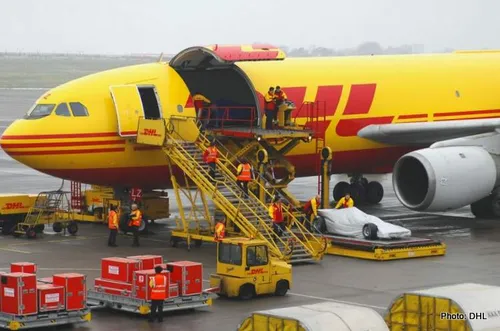
Airspace closures across key hubs such as Dubai, Doha and Abu Dhabi immediately broke the logistics chain. Flights were cancelled, restricted or rerouted, and freight movement became unreliable. Formula 1 depends on precision logistics, and once that system is compromised, the sport cannot function.
This is a freight intensive championship moving hundreds of tonnes of equipment and thousands of personnel on fixed timelines. Every race depends on coordinated global movement. When that system fails, the entire structure stops, which is exactly what happened with Bahrain and Saudi Arabia.
The cancellations were not optional, they were inevitable. There was no realistic way to stage those races under such conditions without compromising safety or operational integrity. Formula 1 had no viable alternative once the logistics chain collapsed.
The financial consequences are significant. Estimates suggest losses close to $200 million when promoter fees, hospitality and sponsorship activations are included. These are core revenue streams that sit at the heart of Formula 1’s commercial model, not peripheral income.
Bahrain and Saudi Arabia represent the premium end of the calendar. They are among the highest paying events and key components of the sport’s financial strategy. Losing them hits directly at Formula 1’s most lucrative segment and creates ripple effects across partners and broadcasters.
The flow of the season is already compromised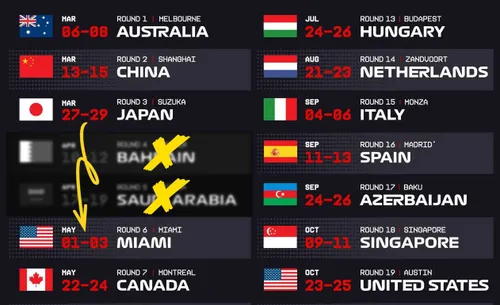
The calendar itself has also been destabilised. The gap between Japan and Miami disrupts the flow of the season and breaks narrative continuity. For a sport that depends on momentum, storytelling and consistent engagement, that disruption has a tangible impact.
For teams, the impact is more complex. There is a clear loss of commercial exposure in a key region, but also an unexpected benefit. The enforced gap creates additional time for development work.
More time in the factory, more simulator running and greater flexibility in upgrade planning can provide competitive advantages. In a cost cap era, that time has value. However, it remains a secondary effect compared to the broader disruption caused by the cancellations.
The bigger issue is structural dependence. Formula 1’s global model is built on expansion into high value markets, but expansion comes with risk. The more the sport relies on specific regions, the more it inherits their instability.
Right now, that instability is concentrated in the Middle East. Formula 1’s deep integration into the region means it is directly exposed to those risks. This is not a temporary inconvenience, it is a systemic vulnerability.
What of the races in Qatar and Abu Dhabi?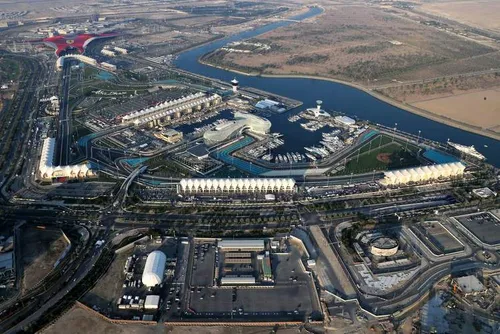
Attention now turns to the end of the season, where Qatar and Abu Dhabi remain on the calendar. On paper, both races are viable with dates in late November and early December providing a buffer for potential stabilisation.
That time advantage allows Formula 1 to maintain a measured approach rather than react immediately. However, time alone does not guarantee improved conditions. The underlying geopolitical risks remain unresolved and continue to evolve.
Qatar has already experienced sporting disruption, with events cancelled or postponed and airspace restrictions affecting travel. These issues highlight the operational challenges that can arise quickly in the region. They cannot be dismissed as isolated incidents.
Abu Dhabi appears more stable for now, with some flight operations resuming and infrastructure intact. However, it exists within the same geopolitical environment and faces the same potential risks. Stability in this context is relative, not absolute.
If the conflict continues or escalates, those races will come under pressure. A season without its traditional Gulf finale is no longer an unthinkable scenario. That possibility alone reflects how much the situation has shifted.
Abu Dhabi is not just another race, it is the climax of the season. Championships are decided there, narratives conclude and the sport delivers its final statement. Losing that would fundamentally alter the structure and perception of the championship.
All sports impacted by the war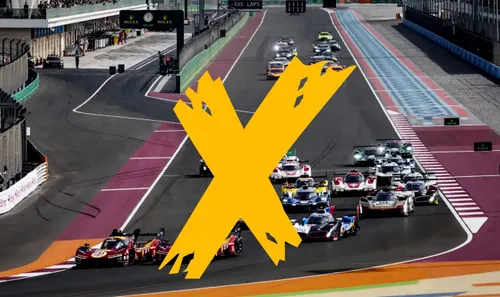
Zooming out, the wider sports landscape reinforces the same conclusion. Football, endurance racing and MotoGP have all experienced disruption across the region. Events have been cancelled, postponed or relocated due to the same underlying issues.
The Gulf’s strategy of becoming a global sports hub depends on stability, accessibility and reliability. Billions have been invested to build that image. War undermines those foundations immediately and exposes the limits of that strategy.
Sport depends on movement, and conflict restricts movement. Athletes, teams and fans require safe and reliable travel. When that is disrupted, the entire ecosystem is affected regardless of financial investment or infrastructure.
Formula 1 is simply the most visible example because of how deeply it is integrated into the region. No other global sport has the same combination of races, sponsorship and ownership ties concentrated in one geopolitical area.
Four races, major sponsors, sovereign ownership stakes and critical logistics routes all connect Formula 1 to the Gulf. This is not optional exposure; it is built into the sport’s current structure and business model.
What now for the Gulf and Formula 1?
That is why the cancellations matter so much. They are not isolated events; they are a stress test of the entire system. The results of that test have exposed clear limitations.
Formula 1 will not walk away from the region. The financial entrenchments remain too strong and the partnerships too deeply embedded. The races will return, and the investments will continue once conditions allow.
However, the perception has changed. The Gulf is no longer seen purely as an opportunity; it is now recognised as a risk that must be actively managed. That shift in understanding is significant.
For years, Formula 1 believed it could expand globally while maintaining control over its environment. It could operate in complex regions without being directly affected by their instability. This war has challenged that belief.
Formula 1 does not control the world it operates in. It adapts to it. And when that world shifts this dramatically, the sport is forced to follow.