
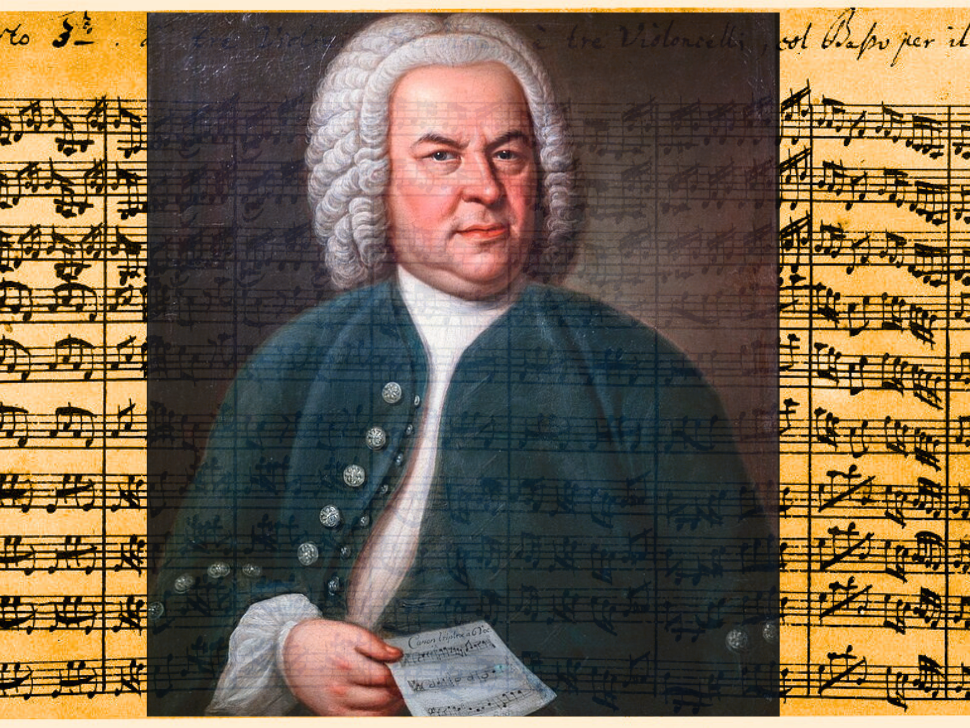
This week, Classic 107 invites listeners on a remarkable journey into the choral masterpieces of Johann Sebastian Bach, featured each day at 1PM from March 23 to 27. The special programming not only celebrates some of the most profound sacred music ever written, but also serves as a lead-in to the Winnipeg Baroque Festival, which begins Sunday, March 29 and runs through April 18, 2026.
At the heart of the week is Bach’s Mass in B minor BWV 232, a towering achievement that occupied the composer over many years. Rather than being conceived as a single work from the outset, the Mass is a carefully assembled collection of movements, some newly written, others adapted from earlier compositions, brought together into a unified and deeply expressive setting of the Latin Mass. It stands today as a monumental synthesis of Bach’s musical language, blending intricate counterpoint, expressive choral writing, and virtuosic solo movements.
Performed here by the Monteverdi Choir and the English Baroque Soloists under the direction of Sir John Eliot Gardiner, the recording features an exceptional roster of vocal soloists: Hannah Morrison (soprano), Esther Brazil (mezzo-soprano), Meg Bragle (alto), Kate Symonds-Joy (alto), Peter Davoren (tenor), Nick Pritchard (tenor), Alex Ashworth (bass), and David Shipley (bass). Together, these performers bring remarkable clarity, energy, and emotional depth to every movement.
Monday, March 23
Kyrie eleison
The week begins with the Kyrie, one of the most solemn and introspective sections of the Mass. Structured in three parts: Kyrie eleison, Christe eleison, Kyrie eleison, this opening movement sets the tone with music that is both pleading and profound. Bach draws on older contrapuntal traditions here, creating a sense of timeless devotion while allowing moments of lyrical beauty to emerge, particularly in the central duet.
Tuesday, March 24
Gloria in excelsis Deo
Tuesday’s broadcast brings the vibrant and celebratory Gloria, a sequence of movements that contrasts exuberant praise with moments of reflection. From the jubilant opening chorus to the graceful Laudamus te and the contemplative Qui tollis peccata mundi, Bach demonstrates an extraordinary range of expression. Each movement feels distinct, yet together they form a cohesive and uplifting declaration of joy and reverence.
Wednesday, March 25
Credo (“Symbolum Nicenum”)
On Wednesday, listeners encounter the theological core of the Mass: the Credo. This section is notable for its architectural brilliance, with Bach organizing the music in a symmetrical structure that mirrors the text’s central themes. Movements such as Crucifixus and Et resurrexit provide striking emotional contrast, moving from sorrow and gravity to radiant triumph. It is a masterclass in musical storytelling and spiritual expression.
Thursday, March 26
Sanctus, Osanna, Benedictus, Agnus Dei, Dona nobis pacem
The serialization concludes Thursday with the Sanctus and the final movements of the Mass. Here, Bach balances grandeur with intimacy: the majestic Sanctus gives way to the lighter, dance-like Osanna, and eventually to the deeply moving Agnus Dei. The Mass closes with Dona nobis pacem, a serene and hopeful plea for peace that brings the entire work full circle, musically recalling earlier material in a gesture of unity and resolution.
Friday, March 27
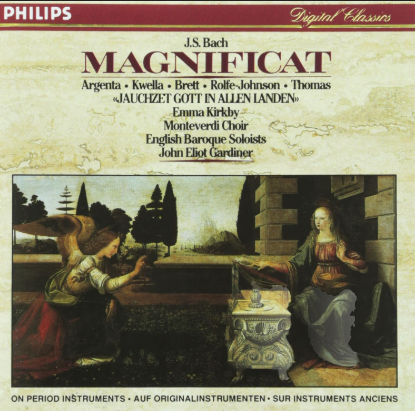
Magnificat in D major, BWV 243
On Friday, the focus shifts to Bach’s Magnificat, a work composed early in his Leipzig tenure in 1723. Unlike the expansive Mass in B minor, the Magnificat is concise and immediately engaging, unfolding in a series of vivid, contrasting movements. Written for the Feast of the Visitation, it reflects both liturgical tradition and Bach’s desire to make a strong impression in his new post.
With its brilliant opening chorus, expressive arias, and festive orchestration, featuring trumpets and timpani, Bach’s Magnificat captures a spirit of joy and celebration from start to finish. This recording, also led by Sir John Eliot Gardiner, brings together the Monteverdi Choir and the English Baroque Soloists alongside an exceptional roster of vocal soloists: Nancy Argenta, Patrizia Kwella, Charles Brett, Anthony Rolfe Johnson, David Thomas, Emma Kirkby, and Crispian Steele-Perkins. Together, these distinguished performers deliver a vibrant and finely detailed interpretation that highlights both the exuberance and the elegance of Bach’s writing.
This special week of programming offers a rich and rewarding exploration of Bach’s sacred music, giving listeners the chance to experience these masterpieces in depth. At the same time, it sets the stage for the Winnipeg Baroque Festival, where audiences can continue to explore Baroque and early music through performances by many of the city’s finest musicians and ensembles.
Whether you’re a lifelong admirer of Bach or discovering these works for the first time, the 1PM hour on Classic 107 this week promises to be an inspiring and unforgettable listening experience.