
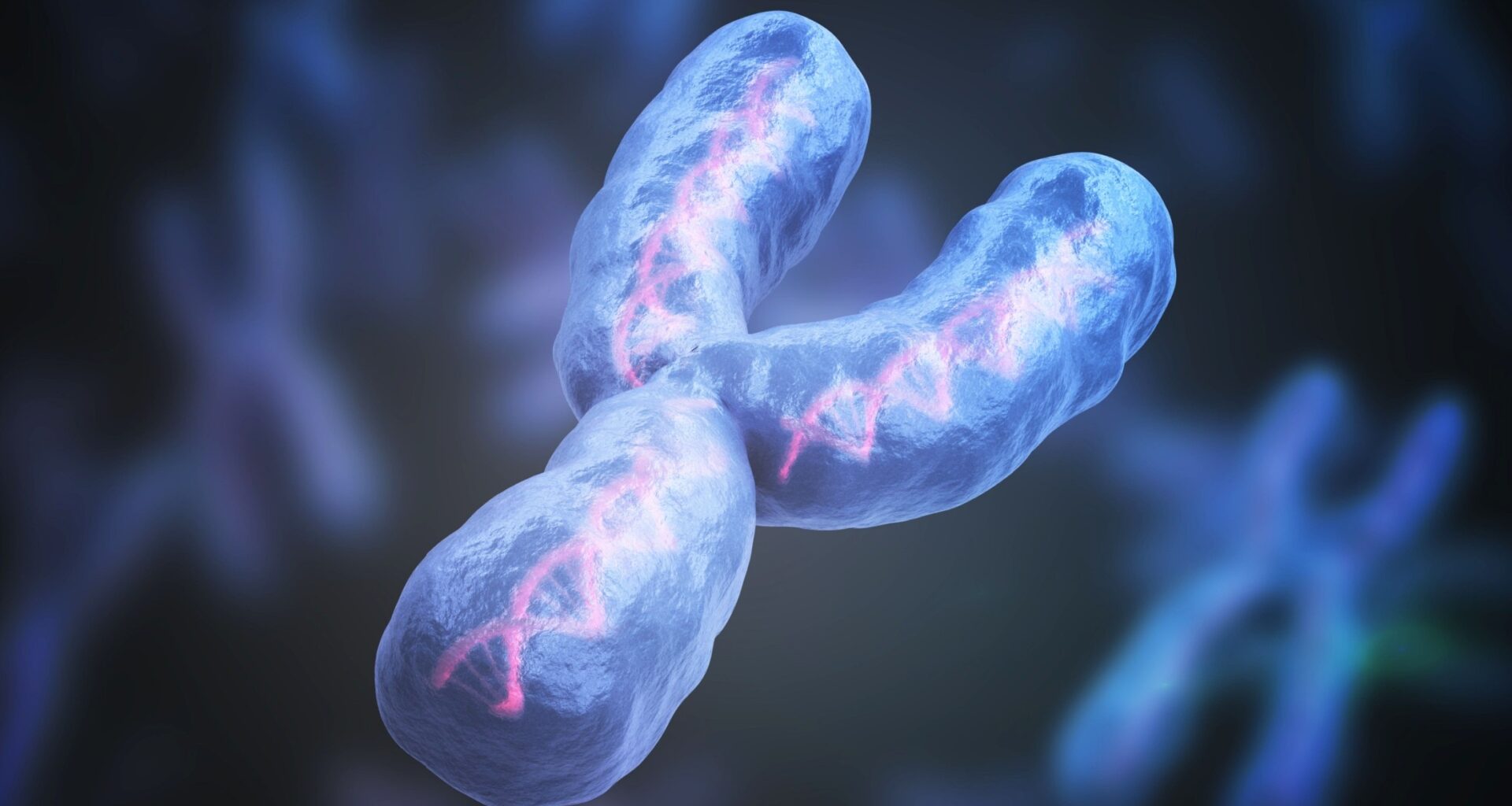
Small changes inside the body can have big effects over time. Scientists now believe the Y chromosome, found in males, plays a bigger role in health and aging than once thought.
Earlier, it seemed less important because it has fewer genes. New research from La Trobe University in Australia shows that losing it with age may raise the risk of serious diseases and even affect lifespan.

This new understanding has pushed researchers to study it more closely, as it now appears to be an important part of how aging and disease develop in men.
How aging affects Y chromosome
As men grow older, some cells in the body slowly lose the Y chromosome. For years, scientists thought this change did not matter much.
The Y chromosome has far fewer genes than other chromosomes, so many believed its loss would not affect overall health.
That idea is changing. New research shows that losing the Y chromosome may increase the risk of serious diseases and even shorten lifespan. This discovery has made scientists look more closely at how aging affects the male body at a genetic level.
Y chromosome loss is widespread
Modern genetic tools have helped researchers study this process in detail. Results show that Y chromosome loss is quite common in older men. Around 40 percent of men in their 60s show some loss. This number rises to about 57 percent by age of 90.
This loss does not happen in every cell. Instead, the body ends up with a mix of normal cells and cells without the Y chromosome.
Scientists call this condition mosaicism. Once a cell loses the Y chromosome, all new cells made from it also lack the chromosome.
Lifestyle factors can also increase the chances of this loss. Smoking and exposure to harmful chemicals can raise the risk. Cells that divide quickly are more likely to lose the Y chromosome because errors can occur during cell division.
Small chromosome, big impact
The Y chromosome is small compared to others. It has only about 51 protein-coding genes, while other chromosomes have thousands. Because of this, scientists once believed it only helped with male development and sperm production.
Studies have shown that cells can survive without the Y chromosome. In some animals, the Y chromosome even disappears over time. This made researchers think that losing it later in life would not cause problems.
Now, evidence suggests that even a small chromosome can have a big impact. The Y chromosome appears to play a role in many body systems, not just reproduction.
Links to major diseases
Recent studies connect Y chromosome loss with several serious health conditions. These include heart disease, brain disorders, and cancer. For example, men with more Y-deficient cells have a higher risk of heart attacks.
Research also links this loss to kidney disease and Alzheimer’s disease. It may even help explain why men often have worse outcomes from COVID-19 infections.
Cancer studies show similar patterns. Many cancer cells lack the Y chromosome. Patients with this loss often have poorer survival rates. Scientists believe that losing the Y chromosome may make tumors grow faster or become more aggressive.
What Y loss really means
One important question remains. Does losing the Y chromosome directly cause disease, or does it simply happen alongside it?
In some cases, illness may increase cell division, which raises the chance of losing the chromosome. Genetics also plays a role.
About one-third of the variation in Y chromosome loss comes from inherited factors linked to cell growth and cancer risk.
However, experiments suggest a direct effect as well. In one study, mice given Y-deficient blood cells developed age-related problems like weak heart function. This finding suggests that losing the Y chromosome may actively contribute to disease.
Impact of Y chromosome in men
Scientists now believe the Y chromosome has more functions than expected. One important gene, called SRY, works in many parts of the body, including the brain. It has been linked to conditions like Parkinson’s disease.
Some genes on the Y chromosome help control how other genes work. Others act as tumor suppressors, which means they help stop cancer from growing. When cells lose the Y chromosome, this protection may weaken.
The Y chromosome also contains non-coding genes. These genes do not make proteins but still influence how other genes behave.
This may explain why losing the Y chromosome affects many systems in the body, including the immune system and heart function.
Y chromosome research continues
The Y chromosome was fully mapped only recently. Researchers are still learning how it works and why its loss has such strong effects on health.
Future studies may help doctors understand disease risks better and develop new treatments. This research could also explain why men and women experience some diseases differently.
A tiny chromosome once seemed unimportant. Now, it is becoming clear that it may hold important clues about how long people live.
—–
Like what you read? Subscribe to our newsletter for engaging articles, exclusive content, and the latest updates.
Check us out on EarthSnap, a free app brought to you by Eric Ralls and Earth.com.
—–