
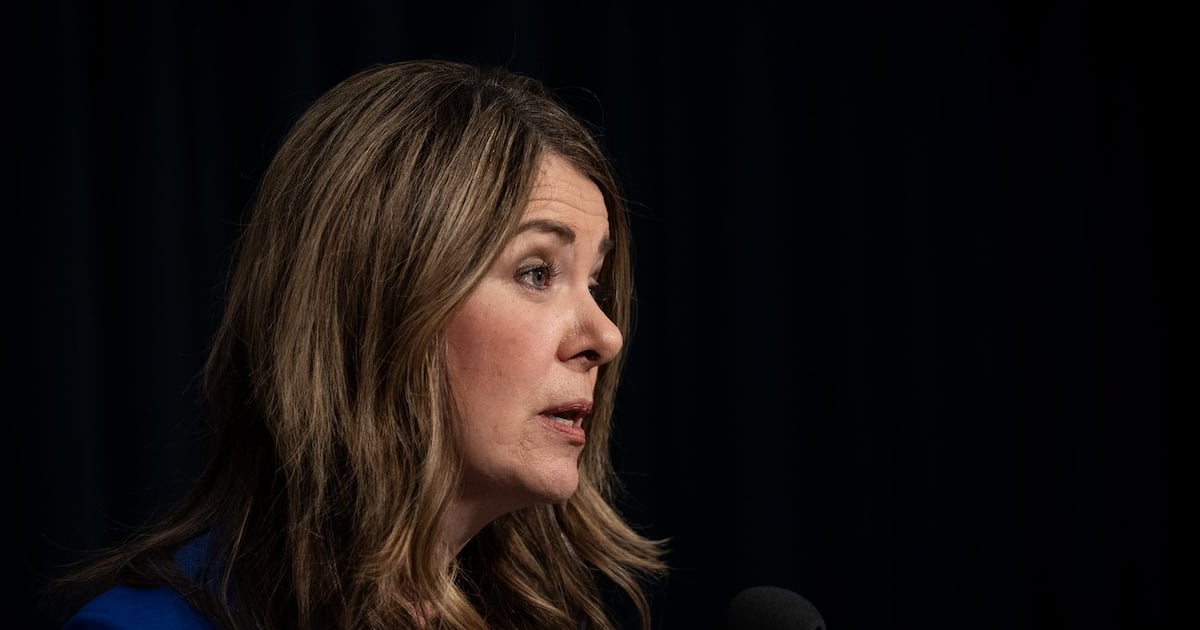
HOUSTON — Middle Eastern and Asian investors have expressed early-stage interest in a potential new crude oil pipeline in Canada and could become minority owners if such a project goes ahead, Alberta Premier Danielle Smith said on Monday.
Alberta, Canada’s main oil-producing province, has been exploring the feasibility of a new one-million-barrel-per-day crude oil pipeline to British Columbia’s northwest coast to increase exports to Asia, but no private-sector company has committed to building a new pipeline yet.
Canadian oil companies hope to boost sales to Asia in the coming years to diversify away from the United States, which currently buys 90 per cent of Canada’s oil in part due to ongoing tensions between the longtime allies since the return of U.S. President Donald Trump to the White House.
Global energy investors are increasingly interested in the world’s fourth-largest oil producer as a safe haven in the face of the war in Iran and geopolitical turmoil, said Smith, speaking to reporters at the CERAWeek by S&P Global conference in Houston.
The Iran war has bolstered global demand for Canadian oil and gas, and Canada agreed last week to support the International Energy Agency’s oil release with 23.6 million barrels from domestic producers.
Alberta has been talking to Middle Eastern sovereign wealth funds as well as Asian investors, she said, and expects foreign capital to emerge if Canada approves a new oil pipeline for federal fast-tracking. “Probably not a majority stake, but at least a substantial stake. Maybe 15 or 30 per cent,” Smith said.
The Alberta government will submit a formal pipeline proposal to the federal government in June, Smith said. If the project is approved for fast-tracking, that will increase the likelihood that a private sector proponent will come forward, she said.
Previous Canadian pipeline projects aimed at increasing the country’s oil export capacity have been plagued by political and regulatory hurdles. Prime Minister Mark Carney has promised to change that, pledging a clear and efficient approval process that will enable a new pipeline to be constructed and financed by the private sector.
While regulatory certainty is important, Smith said, a new pipeline also hinges on the results of ongoing negotiations between Alberta, Canada and the oil sands industry on carbon pricing policy.
The Carney government has pledged to strengthen Canada’s industrial carbon pricing regime, but Smith said Canada’s oil industry cannot increase production if the new system is too stringent, putting Canadian oil companies at a competitive disadvantage to their U.S. competitors.
Alberta and the federal government committed this fall to reaching an agreement on carbon pricing by April 1. But a Reuters report last week cited industry sources who said a deal will not be struck by the deadline, as Canada’s oil sands companies are pushing back against the federal proposal.
(Reporting by Amanda Stephenson in Houston; editing by David Gaffen)