
Getty
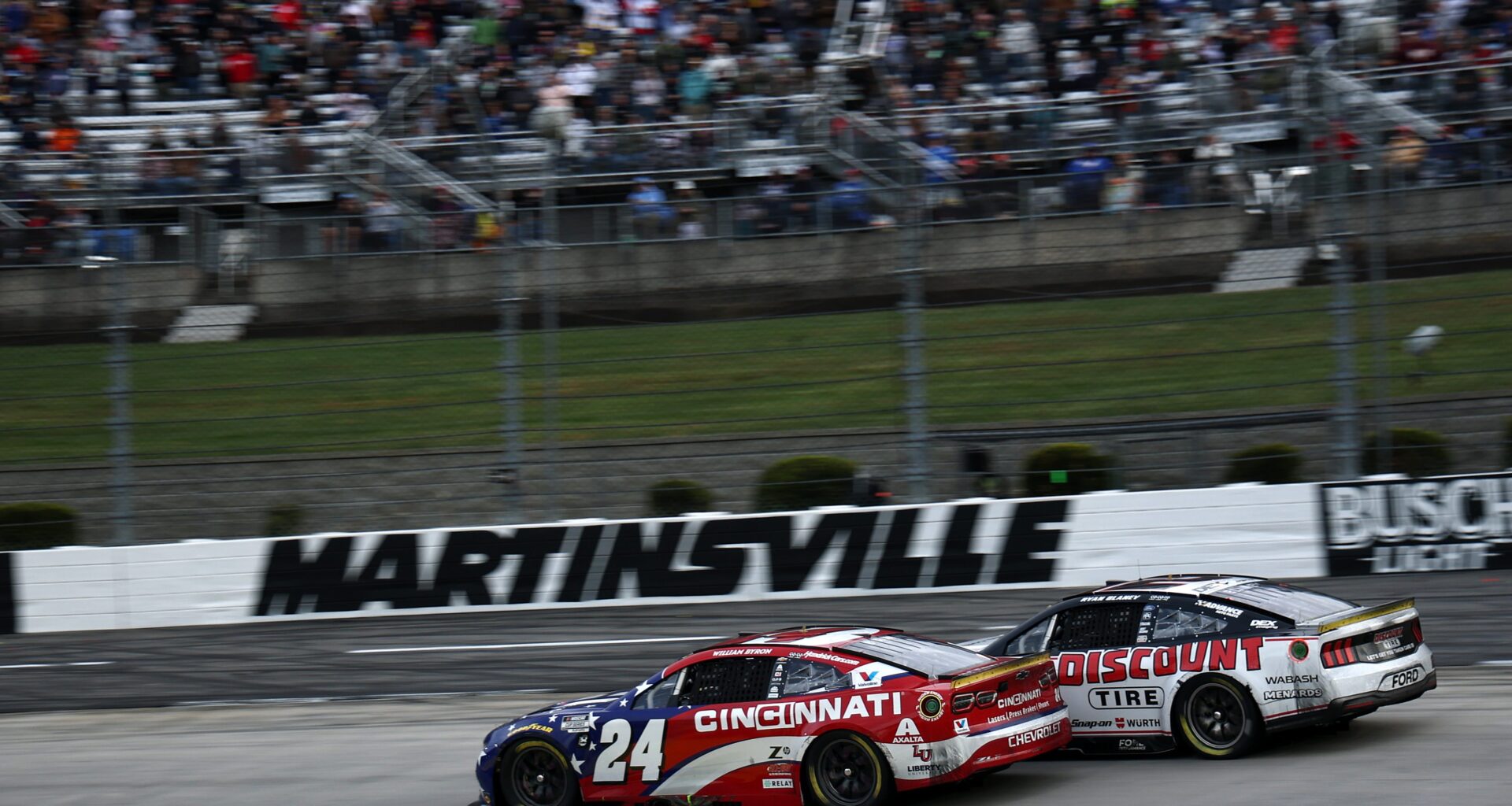
Martinsville Speedway’s tight corners and long straightaways create the “paperclip” layout that defines its racing style.
Martinsville Speedway’s “paperclip” nickname is one of the most searched questions every NASCAR season, and the answer starts with a shape that stands out immediately from every other track on the schedule.
At just 0.526 miles, Martinsville is the shortest track in the Cup Series. But it is not the length that defines it. It is the layout.
The Simple Reason: The Shape Says Everything
Martinsville Speedway is defined by two long straightaways connected by tight, low-banked turns with just 12 degrees of banking. There is no excess, no sweeping arc, and no room to hide mistakes.
From above, the track looks almost identical to a paperclip. The straight lines and sharp corners create a stretched, rectangular oval that is unlike anything else in the sport.
The nickname comes directly from that distinctive outline. It is not symbolic. It is visual, immediate, and impossible to miss.
The Martinsville Track Layout Forces Braking
The Martinsville track layout creates a style of racing that is completely different from intermediate and superspeedway tracks.
Drivers cannot carry speed through the corners. They have to brake hard entering each turn, rotate the car, and then accelerate off cleanly. That stop-and-go rhythm defines every lap.
The straightaways feel longer than the corners, which exaggerates that rhythm and puts even more pressure on braking zones. At most NASCAR tracks, drivers manage the throttle. At Martinsville, braking is unavoidable.
That is why Martinsville rewards patience, discipline, and precision over raw speed.
Why the ‘Paperclip’ Creates Contact and Chaos
The same layout that gives Martinsville its nickname is what makes it one of the most physical tracks on the schedule.
Heavy braking zones create prime passing opportunities. Drivers dive into the corners trying to out-brake the car ahead. The racing groove is narrow, the margins are tight, and contact becomes part of the equation.
Bump-and-run moves are not rare here. They are expected.
Track position becomes critical late in runs, as passing gets harder and drivers lean on experience, timing, and controlled aggression.
Over the course of a long race, that constant pressure builds. Tempers rise, positions are fought for inch by inch, and the track often delivers some of the most dramatic finishes in NASCAR.
A Historic Track That Has Never Changed Its Identity
Martinsville Speedway has been part of NASCAR since 1949, and its layout has remained largely unchanged.
While the sport has evolved toward larger, faster, and more aerodynamic tracks, Martinsville has held onto its original design. The paperclip shape continues to produce a style of racing that feels raw and demanding.
It is one of the last places where drivers are forced to manage brakes, tires, and traffic on every single lap.
Why ‘The Paperclip’ Still Defines Martinsville Today
The nickname is not just about how the track looks. It explains how it races.
When NASCAR heads to Martinsville, drivers and fans know exactly what to expect. Tight corners. Hard braking. Constant pressure. And very little forgiveness.
Because at Martinsville, the shape of the track is not just a visual quirk. It is the reason the racing unfolds the way it does.
Maggie MacKenzie Maggie MacKenzie covers NASCAR for Heavy.com. She previously worked for NASCAR.com, where she reported, wrote, and edited race-weekend coverage and traveled to key events throughout the season. She has more than ten years of experience in sports media and is based in Boston, Massachusetts. More about Maggie MacKenzie
More Heavy on NASCAR
Loading more stories