
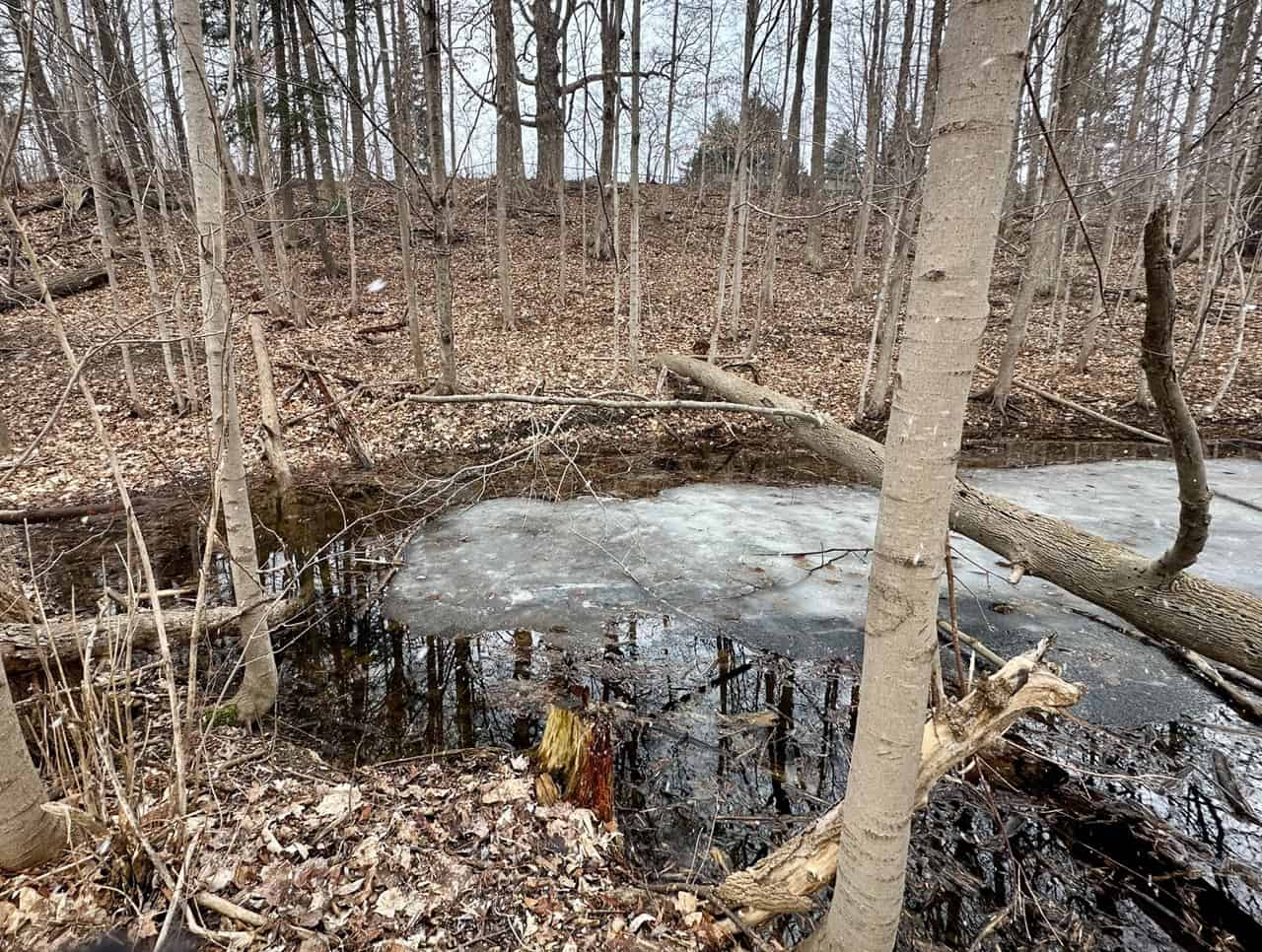
A heavy snowpack left behind by a stormy winter in Mississauga and Brampton is good news for the region, the local conservation authority says.
“Warmer temperatures across the Credit River Watershed are melting this winter’s heavy snowpack, and this is good news for our water resources,” Credit Valley Conservation, the organization that protects natural areas and watercourses in Peel’s municipalities and several other communities, said this week.
“A deep snowpack acts like a natural reservoir. As it melts, it slowly releases water into the ground, helping recharge aquifers and replenish groundwater supplies,” conservation officials continued. “This recharge is especially important after the late-summer and fall drought conditions we experienced last year. Healthy groundwater levels support ecosystems, maintain streamflow and are vital for agricultural communities that rely on consistent water availability.”
CVC added that as Mississauga, Brampton and Caledon transition into spring, “this gradual melt is an essential part of keeping the Credit River Watershed resilient.”
The conservation authority noted that water moves continuously through the natural environment in a cycle, which begins with rain or melting snow.
In reaching land, that rainwater or snow then flows to rivers, creeks and lakes and seeps into the ground and wetlands where it’s stored.


“Plants absorb this water, and animals, including us, drink it,” the CVC said, adding the water then moves again.
“It may evaporate (into the air) from the surface of lakes, aided by the sun. It is released by plants and animals. Water also filters in the ground and moves through soil to feed our lakes, rivers and wetlands.
“The evaporated water, as moisture, is carried by air. It rises, condenses to form clouds and then is released (as rain or snow) to fall to earth once again.”
The water flow through the landscape of a river’s drainage area, or watershed, links the natural features and communities of the watershed together, the CVC noted.
“Within a watershed, everything is connected to everything else. We are as much a part of this system as are the trees, animals and fish. We must take care of the water,” the conservation authority said in an online description of areas such as the Credit River Watershed.
In towns and rural communities in the Credit River Watershed area, drinking water comes from groundwater pumped from underground wells. In the region’s urban areas, Lake Ontario is the source of drinking water.
(Cover photo: Credit Valley Conservation)
INsauga’s Editorial Standards and Policies
Last 30 Days: 35,890 Votes
All Time: 1,270,250 Votes
1653 VOTES
Are you tipping less at restaurants due to price increases?
WIN A $100 GIFT CARD
Subscribe to INsauga’s daily email newsletter for a chance to win a $100 Amazon gift card.