
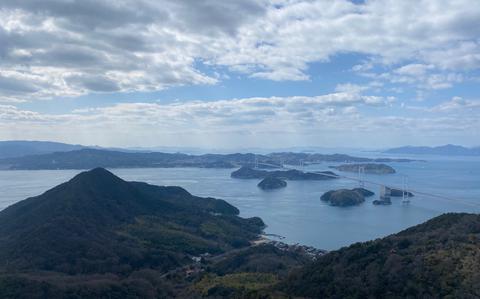
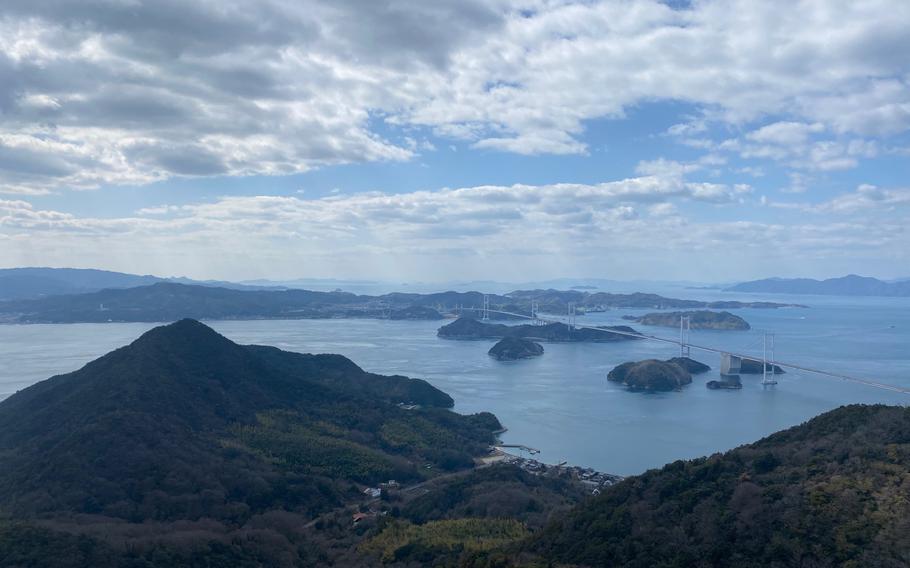
The Seto Inland Sea (Photo by Yasuhiro Muneno/Stripes Japan)
In early March, I traveled the Shimanami Kaido, one of Japan’s most scenic cycling routes, with my friend. My journey began at 7 a.m. from Iwakuni, heading to Hiroshima by train. From there, I took a highway bus departing Hiroshima Station’s Shinkansen Exit at 8:10 a.m., arriving at Imabari Station at 10:40 a.m.
Bicycle rental facilities are conveniently located in front of Imabari Station, making it easy to get started. Since I planned to ride for two days, I chose an electric-assist bicycle for a more comfortable experience. Before setting off, I stopped for lunch at a popular local udon restaurant, Matsuseimenjo, where I had to wait briefly due to the lunchtime crowd.
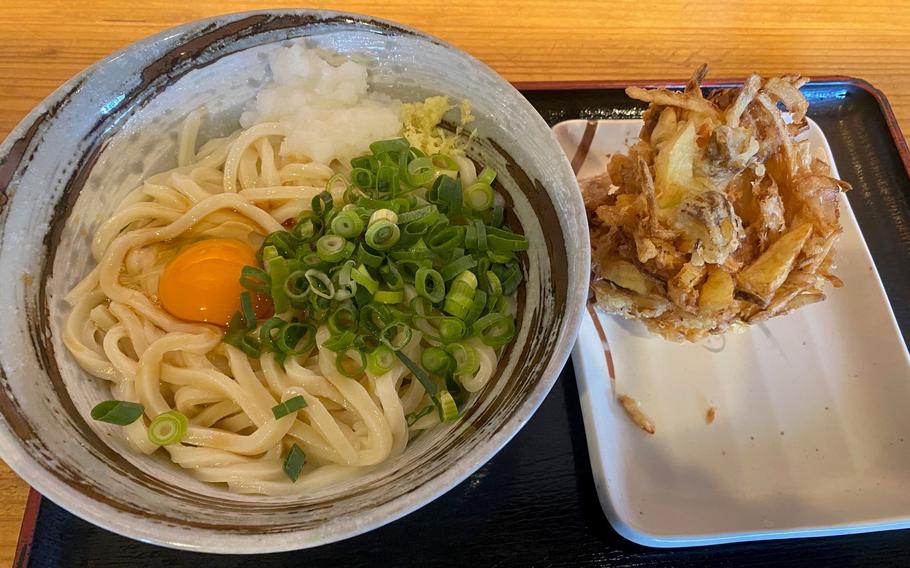
Udon and kakiage (Photo by Yasuhiro Muneno/Stripes Japan)
Kurushima Kaikyo Bridge and Kirosan Observatory
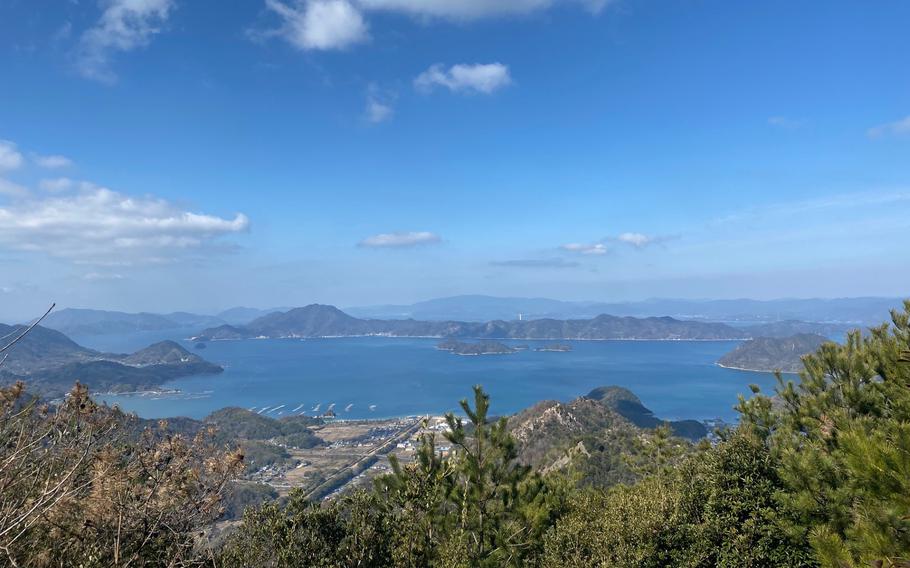
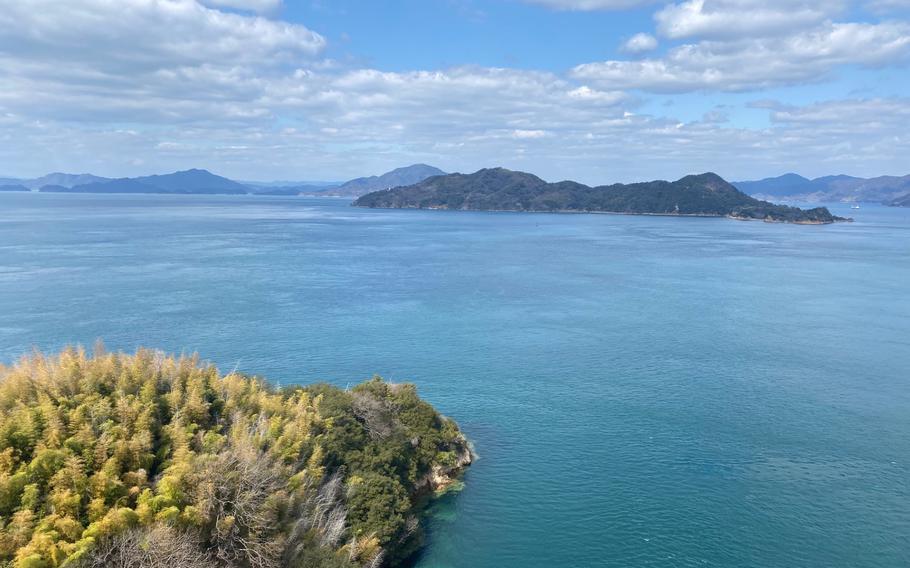
My first major crossing was the Kurushima Kaikyo Bridge, the longest bridge along the Shimanami route, stretching over six kilometers. The views along the way were truly breathtaking.
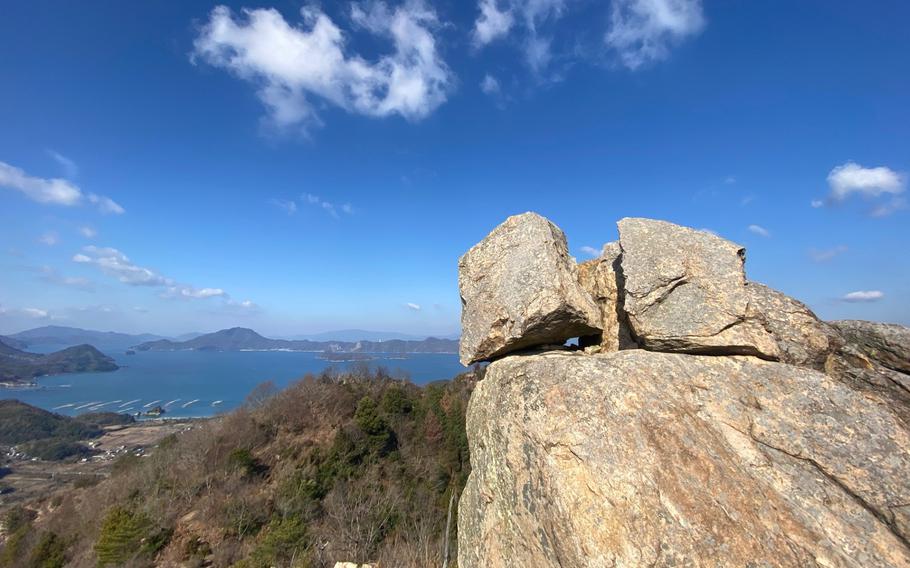
After reaching Oshima Island, I headed to Kirosan Observatory Park. The climb took about 30 minutes with gradients ranging from 5-10%, but the panoramic views at the top made the effort worthwhile. Many tourists also came by bus to enjoy the scenery.
After a short break, I descended quickly by bicycle and continued along the southern coastal road of Oshima, slightly off the main cycling route. The crystal-clear waters and peaceful coastline made for a memorable ride. I then crossed the Hakata-Oshima Bridge and stopped by a souvenir shop on Hakata Island, though unfortunately it was closed that day.
Omishima
Continuing, I crossed Omishima Bridge and at 5 p.m., arrived at Omishima, my destination for the night. At Mare Gracia Omishima, a public bath facility, I relaxed away the long day of cycling in the jacuzzi. A few kilometers later, I checked in at my accommodation, Guesthouse Co-Living & Café SANDO. The room was clean, compact and comfortable.
Since it was a weekday, many restaurants were closed that evening. I eventually found an open spot, Okonomiyaki Otorii, where I enjoyed okonomiyaki and oden for dinner. With little else to do, I went to bed early in preparation for the next day.kaki
Day two – Oyamazumi Shrine visit and hiking
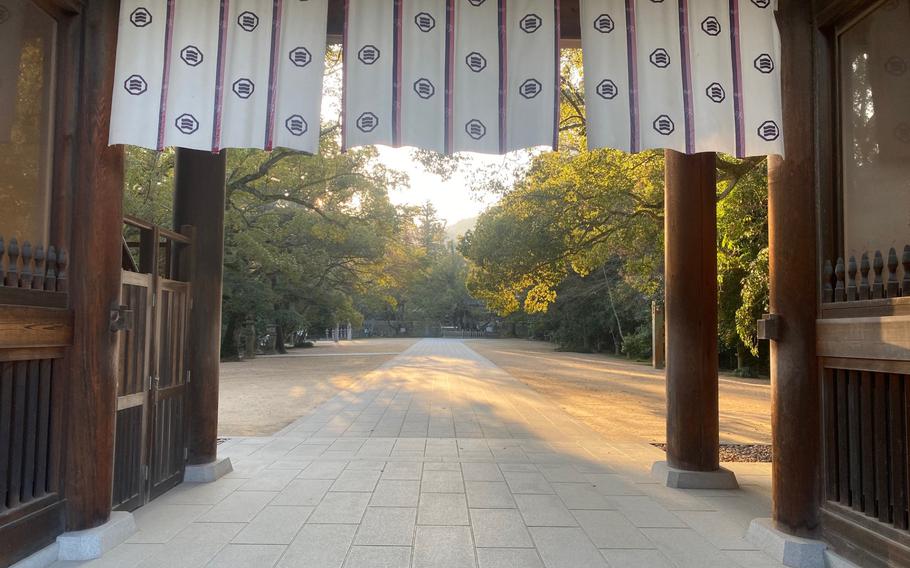
a gate of Oyamazumi Shrine (Photo by Yasuhiro Muneno/Stripes Japan)
The second day began with a quiet morning walk around Oyamazumi Shrine before breakfast. Next on the agenda after breakfast was a hike to the top of Mt. Washigatake, the highest peak along the Shimanami Kaido. The route passed through Mt. Anjin, a steep and striking mountain visible from Omishima town. The climb included a section with chains, adding a sense of adventure. After reaching the summit, the trail became more gradual. The trek took about 2.5 hours roundtrip.
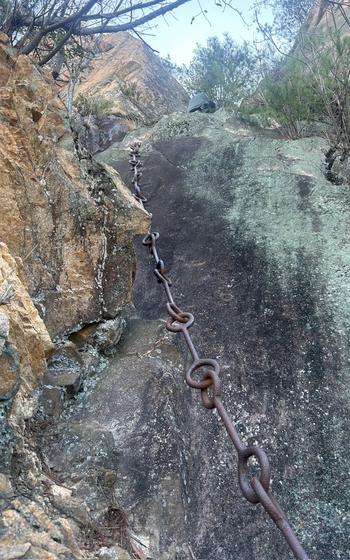
(Photo by Yasuhiro Muneno/Stripes Japan)
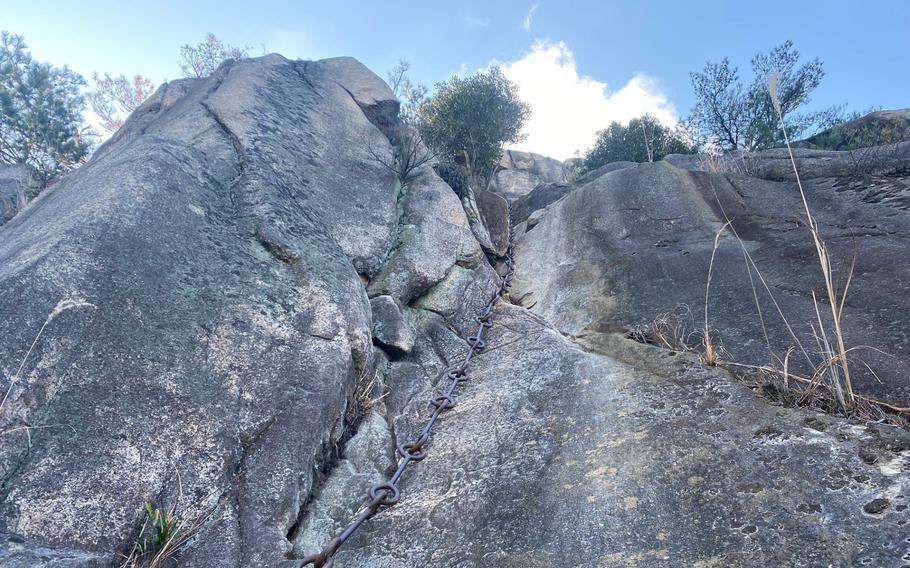
(Photo by Yasuhiro Muneno/Stripes Japan)
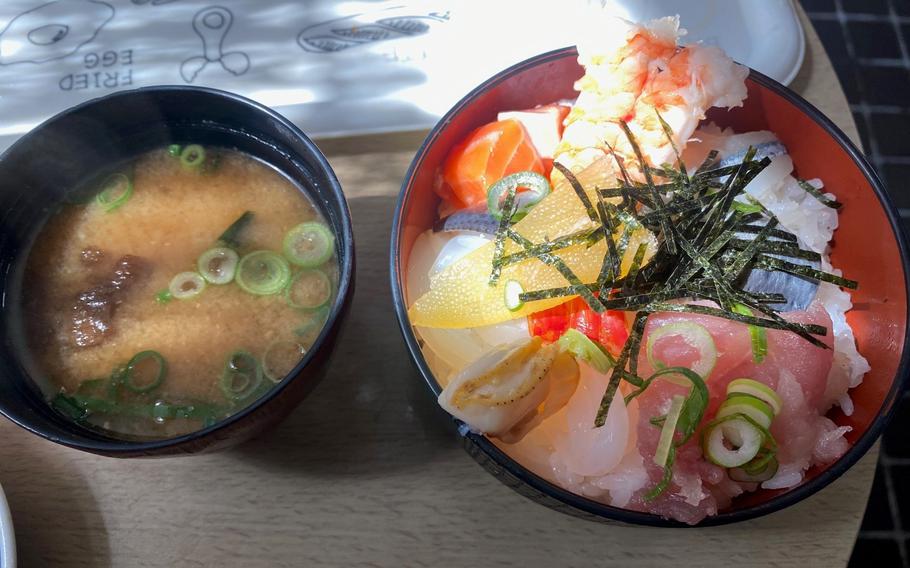
I refueled with fresh seafood served over rice at Tairyo nearby for lunch. After I stopped at a nearby cycling terminal to exchange my bicycle battery before continuing my journey. Across the street at the roadside station, I made sure to pick up some local specialty mikan oranges for later.
Ikuchijima Island
Crossing the Tatara Bridge, which marks the border between Ehime and Hiroshima prefectures, I arrived on Ikuchijima Island. I followed the northern coastal route and stopped in the town of Setoda to try a famous local sweet, hassaku daifuku. This mochi ball treat consists of white bean paste with a piece of hassaku citrus fruit inside.
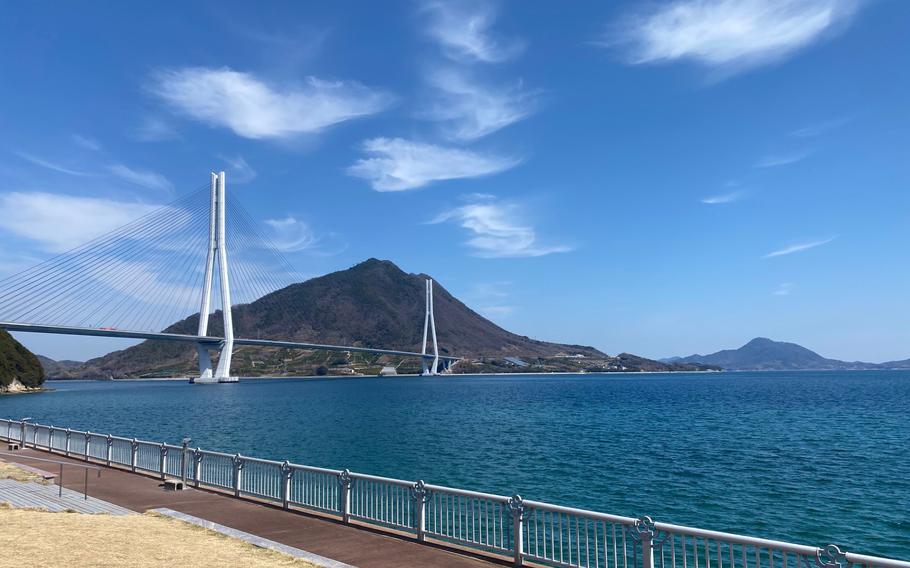
Tatara Bridge (Photo by Yasuhiro Muneno/Stripes Japan)
After, I took some time to explore Kosanji Temple, where I viewed vivid depictions of Buddhist hell in an underground exhibit that left a strong imprtession.
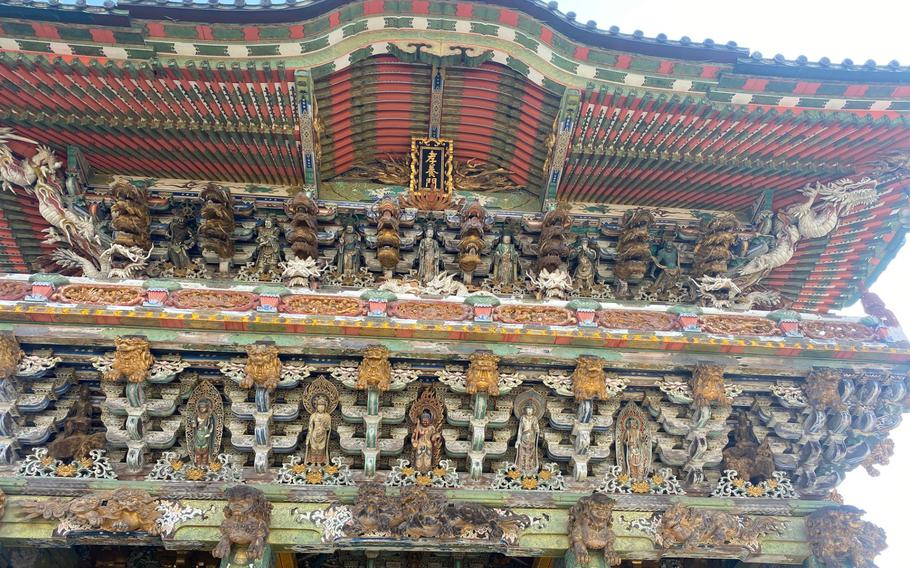
Kosanji Koyomon Gate (Photo by Yasuhiro Muneno/Stripes Japan)
Continuing through the nostalgic streets, I enjoyed freshly squeezed citrus juice before crossing the Ikuchi Bridge to Innoshima Island. I planned to visit the Manda Fermentation HAKKO Park, but it too was closed due to the weekday schedule.
Pushing through to Onomichi
By this point, after two days of cycling, I began to feel soreness from the saddle. Still, I pushed on, crossing the Innoshima Bridge and reaching Mukojima Island. Since there is no dedicated cycling or pedestrian bridge to Onomichi, I boarded a short ferry ride to complete the crossing.
At 5 p.m., I finally arrived in Onomichi. To celebrate the end of my journey, I enjoyed a satisfying meal of Onomichi ramen and a yakiniku rice bowl at a local restaurant. After returning my bicycle near the station, I boarded the 6 p.m. train and arrived back in Iwakuni just before 9 p.m.
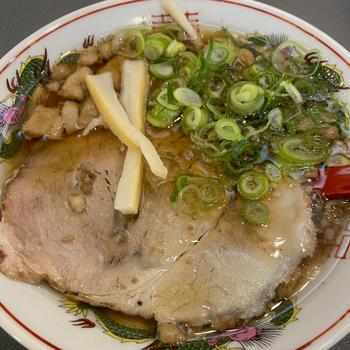
Onomichi Ramen (Photo by Yasuhiro Muneno/Stripes Japan)
Although many shops were closed due to traveling on weekdays, the quieter atmosphere made for a more relaxed and enjoyable experience overall. It was a truly fulfilling journey across one of Japan’s most beautiful cycling routes.
Things to know
Shimanami Kaido connects Onomichi to Imabari across six small islands in the Seto Inland Sea. The 60-km-long trail can be completed by foot or on bicycle.
You can start your journey from Onomichi to Imabari or from Imabari to Onomichi.
Bike rentals and service stations are available along the route.
Read more about cycling the Shimanami Kaido here.
Website: https://shimanami-cycle.or.jp/
(Photo by Yasuhiro Muneno/Stripes Japan)
(Photo by Yasuhiro Muneno/Stripes Japan)
(Photo by Yasuhiro Muneno/Stripes Japan)
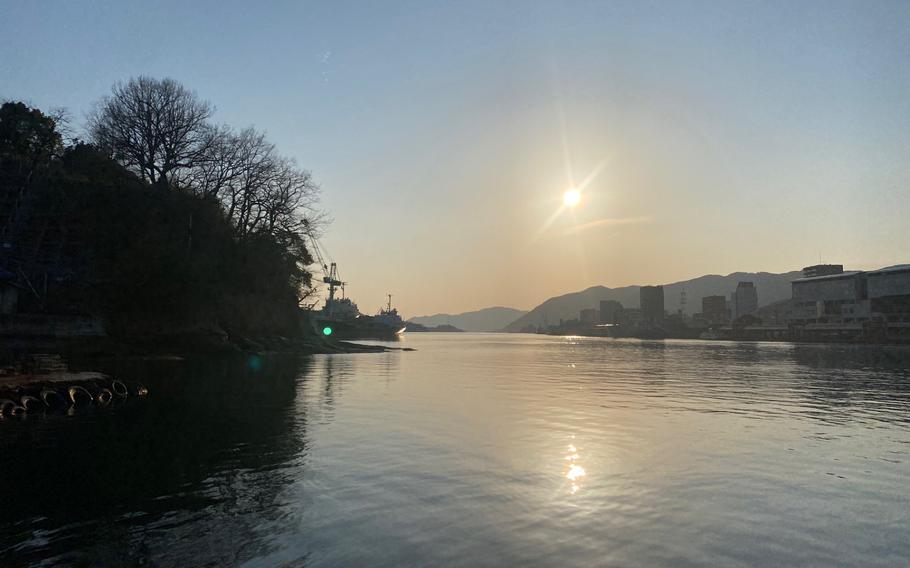
(Photo by Yasuhiro Muneno/Stripes Japan)
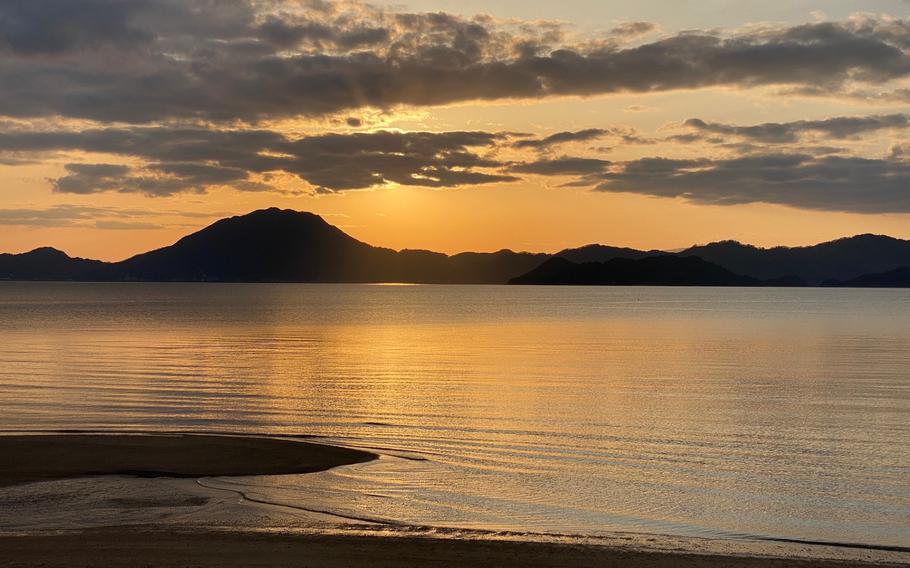
(Photo by Yasuhiro Muneno/Stripes Japan)
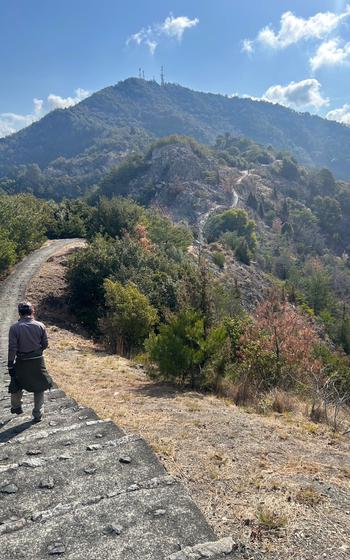
(Photo by Yasuhiro Muneno/Stripes Japan)
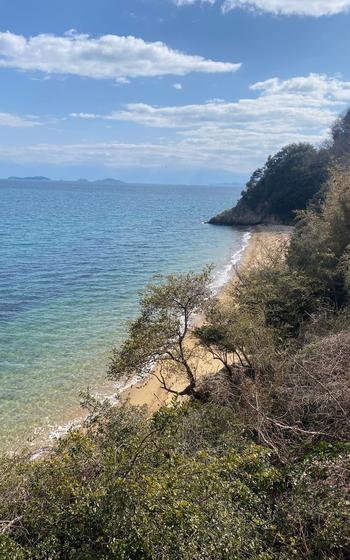
(Photo by Yasuhiro Muneno/Stripes Japan)
(Photo by Yasuhiro Muneno/Stripes Japan)