
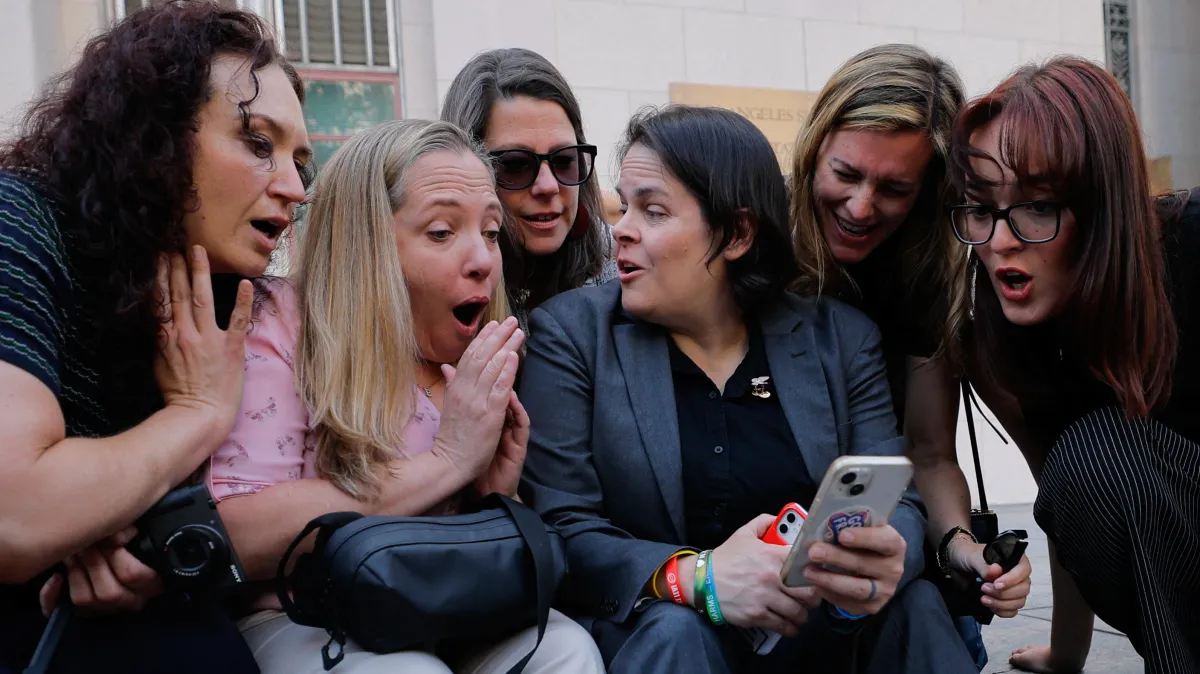
Meta and Google have been found liable in a landmark court verdict for the harm caused to a young woman who became addicted to their platforms.
The ruling in Los Angeles — after a six-week trial in which Mark Zuckerberg, the founder of Meta, gave evidence — is expected to open the floodgates to further lawsuits from families of youngsters harmed by an addiction to social media.
The case was brought by a 20-year-old woman from California who said the social media giants intentionally designed their services to be addictive, comparing their harm to cigarettes.
She said that her mental health had suffered after she became hooked as a child on Instagram, owned by Meta, and YouTube, owned by Google.
The progress of the case was being closely watched by grieving families of victims. They were supported by the Duke and Duchess of Sussex, who have used their charitable organisation, Archewell, to campaign for better digital safety.
Zuckerberg, one of the world’s richest men, testified that his company had adequate safety measures. After more than 40 hours of deliberation over nine days, a jury ruled that the Silicon Valley giants were liable.
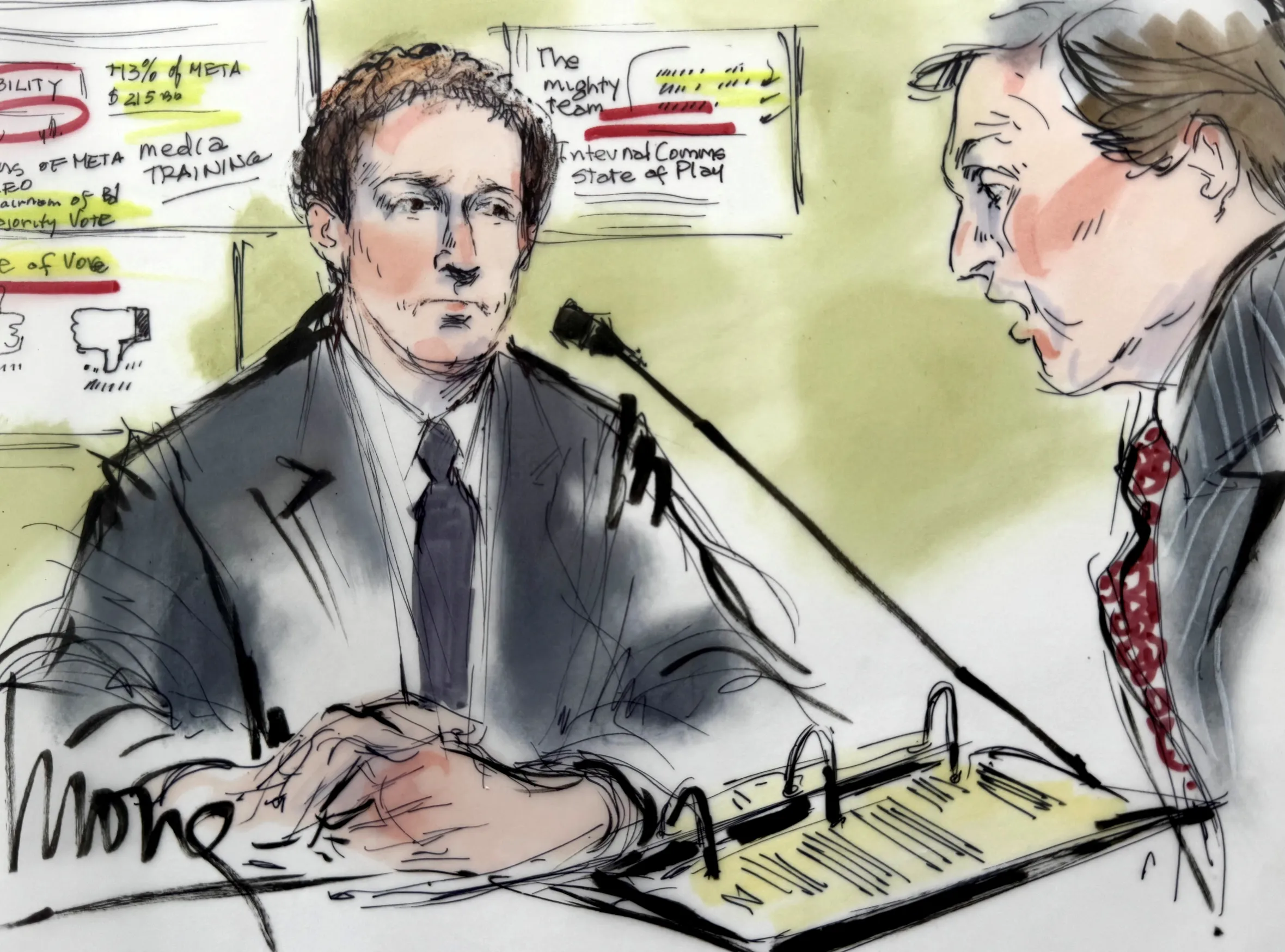 Mark Zuckerberg in court REUTERS/Mona Edwards
The jury awarded $3 million to the woman, referred to in court as Kaley or KGM. Meta is responsible for 70 per cent, and YouTube the remainder.
The jury awarded a further $3 million to KGM in punitive damages.
Meta suggested that it would appeal. “We respectfully disagree with the verdict and are evaluating our legal options,” it said.
The Sussexes welcomed a “reckoning” for social media platforms in a statement on Wednesday.
“This verdict is a reckoning. For too long, families have paid the price for platforms built with total disregard for the children they reach,” they said.
“We stand with every parent and young person who refused to be silenced. Today, the truth has been heard and precedent has been set. Let this be the change — where our children’s safety is finally prioritised above profit.”
For years, those who blame Silicon Valley for the deaths of their children have said that features such as infinite scroll and auto-play of videos were leading young people into addiction. Heavy use of social media by children has been linked to depression, anxiety and suicide. Some experts have compared the cases to those against tobacco and opioid companies.
Meta faces an “avalanche” of legal claims, experts said. John Banzhaf, professor of public interest law at George Washington University, said he believed the company faced an existential threat from thousands of similar cases waiting in the wings.
A group of British parents are suing TikTok in the United States after the deaths of five children.
On Wednesday evening, as members of the House of Lords supported a social media ban for under-16s for the second time, a Tory former minister said that tech companies had gone “way too far in prioritising their commercial instincts”.
The Lords voted 266 to 141, majority 125 in favour of Lord Nash’s amendment on Wednesday. It is the second time he has pushed for a ban on under-16s from social media, after MPs voted against it earlier this month.
Nash, who proposed the age limit as part of the Children’s Wellbeing and Schools Bill, said: “I have been the director of tech companies in California.
“The Californian techies are some of the most able, innovative, entrepreneurial, wealth and job-creating people in the world. But in relation to that cavalier approach that they have taken to harmful content online for our children, I think they’ve gone way too far in prioritising their commercial instincts, and we need to act now in a way that is truly effective.
“I don’t think I need to spend much time talking about the clear evidence and causal link between social media and harm to our children.
“But I was horrified to hear Liz Kendall [the technology secretary] on the radio say a few weeks ago that there is no proven causal link. All I can say is, where has she been?”
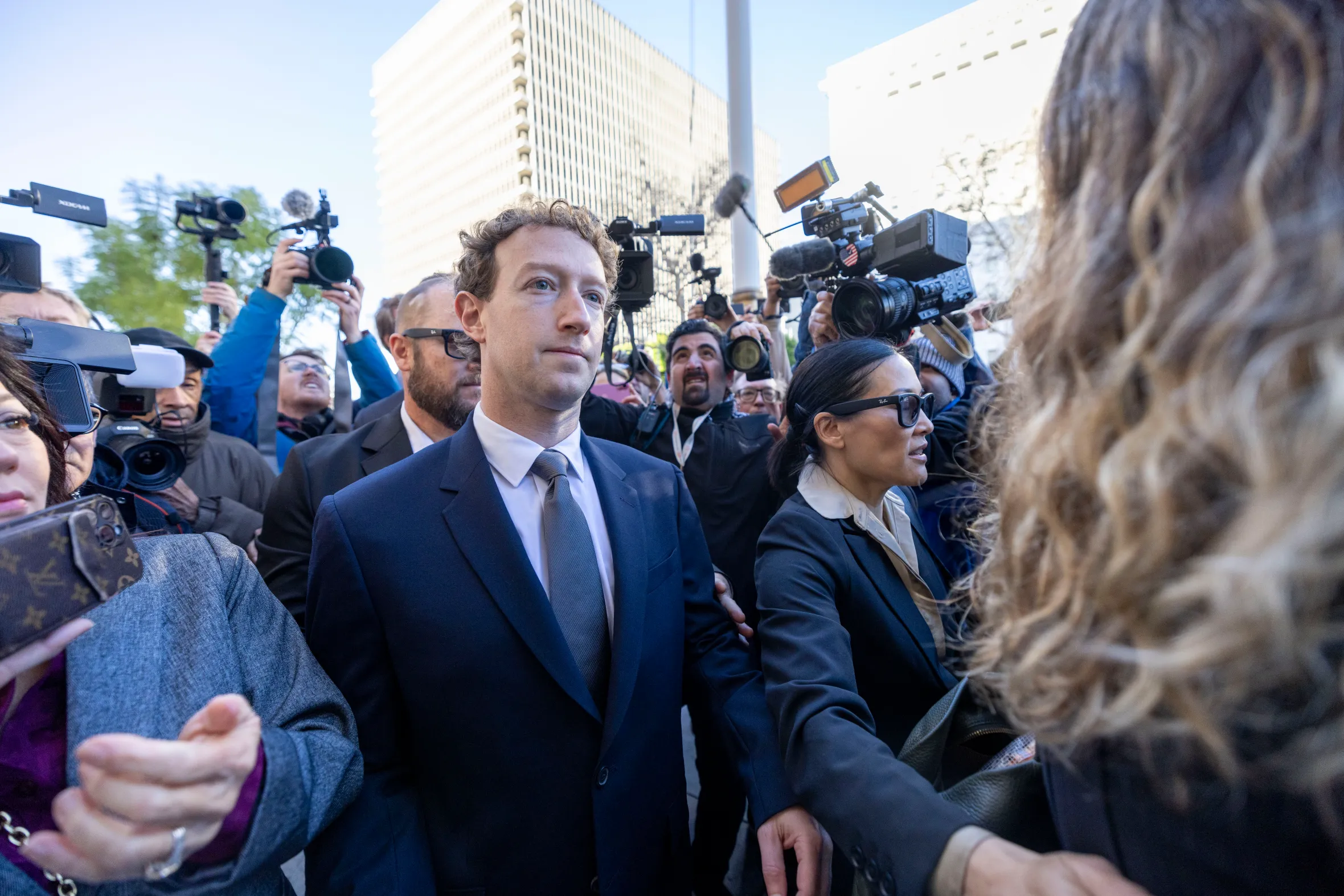 Zuckerberg enters the courthouse in Los Angeles last monthJill Connelly/Getty Images
Andy Burrows, chief executive of the Molly Rose Foundation, which was set up in memory of Molly Russell, 14, who took her own life after viewing toxic content on Instagram, said the ruling “will rightly send shockwaves across the tech sector and governments and highlights how we need to legislate for safer tech that protects young people and their wellbeing. In the UK we have an opportunity with the national conversation to do just that. If the government acts quickly and decisively they can make safety and wellbeing the price for tech firms to pay for doing business in the UK.”
The verdict in Los Angeles came less than 24 hours after a similar result in New Mexico. There, Meta was ordered to pay $375 million in civil penalties after a jury found that it had knowingly harmed children’s mental health. The company was accused of misleading users about the safety of its apps —Facebook, Instagram and WhatsApp — and enabling child sexual exploitation. Meta had denied violating New Mexico’s consumer protection law and has said it will appeal.
The verdicts in Los Angeles and New Mexico offer hope to bereaved parents that the tech giants can be reined in.
In the UK, hundreds of teenagers will be banned from social media in a first-of-its-kind trial by the government to measure the impact on their wellbeing. The six-week pilot will include 300 people aged 13 to 17. They will be placed under varying restrictions, such as a ban on social media use or time limits.
Among the parents watching the progress of the Los Angeles trial were Avery and Lori Schott, whose daughter Annalee took her own life at the age of 18. The Schotts say Annalee’s mind was warped by an addiction to social media.
 Annalee Schott. Below, her parents Avery and Lori with the Duke of Sussex

Mark Lanier, the lawyer representing Kaley, said in his closing argument that the social media giants were like lions preying on gazelles. The lions did not target the strongest animals, he said, but focused on the weakest. “I think that’s what we got in this case,” he said.
Lanier noted internal documents from Meta and Google, which he said illustrated that the companies knew their platforms were potentially addictive. “I don’t naysay the opportunity to make money, but when you’re making money off kids you have to do it responsibly,” he said.
Both sets of lawyers pointed to Kaley’s turbulent personal life. Her legal team said that she was preyed on as a vulnerable user. However, Meta and YouTube argued that she turned to their services as a coping mechanism or means of escaping her mental health struggles.
Meta and Google were the two remaining defendants in the case after TikTok and Snap settled before the trial began.