

Listen to this article
Estimated 5 minutes
The audio version of this article is generated by AI-based technology. Mispronunciations can occur. We are working with our partners to continually review and improve the results.
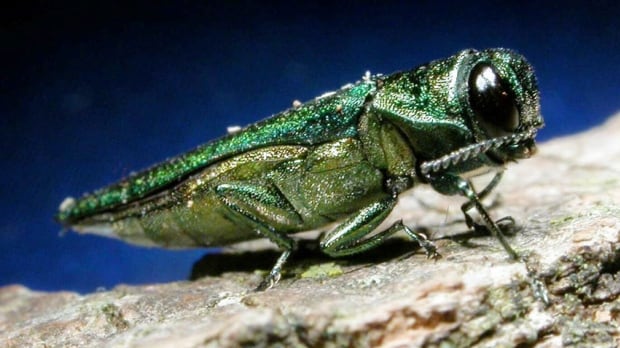
The City of Winnipeg is reviewing its emerald ash borer management policy after the beetle was recently detected in dozens of trees.
For years, the spread of the invasive species seemed to slow in Winnipeg, much to the surprise of scientists.
The city became aware of a number of suspect trees in the Glenwood neighbourhood in late February.
“Sure enough, we identified that the trees were infected with emerald ash borer,” Martha Barwinsky, the city’s forester, said.
Barwinsky said the city is still surveying nearby trees. As of mid-March, dozens were identified and will be subsequently destroyed.
The beetle, native to Siberia, was first detected in Winnipeg in the Archwood area in 2017. Experts and the city say the borer was likely in the area as early as 2013.
From 2017 to 2025, only about 22 trees were found to be infected by the invasive species, Barwinsky said. This made February’s discovery especially concerning.
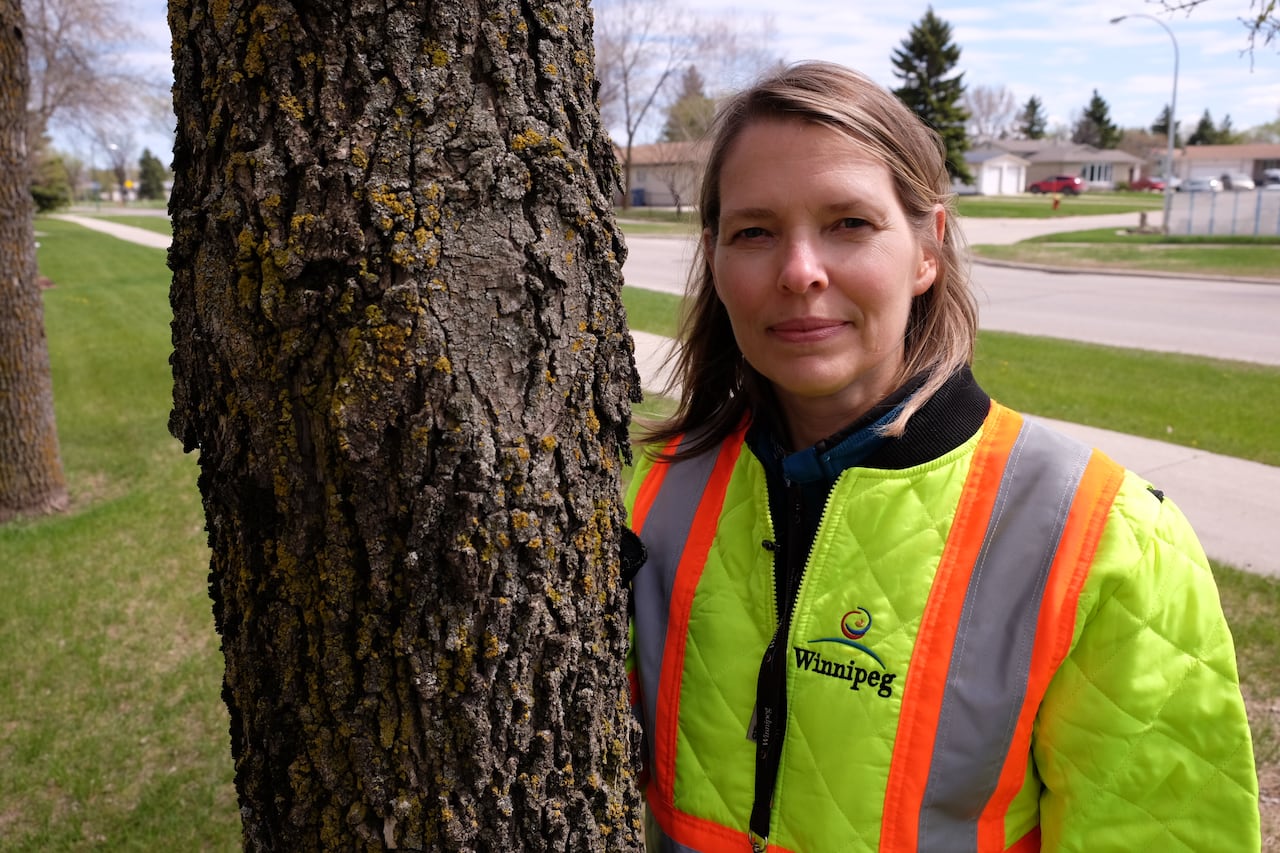 City forester Martha Barwinsky says dozens of trees found to be infested by the emerald ash borer will be destroyed. (Holly Caruk/CBC)
“This is really the first significant identification or detection since that original find in 2017. So, we’re actually still conducting the surveys, but we’re definitely finding dozens of trees that are infected now at this point, which will subsequently have to be removed,” she said.
Barwinsky said another infected tree was detected in the central St. Boniface area but that discovery is not as noteworthy because it is directly adjacent to the initial detection point.
“But with these trees in the Glenwood neighbourhood, now we see that the beetle has jumped over the [Seine] River, so to speak, and has spread,” she said.
Unsurprising, but concerning
While this discovery may be concerning, the city and experts aren’t necessarily shocked.
Richard Westwood, a professor in the department of environmental studies at the University of Winnipeg, said in an interview Wednesday that he is “not surprised at all” by the recent detections.
The professor, who also advises the city on the invasive species, said experts like him have been anticipating this spread for nearly a decade.
“I think probably the most surprising part — and a positive thing — is that the infestation has been pretty much isolated to that particular area where it was first found for about seven or eight years,” Westwood said.
The researcher said that in other affected cities, the invasive species tends to decimate the urban ash tree population within a decade. Winnipeg, for reasons neither Westwood nor the city fully understand, has not followed this trend.
“Where we see it in North America and most other jurisdictions, once it shows up, often the infestation is extremely intense and can kill many, many ash trees within three or four years,” Westwood said.
He is part of a team studying the reasons behind this slow spread. He hypothesizes that Winnipeg’s climate may be behind the phenomenon but continues conducting research.
Westwood said the City of Winnipeg’s rapid response to the invasive species is impressive. The city routinely injects the insecticide TreeAzin into 1,000 trees a year and sets out traps to detect the spread of the adult beetles.
City to review its strategy
The professor said the city recently ramped up surveillance efforts and continues to implement prudent strategies.
“I think they’ve been pretty proactive. Just the fact that they were able to find these trees, because this is very difficult to diagnose, especially when a tree has just become infected, and now destroying them is a plus,” Westwood said.
Barwinsky said the city will be reviewing its response strategy in light of the new discoveries.
“It’s a really strong strategy altogether. So, most likely, what we’ll be doing is just continuing with that, just tweaking some of the efforts here and there,” she said.
One obstacle to the municipal strategy is the fact the majority of ash trees in Winnipeg are on private property, Barwinsky said. While she encourages homeowners to monitor their trees for signs of distress, the city does not offer financial incentives or arborists to deal with infested trees.
Westwood agrees it would be unfeasible for the city to personally assist with removals on private property but encourages homeowners to be proactive.
“I would encourage homeowners that like trees and have the resources to actually protect their trees to investigate that. And I think the city can perhaps publicize that a bit more. There are so many on private property,” he said.
The dates for the city’s emerald ash borer treatment program have not yet been announced, but the program is expected to start this summer.