
 4 min read
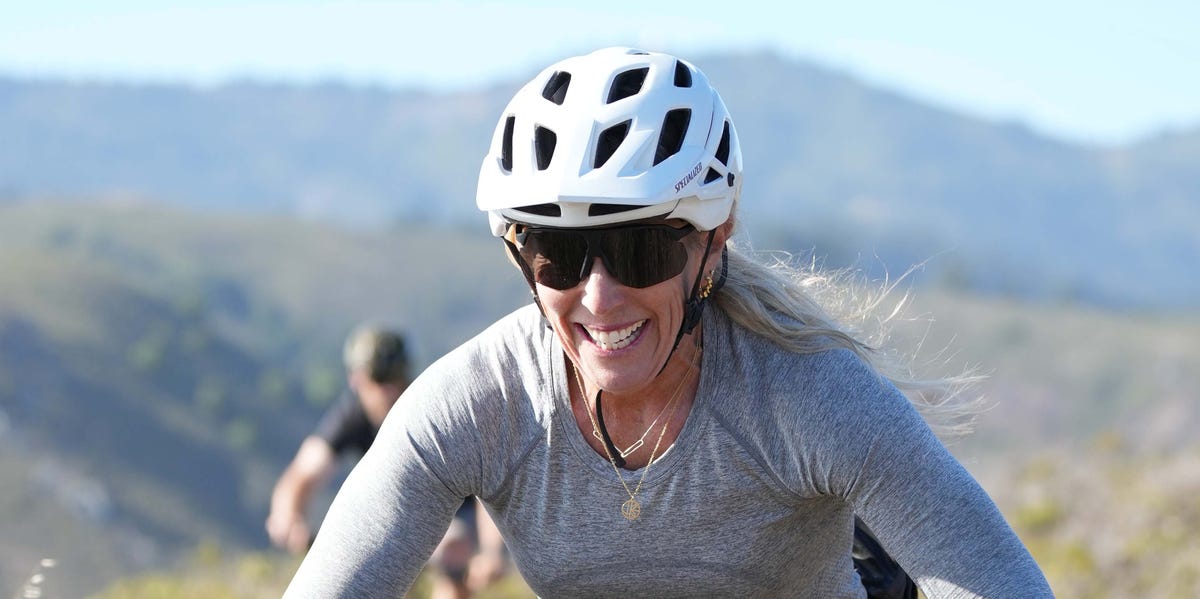
Juliet Starrett, 52, came to cycling later in life, but prior to that, she’s been a three-time Extreme Whitewater World Champion and an entrepreneur who, with her husband, Kelly Starrett, PhD, started one of the first CrossFit gyms and later built The Ready State, a platform designed to help people develop strength and mobility. She’s a master nutrition coach and sits on the board of several foundations focused on getting kids moving. For her, being able to move freely and without pain—down a technical singletrack or when deadlifting at the gym—is the key to happiness and longevity.
For Starrett, fitness simply wasn’t an issue when she got her first mountain bike. Neither was strength, considering she was a longtime CrossFit enthusiast and passionate about strength training. She was, however, hampered by her admitted lack of technical skills. She didn’t let that stop her though, thanks to one thing: Her durability.
The concept is so meaningful to her that she co-wrote a book on the subject with her husband, Built to Move: The Ten Essential Habits to Help You Move Freely and Live Fully. In their words, durability means being strong and mobile enough to handle anything, from shoveling heavy snow without your back going out or being sore for a week to bouncing back faster from a hard workout or ride.
“I’m obsessed with the concept of durability,” she says. She believes that a cyclist—especially one who’s getting older—should be focused on creating the most resilient body possible, so that it is more capable of handling things like the inevitable topple-overs that come when you’relearning new skills on the bike.
“If you’re riding, you’re probably going to take a few little crashes,” she says. “The more durable you are, the stronger you are, the better.”
As we now know, after age 50, bone density begins to decrease. For cyclists, this can be even more prominent since the low-impact sport does little to develop bone strength unless paired with strength training or other higher-impact activities. As bone density decreases, the risk of fractures and breaks increases, even from minor falls (like a slow-speed topple off of your bike). The more you can buffer against this by building muscle to protect those bones and by slowing down the bone density loss itself, the better.
To make this happen, Starrett encourages older cyclists to do at least two full-body strength-training sessions per week. These sessions don’t need to be hours-long—just 30 to 45 minutes is all it takes to see improvements, she says. It doesn’t need to be cycling specific either. Instead, these workouts should target all your major muscle groups.
A great place to find strength-training workouts and advice for cyclists is Bicycling’s own Guide to Strength Training, which has tons of tips and exercises from experts and is free to Bicycling members.
“Cyclists often think they need a strength routine that just builds leg muscles,” Starrett says. “But that really misses the mark. You need way more than just strong legs to be a good cyclist, and to be a durable human. Everybody needs to strengthen all parts of their body. And cyclists are no different.”
She also adds that strength training alone won’t make you durable. Even if you have a huge amount of muscle, if you can’t move it—you can’t bend down in a deep squat, you can’t put your arm all the way above your head—you have a mobility limitation that’s going to hurt your durability.
When you’re more mobile, meaning you’re able to move freely with no stiff spots or tightness, you’re able to ride in more comfortable positions on the bike, and if you crash, you’re less hampered by an impingement that might lead to a harder hit. And as we age, Starrett notes that we tend to lose mobility thanks to both the natural aging process but also to our increasingly sedentary lifestyles. If you only are moving around when you’re riding a bike, but are otherwise at the desk or on the couch, Starrett wants you to move more.
Rather than taking a yoga class or starting an extensive hour-long stretching routine, though, Starrett is a fan of working in movement and mobility throughout your day. Brewing coffee in the morning? It’s a great chance to do some deep squats and work on your hip mobility. Watching TV? Foam roll your legs, use a lacrosse ball and a wall to work into your shoulder and back muscles, or use the couch to help you do the Starretts’ favorite hip stretch, the couch stretch. Starrett is also a big fan of standing desks, or adding a walking pad under your standing desk. These small changes can add up to big results for your overall strength and mobility, but also for your riding.