
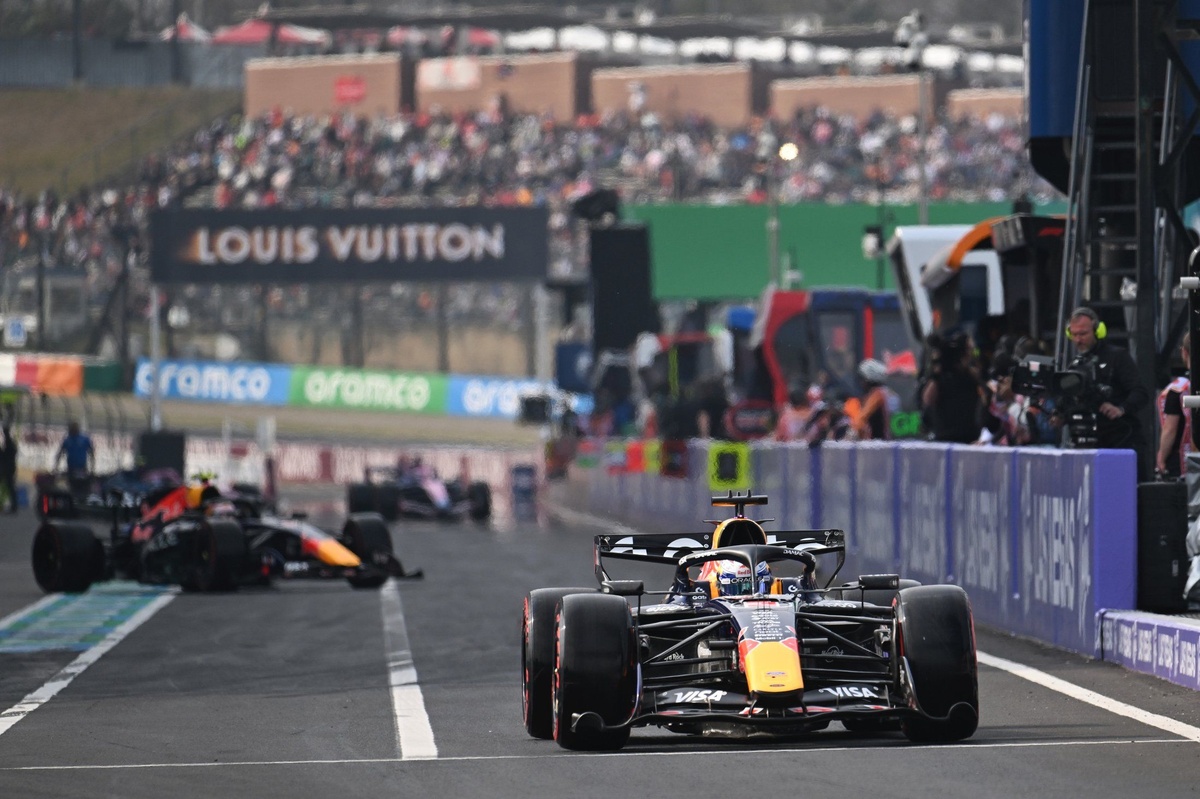
The Japanese Grand Prix is hosting round three of the 2026 Formula 1 campaign and Kimi Antonelli will start on pole after an action-packed qualifying session at Suzuka.
Here are five takeaways from Saturday in Suzuka.
Qualifying change a step in the right direction for 2026 ruleset
The 2026 regulation change has been contentious to say the least. Just looking at the drivers, Max Verstappen and Lando Norris have been heavy critics, whereas George Russell and Lewis Hamilton have been in favour of the more electrical ruleset.
Due to the increased reliance on electrical energy, lift and coast plus super clipping have played a greater role in the track action. And while the races have been more entertaining with the ‘yo-yo’ style battles, qualifying across Melbourne and Shanghai was a disappointment.
Read Also:
Drivers were super clipping well ahead of the braking zone and revealed they were being penalised the more they tried to risk things. So effectively, the exciting challenge of ramping all settings up and going flat out in qualifying had been taken away across the opening two rounds.
This prompted change for the Japanese Grand Prix, as the maximum permitted energy recharge was cut from 9.0 MJ to 8.0 MJ to reduce the amount of super clipping. It’s fair to say that the change was positive as Suzuka did see drivers lift off much closer to corner entry with Degner Curve – the sequence at the end of sector one – being a real exciting part of the lap.
These regulations are a work in progress, how the racing looked in Melbourne will be vastly different to, let’s say, at the end of next year, and this qualifying change indicated how things will gradually improve.
Williams has regressed
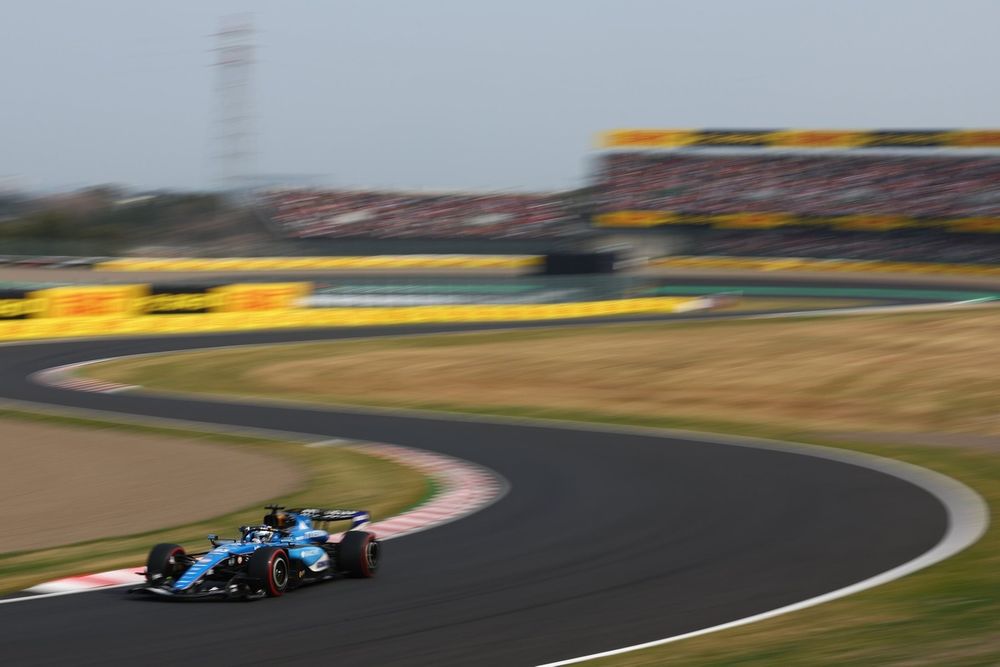
Alexander Albon, Williams
Photo by: Andy Hone/ LAT Images via Getty Images
The uncompetitiveness of Cadillac and Aston Martin is well documented by now and was largely expected heading into the 2026 campaign. But what has come as perhaps a shock, or disappointment, is the regression down at Williams – particularly after its strong 2025.
Last year saw the Grove outfit jump from ninth to fifth in the championship with its first multi-podium season since 2015. That came with the pairing of Alex Albon and new signing Carlos Sainz, so for the first time in what felt like forever, Williams had two strong drivers in its stable meaning everything was looking positive heading into the new regulations.
But it has come crashing back down to earth, despite team boss James Vowles repeatedly saying in the build-up that all work was being done for a strong 2026. In Melbourne it failed to score a point with Sainz not even setting a lap in quali, Shanghai saw it suffer a double SQ1 and Q1 elimination, and once again Williams was out in the first session at Suzuka.
Albon qualified 17th after being knocked out by former Williams man Franco Colapinto late on, and reacted by cryptically stating “I complain for three races in a row that there’s something wrong, but I’m sure that it’s my driving style”.
Sainz, meanwhile, only just made it through to Q2 and eventually took 16th for Sunday’s grid. It was initially believed that Williams would be at the forefront of the midfield this year, with all the tools on paper to progress towards the front – particularly as it has a Mercedes engine – but the opposite has in fact transpired.
Red Bull is a midfield team
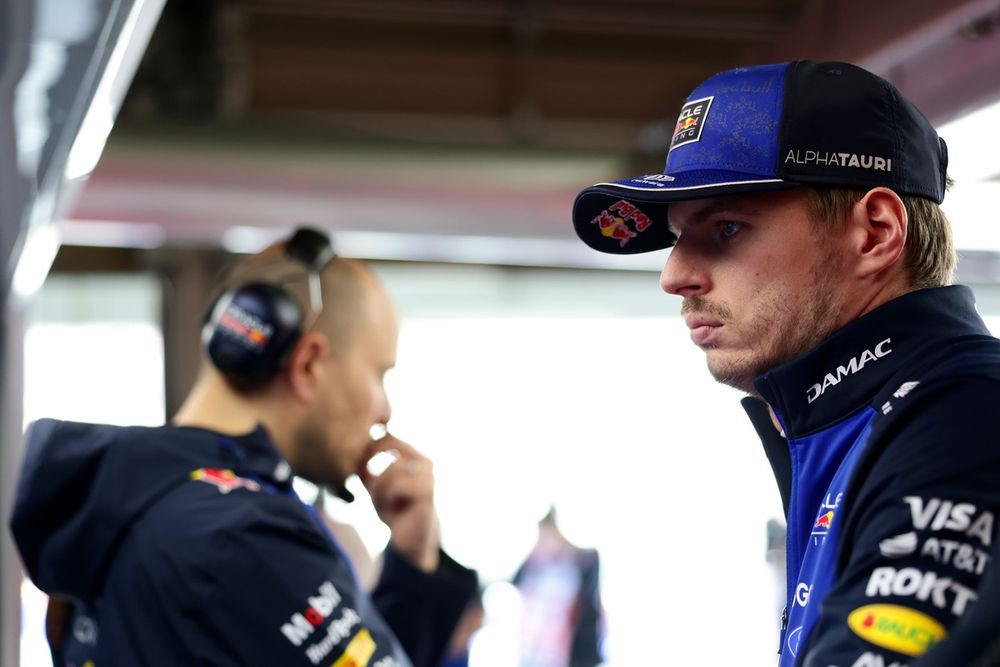
Max Verstappen, Red Bull Racing
Photo by: Mark Thompson / Getty Images
Verstappen just can’t be enjoying life in F1 right now. The 28-year-old is widely regarded as one of the championship’s best with four world titles, which could easily have become five last season. But, in 202, he seems destined for a fight to just get into Q3.
This is something that properly started in China, as the Dutchman qualified eighth for the sprint race before dropping outside of the points. He then started the grand prix in eighth, yet retired with a mechanical problem.
It was hoped that this would just be an anomaly and that Red Bull could return to its strong pace from Melbourne, where Verstappen was challenging McLaren’s Norris for fifth late on, but it seems that the Australian opener was in fact the outlier. That’s because he suffered a Q2 exit in Japan having qualified 11th, so not only does Verstappen strongly hate these new regulations – apparently if one enjoys them they ‘don’t understand racing’ – but he has to put up with a fight in the midfield. “Completely undriveable,” was his reaction to the early elimination – which ended his streak of four, consecutive poles in Japan.
Read Also:
Red Bull should be fighting the likes of Ferrari and Mercedes, not its so-called ‘B team’ Racing Bulls, which reached Q3. Hey, at least Isack Hadjar is an improvement on previous Verstappen team-mates, having outqualified the world champion with eighth at Suzuka…
Arvid Lindblad is a solid rookie
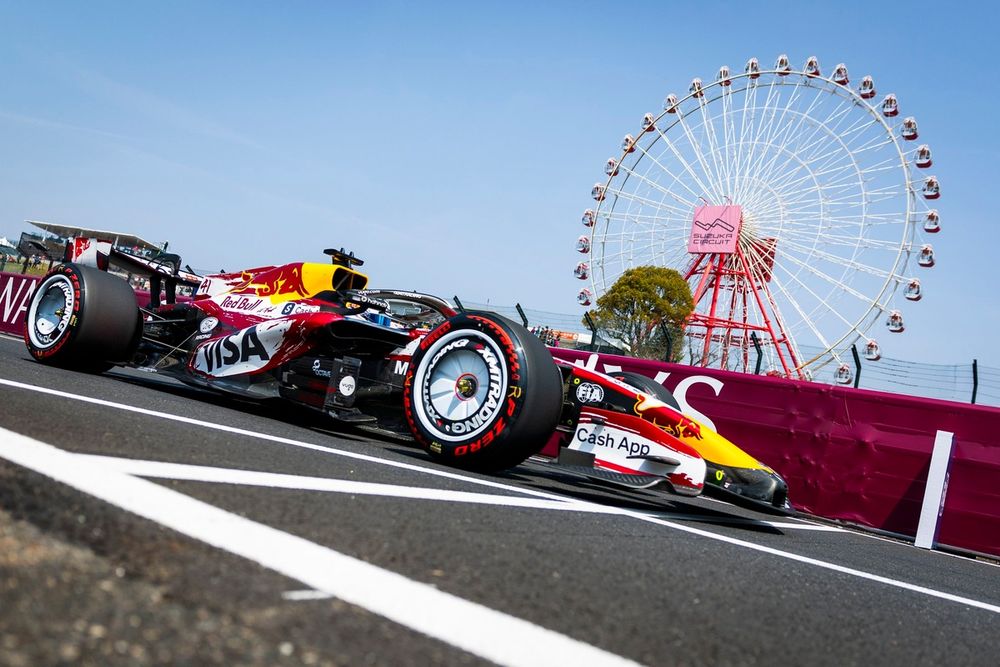
Arvid Lindblad, Racing Bulls
Photo by: Sam Bloxham / LAT Images via Getty Images
There were doubts over Arvid Lindblad heading into 2026, because he was about to make his F1 debut at the age of just 18 after a rather underwhelming F2 campaign where he finished sixth. The talk by many was that Red Bull should have given him another year in the feeder series to build up that experience and ensure he’s actually ready for F1, given how he’d just been fast tracked through the single-seater ladder.
But that talk is no more. Lindblad belongs in F1 with a second Q3 appearance in three weekends. So he is showing all the signs of a top driver because firstly, they need to display that raw pace with the rest of their abilities, such as experience and race craft, coming at a later stage,
What makes this more impressive is that it isn’t like the Racing Bulls car is a definite for Q3, no. It was there because of Lindblad whose team-mate Liam Lawson was knocked out in Q2. So, to already be beating a team-mate this early on during a rookie campaign is a mighty achievement.
Unlikely that George Russell will romp towards the world title
Andrea Kimi Antonelli, Mercedes, George Russell, Mercedes
Photo by: Sam Bloxham / LAT Images via Getty Images
When Mercedes emerged as the team to have nailed this regulation change, Russell instantly became the heavy favourite for the world title. That was with good reason too, as he is now in his eighth season of the championship, produced his best campaign yet in 2025 and has shown all the tools needed to content for a title.
Looking at the other side of the garage, it was all quite the opposite with Antonelli still being a teenager, whose form last year as a rookie was understandably inconsistent, so shouldn’t really be a match for his veteran team-mate in the long run.
All of those assumptions were backed up at the Melbourne opener, where Russell won from pole with Antonelli not really getting close despite completing a Silver Arrows 1-2. The script then flipped a week later in Shanghai, as the 19-year-old became F1’s youngest ever polesitter before taking his maiden grand prix win in another Mercedes 1-2.
The question was, can he now produce that performance on a consistent basis? If Japan is anything to go by, then the answer is yes because Antonelli has taken yet another pole and has had the upper hand on his team-mate ever since FP2 this weekend.
So right now, it’s looking unlikely that Russell – albeit still the favourite for glory – will romp towards his maiden crown because Antonelli is offering a real threat. He’s always had that pace, but now he’s starting to apply that much-needed consistency having learned from his many mistakes last year.
Read Also:
We want your opinion!
What would you like to see on Motorsport.com?
– The Motorsport.com Team