
LNG Canada filings point to Phase 2 groundwork as global pressures mount
Published 3:30 pm Thursday, March 26, 2026
References to a potential Phase 2 expansion of LNG Canada’s Kitimat terminal are surfacing more frequently in regulatory filings and industry developments, signalling that groundwork for a possible second phase is advancing even without a final investment decision.
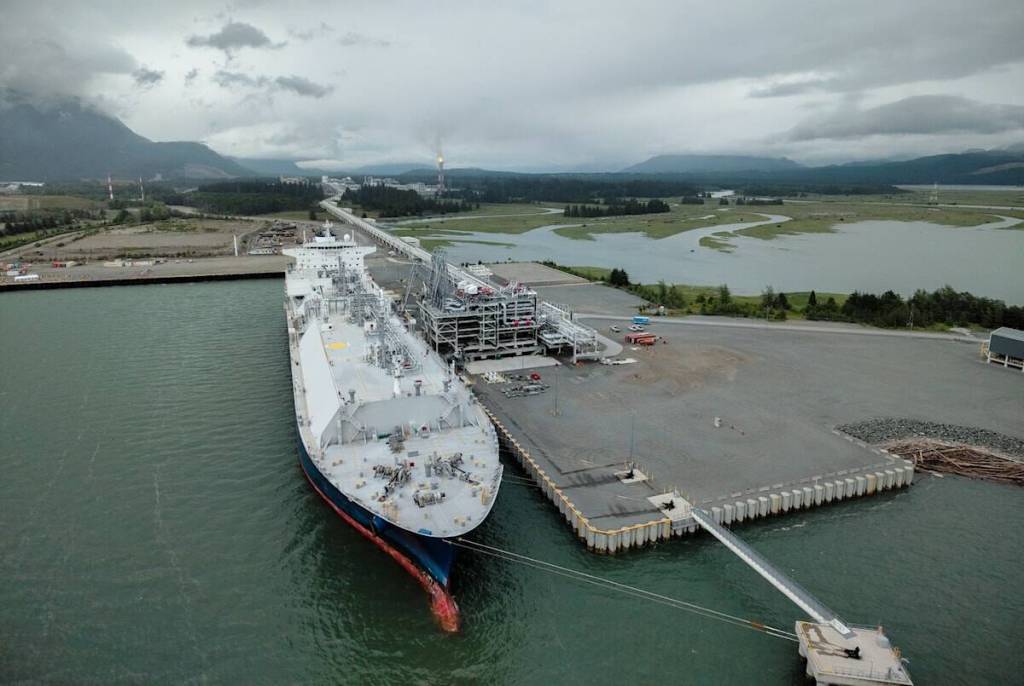
In an application to the B.C. Energy Regulator to amend a waste discharge authorization permit, LNG Canada outlines marine construction tied to demolition of existing wharf structures, construction of a new quay wall and future dredging around LNG Berth 1, repeatedly linking the work to “Phase 2 marine terminal development activities” and timelines extending to 2028.
The company says the work is intended to support a potential expansion, as industry signals increasingly point toward a second phase. “LNG Canada is starting construction work near its marine terminal consisting of wharf demolition, quay wall construction and assessment of dredging work to support a potential second LNG jetty to enable safer and more efficient carrier movements,” a spokesperson said, adding that partners “continue to explore pathways to a potential LNG Canada Phase 2 expansion.”
Momentum is also building outside the regulatory process. According to a Reuters report, TC Energy said March 25 that Coastal GasLink has signed commercial agreements with LNG Canada to advance the pipeline’s second phase, a key step toward expanding gas supply to the terminal. The pipeline expansion, like the LNG facility itself, still depends on a final investment decision.
Global market conditions are increasingly part of that calculation. At a March 9 council update, LNG Canada’s deputy COO and chief health, safety, security and environment officer, Teresa Waddington, said the war in the Middle East has tightened supply and elevated prices. “It has significantly reduced the global oil and gas supply,” she said, adding international partners are pushing the project to operate at full capacity to help offset shortages.
Premier David Eby has also linked LNG development to shifting global dynamics as he prepares a trade mission to Asia. Projects awaiting final investment decisions — including LNG Canada Phase 2 — could gain urgency as countries reassess supply security. “It just underlines our case, as tragic as it is, that British Columbia is a safe place in an incredibly uncertain world,” Eby said.
Analysts say the disruption could strengthen the business case for Canadian exports. Werner Antweiler, an energy and trade expert at the University of British Columbia’s Sauder School of Business, said there is growing market potential as buyers weigh reliability and emissions profiles. “That’s a risk assessment that is being made right now,” he said, adding the current environment could push projects toward approval.
Industry leaders are signalling similar expectations. The disruption to global liquefied natural gas supplies caused by the Iran war makes a second phase more likely, TC Energy chief executive François Poirier told Reuters. He added customers are urging readiness for expansion as global supply routes face uncertainty, particularly for shipments that would otherwise transit the Strait of Hormuz. “What they have pushed us to do, however, is be ready,” Poirier said in an interview in Houston at the CERAWeek by S&P Global conference.
LNG Canada’s Phase 1 project, completed in 2025 at a cost of about $40 billion, is already exporting liquefied natural gas to Asian markets and recently marked its 50th cargo. A second phase would double capacity to roughly 28 million tonnes per year and require expanded pipeline and marine infrastructure, with construction potentially beginning in 2027 or 2028 and exports in the early 2030s.
— With files from Mark Page