
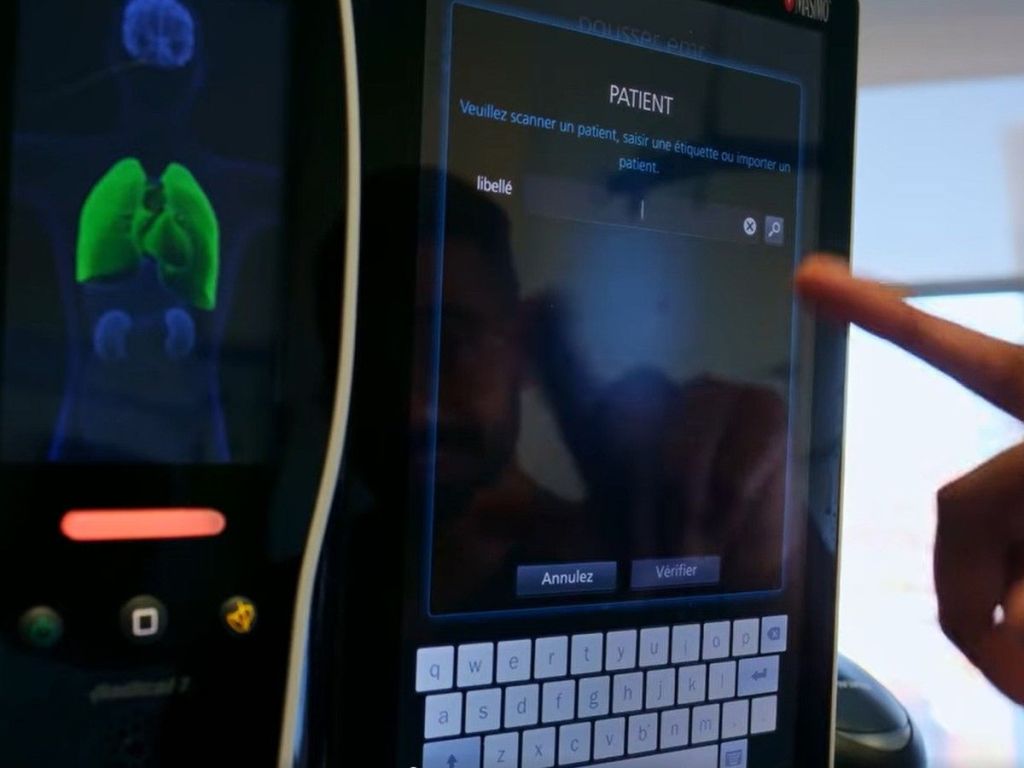
Two months before Santé Québec launches its long-delayed pilot projects to establish digital health records, the Jewish General Hospital is already proceeding with its own project, which is considered much more advanced and yet will cost considerably less.
And unlike the pilot projects spearheaded by Santé Québec, which will still require nurses to fill out paper records for vital signs, the project at the Jewish General is not using paper at all. What’s more, the Jewish General’s $100-million digital initiative — which not only includes electronic medical records, but an already-implemented command centre and a virtual-care program — is being financed 100 per cent through donations raised by the Côte-des-Neiges hospital’s foundation.
In contrast, Santé Québec’s partnership with Wisconsin-based Epic Systems will cost taxpayers $402 million, up from $268 million, raising concerns about cost overruns by the Crown corporation that was set up in 2024 with a mandate to manage health care more efficiently and avoid going over budget.
Bram Freedman, president and chief executive officer of the Jewish General Hospital Foundation, extended an invitation to Santé Québec to use the Jewish General’s digital health records system should its partnership with Epic Systems run into major problems.
“We invest in innovation at the Jewish General Hospital, and we’ve always taken the view that we can make those innovations available to the whole system,” Freedman said in an interview on Friday.
“So other hospitals will come and see what we’ve done and learn from us,” he added, alluding to the Jewish General’s command centre and virtual-care program, in which patients who are discharged from the hospital are equipped with apps on their smartphones while also wearing devices at home that transmit vital signs and enable video consultations.
The virtual-care program has since been adopted by Hôpital du Suroît in Salaberry-de-Valleyfield, while the command centre is being used by the West Island and Saguenay—Lac-St-Jean health authorities.
Santé Québec is aware of the Jewish General’s pilot project on digital health records. A spokesperson told The Gazette that Santé Québec “encourages this type of initiative” because “they allow for the exploration of new approaches that can provide added value for the public. These projects help enrich collective thinking and guide the evolution of our digital solutions across the network.”
However, the spokesperson stopped short of agreeing to rely on the Jewish General software — which has already won a prestigious award for innovation — should its two pilot projects fail. Digital health records will be deployed in May at the CIUSSS du Nord-de-l’Île-de-Montréal, which oversees Sacré-Coeur, Jean-Talon and Fleury hospitals; and at the CIUSSS de la Mauricie-et-du-Centre-du-Québec, also in charge of several hospitals.
“Santé Québec is currently continuing the rollout of its two pilot sites,” the spokesperson added. “Over the coming months, the organization will analyze the results obtained, particularly in terms of clinical, organizational and user benefits. These factors will help guide future directions through a rigorous, phased approach focused on delivering value to the network and the public.”
However, as The Gazette reported in January, those two pilot projects are hobbled from the start, as vital signs monitors were never purchased that can upload health information digitally. The only exceptions are vital signs monitors in intensive-care units. By comparison, the Jewish General is making sure to acquire vital signs monitors for the entire hospital with that capability.
“The feedback we’ve received has been very positive,” Dr. Justin Cross, director of digital health, said of the Jewish General’s system. “A trainer was telling me that some of the nurses that traditionally had not been so fluent with technology have taken to the system without any big issues, and I think that’s a testament to the fact that the design is good because we’ve involved a lot of people in the process.”
Cross predicted the Jewish General’s bilingual software, developed in partnership with Harris Healthcare, will lead to fewer medical errors and accidents and save the clinical team precious time in the frenetic hospital environment.
“When you have everything that’s digital in terms of the key information — you know, the vital signs, the allergies, the medications — it’s clear what the treatment team is doing because you’re not wrestling with handwritten notes or anything like that,” Cross explained. “All of those things absolutely increase patient safety.”
The Jewish General launched the software module, called Observa, on the neurology floor in the K Pavilion last week and plans to phase it in throughout the entire hospital. Cross added that the software has received the highest certification for digital security to protect against ransomware and other cyber attacks.
Cross was recruited from Johns Hopkins Community Physicians in Maryland to help steer the Jewish General into the digital age of electronic health records. Dr. Lawrence Rosenberg, president and CEO of the CIUSSS du Centre-Ouest-de-l’Île-de-Montréal, which oversees the Jewish General, has long been a proponent of cutting-edge digital technology to assist in health care.
“Our focus is always on the people we care for, and this technology empowers our clinicians to act more quickly, more confidently and more collaboratively,” Rosenberg said in a statement. “We are grateful for the interest and support we have received from our provincial partners. This advancement brings us closer to our vision of a fully integrated and intelligent health record ecosystem.”