
THE Government may consider introducing an economic stimulus package similar to measures implemented during the COVID-19 pandemic to cushion the impact of the escalating West Asia conflict on households and the broader economy.
Political Secretary to the Finance Minister Muhammad Kamil Abdul Munim said any such move would depend on ongoing government assessments of the conflict’s economic fallout.
He noted that weekly meetings are being held to monitor developments, plan responses, and evaluate appropriate economic interventions.
“An economic stimulus package like those introduced during the COVID-19 era may be implemented, but it depends on the government’s monitoring and the impact of the war,” he said, adding that Malaysia has so far managed to remain resilient due to earlier fiscal discipline and subsidy restructuring efforts.
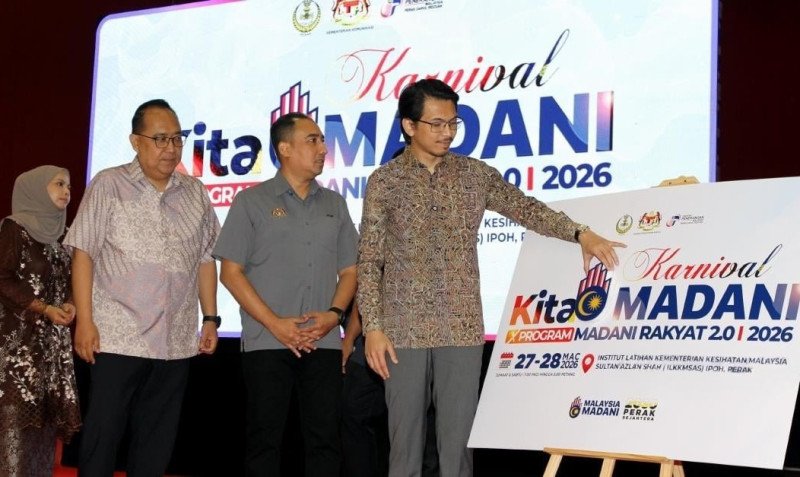
He revealed that subsidy costs have risen sharply, underscoring the strain on public finances. “The increase in subsidy allocation is not small, rising from RM700 million to RM4 billion per month,” he said at the launch of a Madani programme in Perak.
Muhammad Kamil also welcomed Prime Minister Datuk Seri Anwar Ibrahim’s upcoming meeting with state leaders and political party representatives, describing it as a positive step towards coordinating a national response.
He noted that briefings by the National Security Council and the National Economic Action Council would determine whether a special parliamentary sitting is required to address the crisis.
He cautioned that rising global oil prices do not automatically translate into higher returns for Malaysia, despite the country being an oil producer.
Malaysia continues to import roughly half of its oil needs, much of it via the Strait of Hormuz, exposing it to global supply disruptions.
“Assumptions that all profits from PETRONAS can be used to offset domestic fuel prices are inaccurate, as returns to the government are based on specific dividend structures,” he said.
Muhammad Kamil stressed that the current situation should be viewed as a broader energy crisis rather than solely an oil price issue.
“This is not just about rising oil prices. At the global level, it is referred to as an energy crisis, not merely an oil crisis,” he said.
He added that Malaysia has managed to keep domestic fuel prices stable and maintain supply, unlike some countries that have already declared emergencies.
The government is also working to contain the knock-on effects of higher fuel costs on essential goods through targeted subsidy schemes such as the Subsidised Petrol Control Scheme and Subsidised Diesel Control Scheme.
“We cannot compromise the education and healthcare systems or programmes aimed at easing the cost of living. What we can do is ensure prudent spending, efficient management, integrity, and strong enforcement to prevent leakages,” he said.
Muhammad Kamil also urged the public not to be influenced by political narratives that seek to exploit the global crisis to criticise the government’s handling of the situation, emphasising that current policies are designed to safeguard economic stability and public welfare. – March 28, 2026