
When Darren Baum started riding a bike with 32in wheels, his colleagues didn’t notice. The founder and owner of Baum Cycles in Australia had begun testing the wheel size after he learned that Maxxis had a 32in version of its Aspen tyre on display at the Taipei Cycle Show.
Familiar with the tyre, Baum asked a contact to grab him a set from the show so he could try them out, and after building a prototype 32in-wheel bike, it didn’t take long to accept the larger size.
“You walk around it for like a couple of minutes and it’s just becoming normal,” he told me. “Even when I’d been commuting on the bike the first couple of days, the guys didn’t realise. They drove by me going to work and didn’t even recognise or notice the odd wheel size.”
Since Maxxis revealed the 32in Aspen tyres – we spotted them at Eurobike last year – there has been a slew of product announcements and an increase in attention around the new wheel size.
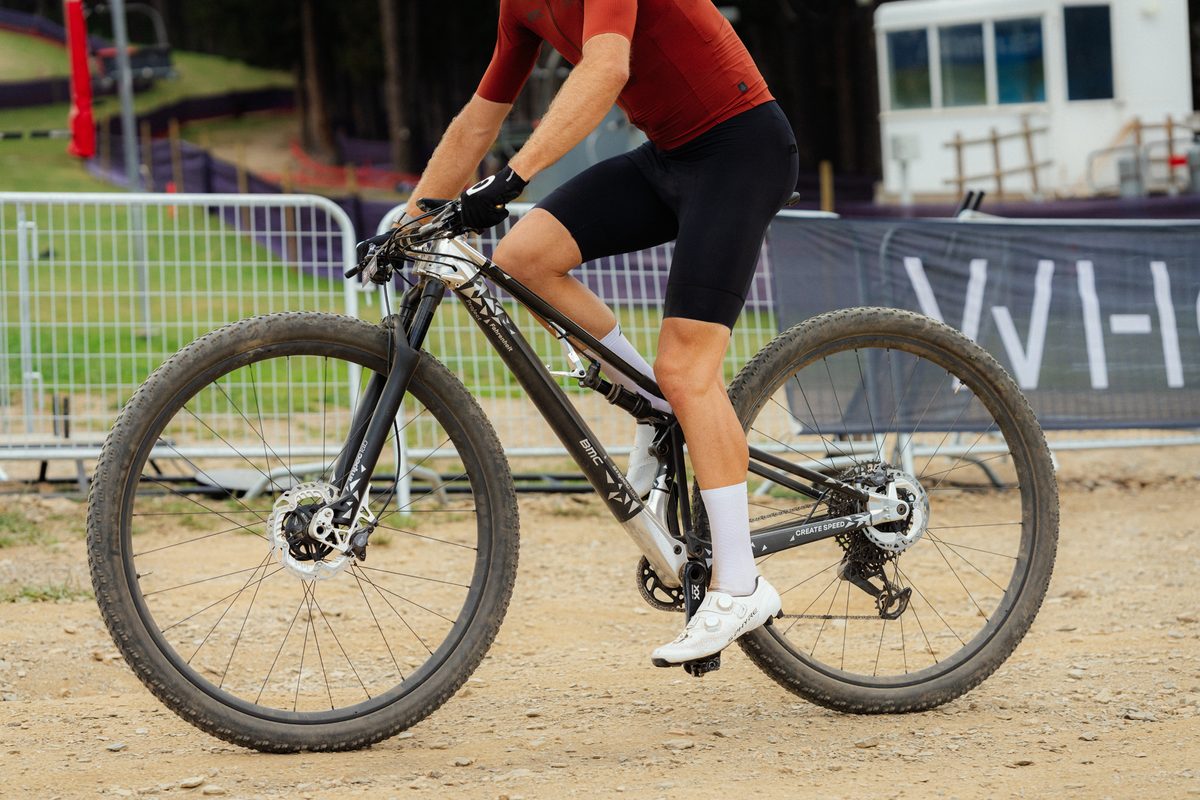
In July, BMC was spotted testing a 32in prototype at the Andorran round of the XC World Cup. Later, the UCI, cycling’s governing body, approved the wheel size for use in XCO World Cups. And then, in March 2026, Felix Stehli won stage 3 of the Cape Epic using 32in wheels.
Baum was testing his own prototype through much of last year. He said he was sceptical of the wheel size at first and thought that at least his prototype could hang on the wall to show that, “Hey, I’m willing to try things, not everything works,” he said.
But for the Australian, who’s been designing and building bikes for more than 30 years, the advantages of the new size were clear and led to the release of the Baum DBM 32 in February.
“Anecdotally, I feel like I’m riding faster. I feel like I’m riding safer. I’ve set some PRs on different types of terrain,” he said, adding that these include trails and tarmac roads that are super-steep.
Schwalbe’s lab
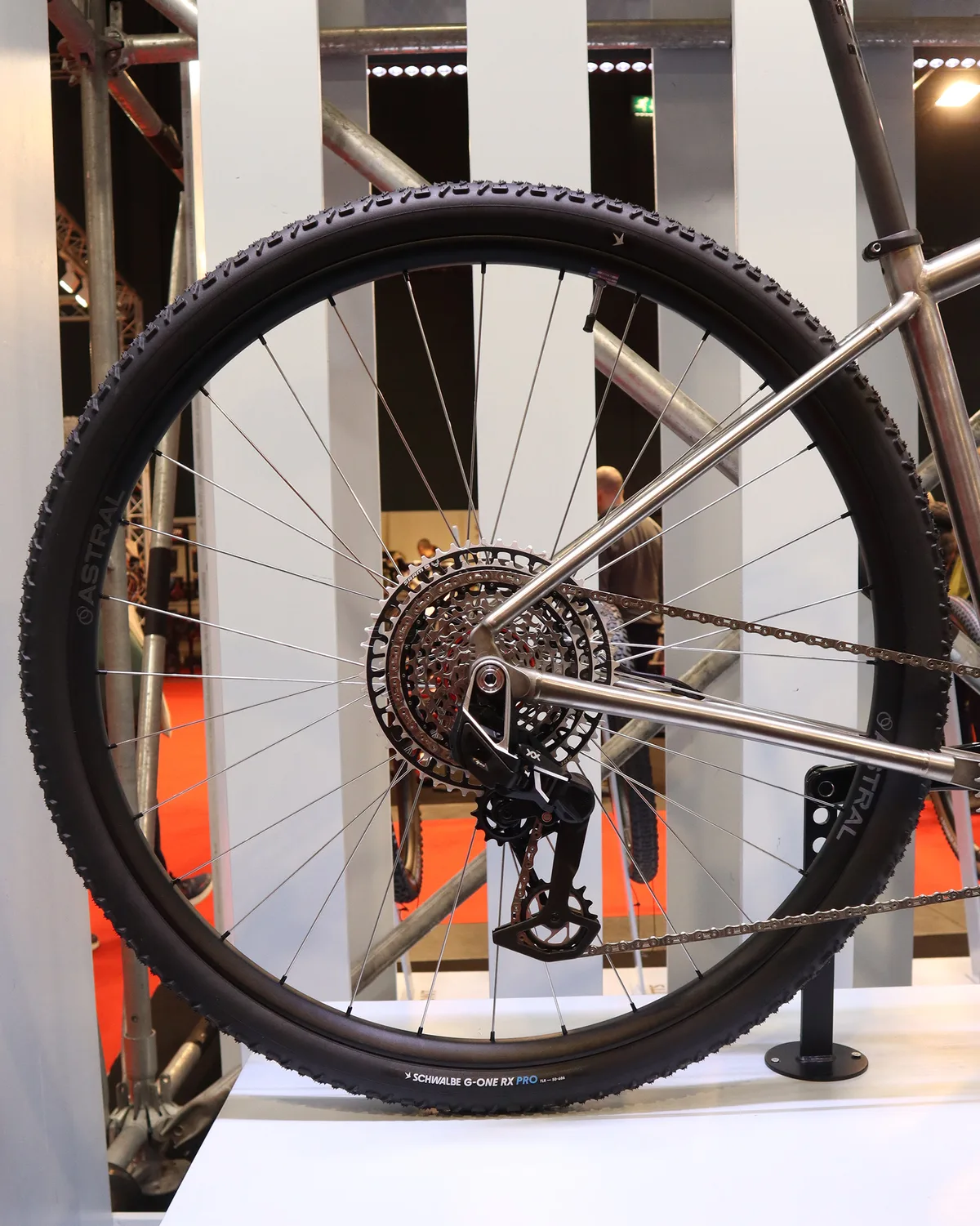 On display at Schwalbe’s stand at Velofollies was a gravel bike from Unpaved Cycles with 32in wheels and prototype Schwalbe G-One RX Pro tyres. Stan Portus / Our Media
Baum was up front that his testing and experience of 32in wheels has not been scientific. But one company that has taken a more rigorous approach to the new size is Schwalbe.
In January, at the Velofollies trade show, in Belgium, Schwalbe revealed it would be releasing 32in tyres and that it was “fully convinced” by the new size, based on field research and testing in its lab.
“Our tests show that 32in tyres offer significant advantages,” Felix Schäfermeiet, Schwalbe’s head of product management, told me via email. “Test riders reported significantly more confidence based on very stable handling and an increased sense of safety. They experienced more grip, higher cornering speeds, and improved comfort – all that ended up in more fun and speed. In addition, our laboratory measurements confirm measurable advantages in rolling resistance on uneven terrain.”
Although the wheel size has made the biggest impact in professional mountain biking, the tyre Schwalbe revealed at Velofollies was a gravel tyre.
“At Schwalbe we are convinced that 32-inch tires offer real and tangible advantages across market segments – not only in purely performance-focused applications,” Schäfermeiet said. “The benefits of the bigger wheel-diameter are even more noticeable on a bike without suspension.”
According to Schäfermeiet, there could even be advantages of the new size for road riding. But UCI restrictions on wheel diameters for race bikes currently rule out the use of the size for competition.
“Based on our testing and riding experience there might be benefits for particular races like Paris–Roubaix. A bigger wheel diameter could lead to more speed and safety on rough terrain. Nevertheless, there are open questions on other performance aspects such as aerodynamics,” he said.
So when will 32in bikes hit the mainstream?
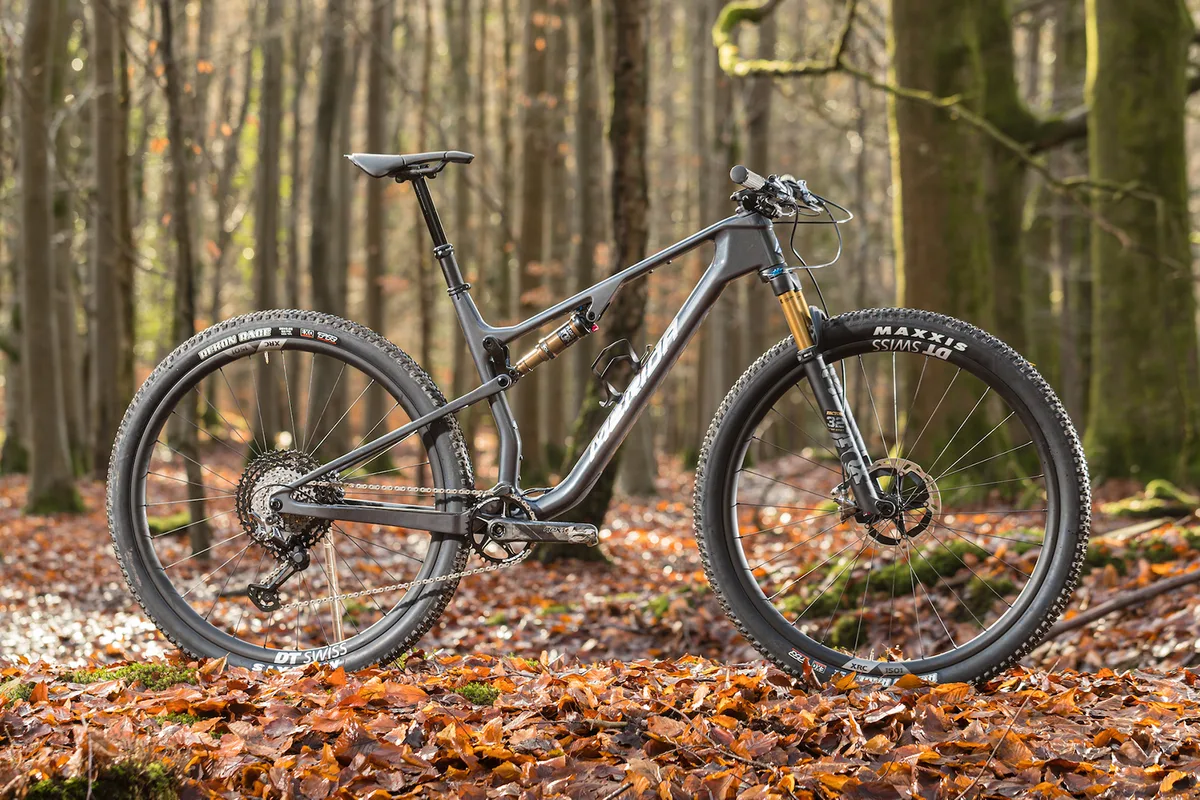 Merida is yet to release a bike with 32in wheels, but Stephan Seitz says the standard has breathed new life into the company’s work on XC bikes. Russell Burton / Immediate Media
Stephan Seitz has worked at Merida for five years. The mountain bike product manager told me the 32in wheel size has been the “most exciting new topic” in that time and that it has breathed new life into Merida’s work on cross-country mountain bikes. But Seitz stresses that Merida has not pushed for the new standard, rather it simply started by testing the size after hearing rumours.
“At Merida, we always prioritise the exchangeability of components. So that’s why in the beginning we didn’t really push for a new standard. But then people told us that it definitely will come [to the market],” he explained.
Merida then created some hardtail mountain bikes with 32in wheels and began to ride them. Similar to Darren Baum’s scepticism, Seitz said, “To be honest, everybody hoped that it wasn’t as good as other people say, but then we did some back-to-back riding, and it’s really, really good compared to 29in bikes.”
 Felix Stehli (right) won stage 3 of the Cape Epic using 32in wheels. Absa Cape Epic
Merida tested the bikes on a very wet day, riding them on a trail with lots of tree roots. “The whole ride was much safer and everybody felt super comfortable from the first step. I mean, there haven’t been any feelings of uncertainty,” Seitz said.
At this point, Merida realised that it had to do something with the new size. It is now developing 32in cross-country mountain and gravel bikes, and Seitz stated it will become the new standard for performance riding in these disciplines in “basically one year” from now, when there are enough available parts on the market.
For Seitz, this is why 32in gravel bikes have begun to gain momentum. The bikes are less complicated than mountain bikes and therefore require fewer specialist parts, such as suspension forks, to accommodate the wheel size.
Tall orders
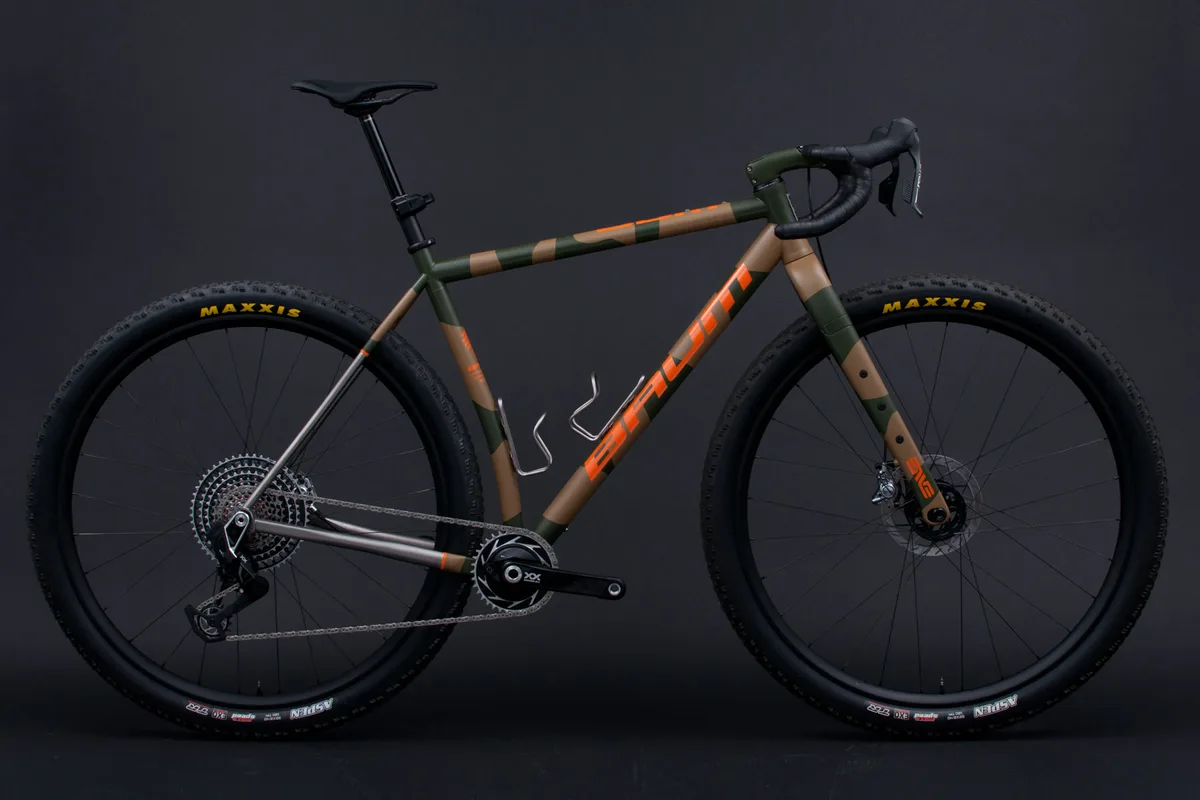 The Baum DBM 32, which launched in February 2026. Baum
The cycling industry’s bent to introduce new standards can cause headaches for consumers and bike shops. So, despite the purported advantages of 32in wheels, many might roll their eyes at the introduction of a new wheel size. After all, wheel sizes have pretty much stabilised into three: 27.5in and 29in on mountain bikes, and 700c on road bikes.
For Baum, the new 32in size is best suited to taller riders. “I think the taller you are, the greater benefit you’re going to get from it,” he said, and added that, “29in is probably nearly optimal for some people’s height.”
Seitz said that there has to be a size split between frame sizes, with larger frames having the new standard and smaller frames sticking to 29in. But he said he doesn’t think it’s clear yet where that split should be.
“I’m quite small, I’m 170cm,” Seitz said, “so I’m between small and medium frames. But I rode the 32in hardtail and actually it didn’t feel strange at all. So we definitely think that it will be possible for a size medium.”
But Seitz added that 32in wheels could pose difficulties for smaller full-suspension mountain bikes in particular because “the seat tube has to be fairly long so you don’t have interference between the saddle and the rear tyre”.
Another slice in the pie
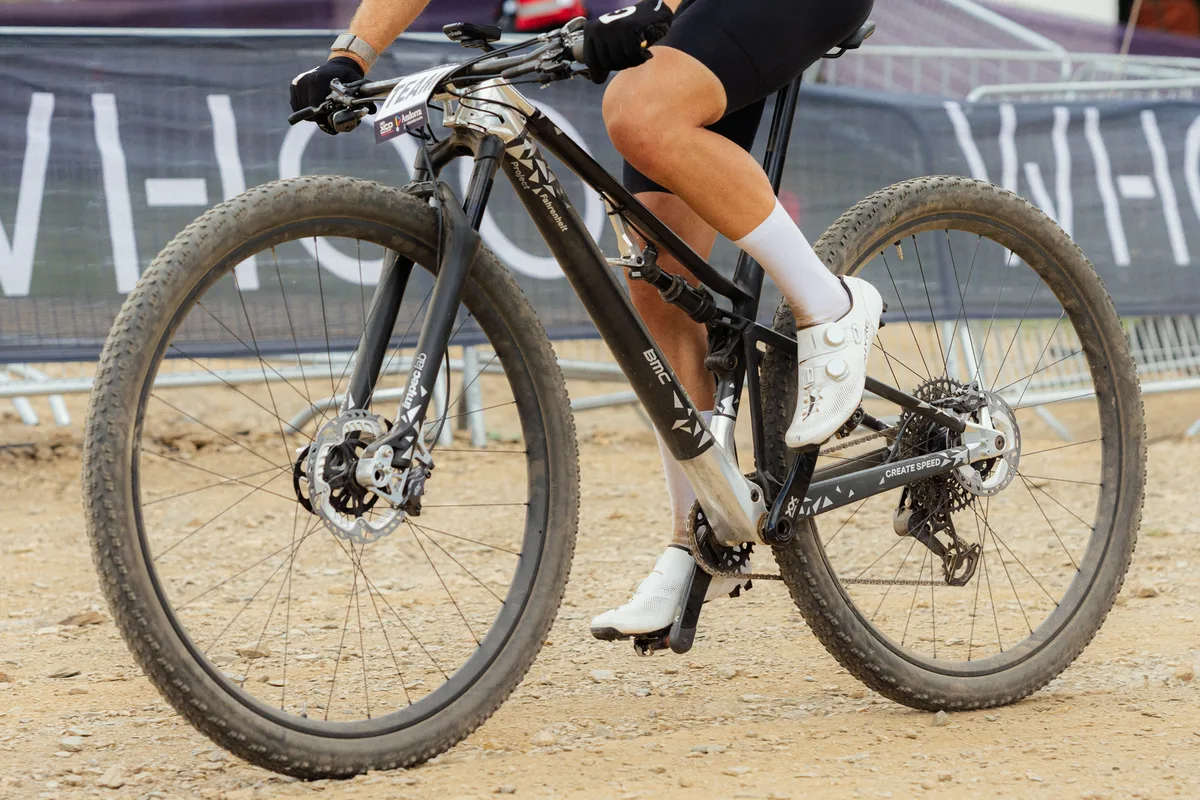 BMC tested a prototype bike with 32in wheels last year, but the Swiss brand says the project remains a concept. Piper Albrecht
The question of who 32in wheels are best suited to makes Baum ask another question: why is the cycling industry pursuing the wheel size at all?
Baum said his company makes tailored bikes that serve riders who fall outside of the usual offerings from big, mainstream brands.
“Why do you come and get a bike from me?” he asked. “Because you’re too short or you’re too tall, or your legs are too short and your body’s too long, or your legs are too long and your body’s too short.”
Catering to riders who are too tall for other bikes, then, meant that adopting the larger wheel size made sense for Baum Cycles, especially as the company was able to simply adapt its production to make the DBM 32. “It’s very easy in a way. We had already worked out every corner of the bike. All we needed to do was stick some longer tubes in,” Baum said.
But the industry veteran is less sure on the viability of the size for brands that mass produce their bikes – and are struggling. “I don’t think it’s going to grow the market. I think we’ve already got an oversupply problem. We’re not making the pie bigger, we’re just cutting another slice in,” Baum said.
Even though Merida, one of the world’s biggest producers of bicycles, is committing to the new size, when I put Baum’s criticisms to Seitz, he said it was “fair and correct”.
“I think there will be no additional person who will start mountain biking just because of the 32in size,” Seitz said. “It will just make the performance riders who currently race on 29in buy a new bike earlier.”
Although it was one of the first big brands to test a 32in wheel bike out in the wild, BMC’s Jan Ulatowski echoed Seitz’s words about holding out for the rest of the market. “At the moment, the 32in project is just a concept, and we have no plans to put it into production,” Ulatowski told BikeRadar. “We need to be prepared for when the market is ready, so developing the concept mountain bike is the first step for that.”
According to Seitz, that waiting game might soon be over, but if Baum is correct, the adoption of 32in wheels could reveal deeper struggles in the industry. “I think there’s still a lot of desperate people out there hoping that there’s a magic bullet for expansion,” he said. “I think we’re going to have people feeling the pressure, looking for growth.”
You may like