
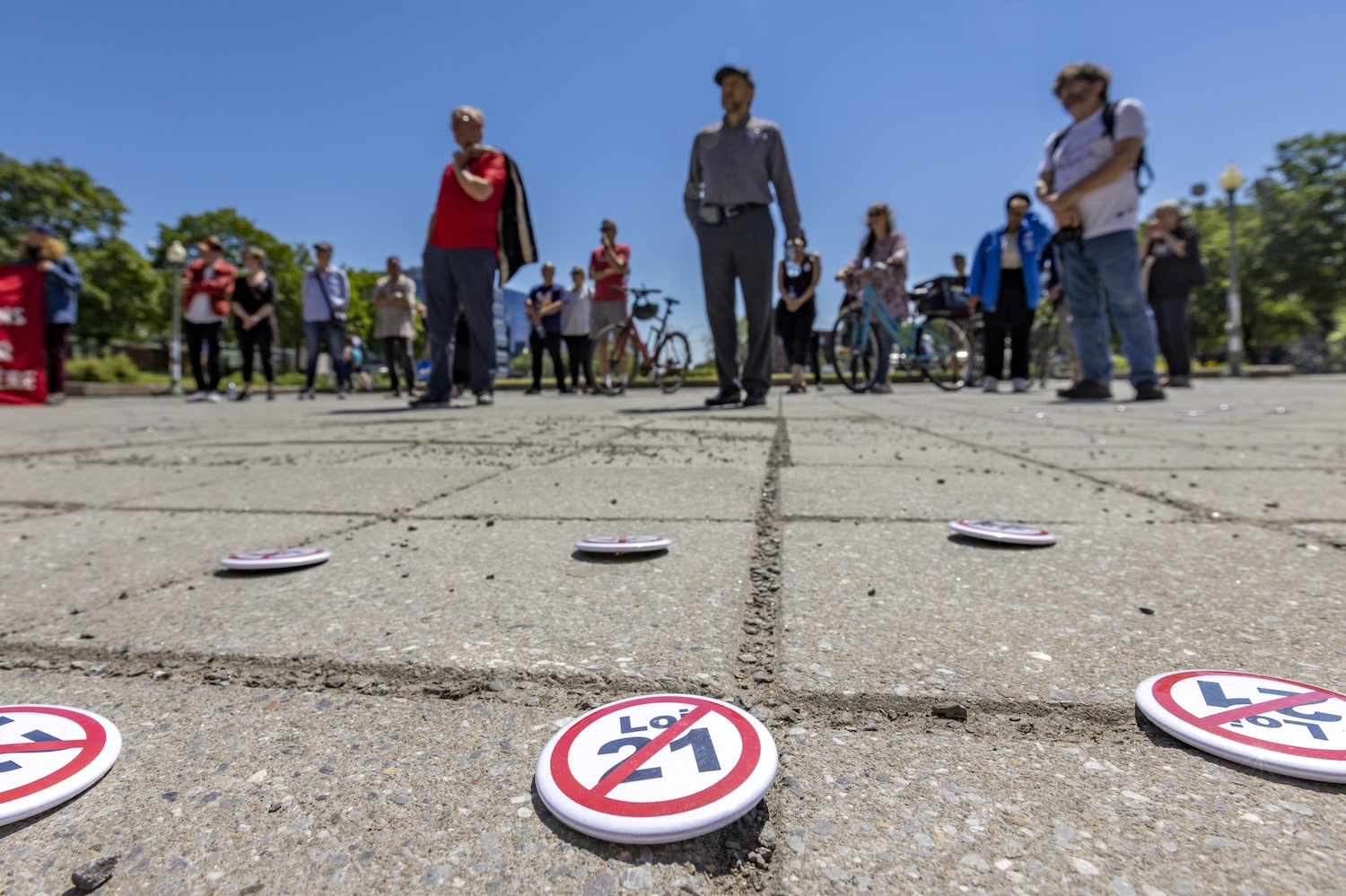
When I first heard about Bill 21 — Quebec’s secularism legislation — I did not believe it concerned me much. I’m a student in Halifax. I attend school, work and remain an active member of my community. Quebec felt far away.
However, as the Supreme Court of Canada holds hearings this week on the controversial bill, my perspective has shifted. I realize now that this isn’t just about Quebec, but about all of us.
Bill 21 prohibits some public employees such as teachers, police officers and judges from wearing religious symbolisms like a hijab, turban or kippah on the job. This is a very real choice of career versus faith as far as Muslim women are concerned. That is not what I grew up believing Canada to be.
I was always taught that Canada is a country where diversity is tolerated and people have free will to be who they are. We are motivated to strive, aim high and believe that our identity will not be a restriction. But Bill 21 conveys another message. It tells young Muslims that there are limits. That in some careers, who you are might hold you back. It tells young girls who wear the hijab that certain paths may be closed to them before they even begin.
Although I do not reside in Quebec (and as a man, don’t wear the hijab), it still makes me think about my future. It poses a question that I do not believe any student should have to ask: Is it possible that something like this might happen in other provinces as well?
This is why this Supreme Court case is so critical. The court’s ruling will not only have an impact on Quebec but it can also influence the way rights are perceived throughout Canada and the degree to which governments may limit them.
The National Council of Canadian Muslims is among the organizations presenting arguments that challenge Bill 21’s legitimacy so that we may all secure the right to live and work without having to conceal our identity — not only now, but also in the future.
This is not a legal issue for me — it is personal. It’s about belonging. To be a Muslim in Canada is to want to feel more than just conditionally accepted; it’s to want to feel included. It is the feeling that we can all contribute to Canadian society without being requested to give up part of who we are.
Laws like Bill 21 — and Bill 94, which extends the scope of the religious-symbols ban to include daycare workers, school janitors, classroom aides and others — complicate that.
Moments like these force us to ask what kind of a country we want Canada to be — one where diversity is respected and embraced, or one where limits are imposed on individual freedoms?
This is something none of us — perhaps especially the younger generation — can afford to overlook. The outcome of this case has the potential to shape the country we graduate into, the opportunities available to us, and the message future generations receive.
My hope is that it will be a country where no one has to choose between their identity and their future.
Yahya Shuli is a commerce student at Saint Mary’s University in Halifax.