
In 2024, city council approved Ottawa’s economic development strategy, a multi-year plan to build a city “with a diversified and prosperous economy.”
But two years later, a new staff report that updates Ottawa’s economic conditions paints a grim picture, one that includes a rising unemployment rate, increased job loss, and trickle-down effects from the federal workforce reduction.
While the report states that Ottawa-Gatineau’s real gross domestic product is projected to increase by 1.4 per cent this year, the overall rate of growth is projected to be slower than in previous years.
Gradual improvement is expected in 2027, the report says.
Recent data from Statistics Canada shows Ottawa also “experienced the largest employment loss” in the province between February 2025 and February 2026, with 30,500 jobs lost and the unemployment rate increasing to 6.3 per cent.
“There are no other cities in Ontario that are really anywhere close to that kind of job loss over this same period,” said David Macdonald, a senior economist with the Canadian Centre for Policy Alternatives.
Public service job cuts are a key contributor to that job loss, Macdonald said.
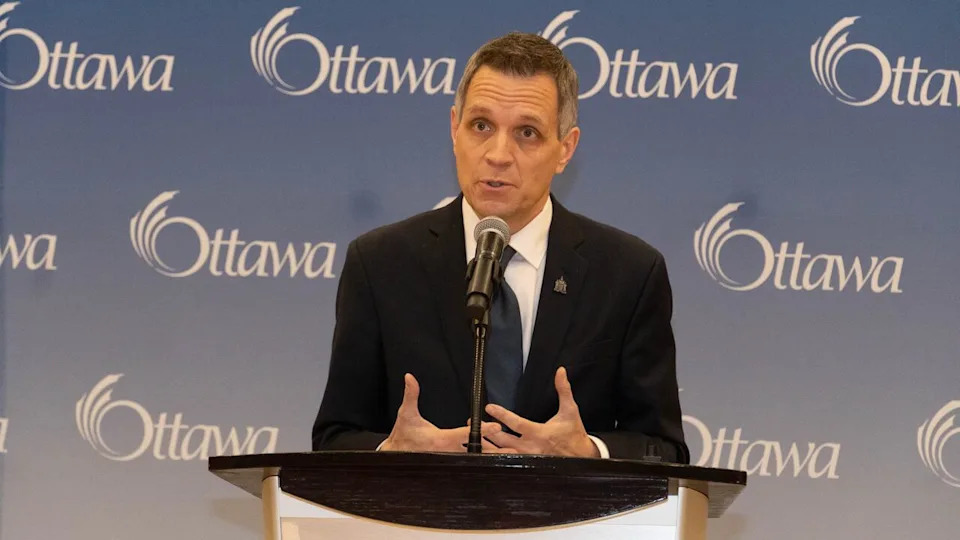
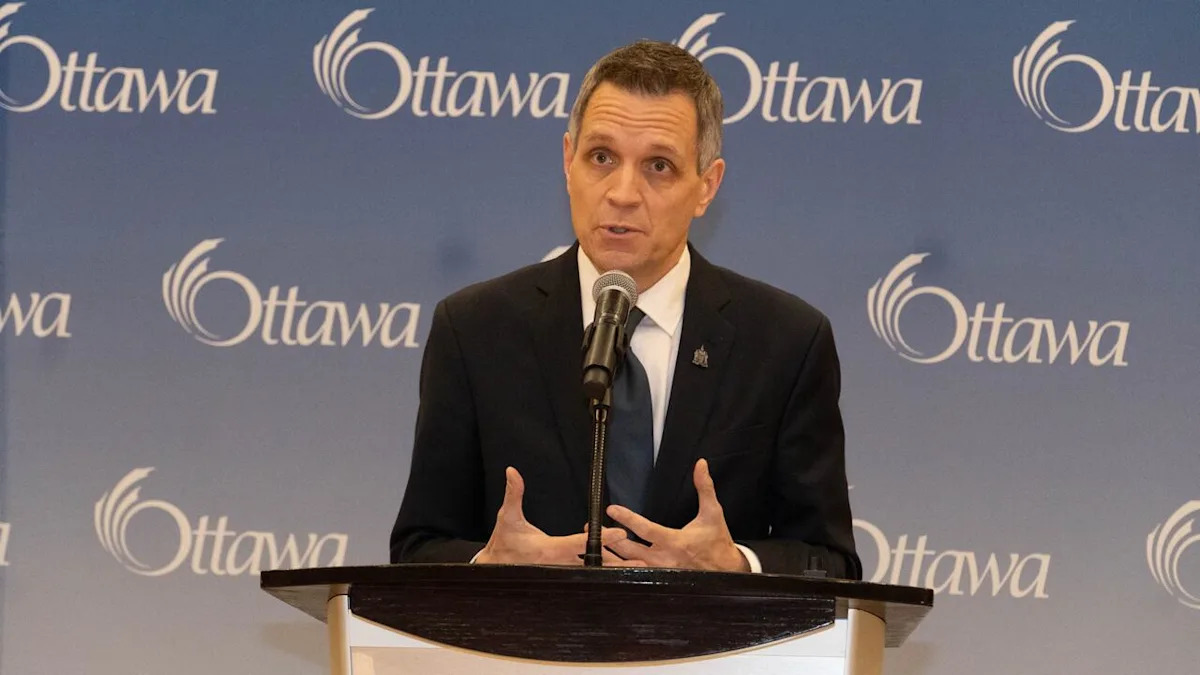
Mayor Mark Sutcliffe acknowledged that public sector layoffs and tariff-related threats have made it a ‘tough time’ for the city’s economy. (Jean Delisle/CBC)
‘It’s a very difficult time’
Per the city’s economic report, the public sector accounts for nearly a quarter of employment in Ottawa. The cuts are expected to affect sectors like retail and real estate.
“There’s a knock-on effect to this chill that’s happening and that is likely also affecting the local economy and local employment,” Macdonald explained. “Folks are concerned they might be laid off and so, as a result of that, [they’re] just not spending their money.”
Ottawa mayor Mark Sutcliffe addressed the concerns at an unrelated press conference on Friday, acknowledging that “it’s a tough time for Ottawa’s economy.”
“We’re facing a lot of pressures from events around the world, from the trade and tariff battles that we’re having with our closest neighbour [to] the threat of public sector job reductions in the federal public service. It’s a very difficult time.”
City investing in private sector, tourism
Ottawa is also losing jobs in sectors affected by tourism, including accommodation and food services and culture and recreation, Macdonald said.
Sutcliffe told reporters the city is working with Ottawa Tourism and focusing on creating more jobs in the private sector to help small businesses and boost the local economy.
“That’s been very successful recently,” he said of the city’s work with Ottawa Tourism.
In a statement to CBC, Ottawa Tourism noted that 2025 was a strong year for the industry and that it anticipates more of the same for 2026.
That’s due in part to the relaunch of the Canada Strong Pass for the summer, the return of the Ironman competition and Ottawa’s 200th anniversary celebrations, the agency said.
“Tourism is an important part of Ottawa’s overall economy, so we are heartened to think when other sectors may be experiencing challenges, tourism can help sustain our community and bring both economic benefits and quality of life to the city,” the statement reads.
The city’s report also emphasizes technology, defence and security, tourism, construction and manufacturing as sectors that could lead to economic growth.
The construction sector could use that boost, said Juliette Nicolaÿ, a policy analyst with the Canadian Federation of Independent Business, adding the organization is pushing for more support for small businesses overall.
“We are seeing currently an entrepreneurial drought. So there have been more business exits than business entries,” she said.
“We are asking governments at all levels, municipal, provincial and federal, to tackle this issue.”