
Summary
A working group of First Nations and the Impact Assessment Agency of Canada released an interim report on the cumulative impacts of development in the Ring of Fire.
Among the participants and collaborators in that report, the Government of Ontario was glaringly absent. The report says the province hasn’t shared valuable data on caribou, polar bears and other regional species that are needed to complete the assessment.
Ontario NDP MPP Sol Mamakwa said, “By not providing any information or any data to the process, they are essentially muzzling the process itself.”
We’re trying out staff-written summaries. Did you find this useful? YesNo
Ontario has not been involved in the federal government’s regional assessment of the Ring of Fire, withholding scientific data and funding needed to understand the impact of mining development, even as the province ushers it through.
The province is absent in the regional assessment working group’s interim report, released Feb. 23. In multiple instances, the group, made up of representatives from 15 First Nations and the Impact Assessment Agency of Canada, makes clear Ontario has yet to sign on.
There is still an “opportunity for collaboration with the province of Ontario in the regional assessment,” the group wrote in the report. The group said it’s preparing what “specific information” it will need to request from the province.
Ontario’s absence is notable as the Doug Ford government continues to push through development in the Ring of Fire, an environmentally sensitive area of boreal forest and peatlands in the James Bay Lowlands, known as Bakitanaamowin Aki, which means “the Breathing Lands,” and Mammamattawa, or “many rivers coming together,” by the First Nations that call it home.
“If they really, really cared about [the assessment], they would work with the federal government,” Ontario NDP MPP Sol Mamakwa, who represents the Ring of Fire region, told The Narwhal. “By not providing any information or any data to the process, they are essentially muzzling the process itself.”
A spokesperson for the federal Impact Assessment Agency confirmed to The Narwhal that the working group understands “several areas it must assess are within provincial expertise.” It will “request information from Ontario as needed” in addition to consulting publicly available data, the spokesperson added.
Dive deeper on this topic
The Ontario government is hoping the region will be the centre of new mining activity. During a press conference with Prime Minister Mark Carney in December, Premier Ford said Ontario is on track to get “shovels in the ground this June” to build a road to the remote region.
But the regional assessment has also been in the works for at least seven years. Aroland First Nation and environmental groups asked for a federal regional assessment in 2019.
The Ontario government has signed deals with three First Nations along the proposed roads to the Ring of Fire, even as other local communities urge the government to pause and properly address environmental protections and long-standing issues on the ground, such as boil-water advisories, health care and housing.
The interim regional assessment report reiterates some of these concerns, recommending the existing conditions for First Nations in northern Ontario be “thoroughly examined” and for “immediate interventions” to be made, even as mining and development are greenlit.
“There are a lot of things happening in these First Nations and their territories that both Canada and Ontario need to address,” Mamakwa said.
“Before the conversation turns to mining, conditions need to be properly assessed and improved.”
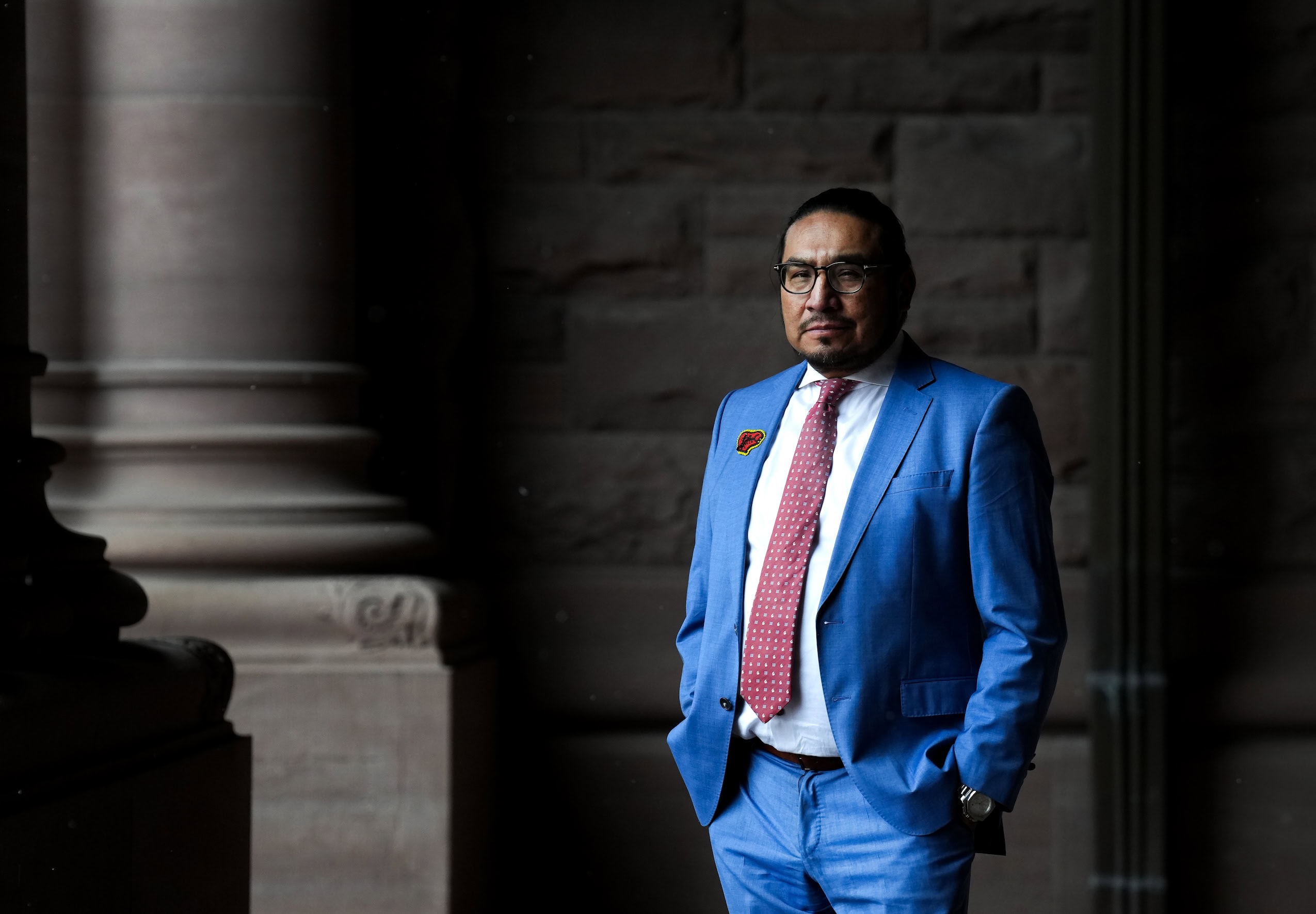 Sol Mamakwa is the NDP MPP for Kiiwetinoong, a expansive riding that encompasses much of northwestern Ontario, including the Ring of Fire region. He says living conditions in northern Indigenous communities need to improve before conversations about mining in the area continue. Photo: Nathan Denette / The Canadian Press
The working group’s plan, updated in November, shows it has already built an information sharing platform, held technical sessions, developed community-led studies and begun to evaluate cumulative impacts of development in the Ring of Fire.
It’s now seeing through evaluations and studies and continuing to engage with communities to eventually compile a final report, which the group expects to land around June 2027.
Whether or not Ontario will come to the table for the next phase is not yet clear.
“I think [the Ford government] is not happy with the federal assessment,” Mamakwa said. “The process itself, I think, they don’t want to be part of. And they just want to do their own thing.”
Ontario’s participation was ‘TBD’ — now it’s non-existent
Last January, when the working group finalized its terms of reference, it described an “outer ring” of contributors, such as experts and industry representatives and listed Ontario as one of these — but with “TBD,” or to be determined, attached to its name.
The latest report suggests Ontario is not participating despite having a trove of scientific information readily available about the region.
While 22 federal departments and agencies show up on a list of respondents to the working group’s public call for information and data, no provincial ministries are listed.
Even Wyloo Metals, the company behind the Eagle’s Nest mine, currently in the exploration phase in the Ring of Fire, contributed to technical sessions of the regional assessment, according to the report.
All of this is raising questions about whether the Ford government is preventing Ontario public servants from participating in the regional assessment.
Without Ontario at the table for the regional assessment, “staff obviously won’t be given the mandate to participate,” Kerrie Blaise, the founder of the non-profit Legal Advocates for Nature’s Defence, told The Narwhal.
“One hundred per cent, there would be staffers who would have knowledge and things to contribute. Without the direction to do so, they’re barred from doing so.”
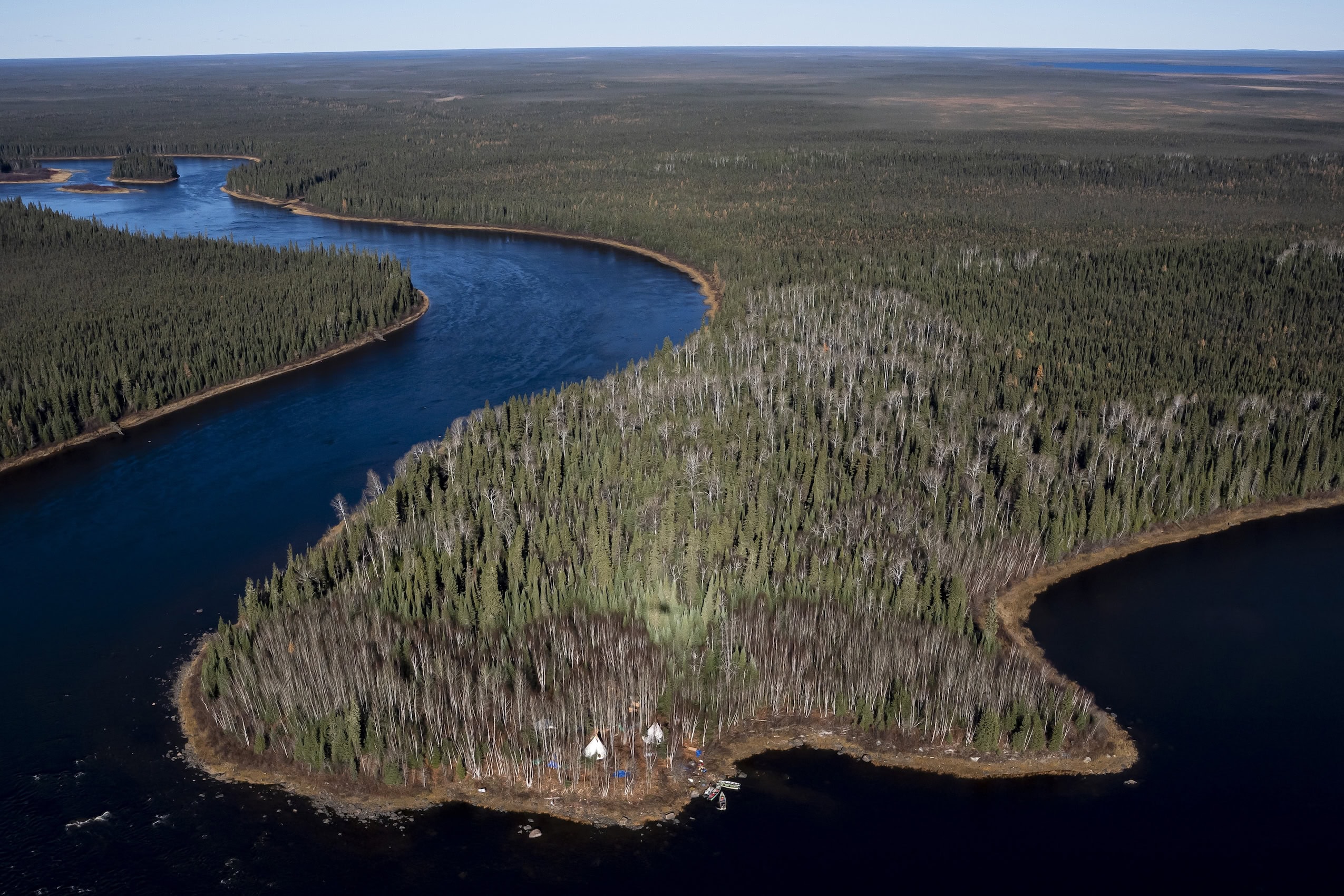 Mining in northern Ontario’s Ring of Fire region will bring significant change to the Indigenous communities that have long called the territory home. Photo: Christopher Katsarov Luna / The Canadian Press
In an interview at Queen’s Park on March 23, The Narwhal asked Ontario Environment Minister Todd McCarthy about the province’s lack of involvement in the regional assessment. He said he’d look into the matter.
McCarthy also told The Narwhal the province is “co-operating” with the federal government, citing a Dec. 18 agreement between the two levels to streamline the environmental assessment process.
In that agreement, Ontario promised to lead any assessments for projects that are subject to both federal and provincial jurisdiction. But this deal covers single projects, whereas the Ring of Fire regional assessment isn’t examining a project, instead looking at cumulative effects of development in the region.
McCarthy said Ontario’s absence from the interim regional assessment report was “an exception.”
“I suspect that Ontario is part of that conversation, and will be part of the conversation and will continue to co-operate and lead in terms of sharing data … to get all of it done,” he said.
“If the sense is that we’re not there at the moment, as I speak to you, we’re going to be there as we are all the time in terms of co-operating and leading.”
The Narwhal sent specific questions to Ontario’s Ministry of Natural Resources, as well as the premier’s office, the Ministry of Environment, Conservation and Parks and the Ministry of Indigenous Affairs and First Nations Economic Reconciliation, about the government’s direction to public servants and financial willingness to support First Nation participation in the federal assessment. None responded to those emails by publication time.
Ontario is withholding scientific data on the Ring of Fire from the regional assessment
Within its interim report, the assessment group wrote that “several priorities for the regional assessment would benefit from provincial expertise.”
There are hints of what kind of expertise the group is hoping to get, in a submission by Environment and Climate Change Canada filed in January in response to one of the group’s requests for information.
In a question about Indigenous consent for non-Indigenous uses of land, the Environment Department pointed out that most traditional territories in Ontario are on non-federal lands, and the province is responsible for hunting and fishing regulations there.
The department also pointed out how the province has been monitoring boreal caribou and undertaking research to fill gaps in knowledge about the animal, and that the province holds valuable data such as aerial surveys on polar bears in the southern Hudson Bay subpopulation.
Ontario also hosts the Natural Heritage Information Centre, which has historical data and continues to track biodiversity in the Ring of Fire region, the federal Environment Department noted, and directed questions about the centre to the provincial government.
“There are certain things the federal government cannot touch,” Blaise said. “So even if there’s a comment deadline, and people bring up concerns, if it’s not all within federal jurisdiction, you’re not going to have those players at the table to actually respond to those information gaps and requests.”
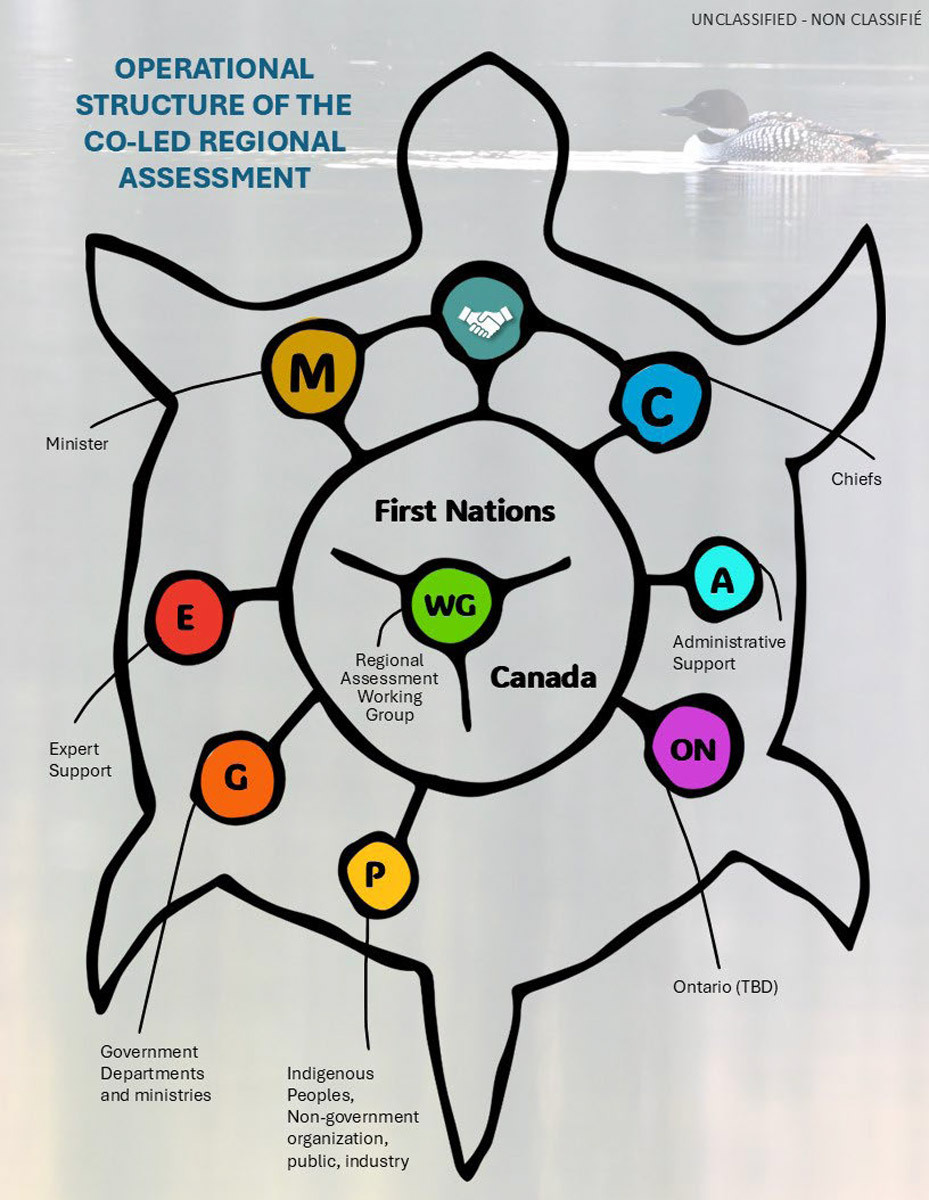 The working group in charge of the Ring of Fire regional assessment envisions a key role for Ontario in the process. The provincial government holds important environmental data and expertise that would help inform the assessment, for example. But so far, the province has declined to participate. Illustration: Regional Assessment Working Group
Without Ontario’s participation, the working group will be forced to go to the province to request information. That could result in more delays and extra costs, Blaise said.
When the Government of Alberta successfully challenged the constitutionality of the Impact Assessment Act at the Supreme Court of Canada, the judges emphasized in the 2023 ruling that “respect for the division of powers” between the federal and provincial governments helps put in place strong environmental protection laws and “facilitates co-operation between the two levels of government.”
Here, “we’re not getting that co-operation,” Blaise said. “So it means you’re inherently getting a narrower process, a process that doesn’t actually have all the requisite knowledge and expertise and government officials at the table.”
Blaise also said Ontario’s lack of participation could translate to a lack of provincial support for whatever the working group ends up recommending.
First Nations need more funding to participate in the regional assessment from ‘other parties.’ Ontario did not respond to the call
The interim report highlights how many First Nations in the Ring of Fire area lack basic necessities, like clean water, health care, housing, education and electricity. First Nations can’t be “true partners in equitable decision-making processes” like the regional assessment, the group wrote, without these “necessities of life.”
The report recommended that the existing conditions of First Nations in northern Ontario be “thoroughly examined” and that “immediate interventions” be made.
Community members also have to “constantly balance their roles,” the report stated, with responding to emergencies, dealing with other federal and provincial negotiations, staying involved in legal actions, responding to regulatory processes like permit applications and answering outside requests from industry.
All of this points to a need for more funding to help “address the participation gaps within the regional assessment process,” the group wrote.
While First Nations have worked with the Impact Assessment Agency of Canada on a funding strategy, and receive “base funding” to support their participation, the group said the amounts involved are “often largely insufficient.”
The Impact Assessment Agency of Canada’s departmental plan for 2026-27 shows it’s planning for $34,206,000 in cumulative spending cuts through 2029, but it’s unclear whether or how those cuts will impact its work on the Ring of Fire regional assessment.
The working group noted the effort involved in trying to apply to other federal funding programs, or nailing down private funds, is “prohibitive.” The group recommended that the federal government “and other parties” help the First Nations get enough funding so that they’re not burdened with trying to find the money themselves.
“The provincial government cannot claim to move the Ring of Fire forward ethically or equitably while withholding information or funding for this process,” Mamakwa said.