
Jayna Adair takes pride in the range of services available at her yoga and wellness studio in Pincher Creek.
“We do spray tans, lashes, brows. There’s reiki and a reflexologist and a massage therapist and a tattoo artist,” said the Sugar Studio owner.
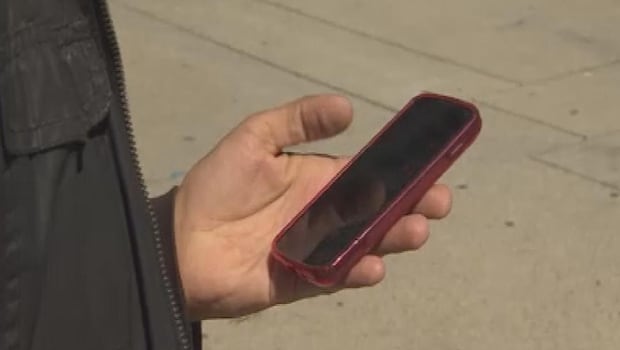
However, there’s one service that’s difficult to get: cellphone service.
“No phone calls, no texting. It’s basically just like a dead hole,” she said.
Mayor Wayne Oliver says he’s consistently hearing about similar bad experiences from residents in the town 170 kilometres south of Calgary.
He says he also has firsthand experience.
“I’m sitting in my kitchen talking to my brother and dropped the call three times, probably one bar of service only.”
 Sugar Studio owner Jayna Adair pictured in her storefront on main street in Pincher Creek, Alta. She says the area is a “dead zone” for cell service and mobile networks, which means she misses out on potential customers. (Ose Irete/CBC)
Professor Michael McNally studies rural cellphone and data access at the University of Alberta’s School of Library and Information studies. He says historically, major telecommunications companies have focused their resources on urban areas with a lot of customers.
McNally says geography can also affect how rural areas are able to connect. In some parts of the province, trees or mountains get in the way. In Pincher Creek’s case, the town’s low-lying location in a valley could be a factor.
“From a design perspective, it would make sense to put a tower as high up as possible because you get the broader coverage, but it does create problems in the valleys.”
Rogers recently installed a new cell tower in that valley near the townsite. In a statement the company says this was done to improve coverage and capacity.
Bell and Telus use the same tower, which is located outside of the town of Pincher Creek.
A Telus spokesperson said the company upgraded that tower last June. They say Telus is evaluating options to improve service quality in the region.
Connectivity key for rural areas, says professor
According to data from the Canadian Radio and Telecommunications Commission, 99.4 per cent of rural Alberta has access to mobile data.
McNally— who works with the Alberta Rural Connectivity Coalition— says it’s concerning that the reality on the ground seems quite different.
“Rural and remote communities have the most to gain from access to digital online services, yet they are the often the poorest connected,” he said.
He points out that having the option of online classes or virtual health care can bring amenities to rural Albertans that would usually be a long drive away.
Poor mobile network access can also limit opportunities for rural communities to attract tourists, new industries and new residents.
“I have many colleagues in rural communities who say that often one of the top questions that realtors get is ‘What’s the internet like in this community?'”
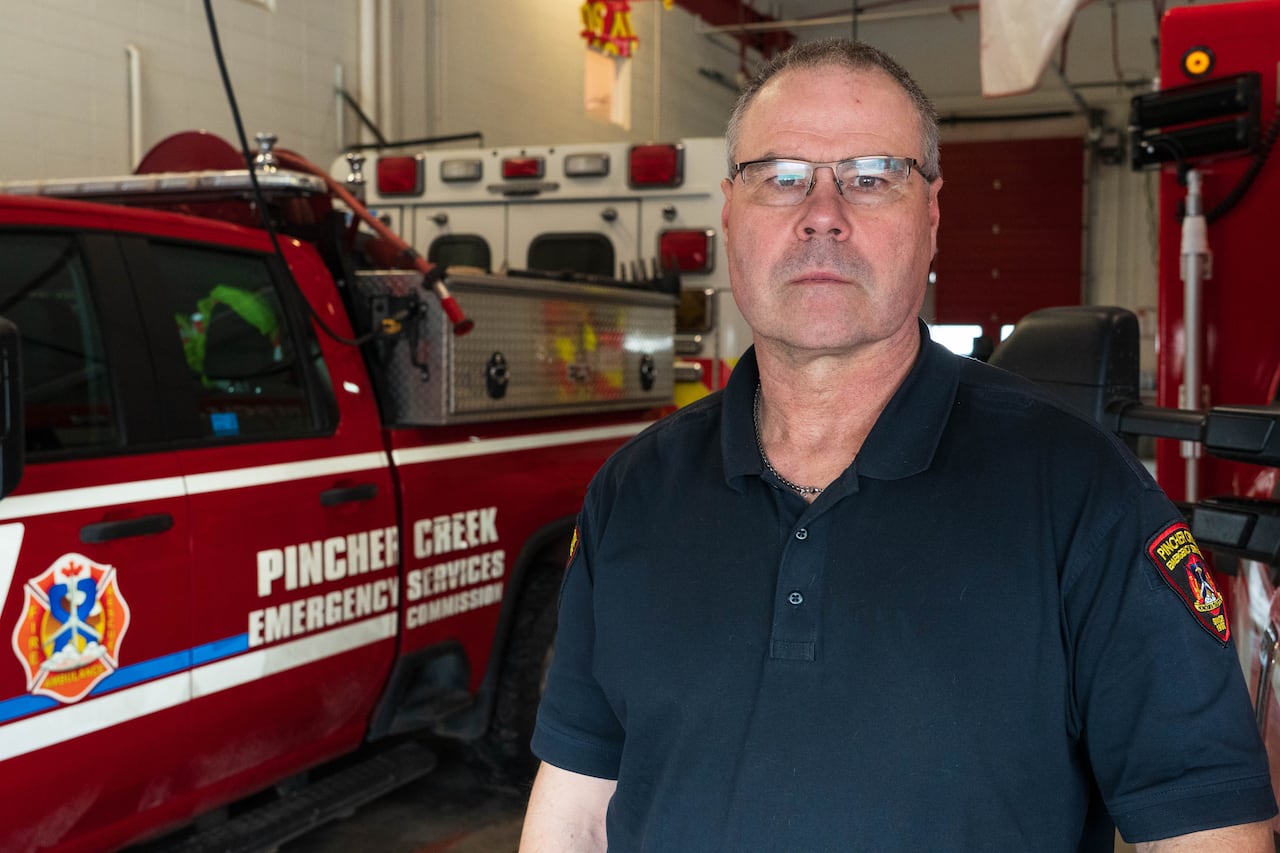 Town of Pincher Creek Fire Chief Pat Neumann says the town’s spotty mobile network is making emergency services’ job more difficult.
(Ose Irete/CBC)Businesses, emergency services affected
For businesses in Pincher Creek poor cell service means missed calls, and missed calls can mean missed customers.
Adair says she often doesn’t realize just how many potential customers have tried to call her at Sugar Studios until she’s on her way home and her phone starts buzzing.
“I’ll get a bunch of voicemails sort of on the same point of the road where the service kind of kicks back in and people have been looking for a service that day that I could have provided,” she said.
It’s not just businesses feeling the brunt of this. The town’s fire chief says poor connectivity makes first responders’ jobs harder.
Pat Neumann says his staff often get the basics of a case they’re responding to via radio before heading out. The rest of the information is displayed on a computer system inside the ambulance.
“Lots of times that system will crash or doesn’t properly update,” he said.
EMS also rely on internet access to look up patient information when they’re on the scene.
“Does the patient have pre-existing medical conditions that we need to know about? That is going to affect the way we treat stuff,” he said.
As a pastor, Doug Iron Shirt says a lot of his work is helping people through hard times and that often means phone calls to check in.
“Having these intimate calls with people, it’s kind of frustrating to try to help them, to encourage them but then you can’t get no connection,” he said.
Addressing network issues nationwide
Iron Shirt says he wants providers to build more cell towers in and around rural communities.
Oliver says when the previous council administration contacted a telecommunications provider, they were told the company hadn’t been notified about the issues by its customers in the area.
He says residents need to get a hold of their providers directly.
“If they get 500 complaints in the next three months, then maybe they’ll come to realize, oh, there is an issue there,” he said.
Rural connectivity is also a national conversation.
A recent private members bill in the House of Commons aims to overhaul the act that oversees mobile networks in canada.
The Spectrum Policy Framework for Canada Act was last updated almost 20 years ago.
“It doesn’t have any kind of real strategy or focus for rural communities,” said McNally.
If passed, the bill will require the CRTC to review mobile network coverage in Canada and make a plan to address connectivity issues in rural communities.