
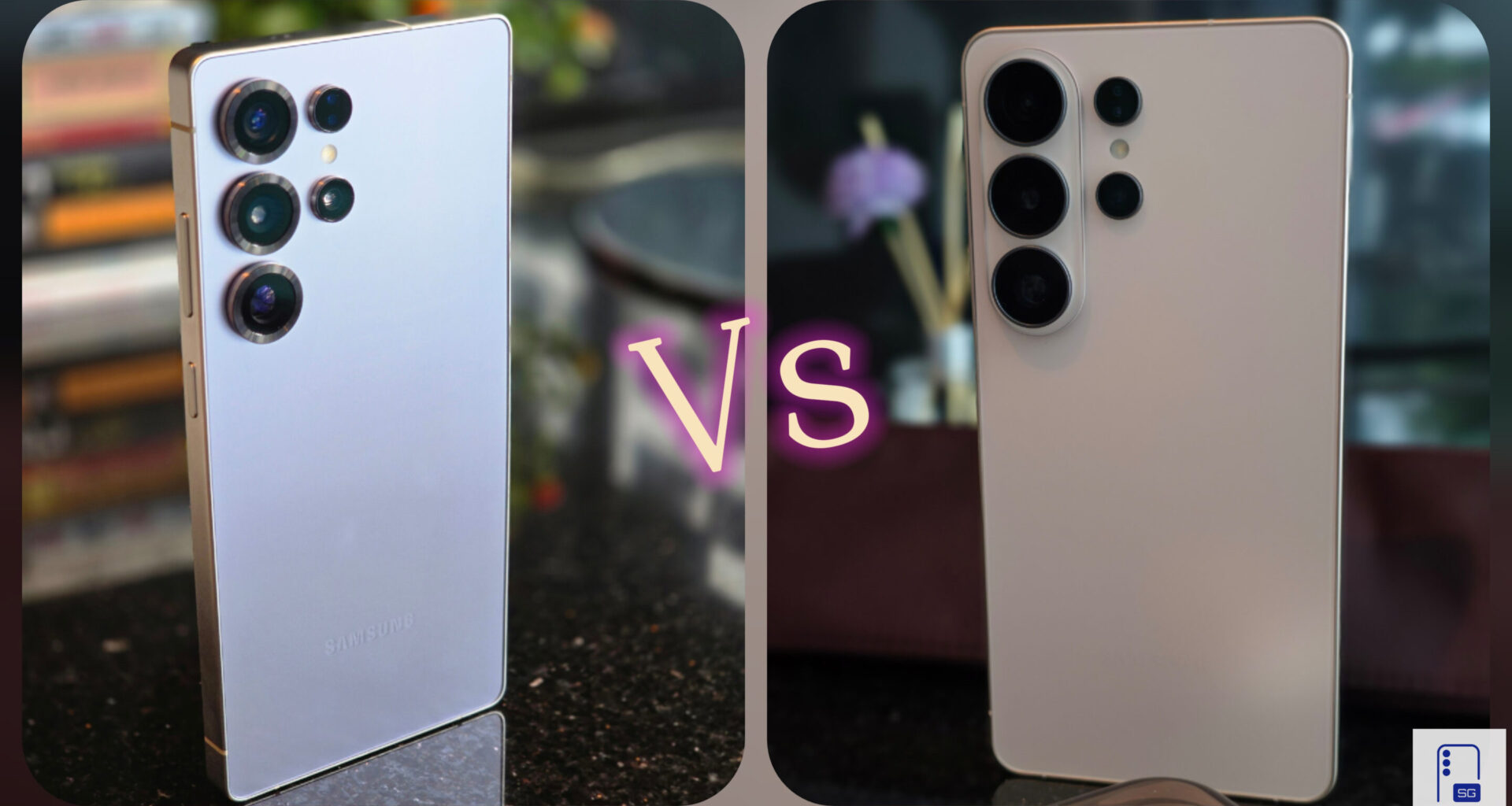
In a previous analysis, I explored one of the most interesting behaviors on the Galaxy S26 Ultra — a nearly lossless zoom window between 5x and 9.9x, where the camera maintains full 24MP resolution before transitioning into long-range AI zoom. On its own, that already felt like a meaningful improvement in how Samsung handles telephoto detail.
But extended testing quickly raised a more important question. Was this behavior limited to the 5x telephoto camera, or was it part of a broader shift in how the entire zoom system operates? Once you step back and test across all focal lengths, the answer becomes clear.
The Galaxy S26 Ultra doesn’t rely on a single high-quality window. It operates with a structured system of multiple high-resolution zones. Compared to the previous generation, this change is not subtle; it fundamentally reshapes how zoom behaves.
Auto mode and Expert RAW finally behave the same
One of the most important changes is also one that many users may overlook. On the Galaxy S26 Ultra, Auto mode and Expert RAW now follow the same resolution logic across the entire zoom range. Whether you are shooting in HEIF or JPEG through the standard camera app, or capturing RAW in Expert RAW, the underlying pipeline behaves consistently.


This is a major shift from the Galaxy S25 Ultra, where high-resolution behavior was largely limited to Expert RAW. In Auto mode, the system stayed locked to 12MP output across most zoom levels, even when more detail was available from the sensor.
With the S26 Ultra, Samsung unifies the experience. The same structure applies regardless of mode, which removes a layer of unpredictability and makes the system far more transparent in real-world use.
Three distinct 24MP lossless zones
Testing across the full zoom range reveals a clear and intentional structure. Instead of gradual resolution changes, the S26 Ultra operates with three distinct 24MP zones, each aligned with a native camera.
The ultrawide camera maintains full 24MP output from 13mm to around 22mm. Within this range, the system relies on high-resolution cropping from the sensor, preserving detail without heavy computational interference. The result is a consistent level of clarity even when moving slightly away from the native 0.6x view.
The main camera continues this behavior from 23mm up to roughly 45mm. Here, the 24MP pipeline delivers maximum native detail, with the sensor operating in its most stable and predictable range before transitioning into heavier processing.
The most interesting zone sits on the 5x telephoto. From 115mm to 229mm, the camera maintains full 24MP resolution in what behaves like a near-lossless zoom window. Detail remains clean, processing is minimal, and the image retains a natural look that reflects true sensor data rather than reconstruction.
This is not just an improvement in quality. It is a deliberate expansion of where that quality exists.
The transition zones reveal the system’s priorities
Between these high-resolution zones, the camera enters transition ranges where processing takes over. This behavior exists on both the S26 Ultra and the previous S25 Ultra. However, on the newer model, it is far more structured and easier to identify.
From 2x to 2.9x, the system continues to use the main camera, but resolution drops to 12MP even when shooting in 24MP mode. This indicates a shift toward computational processing, where the system prioritizes consistency over raw detail.
From 3x to 4.9x, the camera switches to the dedicated 3x telephoto lens, and this is where the limitation becomes physical rather than computational. The sensor itself operates at an effective resolution of around 10MP, which means it cannot sustain a true 24MP output pipeline regardless of processing.
But beyond 10x, the system moves fully into AI-assisted zoom. Resolution remains fixed at 12MP, and computational enhancement becomes the dominant factor in shaping the final image. These transition zones are not weaknesses. They are boundaries where the system shifts from native detail to controlled reconstruction.
How the Galaxy S25 Ultra handled zoom differently
Looking back at the Galaxy S25 Ultra, the difference in approach becomes immediately clear. Instead of defined zones, the system behaved with gradual resolution degradation as zoom increased, particularly in Expert RAW. Auto mode, in most cases, remained limited to 12MP output.
On the ultra-wide and main cameras, resolution would slowly drop as you moved away from the native focal length. The 5x telephoto showed a similar pattern, starting at 24MP but gradually falling toward lower resolutions as zoom increased. This made it difficult to predict where the camera was delivering its best quality. Instead of clear boundaries, users were working within a continuous curve of degradation.
What Samsung actually changed
With the Galaxy S26 Ultra, Samsung didn’t just improve image quality. It restructured how that quality is delivered. Instead of a gradual decline, the system now operates in clearly defined stages: high-resolution zones, transition zones, and AI-driven zoom. This creates a far more predictable shooting experience and fundamentally changes how the camera feels in use.
Rather than behaving like a continuous digital zoom, the system now acts as three distinct cameras, each with its own optimized high-resolution window. Within those windows, the camera delivers consistent, native detail. Outside them, it transitions in a controlled and intentional way. This is not just a technical adjustment. It is a shift in how the user interacts with zoom.
Smartphone zoom has always been a balance between optical hardware, sensor cropping, and computational photography. What sets the Galaxy S26 Ultra apart is not just how well it uses these elements, but how clearly it organizes them.
There is no longer a need to guess where quality drops or where processing takes over. The system defines those boundaries for you, and once you understand them, the behavior becomes predictable. You are no longer just zooming through a continuous digital range. You are moving between controlled zones, each with a different way of building the image. And that changes everything.