
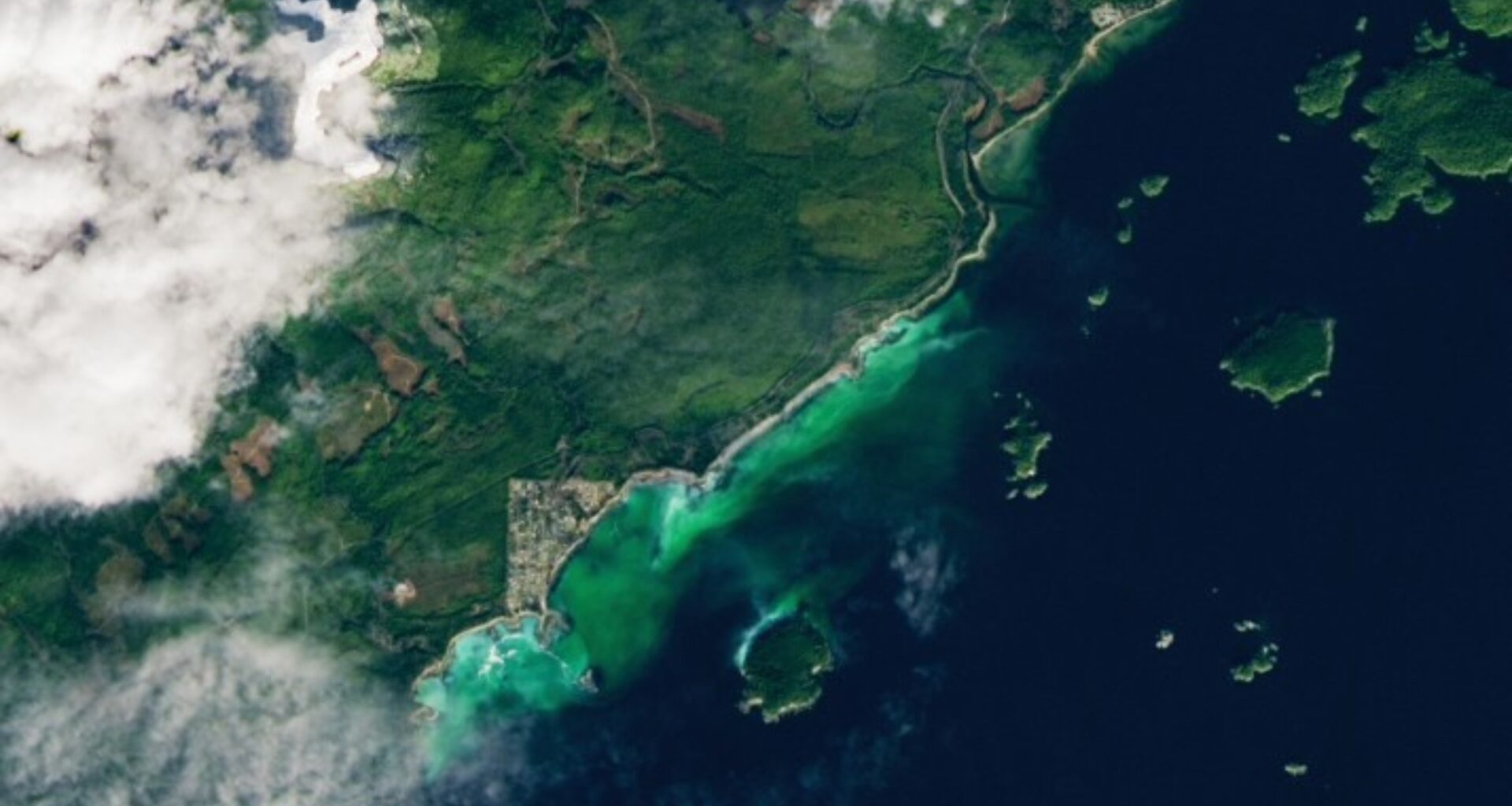
Today’s Image of the Day from NASA Earth Observatory captures a fleeting moment along the coast of British Columbia.
The ocean has briefly turned into a cloudy shade of turquoise – signaling the start of a remarkable annual event.
A coastline transformed by fish
Each year, from mid-February through early May, thousands of Pacific herring gather in shallow coastal waters around Vancouver Island.
These small, silvery fish arrive in dense schools, moving into protected areas where the conditions are just right.
What follows is hard to miss. The water shifts in color, turning milky green or blue as spawning begins, sometimes so vivid that satellites can detect it from space.
In Barkley Sound, on the southwestern edge of Vancouver Island, this event has become a regular seasonal marker.
Sheltered waters, rocky surfaces, and lower salinity create an environment that herring seem to return to year after year. The process itself is simple but intense.
Females release eggs that cling to kelp, seagrass, and rocks, while males release milt into the water, creating that signature cloudy hue.
A successful spawning site
The same spawning grounds near Forbes Island have been used consistently since at least the 1970s. That kind of repeat behavior suggests something deeper than chance.
Herring appear to favor locations that offer both protection and the right physical features for their eggs to survive.
“Herrings prefer spawning locations that are more protected, have rocky substrate, and allow them to select areas with reduced salinity,” said Jessica Moffatt, biologist with the Island Marine Aquatic Working Group (IMAWG).
“Barkley Sound hits the sweet spot” in many of these regards, she said, adding that collective memory, predation pressure, and other factors also play a role in spawn size and location.
The idea that fish return to familiar places across generations points to a kind of learned or inherited behavior.
Over time, successful spawning sites become part of the species’ rhythm, shaped by both survival and environmental stability.
A short but intense window of activity
Spawning itself does not last long. Events can stretch from a few hours to several days, but the buildup begins earlier.
In 2026, observers noted that herring schools started gathering near Forbes Island by February 13, with peak activity reported between February 19 and February 21.
During this time, the area becomes unusually busy. The sudden abundance of eggs and fish draws in predators from both sea and land.
Whales and sea lions move through the water, while eagles, wolves, and even bears appear along the shoreline. It is a brief but intense moment when multiple parts of the ecosystem converge on the same resource.
Once spawning is complete, the herring leave just as quickly as they arrived. They head back to deeper, nutrient-rich waters for the summer, often staying within the same large school for years.
Watching from space
For decades, tracking these spawning events depended on limited tools. Aerial surveys, diver observations, and local reports offered useful snapshots, but they often missed the full scale and timing of what was happening.
Satellite observations are changing that. Imagery from missions like Landsat 9 allows scientists to monitor large stretches of coastline over time, capturing changes in water color that signal spawning activity.
The February 19, 2026 image near Forbes Island is one example of how early-season events can now be detected and recorded with precision.
Researchers at the University of Victoria have used decades of satellite data to expand historical spawn records and refine methods for identifying future events.
This broader view helps fill in gaps left by earlier monitoring efforts and provides a more complete picture of how herring use coastal habitats.
Herrings beyond the shoreline
Pacific herring play a central role in coastal ecosystems. As a forage fish, they serve as a key food source for salmon, seabirds, and marine mammals.
Their spawning events are not just a reproductive step but a pulse of energy that supports a wide range of species.
They also hold cultural and economic importance. Herring and their roe have long been part of First Nations food systems and harvesting traditions, while commercial fisheries in British Columbia depend on them as well.
Understanding where and when herring spawn offers more than just a glimpse into their behavior. It provides clues about the health of the broader marine environment.
Shifts in spawning locations or timing can reflect changes in water conditions, predator dynamics, or climate patterns.
With more consistent monitoring from satellites and continued observations on the ground, scientists are building a clearer record of these events.
That record could help track long-term changes in coastal ecosystems and guide decisions about how to protect them.
Image Credit: NASA Earth Observatory
—–
Like what you read? Subscribe to our newsletter for engaging articles, exclusive content, and the latest updates.
Check us out on EarthSnap, a free app brought to you by Eric Ralls and Earth.com.
—–