
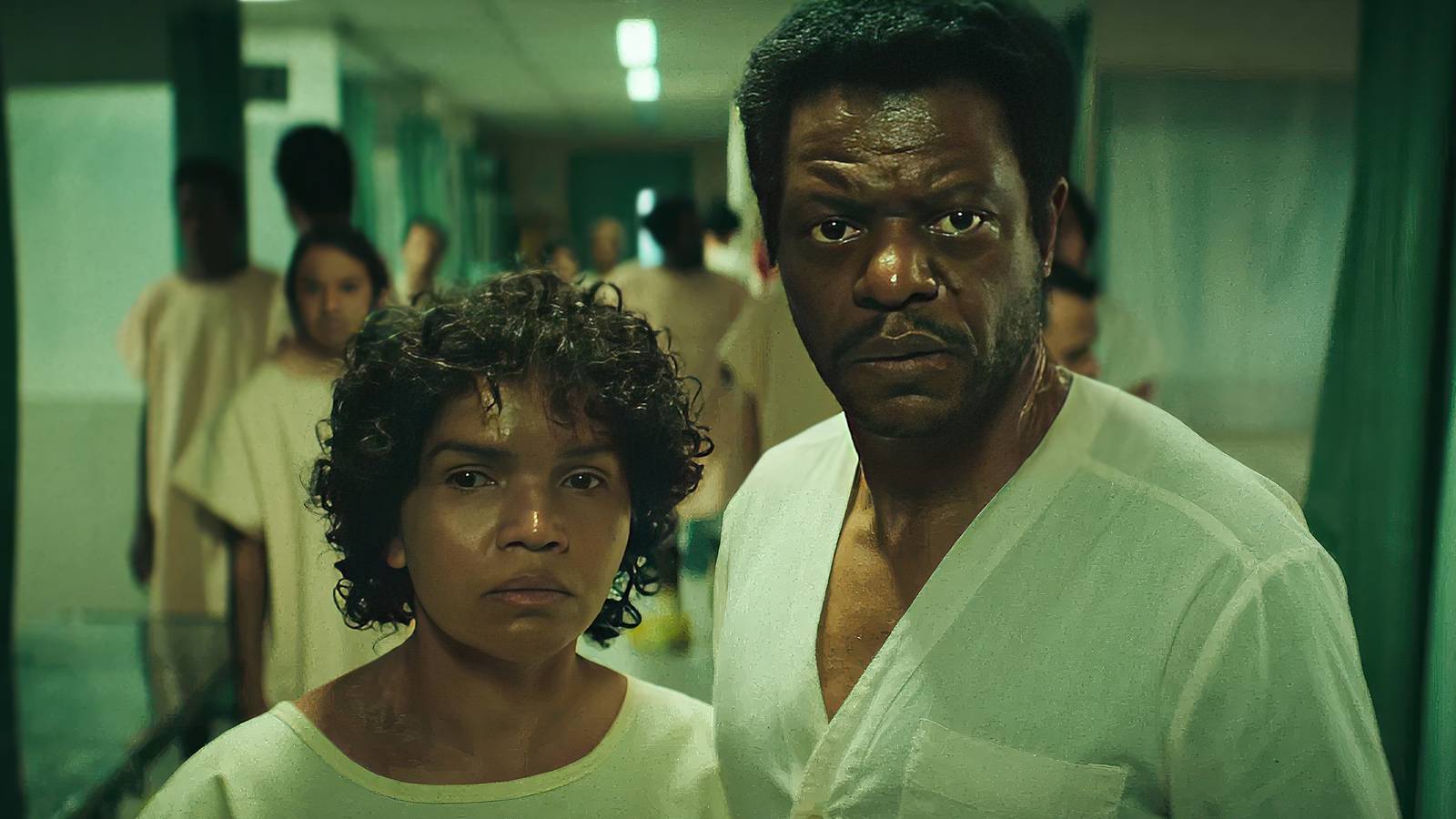
When the Chernobyl disaster erupted on 26 April 1986, there was no doubt about how dangerous the situation was. A nuclear reactor had exploded, and authorities acted fast, evacuating nearby areas, taking those exposed to designated hospitals, and decontaminating as much as they could. But, just over a year later, on September 13, 1987, in Goiás, Brazil, another radioactive incident happened, and the reaction was quite different.
While viewers can watch the aftermath of the Chernobyl explosion in the stellar HBO limited series Chernobyl, which released back in 2019, Netflix’s newest thriller series, Radioactive Emergency, shows the lesser-known radioactive incident that took place on Brazilian soil. The series, which premiered on March 18, 2026, has been quickly surging through the charts ever since. Per FlixPatrol, the series is now #5 worldwide, reaching #6 in the US, and #1 in countries around the world, from Argentina and Uruguay to Serbia and Poland.
What Is ‘Radioactive Emergency’ About?
Created by Gustavo Lipsztein, Radioactive Emergency (or Emergência Radioativa in Portuguese) follows the real story of how the Brazilian state capital of Goiânia was exposed to a radioactive substance for weeks before authorities caught word and took action. It all started when two men walked into an abandoned hospital and stole an unsecured radiotherapy machine. After busting it open, they sold it as scrap metal to a junkyard. Inside of it, however, was Cesium-137, a phosphorescent substance that is incredibly radioactive and dangerous to humans. Without knowing any better, the junkyard owner, Evenildo (Bukassa Kabengele) on the show, paraded his new “magical” substance around town, and even gave it to his friends for them to play with too.
Approximately 16 days after the batch of Cesium-137 was first discovered and sold, Evenildo’s wife, Antonia (Ana Costa), handed it in to the authorities. She claimed it was cursed because everyone who had come into contact with it was either sick or at the local hospital. That’s when nuclear physicist Márcio (Johnny Massaro) comes in, and, with the help of the hospital’s doctor, diagnoses the patients with acute radioactive exposure, and identifies the unknown substance as Cesium-137.
What then follows in the five-episode series is a city unraveling as it comes to terms with the reality of the exposure. As government officials hesitate to make bold moves not to alarm the public, the first victims of radiation reluctantly accept help, first being taken to an emptied stadium, then a deserted hospital in the middle of a strike, then transported all the way to Rio de Janeiro for further treatment. At every step of the way, the patients, each with varying levels of sickness, push back on the treatment, not knowing the dangers they’re under. As they get treatment, experts from all over the country, including Dr. Orenstein (Paulo Gurgulho) and Dra. Paula Matos (Clarissa Kiste), team up with Márcio to assess the extent of the radioactive exposure, warn as many exposed people as they can, and try to reduce exposure from increasing any further.
Collider Exclusive · TV Medicine Quiz
Which Fictional Hospital Would You Work Best In?
The Pitt · ER · Grey’s Anatomy · House · Scrubs
Five hospitals. Five completely different ways medicine goes sideways on television — brutal, chaotic, romantic, brilliant, and ridiculous. Only one of them is the ward your instincts were built for. Eight questions will figure out exactly where you belong.
🚨The Pitt
🏥ER
💉Grey’s
🔬House
🩺Scrubs
FIND YOUR HOSPITAL →
01
A critical patient comes through the door. What’s your first instinct?
Medicine under pressure reveals who you actually are.
AStay completely present — block everything else out and work through it step by step, right now.
BTriage fast and delegate — get the right people on the right problems immediately.
CTrust my gut and move — I work best when I stop overthinking and just act.
DAsk the question everyone else is ignoring — what’s the thing that doesn’t fit?
ETake a breath, make a joke to cut the tension, and then get to work — panic helps no one.
NEXT QUESTION →
02
Why did you go into medicine in the first place?
The honest answer says more about you than the one you’d give in an interview.
ABecause I wanted to be where it matters most — right at the edge, when someone’s life is actually on the line.
BBecause I wanted to help people — genuinely, one patient at a time, in a system that makes it hard.
CBecause I was drawn to the intensity of it — the stakes, the drama, the feeling of being fully alive.
DBecause medicine is the most interesting puzzle there is — and I needed a problem worth solving.
EBecause I wanted to make a difference — and also, honestly, I didn’t know what else to do with my life.
NEXT QUESTION →
03
What do you actually want from the people you work with?
Who you want beside you under pressure is who you are.
ACompetence and calm — I need people who don’t fall apart when things get bad.
BTrust and reliability — I want to know that when I pass something off, it’s handled.
CConnection — I want colleagues who become family, even if that gets complicated.
DIntelligence and the willingness to be challenged — I have no interest in people who just agree with me.
EFriendship — people I actually like spending twelve hours a day with, because those hours are going to happen either way.
NEXT QUESTION →
04
You lose a patient you fought hard to save. How do you carry it?
Every doctor who’s worked a long shift has had to answer this question.
AI carry it. All of it. I don’t look for ways to put it down — that weight is part of doing this work honestly.
BI process it and move — you have to, or the next patient suffers for the one you just lost.
CI feel it deeply and lean on the people around me — I don’t think you’re supposed to handle that alone.
DI go back over every decision — not to punish myself, but because I need to understand what I missed.
EI grieve it genuinely, find some way to laugh about something unrelated, and try to be kind to myself — imperfectly.
NEXT QUESTION →
05
How would your colleagues describe the way you work?
Your reputation on the floor is usually more accurate than your self-image.
AIntense and completely present — no small talk during a shift, but exactly who you want there.
BSteady and dependable — not the flashiest in the room but never the one who drops something.
CPassionate and occasionally chaotic — brilliant on the hard cases, prone to drama everywhere else.
DBrilliant and difficult — right more often than anyone else, and everyone knows it, including me.
EWarm and self-deprecating — not the most intimidating presence, but genuinely good at this and easy to like.
NEXT QUESTION →
06
How do you feel about hospital protocol and procedure?
Every institution has rules. What you do with them is a choice.
AProtocol is the floor, not the ceiling — I follow it until the patient needs something it can’t provide.
BI respect it — the system is broken in places, but the structure is there for a reason and I work within it.
CI follow it until my instincts tell me not to — and my instincts are usually right, even when they cause problems.
DRules are for people who haven’t thought hard enough about when to break them.
EI try to follow it and mostly do — with a few memorable exceptions that still come up in meetings.
NEXT QUESTION →
07
What does this job cost you personally?
Nobody works in medicine without paying a price. What’s yours?
AEverything outside these walls — I’ve given this job my full attention and the rest of my life has gone around it.
BMy idealism, mostly — I came in believing the system could be fixed and I’ve made a complicated peace with that.
CStability — my personal life has been as chaotic as the OR, and that’s not entirely a coincidence.
DMy relationships — I am not easy to know, and the people who’ve tried to would probably agree.
EMy sense of gravity — I use humour as a coping mechanism, which not everyone appreciates in a hospital.
NEXT QUESTION →
08
At the end of a long shift, what keeps you coming back?
The answer to this question is the most honest thing about you.
AThe fact that it’s real — that nothing else I could be doing would matter this much, right now, today.
BThe patients — individual human beings who needed something and got it because I was there.
CThe people I work with — I have walked through impossible things with these people and I’d do it again.
DThe next unsolved case — there’s always another puzzle, and I’m not done yet.
EBecause despite everything — the exhaustion, the loss, the absurdity — I actually love this job.
REVEAL MY HOSPITAL →
Your Assignment Has Been Made
You Belong In…
Your answers have pointed to one fictional hospital above all others. This is the ward your instincts, your temperament, and your particular brand of dysfunction were built for.
Pittsburgh Trauma Medical Center
The Pitt
You are built for the most unsparing version of emergency medicine television has ever shown — one that puts you inside a single fifteen-hour shift and doesn’t let you look away.
You need your work to be real, not romanticised — meaning over drama, honesty over aesthetics.
You find purpose inside the work itself, not in the chaos surrounding it.
You’ve made peace with the fact that this job takes from you constantly, and gives back in ways that are harder to name.
Pittsburgh Trauma Medical Center demands exactly that kind of person — and you would not want to be anywhere else.
County General Hospital, Chicago
ER
You are the person who keeps the whole floor running — not the most brilliant in the room, but possibly the most essential.
You show up, do the work, absorb the losses, and come back the next day without needing the job to be anything other than what it is.
You care about patients as individual human beings, not as cases to solve or dramas to live through.
You believe in the system even when it fails you — and you understand that emergency medicine is about holding the line just long enough.
ER is television about endurance. You have it.
Grey Sloan Memorial Hospital, Seattle
Grey’s Anatomy
You came to medicine with your whole self — your ambition, your emotions, your relationships, your history — and you have never quite managed to leave any of it at the door.
You feel things fully and form deep attachments to the people you work with.
Your personal and professional lives are permanently, chaotically entangled — and that entanglement drives both your greatest disasters and your most remarkable saves.
You understand that extraordinary medicine often happens at the intersection of clinical skill and profound human connection.
It’s messy at Grey Sloan. You would not have it any other way.
Princeton-Plainsboro Teaching Hospital, NJ
House
You are drawn to the problem above everything else — the symptom that doesn’t fit, the diagnosis hiding underneath the obvious one.
You’re not primarily motivated by the patient as a person — though you are capable of caring, even if you’d deny it.
You work best when the stakes are highest and the standard answer is wrong.
Princeton-Plainsboro exists to house one extraordinary, impossible mind — and everyone around that mind is there because they’re smart enough to keep up.
The only way forward here is to think harder than everyone else in the room. That is exactly what you do.
Sacred Heart Hospital, California
Scrubs
You understand that medicine is tragic and absurd in almost equal measure — and that the only sane response is to hold both of those things at the same time.
You are warm, self-aware, and funnier than most people in your field.
You use humour to get through terrible moments — and at Sacred Heart, that’s not a flaw, it’s a survival strategy.
You lean on the people around you and let them lean back. The laughter and the grief are genuinely inseparable here.
Scrubs is a show about learning to become someone worthy of the job. You are still very much in the middle of that process — which is exactly right.
↻ RETAKE THE QUIZ
‘Radioactive Emergency’ Is a Gripping Real-Life Thriller
From the synopsis alone, it’s safe to say that Radioactive Emergency depicts a real-life radiological disaster like no other. Set in a city entirely ill-equipped to handle a crisis of this magnitude, and filled with patients who remain resistant to help even as burns spread across their skin, the series carries a gripping, ever-present tension throughout. After all, not only are the doctors and physicists themselves startled at the staggering exposure levels, but the public reaction to the crisis is what sets the series apart. With little understanding of radioactive exposure, the city’s residents respond with confusion, annoyance and, at times, outward aggression. Their reaction is understandable, especially given the authentic performances that depict them, but it’ll likely leave viewers screaming at their screens.
Related
The Most Realistic Disaster Series of All Time Resurfaces on US Streaming Charts
A ‘Foundation’ star leads the miniseries.
Of course, this tension is only successful given the incredible acting throughout the series. In the lead, Massaro, who plays the fictionalized version of nuclear physicist Walter Mendes Ferreira, is a calming yet commanding presence. Benefiting from being the youngest among the experts, he quickly becomes a figure even the most skeptical patients warm up to, making him invaluable to the team. Plus, as the series uses him as a vessel for storytelling, his reactions, be it shock, fear or despair, carry the show, and underscore the escalating danger with striking clarity. Another highlight in the series is a tight-knit family that’s heavily exposed, including mom Catarina (Marina Merlino) and her young daughter, Celeste (Mari Lauredo). By solidifying their tight bond, and later separating them as Catarina’s symptoms subside and Celeste’s condition deteriorates, the series shows a personal side to the crisis, depicting the emotional toll of what going through an exposure like this could entail.
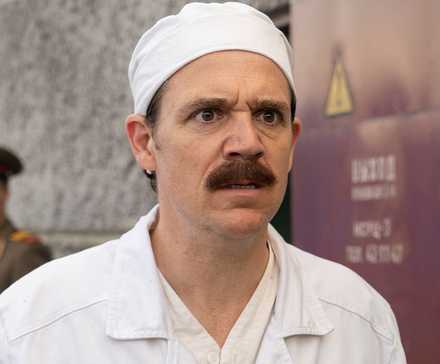
With that said, while Radioactive Emergency will certainly be compared to Chernobyl as another series that tackles a radiological disaster, the new five-episode thriller certainly sets itself apart. Instead of the still, icy background of Chernobyl, Radioactive Emergency takes place in sunny Brazil and focuses on how one mistake triggered a fatal chain of events, how doctors swooped in and prevented further damage, and how patients, albeit skeptical ones, were isolated and treated throughout the crisis. The series tackles the crisis from all sides; personal, scientific, and even governmental, and is extremely effective in showing Brazil’s biggest radiological disaster to date. It’s a must-watch new series on Netflix, for Chernobyl fans and beyond.
Release Date
March 18, 2026
Network
Netflix
Directors
Fernando Coimbra, Iberê Carvalho
Cast

Paulo Gorgulho
Dr. Benny Orenstein
Ana Costa
Antônia “Tininha”
Bukassa Kabengele
Evenildo