
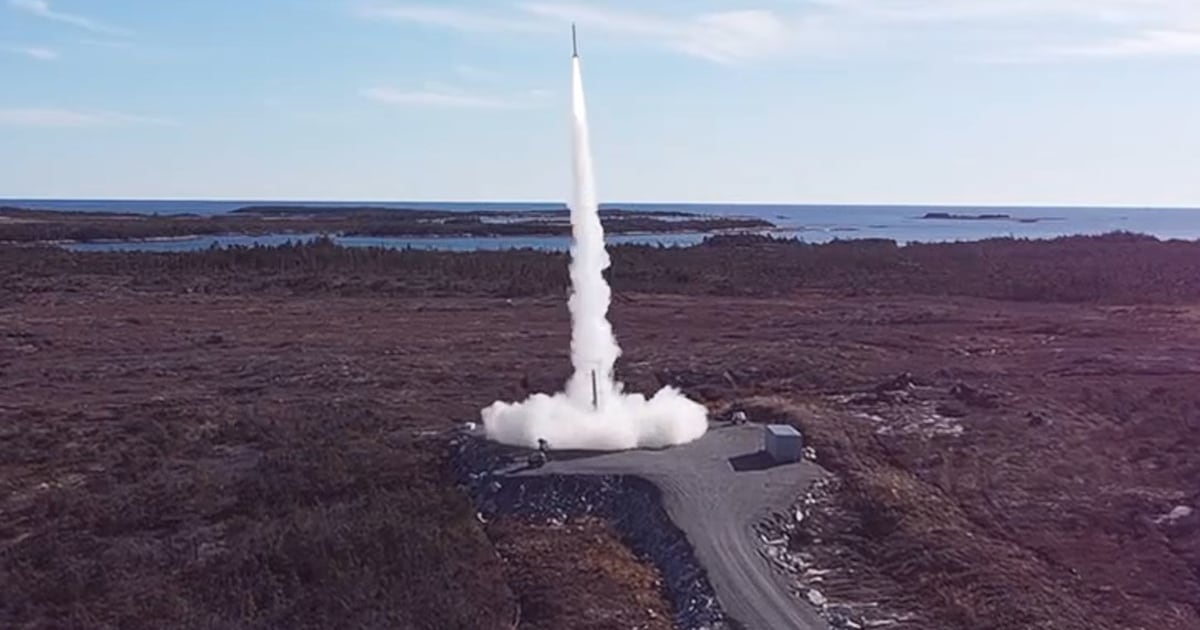
Steve Matier, founder, president and CEO of Maritime Launch, joins BNN Bloomberg to discuss Canada’s sovereign space launch capabilities.
Maritime Launch has secured a major long-term agreement that supports the buildout of its Nova Scotia spaceport and strengthens its position in the global launch market.
BNN Bloomberg spoke with Steve Matier, founder, president and CEO at Maritime Launch, about construction progress, customer demand and how the deal supports the company’s path toward full orbital launch operations.
Key TakeawaysMaritime Launch secured a $200 million, 10-year agreement that supports development of its Nova Scotia spaceport. The deal provides steady revenue and near-term cash flow as the company advances construction and infrastructure. The company is targeting full orbital launch capability by the end of 2027. Maritime Launch is attracting international interest, including potential customers seeking favourable launch conditions. The company is positioning itself to capture growing demand for launch services amid global capacity constraints.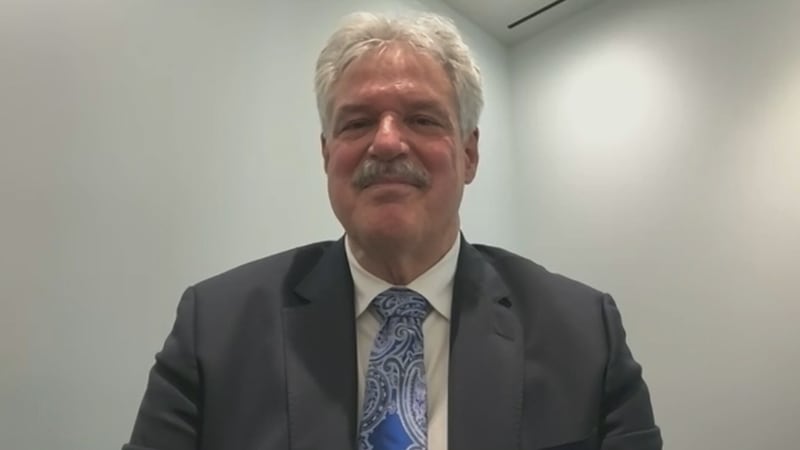 Steve Matier, founder, president and CEO of Maritime Launch Steve Matier, founder, president and CEO of Maritime Launch
Read the full transcript below:
ROGER: Canada is taking a major step toward sovereign access to space with a landmark deal that brings the Department of National Defence on as a long-term tenant at Spaceport Nova Scotia, backed by a $200 million, 10-year agreement. Here to provide more on this new deal is Steve Matier, founder, president and CEO of Maritime Launch. Steve, thanks very much for joining us.
STEVE: Very much my pleasure. Thank you for allowing me to be here.
ROGER: Congratulations on this deal with the Department of National Defence. What does it mean? What are you going to be doing for them?
STEVE: We are going to be enabling the rest of this site for them and our other clients that are intending to launch their rockets and satellites into orbit from Spaceport Nova Scotia.
ROGER: And you’ve had some test launches. Where are you in the process right now?
STEVE: Yeah, so we’ve done several suborbital launches, have another one slated for this coming June and another one in October. Those have been great training exercises for us to help build our team — that team being NAV CANADA, Transport Canada, my team, the RCMP, etc. And those have been really fortuitous in helping to build out for the orbital launches to come. In the meanwhile, we’ve also restarted construction today with the season kicking in and expanding roads. And we’ve got design teams working on the building designs as we speak to get significant construction underway this year as well.
ROGER: And so when do you hope to have, I guess, an official launch, either with Defence or with a commercial client?
STEVE: The official being orbital launch, I would say it’ll be the end of 2027 when we’re fully commissioned and ready to go. And that will depend on which client we finalize and plan for that first orbital launch. There’s quite a few clients that we’re working with. Our model is to enable four launch pads, with two of them taken now, one by DND, one by Reaction Dynamics based in Montreal, and the other two we’re working with some clients on now, selecting among those for that first orbital launch.
ROGER: And I believe you’ve had interest from South Korea, if I’m not mistaken?
STEVE: Yeah, the team in South Korea is really interested in launching from our location. They love the neighbourhood. As you can imagine, launching in their neighbourhood is a little tough. They love the orbital inclinations, meaning the directions that they can launch to without overflying Japan, for example. We’re in a real sweet spot with our location, hanging out over the top of the North Atlantic. So they, and a lot of other clients, are really keen to use what we have to offer.
ROGER: All right, now Canada is looking to be involved in NATO’s STARLIFT. What would that mean for you? How busy do you expect to be?
STEVE: So the space economy big time is headed for a trillion dollars a year in just the next couple of years. That’s the overall commercial space economy. But with the addition of NATO STARLIFT, it speaks to an additional addressable market, because now there are, I think there’s 16 nations now participating in STARLIFT, meaning our launch site is offered into that program. So if there’s a satellite that needs to be launched by some of these other nations for whatever their purposes are, we’ll be able to offer that service to them. So for me, it’s just a plus-up to our addressable market.
ROGER: And you said it’s a trillion — just the launch market is a trillion dollars? You’re talking about the whole space, satellites and everything?
STEVE: Great question. The space economy is a trillion dollars, and you think of Starlink and the services they’re charging us for, etc. The launch portion of it is really only about $10 billion, but understanding that’s the backbone, right? You need a spaceport and you need the launch vehicle to get those satellites made on the ground into orbit. There’s only one way to do it, and that’s what this site really offers with this geographic location over the top of the North Atlantic.
ROGER: And who are you competing with? Where is it? I appreciate — they call it Cape Canaveral anymore, do they? Or no, they’ve changed it back to Cape Canaveral. Who are you competing with?
STEVE: There is just so much market, it’s not really a competition for me. The Space Force in the Florida space world, they’re launching almost twice a week. They’ve got other vehicles coming online with Relativity and then SpaceX and everything else. And I think they’re filled up. It’s really about the fact that there are satellites sitting on the ground that are not getting into orbit. So we’re not taking anything away from anybody. We’re just offering something that the industry really needs more than anything else.
ROGER: And where else is there in the world? I guess Kazakhstan is one?
STEVE: Kazakhstan is one of them. ESA has a site in South America. There’s a couple. Sweden and Norway are trying to go orbital as well. SaxaVord. But understanding each of those locations has their challenges associated with them, the limited orbits that they can reach. For example, ours is in a real sweet spot that we can reach many, many of the key orbits that companies like Telesat are really looking for.
ROGER: And are you making money yet with this?
STEVE: We are generating revenue absolutely already. We actually started that last year with a contract with Reaction Dynamics. We’ve also got a program going for Leaf Space that does data downlink from satellites that they’re selling to their clients. So we’re hosting them. We have this agreement with DND, which is revenue as well. And again, with the two pads and easily half a dozen different clients that are trying to vie for it, we expect to nail down those other two really in quite short order, because I’ve got design teams working on buildings and facilities and layouts and power requirements for the European launcher. It’ll have different power requirements, for example.
ROGER: All right, and just — not random — but what do you think of Artemis going up and seeing a Canadian go up and go around the moon?
STEVE: Jeremy Hansen is fantastic. He’s been a real pleasure. I’ve had the honour and opportunity to meet with him and talk to him about it. He’s certainly been a supporter for this initiative in Nova Scotia, and I wish him Godspeed in his trip around the moon. Looking forward to getting him back.
ROGER: Oh yeah, he’s coming back. Okay, we’ll leave it there. Steve, thanks very much for joining us.
STEVE: Very much my pleasure. Thank you.
ROGER: Steve Matier is founder, president and CEO of Maritime Launch.
—
This BNN Bloomberg summary and transcript of the March 31, 2026 interview with Steve Matier are published with the assistance of AI. Original research, interview questions and added context was created by BNN Bloomberg journalists. An editor also reviewed this material before it was published to ensure its accuracy and adherence with BNN Bloomberg editorial policies and standards.