

Listen to this article
Estimated 4 minutes
The audio version of this article is generated by AI-based technology. Mispronunciations can occur. We are working with our partners to continually review and improve the results.
Federal NDP Leader Avi Lewis is calling for cooperation despite a growing public rift with Saskatchewan NDP Leader Carla Beck over fossil fuel policy.
In an interview with CBC’s Power and Politics on Monday, Lewis emphasized shared priorities, even as Beck has criticized his opposition to new fossil fuel development.
“Let’s work together on grocery prices, let’s work together on housing, let’s work together on finishing Tommy Douglas’s dream of head-to-toe public health care,” Lewis said.
At the same time, he made it clear he will not back away from his position on fossil fuels.
“I’ve been consistent on these policies,” he said. “We have a massive mandate from the federal NDP base, so reversing myself would just be weird.”
Lewis acknowledged differences across the party, saying “there are going to be some points of friction,” but made reference to a meeting he had with Manitoba Premier Wab Kinew, who told him they didn’t have to agree on everything to accomplish their goals.
“Our tent is growing. It’s a good sign that we have healthy democratic debate in our party,” Lewis said.
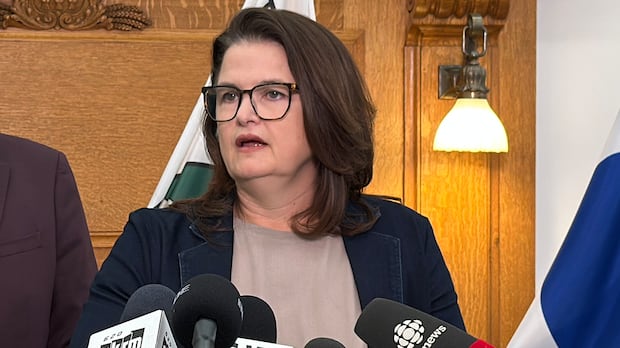
Beck, meanwhile, is holding firm, saying she is focused on issues in Saskatchewan.
Speaking to reporters on Monday, she declined to expand on her open letter issued on Saturday, in which she criticized Lewis.
“We’re focused on the people of this province, on providing choice, an alternative,” Beck said.
Her party is “laser focused on providing practical solutions that apply here in this province that are going to ensure jobs, affordability, a bright future for people in this province,” she said.
Premier Scott Moe, speaking to reporters after question period on Monday, said the provincial and federal NDP have similar goals and share the same mandate. He also criticized Lewis, calling him “one of the more radical left-wing leaders” the party has elected and accusing his policies of threatening Saskatchewan’s economy.
“What this new NDP leader is bent on doing is actually destroying half of the economy, and then nationalizing the other half,” Moe said.
‘It’s a smart move on her part,’ expert says
Observers say the divide reflects deeper political realities in Saskatchewan, and competing ideas about how the NDP should position themselves.
Raymond Blake, a history professor at the University of Regina, said the split is not surprising in a province where resource industries are central to the economy.
“The Saskatchewan NDP is very much looking to win support in a province where oil and gas all matter and matter greatly,” Blake said. “She really had very little options other than to distance herself from them.”
Blake said while historically the NDP has represented the “conscience” of a nation, that doesn’t usually translate to success in forming government or being a party-in-waiting.
“I think Carla Beck probably learned from the last election that it’s the bread and butter issues that get people excited around election time,” he said.
“It’s a smart move on her part.”
WATCH | Will Avi Lewis’ leadership revive or break the NDP?: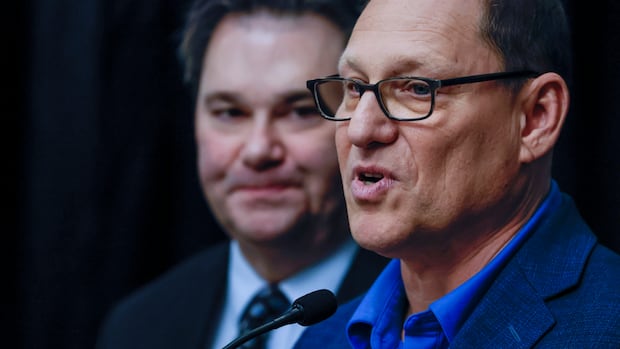
Will Avi Lewis’s leadership revive or break the NDP?
The federal NDP selected Avi Lewis as its new leader on Sunday, drawing immediate criticism from the Alberta and Saskatchewan NDP as they attacked Lewis for past comments and his stance on fossil fuels. Lewis joins Power & Politics to defend his policies and his vision for restoring a caucus reduced to six seats. Plus, Housing Minister Gregor Robertson defends his nationwide progress on housing despite what he calls a ‘challenged’ Ontario market.
Emily Eaton, a professor in the Department of Geography and Environmental Studies at the U of R, said the provincial party is taking a defensive stance rather than defining its own position.
“They’re sort of anticipating the [Saskatchewan Party] attacks, and trying to say, ‘No, we’re not them,'” Eaton said. “They’re really worried about their image and their reputation.”
Beck wrote in the open letter that Lewis’s position on fossil fuels was “antithetical to the values of a party built with and for working people,” but Eaton said that framing leans on a long-standing narrative that fossil fuels are essential to Saskatchewan’s economy, which has been reinforced by the Saskatchewan Party and industry.
“The NDP provincially has a long history of pushing back against that narrative and saying actually there is another way,” Eaton said.
Lewis’s campaign tapped into the energy of younger voters focused on affordability and climate action, the provincial NDP has not been able to replicate, Eaton said.
“We can harness these resources for our own well-being, and here I think they’ve really failed to do so.”