
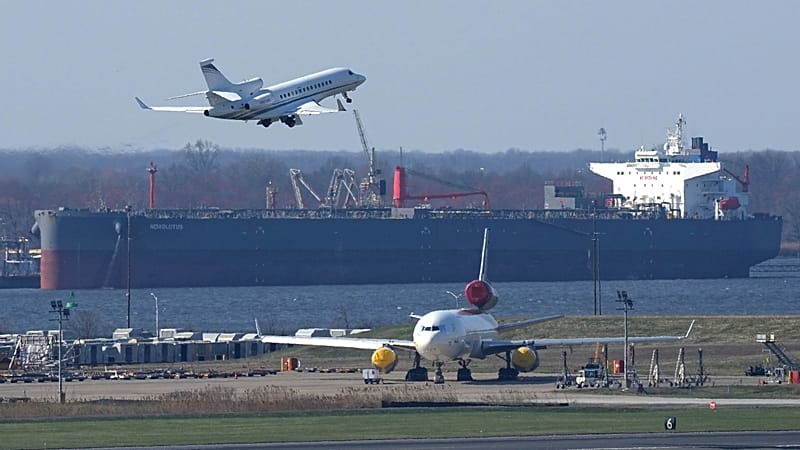
Tourists planning summer holidays face a difficult decision as the disruptions to global oil supplies, caused by the conflict in the Middle East, have spiked jet fuel prices leading to increases in flight costs that are passed on to passengers.
According to the International Air Transport Association’s latest monitor, the global average jet fuel price stood at $195.19 per barrel last week, down 0.9% from the previous week, but still more than double the levels from late February.
In the US, the Argus US Jet Fuel Index recorded over $4.60 per gallon on Monday, up sharply from around $2.50 before the conflict began.
Even if the Iran war ceases or at least eases in the short term, the disruptive effects to jet fuel prices, and consequently airfare, are likely to linger.
Fuel typically represents 25-35% of airline operating costs and the rise in prices has prompted swift action across the sector.
United Airlines announced a 5% reduction of its planned flights, Scandinavian carrier SAS is cancelling at least 1000 flights next month, Air New Zealand is trimming capacity by 5% and has cancelled approximately 1100 services until early May.
Cathay Pacific increased prices on all routes, Thai Airways has signalled expected fare rises between 10% and 15%, while AirAsia and Qantas have also introduced temporary surcharges, to name a few examples.
Carriers with hedging programmes, such as Lufthansa and Ryanair, have been able to mitigate some exposure by locking in earlier prices.
Related
The adjustments made by the airlines reflect a broader effort to manage margins amid supply constraints and rerouting demands.
Routes avoiding the Middle East have seen increased traffic, contributing to higher operational costs and selective fare adjustments.
While some long-haul operators have passed on costs more aggressively, short-haul and domestic markets are also experiencing upward pressure, with spring and summer fares already reflecting the new reality.
Anita Mendiratta, special adviser to the Secretary General of UN Tourism and an aviation expert, told Euronews that early warnings and fears are starting over jet fuel deliveries into the UK as the western hemisphere summer travel season nears.
“While the UK government position is that there are no immediate concerns about fuel supply and that the UK benefits from diverse and resilient supply chains, the issue airlines are focused on is not crude oil availability but refined jet fuel and the logistics of getting that fuel to airports,” Mendiratta stated.
Story Continues
On Tuesday, US President Donald Trump addressed the issue of rising jet fuel prices and named the UK specifically, suggesting that they should “buy from the US, we have plenty,” and to get involved directly in securing the Strait of Hormuz.
Mendiratta also described to Euronews how airline companies make logistical decisions based on the increased costs. These determinations will have a profound impact on the holiday destinations available to passengers in the case of the Iran war prolonging.
“Jet fuel cannot be stored in large quantities at airports, and the system relies on continuous deliveries through refineries and pipelines. That means even short disruptions can create operational challenges quite quickly, particularly at large hub airports,” she explained.
“If fuel availability becomes constrained, airlines do not shut down whole networks. Instead, they prioritise routes where each flight generates the most revenue and supports the wider network,” the expert added.
“In practice, that means long-haul routes, hub flights and business travel are protected, while lower-yield leisure routes and some short-haul flying may see reduced frequency,” Mendiratta concluded.
Travellers are confronting higher ticket prices and fewer flight options at a time when many had anticipated more affordable summer holidays following the post-pandemic recovery.
According to industry reports, the combination of rising fares and schedule reductions is creating uncertainty, with some tourists delaying bookings in anticipation of potential diplomatic progress that might stabilise oil markets.
Travel agents report clients shifting towards flexible options or closer destinations to limit exposure to further volatility.
A Booking.com spokesperson told Euronews that “regardless of what’s going on in the macro environment, airlines adjust their flight prices based on demand and availability, with prices generally increasing as the date of travel approaches, particularly in the last three weeks before the desired departure date.”
“As people are making their summer travel plans, we recommend setting up a price alert to keep track of any fluctuations,” the spokesperson added.
 Travellers at Denver International Airport, 23 March 2026 – AP Photo/David Zalubowski
In a related development, the European Commission is urging Europeans to consider travelling less to help avoid spiralling energy costs linked to the Iran war.
In a letter to national energy ministers seen by Euronews, EU energy chief Dan Jørgensen called for “voluntary demand saving measures […] with particular attention to the transport sector,” which could include asking citizens to drive or fly less to conserve fuel for essential uses.
Mendiratta noted that summer demand remains robust but consumer behaviour is indeed shifting.
“The travel data so far suggests that people still intend to travel this summer, but they are behaving differently,” she told Euronews.
“Flight searches are up and forward bookings are holding, but travellers are booking earlier, staying slightly longer and being more price sensitive […] the picture is not one of falling demand, but of demand moving and becoming more sensitive to price and disruption risk,” the expert concluded.
So, should you book those holiday flights now? In this jet fuel crisis, the only certainty is uncertainty.
Prices could spike higher tomorrow or plummet if the Iran war ceases, travellers have to weigh the risks of locking in the current elevated fares against the possibility of further increases or sudden capacity cuts. There is no straightforward answer.
For many, booking earlier with flexible or refundable options may provide protection and comfort, while others prefer to monitor developments closely and set price alerts.
In either case, the prudent approach is to stay informed, assess personal travel needs and prepare for continued volatility as the summer season approaches.