
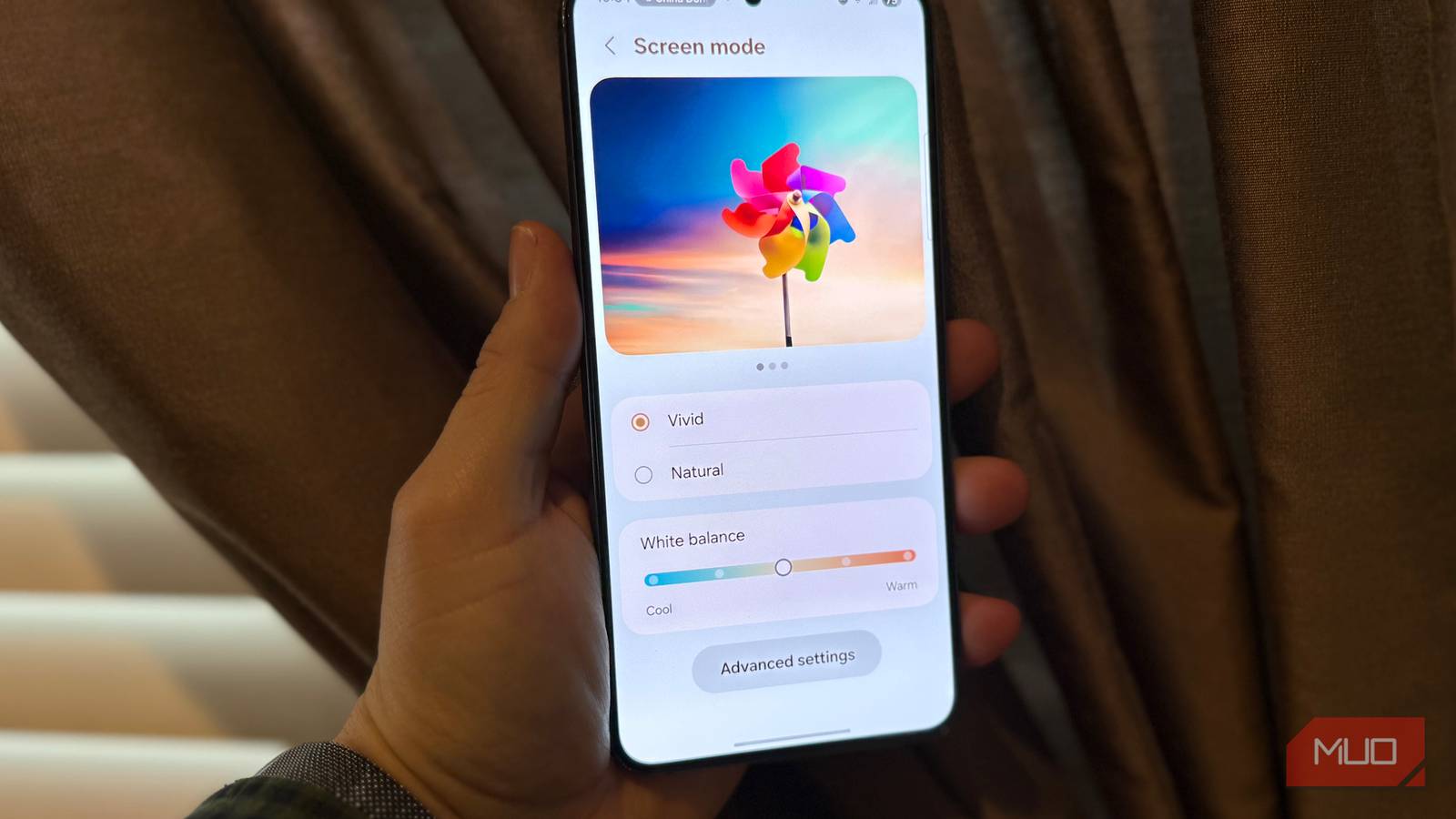
Ever since we saw the first AMOLED screens back in 2008 (Samsung was among the first with its i7110), we have been smitten by overly saturated displays. Green grass turned a vivid shade of green that almost looked neon. App icons on home screens would pop with so much color that the icons almost leaped off the screen. And overall, our phones gave us a view port into a world of color so beyond what our retinas can actually infer that we became used to vivid, bright colors, and this became the default setting on most phones (and don’t even get me started on dark mode, which is terrible for legibility).
I’m here to tell you that it doesn’t have to be this way (but be sure to color calibrate your PC monitor) — that your phone can be a window into more realistic colors that don’t distract or exaggerate. I’ll explain why boosted/vivid color settings are robbing you of experiencing the authenticity of the world, and more importantly, how to tweak your color settings to be more realistic.
Boosted colors are fake
Take a look at these before and afters
I put together the above gallery, and I encourage you to flip through it. The images on the left are from my Pixel 10 Pro in natural (not boosted) color mode, and the phone on the right is my Samsung Galaxy S22 Plus with the default Vivid color mode enabled.
In every case, the colors are so extreme on the Samsung on the right that they look fake. I’d argue that they look ugly. The green grass is neon; the blue ball is almost a comical shade of blue; the orange clementine looks like it’s made of wax (it’s not, it’s real).
The question is: why would you want this? Why do you want your phone to show colors so extreme that they have little to do with reality?
Sure, you might experience a greater dopamine hit when you see bananas that are bright yellow versus a more muted yellow, like in real life. But photography should be about accuracy and emotion. If you printed these photos for framing, the resulting prints would not be reminiscent of the original scene. Instead, the resulting prints would look like an alternate reality where you went into a photo app and boosted all the colors.
Photos with boosted colors create a real disconnect between your memory of something and the photo you have to help you remember it. A color-boosted clementine might look nice, but the reality is that the clementine was never that orange.
The question is: why would you want this? Why do you want your phone to show colors so extreme that they have little to do with reality?
Saturated colors are distracting
This is not what developers intended
If you’re like me and are trying to use your phone a bit less, boosted colors are not helping. Overly saturated colors trigger dopamine release in your brain, much like scrolling through social media, which rewards your brain and makes it more difficult to stop using it. By making the colors slightly more dull and realistic, your phone is slightly less interesting to use, because let’s face it, real life doesn’t usually have dramatic colors unless you’re at the zoo looking at an exotic bird or at the beach looking at pristine turquoise water. That said, if you insist on OLED for your PC monitor, just make sure you don’t pick the wrong one.
How to change your phone to show natural colors
You’ll feel better quickly
Credit: Brandon Miniman / MakeUseOf
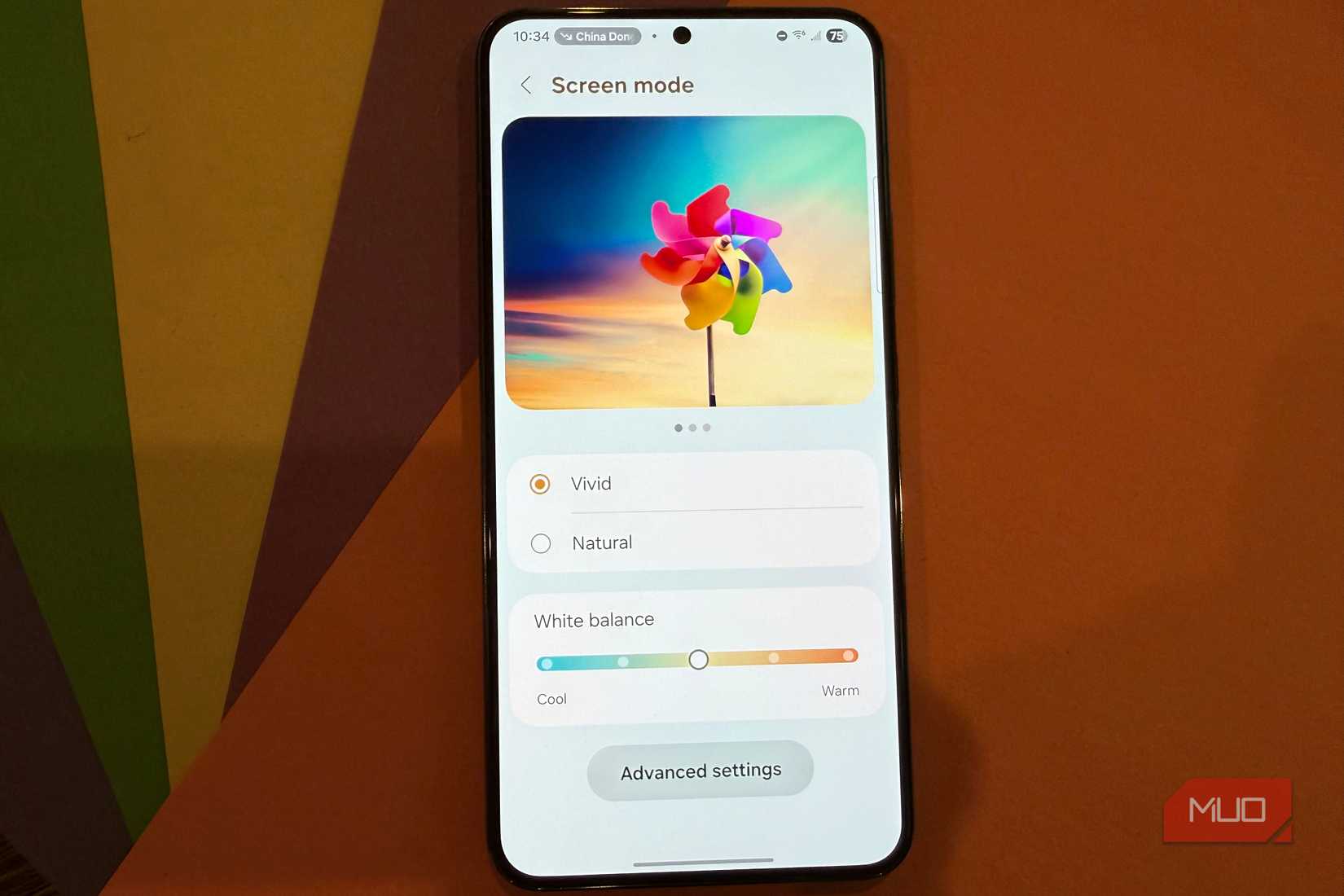
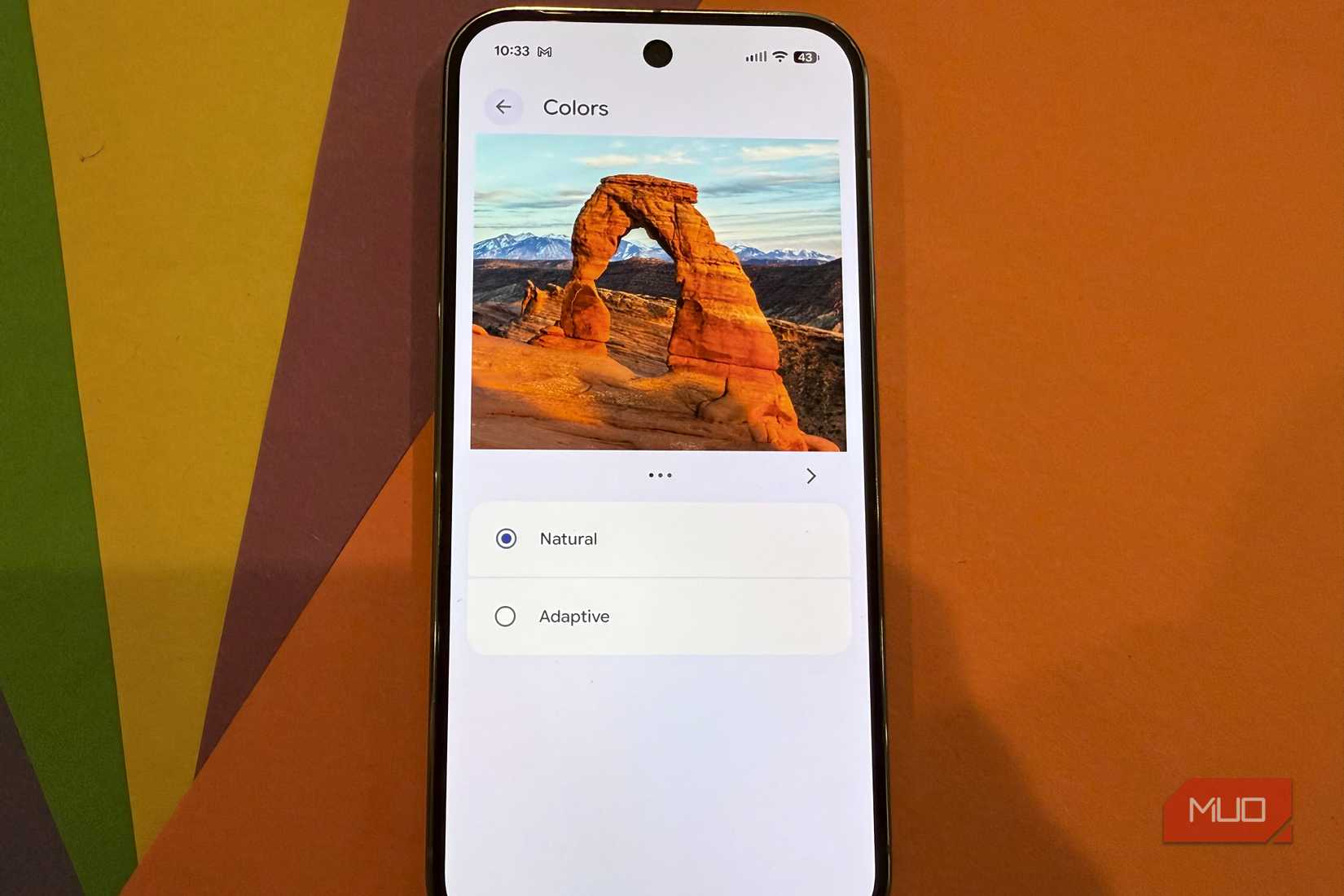
This is an easy fix, but it varies by the phone you have. In most cases, color saturation settings can be found in Settings -> Display.
An easier way to do this is to just search your settings for “Color” and look for Screen Mode (Samsung) or “Colors” (Pixel). Then, change your mode to Natural.
Accurate colors matter for a variety of reasons, and your phone is lying to you if you have boosted colors turned on
You don’t need exaggerated colors
There’s no benefit and it’s distasteful
Credit: Brandon Miniman / MakeUseOf
There’s a one-time wow you experience when you look at something with vivid colors. That wow is a novelty that quickly fades.
Also, boosted colors are great for retail environments where you are comparing multiple phones. Your eye is naturally attracted to phones and devices with the boldest colors and brightest screens. That is why when you go to Best Buy or any retail store, all the devices are set to 100% brightness and maximum color boost.
Accurate colors matter for a variety of reasons, and your phone is lying to you if you have boosted colors turned on. When buying things online or looking at clothing, you’re getting an inaccurate depiction of how things look in reality. Not only that, but boosted colors look cheap, in the same way that someone with low confidence has to wear a lot of cologne or wear a fancy watch: it’s not authentic, it’s not real, and there’s virtually no benefit at the end of the day, so why do it?