
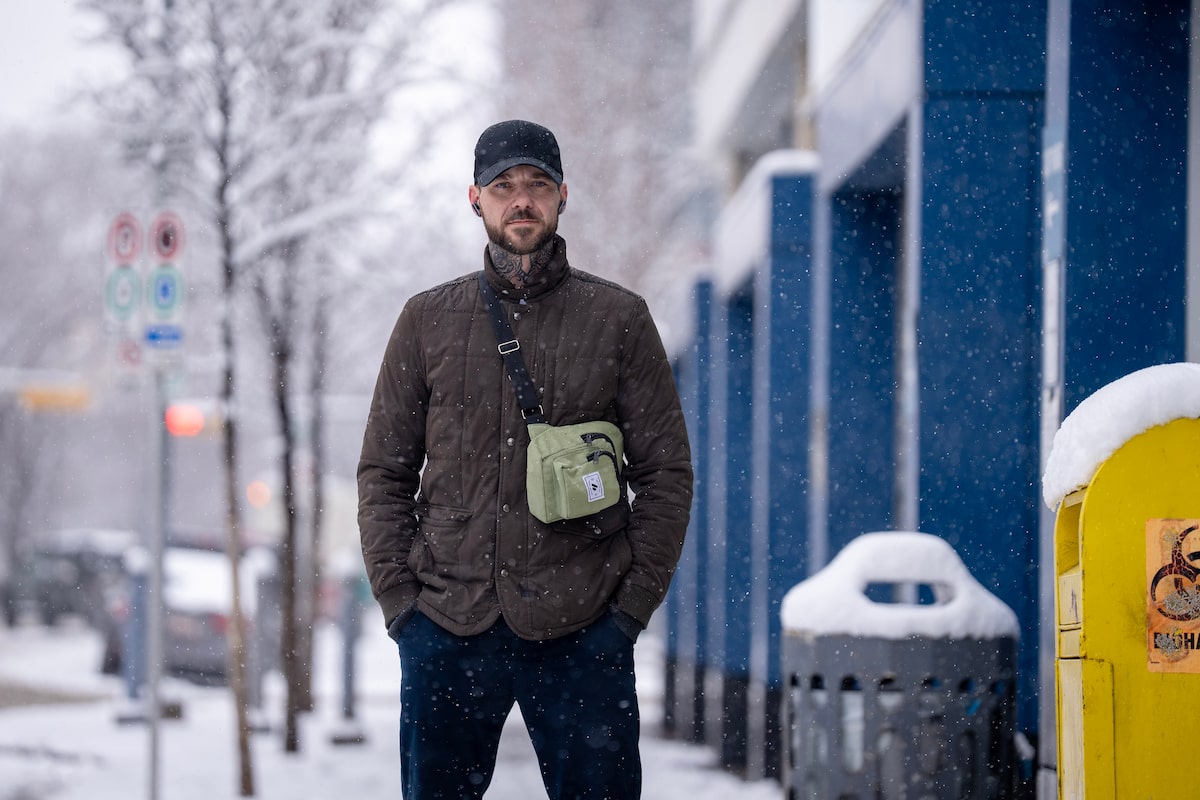
Travis Peddie, who has previously relied on supervised drug-use sites in Alberta, stands outside the shuttered site in Calgary on Thursday.Todd Korol/The Globe and Mail
Travis Peddie has relied on supervised drug-use sites in Alberta over the past six years to keep him safe while using illicit substances. He says staff have reversed many of his overdoses, saving his life over and over again.
These health care workers have not only provided critical medical supervision, but a caring environment where, he said, they loved him until he could love himself. The 41-year-old father said it is because of them that he is now in recovery, but he is afraid of relapsing and having no place to go.
That’s why Mr. Peddie this week served the Alberta government with a legal action over its closings of drug-use sites in Calgary and Lethbridge, both of which he has depended on. He alleges that the closings violate his Charter-protected rights and increase the risk of harm to himself and others.
Ontario should restore funding for supervised drug-use sites, former Toronto mayors say
“All those people who are using those sites, they are somebody’s son, somebody’s daughter, somebody’s mother, somebody’s sister, somebody’s brother,” Mr. Peddie said in an interview. “If those places close down, then those people will die.”
Alberta last month announced it would be closing the Safeworks drug-use site in Calgary and a mobile unit in Lethbridge on June 30. Mike Ellis, Minister of Public Safety and Emergency Services, argued the sites are dangerous to the community and do not help people recover from addiction.
Drug-use sites have been a point of contention across the country, particularly among conservative-leaning governments. While advocates stress that the sites save lives and help connect people to social supports, critics have expressed concerns over public safety and crime.
The United Conservative government has now faced five legal actions over its restrictions to harm reduction services, including its cuts to an opioid treatment program in 2020 and standards for opioid prescribing in 2023. The province is also facing a separate challenge, filed in 2024, over its closing of the Red Deer drug-use site.
In photos: The last days of Kitchener’s supervised drug-use site
Avnish Nanda, who has represented plaintiffs in all five cases, including Mr. Peddie, said drug-use sites help people pave a path toward recovery, keeping them alive until they are willing and able to pursue it.
“Narrow, ideological, anti-science beliefs should not place vulnerable people like Travis in front of death’s door for no reason,” Mr. Nanda said. “The government should enact policies that are for the benefit of the people, not to harm the people.”
Mr. Peddie is seeking an injunction to keep the Calgary and Lethbridge sites open. The legal action will be filed in the Court of King’s Bench of Alberta.
It alleges that Alberta is breaching three Charter rights, including Mr. Peddie’s: the right to life, liberty and security of the person; the right not to be subjected to any cruel and unusual treatment or punishment; and the right to equal benefit and protection under the law.
None of the allegations have been proven in court.
Nathaniel Dueck, press secretary to Rick Wilson, Minister of Mental Health and Addiction, said Alberta will “vigorously defend” its position but declined to comment further on a matter before the courts.
Mr. Peddie, who was born and raised in Calgary, suffered from low self-esteem and self-worth at a young age, turning to marijuana and alcohol to feel better. At 14, he was kicked out of his family home and started living on the streets or in group homes.
He started using cocaine, ecstasy and other stimulants, eventually turning to crack cocaine. Mr. Peddie sold drugs to fund his substance use and, at 30, was sent to prison for trafficking.
He served five years at Bowden Institution, where he was introduced to Suboxone, a medication used to treat opioid-use disorder. Before then, he had never used an opioid. When he was released on parole in 2019, the withdrawals were so bad that he turned to street-sourced fentanyl.
Alberta man asks province’s top court to fast-track appeal of drug-use site closing after overdose
His overdoses became so frequent that a friend pointed him to the supervised drug-use site in Lethbridge.
“I was just grateful to have a safe place,” said Mr. Peddie, who soon returned to prison to finish his sentence in Grande Cache, again using Suboxone. He was released in 2021, after the outbreak of COVID-19.
He frequently visited the drug-use sites in Calgary and Lethbridge at that time. They fed him, let him stay inside for hours after bad overdoses and, most importantly to him, treated him as a human and friend.
Eventually, staff encouraged him to enter detox, and he stopped using drugs for roughly four years, during which he built a “beautiful life” and had his daughter, who is now 3.
Mr. Peddie relapsed last July and, in December, entered recovery again. He said long conversations with staff at the Calgary site about being a dad helped him see life from a different perspective.
“That’s my purpose,” Mr. Peddie said of his daughter, holding back tears. “Being in recovery gives me the opportunity to be a present and loving father, which I work very hard at today.”
Although he hopes it won’t happen again, he knows there is a chance he could relapse. He doesn’t want himself or others to die from a lack of safe venues for drug use.
“Supervised consumption services kept me alive until I was able to access recovery,” he said. “If it were not for supervised consumption services when I relapsed, I would have died.”