
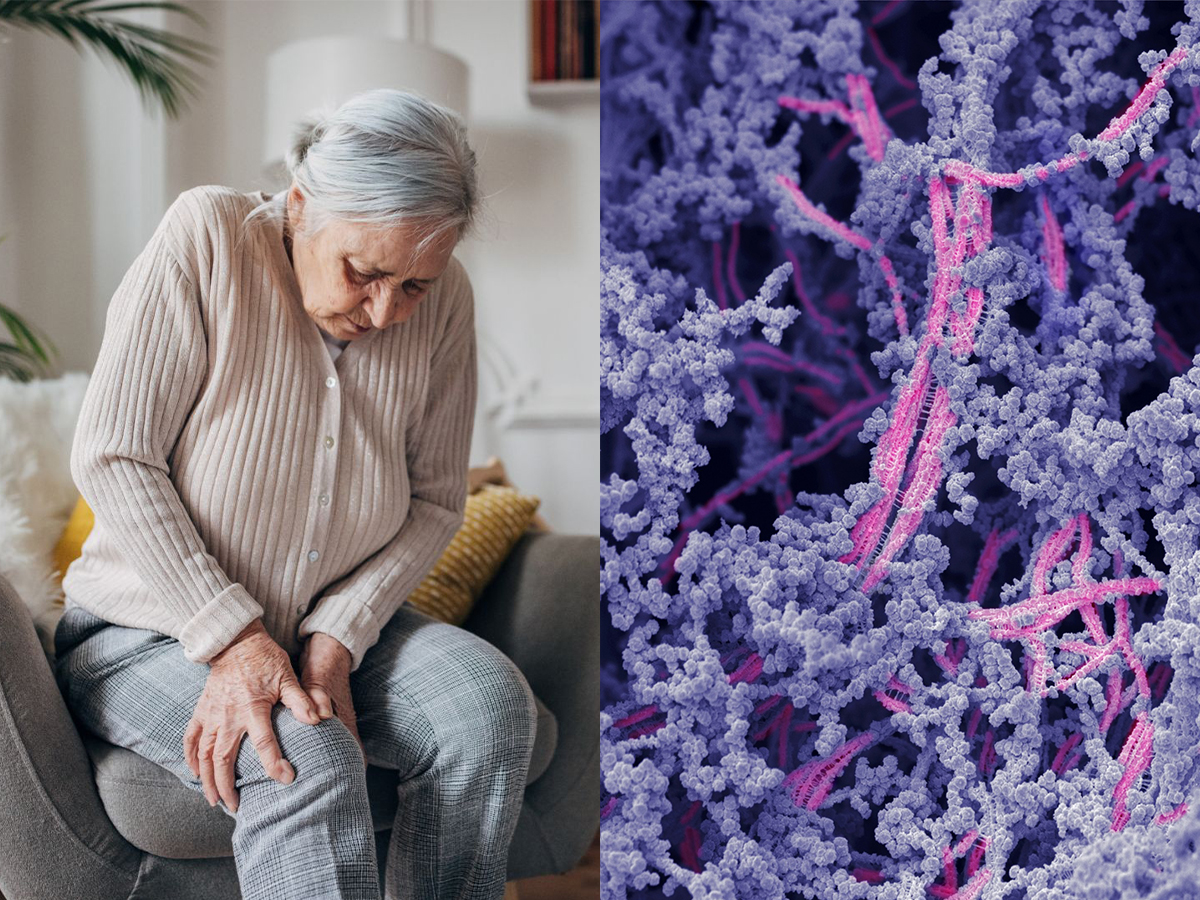
Science might be closer than ever to solving your aching knee problems. Researchers at Northwestern University have created a rubbery goo that can regrow cartilage in damaged knees.
Cartilage cushions joints, keeps movement smooth and pain-free, and reduces pressure on bones—from standing still to a vigorous hike. However, when it’s damaged by injury or simple wear and tear, the road to recovery can be extremely challenging. Cartilage has a very limited ability to regrow and heal itself.
 A doctor examines a knee.
Photo credit: CanvaRegrowing cartilage with a rubbery goo
This breakthrough bioactive material doesn’t just passively sit in the body, it binds to and integrates with surrounding tissue, promoting cartilage regeneration. The substance forms a network of components that imitate the body’s natural environment. A scaffold-like structure allows cells to connect and rebuild cartilage tissue.
“The problem is that, in adult humans, cartilage does not have an inherent ability to heal,” said Samuel I. Stupp, who led the study. “Our new therapy can induce repair in a tissue that does not naturally regenerate. We think our treatment could help address a serious, unmet clinical need.”
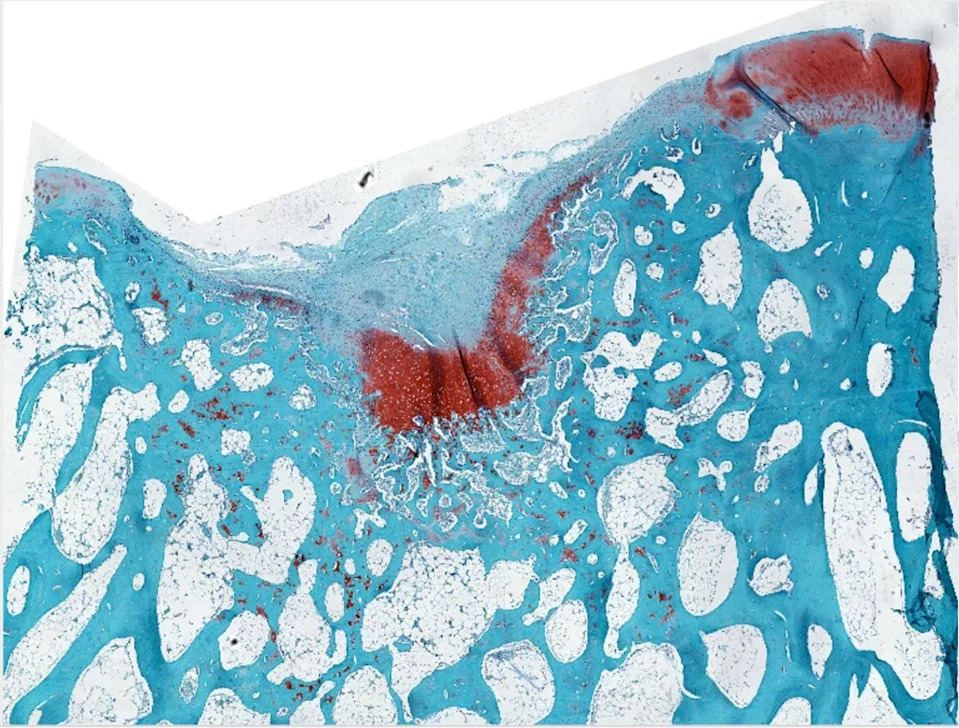 Bioactive material regenerates high-quality cartilage
In the study, Stupp and his team applied the material to damaged cartilage in sheep. These animals have weight-bearing loads comparable to human knees.
The biomaterial, made from short protein fragments and a modified version of hyaluronic acid, behaves similarly to naturally occurring cartilage in the body. Stupp explained the reasoning behind using hyaluronic acid, saying, “It’s also naturally found in many tissues throughout the human body, including the joints and brain. We chose it because it resembles the natural polymers found in cartilage.”
After fewer than six months, the new cartilage showed high-quality regeneration and strong indications that the repair could work in humans.
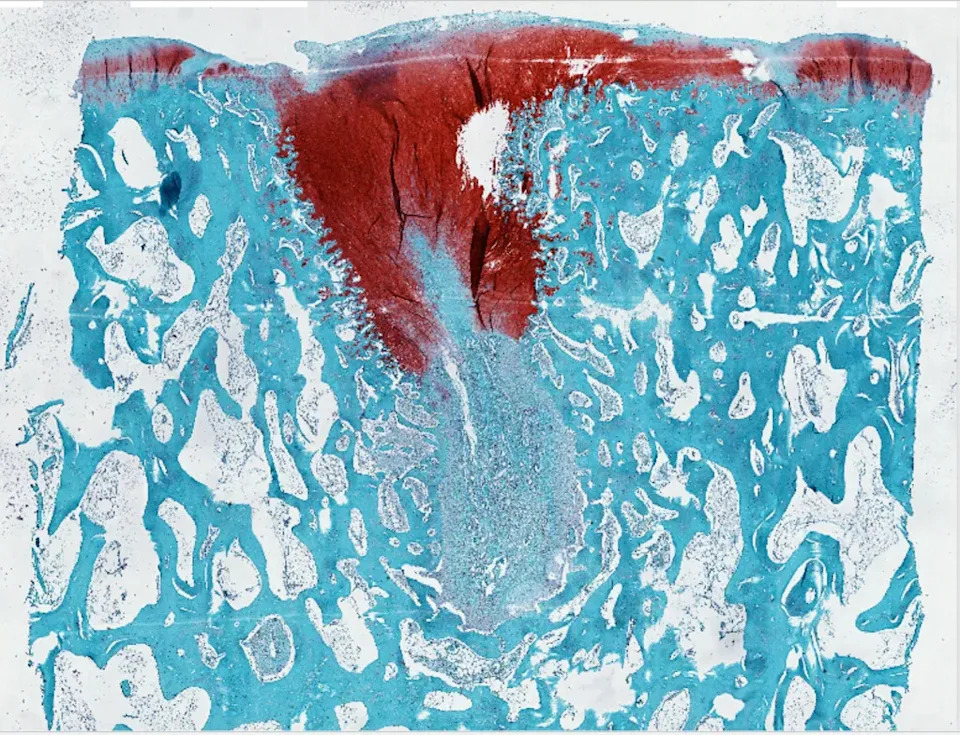 Limited solutions to damaged knees
Cartilage damage is unfortunately very common, affecting more than 500 million people worldwide. For decades, the message has been discouraging: once cartilage is damaged or disappears, it’s gone for good.
A 2025 study found that current treatments, such as surgery, cell implants, and microfracture, may help in the short term but often produce weaker cartilage soon after. Failure rates for microfracture surgery have led to as many as 41% of patients requiring total knee replacement. Finding reliable, long-lasting solutions is still a work in progress.
A 2025 study on cartilage repair found that, although many people felt better after surgery, up to 48% developed arthritis over time. Only 17–20% returned to playing sports, and some required additional surgeries, including knee replacement.
 A woman practices yoga.
Photo credit: CanvaStudy hopes to change the standard of care
Researchers believe the bioactive material could be used in most joint surgeries. With these promising findings, the goo-like substance could one day make a meaningful difference for anyone hoping to move without pain again.
“By regenerating hyaline cartilage, our approach should be more resistant to wear and tear, fixing the problem of poor mobility and joint pain for the long term while also avoiding the need for joint reconstruction with large pieces of hardware,” Stupp said.
The post Goodbye, knee pain. In a medical first, scientists have found a way to regrow damaged cartilage. appeared first on Good.is.