
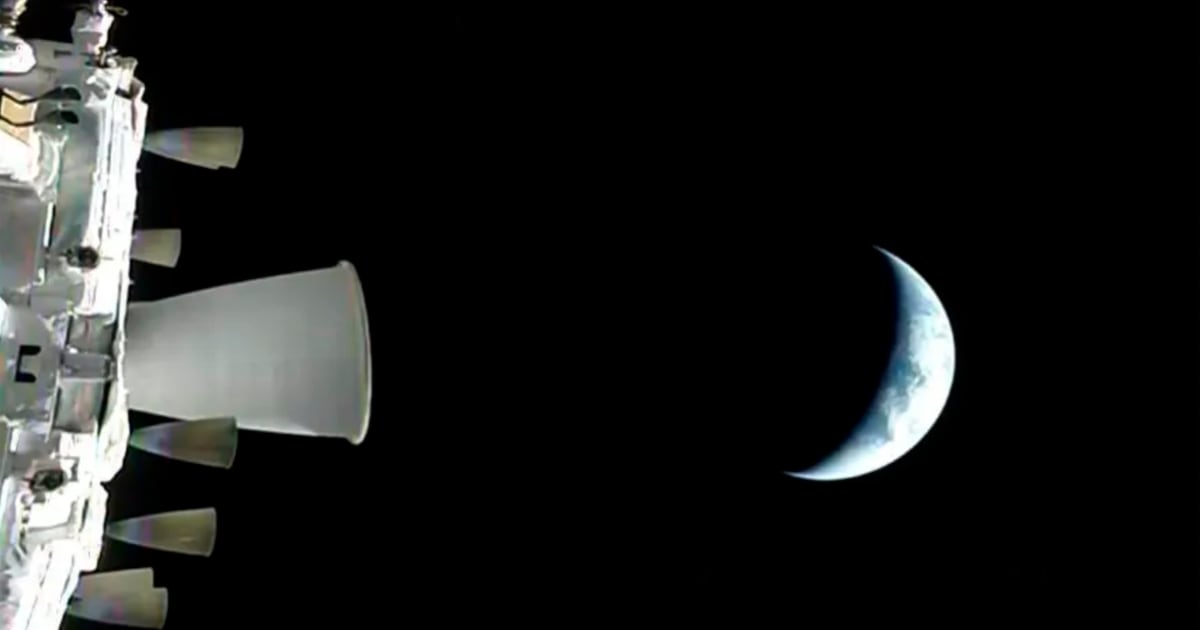
For the crew of the Orion spacecraft, there’s no turning back now.
Following a critical six-minute engine burn Thursday night, the mission has completed its “trans-lunar injection,” kicking the capsule out of Earth’s orbit and on a trajectory that will see it slingshot around the moon.
“Once they’ve committed to a trans-lunar injection, it would take them days to come back. They can’t just simply turn around,” said Mathieu Caron, director of Astronauts, Life Sciences and Space Medicine at the Canadian Space Agency.
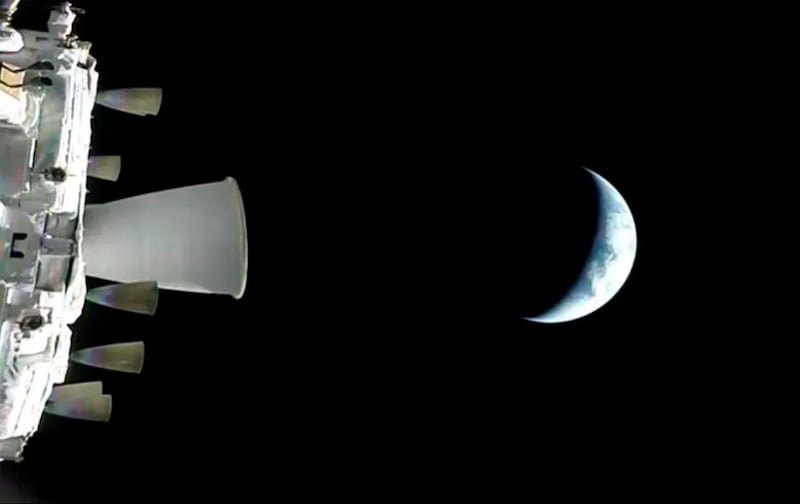 NASA Artemis Moonshot In this photo provided by NASA, a view of the Earth from NASA’s Orion spacecraft as it orbits above the planet during the Artemis II test flight, on Thursday, April 2, 2026. (NASA via AP)
After extensively checking out the life support and other systems while orbiting Earth, NASA flight controllers gave the “go” for the maneuver that effectively leaves the safety of home in the rearview mirror.
While there are ways to shave a day or two off the return trip in an emergency, Caron says the crew is now essentially committed to the deep-space trek.
Soon after the translunar injection burn, Canadian astronaut Jeremy Hansen asked mission control in Houston if he could share the sentiment of the crew as they were officially moonbound.
“We just wanted to communicate to everyone around the planet who’s worked to make Artemis possible that we firmly felt the power of your perseverance during every second of that burn,” Hansen said.
‘Humanity has once again shown what we are capable of’: Jeremy Hansen after critical engine burn Canadian astronaut Jeremy Hansen delivers a message to the ground from the Orion spacecraft after completing its ‘trans-lunar injection’ out of Earth’s orbit.
“Humanity has once again shown what we are capable of, and it’s your hopes for the future that carry us now on this journey around the moon.”
Over the next three days, the crew will monitor the ship’s vitals and perform minor course correction burns. They will also run through safety drills, including performing CPR in space and testing getting in and out of their bulky orange survival suits, which could protect the astronauts if they lose cabin pressure.
Space gym: The flywheel edition
Living in microgravity is tough on the human body, leading to rapid muscle and bone loss. On the International Space Station (ISS), astronauts have the luxury of treadmills and weight-lifting simulators. In the cramped Orion, they have to get creative.
The crew will be staying fit using a compact “flywheel” device that mimics a rowing machine.
“Depending on how quickly you do it or how much resistance you put, you can exercise the muscles or perform aerobic exercises,” said Caron.
He noted that these tests are about more than just this trip: they are laying the groundwork for longer missions in deep space to destinations like Mars.
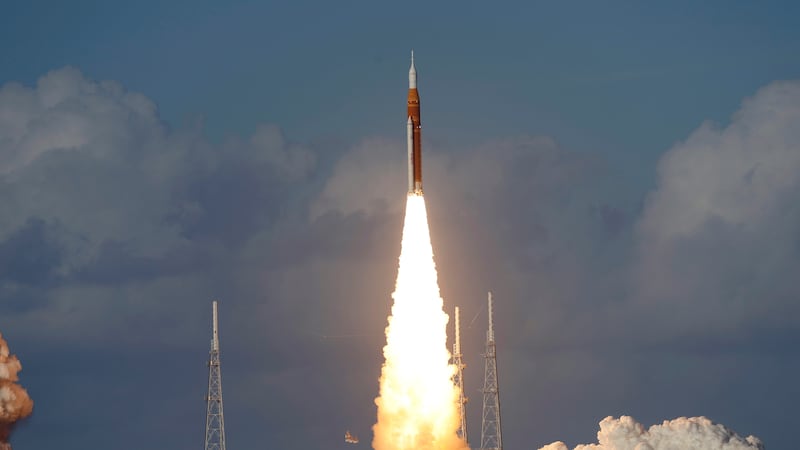 NASA Artemis Moonshot NASA’s Artemis II moon rocket lifts off from the Kennedy Space Center’s Launch Pad 39-B Wednesday, April 1, 2026, in Cape Canaveral, Fla. (AP Photo/Terry Renna) Expect a few ‘blips’
As the mission progresses, Caron warned the public not to panic if they hear about problems and technical hiccups. The lone space toilet on board didn’t work at first, but to the relief of the astronauts, it has been fixed. There was also a brief communication problem after launch.
“With such complex systems, different little anomalies will blip up and down and they’ll be resolved. It’s par for the course,” he said.
The Artemis II mission is all about putting the Orion spacecraft through its paces in preparation for a pair of potential lunar landings in 2028.
Hansen is now the first non-American in history to ever leave low-Earth orbit.
Canadians will get their first live check-in from Hansen early Saturday morning when he’s scheduled to take part in a video chat from space.
Breaking records and losing signal
The mission’s climax begins Monday around 1 p.m. ET when the Orion capsule loops around the moon, surpassing the all-time distance record for a crewed spacecraft — a milestone set by Apollo 13 at 248,655 miles (roughly 400,171 kilometres) from Earth.
The video feed might go dark for a time, however. Communications will be lost for roughly 40 minutes as the astronauts venture behind the moon, which will prevent them from receiving Earth’s radio signals.
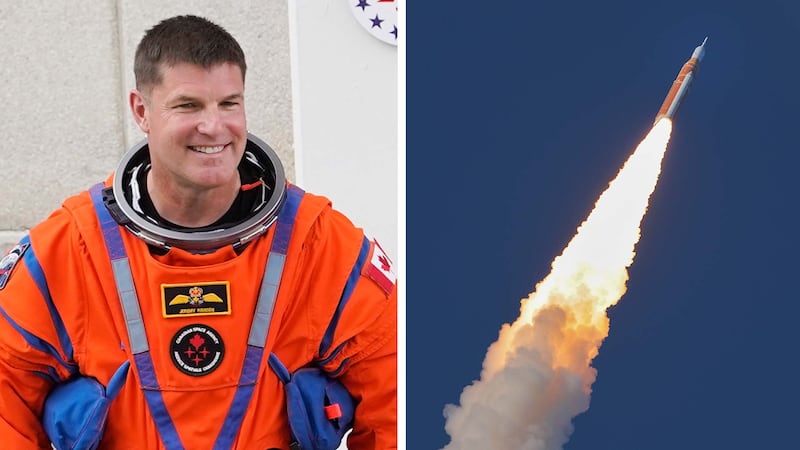 Jeremy Hansen Canadian astronaut Jeremy Hansen on the Artemis II. A taste of home
While he drifts further from Canada, Hansen won’t be lacking for home-cooked flavours. The spacecraft pantry is stocked with five Canadian-made foods:
• Maple syrup and maple cream cookies
• Shrimp curry and rice (made in Quebec)
• Pacific smoked salmon bites
• Breakfast cereal (made in Ontario)
Orion is scheduled to return to Earth with a splashdown in the Pacific Ocean off the coast of San Diego on Friday, April 10.