
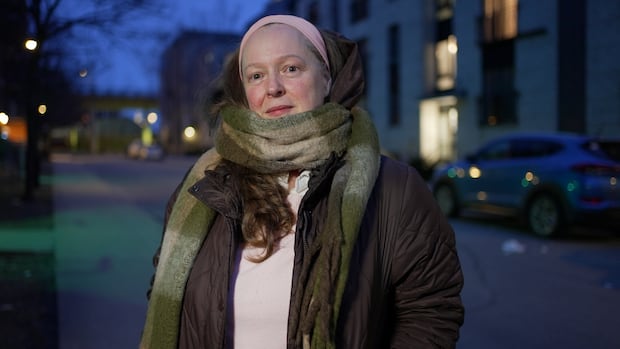
Heidi Miller has lived in a Montreal housing co-operative for 20 years, a tenure that spanned raising her children, the death of her husband and a battle with cancer.
“I’ve had some really tough years, I’ve had some really great years,” she said. “The thing that allowed me to survive through all of this is knowing that I had a place that I could afford.”
But a proposed law has people like Miller worried about the future of housing co-operatives, or co-ops, in Quebec.
Bill 20, introduced by Housing Minister Caroline Proulx, would make several changes affecting access to affordable housing in the province, including co-ops, which are managed by the residents. There’s a board that controls the rent, makes decisions about building management and oversees the resident selection process. This helps keeps costs down for residents.
Bill 20 would make people pay a penalty if their income rises past a certain threshold. What that penalty will be hasn’t been determined yet.
The aim is to improve access to affordable housing, but Miller explained a co-op isn’t just an affordable place to live. It’s a community where residents are carefully selected and, as their income grows, those older, more successful residents tend to have more time to dedicate to the board or other volunteer positions around the co-op, she said.
WATCH | Co-op residents decry Quebec’s Bill 20:
How Quebec’s Bill 20 could impact access to affordable housing, including co-ops
Bill 20, tabled in February, is expected to make several changes affecting access to affordable housing in Quebec, including co-ops. It would make residents of housing co-operatives pay a penalty if their income rises past a certain threshold.
Meanwhile, those balancing multiple jobs and children who have a lower income don’t necessarily have the time to help out around the co-op as much, she said.
Miller is among those urging the government to reconsider lumping co-ops into the same group as affordable housing.
‘Rich people do not come to our co-ops’
The director general of the Confédération québécoise des coopératives d’habitation (CQCH), which represents nearly 500 housing co-operatives across Quebec, said the government is taking the wrong approach.
“We don’t have to make a law for all the co-ops,” said Sandra Turgeon. “Rich people do not come to our co-ops, and if they try, we don’t welcome them.”
 Housing Minister Caroline Proulx says the government has been listening closely to housing and co-op groups as part of special consultations on the bill. (Sylvain Roy Roussel/CBC)
A 2024 report from Quebec’s auditor general found that roughly one in 10 households in affordable housing make more than the financial eligibility criteria allow. For a single person in Montreal, that’s just under $60,000 annually.
“It’s not easy to leave the co-op. It’s not easy to buy a house or a condo, or to leave the co-op and stay in the area,” Turgeon said, noting only about 20 per cent of co-op households earn more than $60,000.
She said the proposed law hurts the long-term viability of co-ops. It would be detrimental for people to know they will be asked to leave or pay a fine if they start earning more income, she said.
And, Miller added, that essentially takes away the carrot on a stick — discouraging people from succeeding. On the other hand, co-ops provide a lower-cost housing opportunity while people build their lives, she said.
Concerns brewing over bill
Co-op residents aren’t the only Quebecers concerned about Bill 20. Stakeholders in the community housing sector have been lamenting the bill, which is aimed at improving access to housing. Opponents say it only offers “ad hoc fixes” instead of structural measures to address the affordability crisis.
“The priority issue remains the collective ability to increase and protect the supply of non-profit housing, a central aspect that is nevertheless absent from the bill,” stated the affordable housing advocacy group, Alliance des corporations d’habitations abordables du territoire, in its brief to the government.
In a statement to CBC News, the housing minister says the government has been listening closely to housing and co-op groups during special consultations on the bill. Those consultations ended this week.
Proulx declined to answer further questions, saying it would be premature given that the bill has not yet been passed and that consultations will also be held on the draft regulation.
Miller reached out to the Québec Solidaire MNA for Laurier-Dorion, Andrés Fontecilla, for help. His team wrote back in an email, agreeing that Bill 20 “significantly undermines” co-ops.
Fontecilla is the opposition party’s spokesperson on housing and is “deeply attached to the co-operative model,” the email states. “In the midst of a housing crisis, we believe the government should have better things to do than attack co-operatives.”
Miller, who largely freelanced throughout her career, said her income has fluctuated, but she was able to save money because of her lower housing costs. That money helped her through her bout with cancer. Were she anywhere else, she would have been out on the streets, she said.
“A co-op offers people some stability in terms of a fluctuating world and a fluctuating work market,” said Miller. She said the proposed model “prevents people from building and creating roots.”