
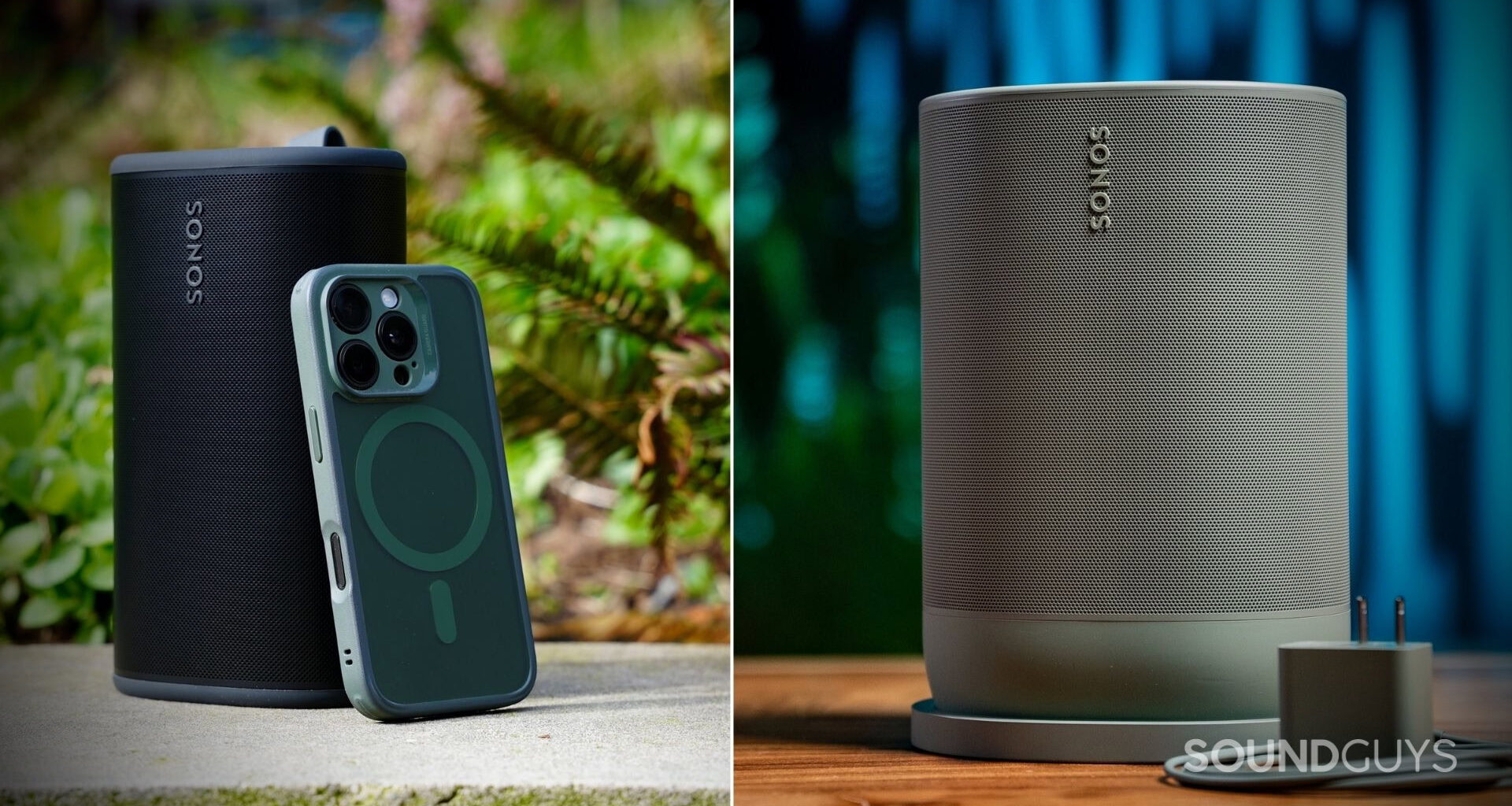
The Sonos Play and Sonos Move 2 do a lot of the same things, so the better pick really comes down to how you plan to use them. Both are portable Sonos speakers with Wi-Fi and Bluetooth, but the Play is smaller and easier to carry around, while the Move 2 gives you more bass, more output, and a bigger overall sound.
So which speaker is right for you? Let’s break it all down in this Sonos Play vs Sonos Move 2 comparison.
How has this article been updated?
This article was published on April 3rd, 2026, and is the first version.
What’s it like to use the Sonos Play compared to the Move 2?
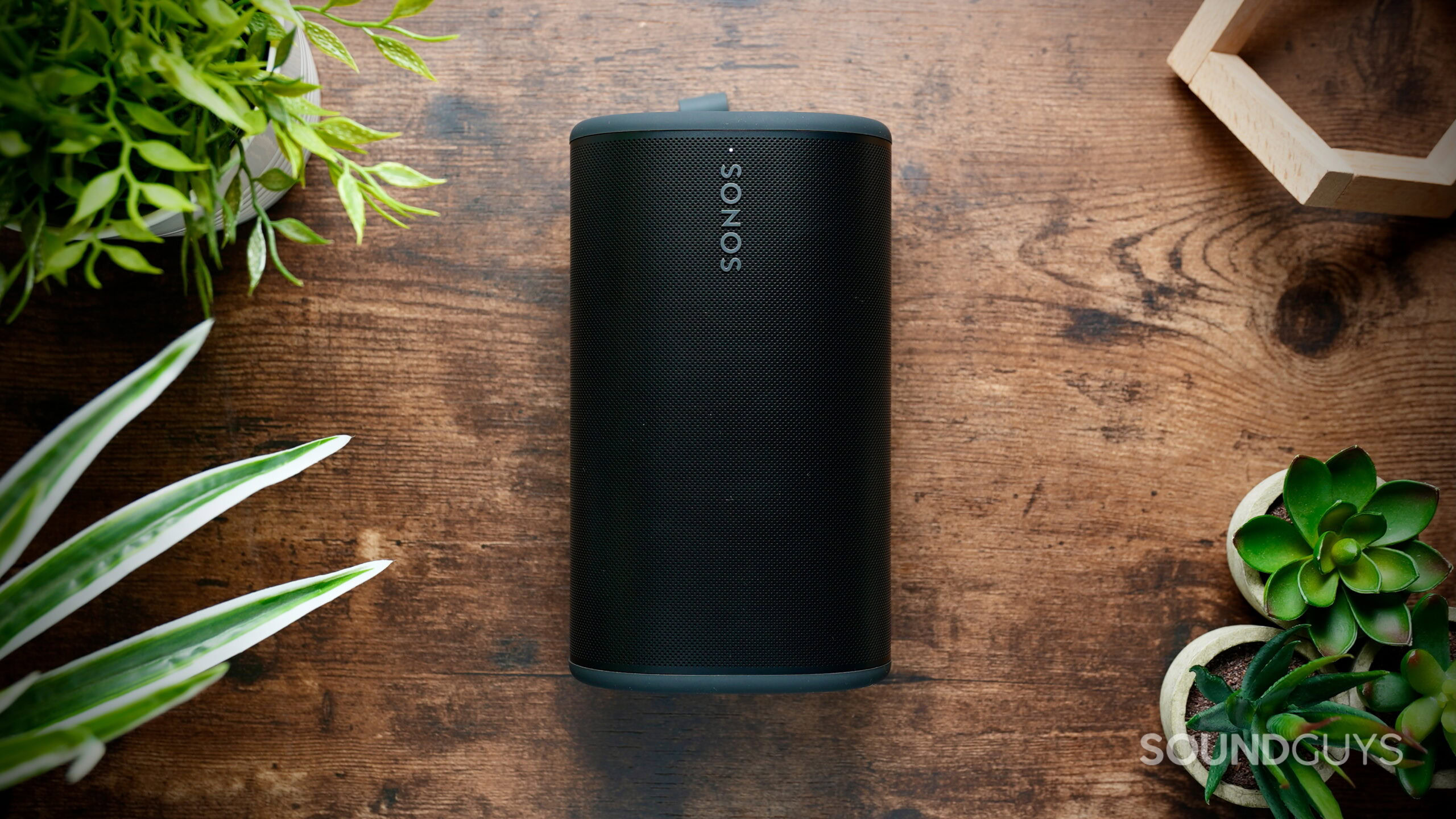 The Sonos Play shares plenty of the same features as the Move 2.
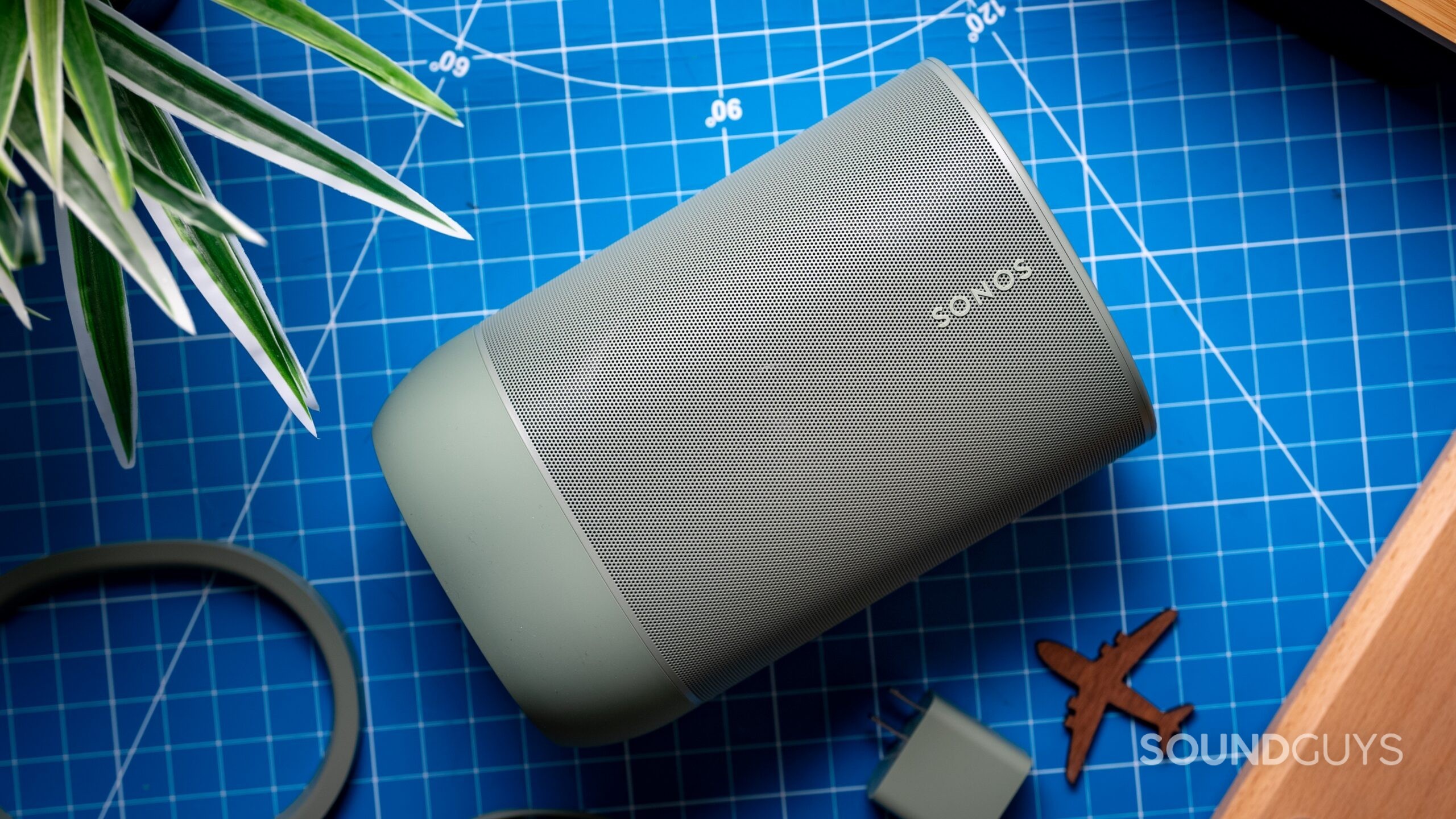 To use the Sonos Move 2 you’ll want to stand the speaker upright, and unlike most portable speakers it has a single standing orientation.
The Sonos Play feels like the more practical speaker to carry around the house. Its smaller, upright design is easier to place on a kitchen counter, shelf, or side table, and at 1,300g, it’s much easier to pick up and carry from room to room. It still feels more like a portable home speaker than something you’d throw in a backpack every day, but the lighter build and IP67 rating make it easier to use casually outside. If you want something for the patio, garage, or backyard that doesn’t feel oversized indoors, the Play fits that role really well.
The Sonos Move 2 is built around the same general idea, but it feels much more substantial in use. At 3kg, it’s noticeably heavier, and while the built-in handle makes it easy enough to carry, this is still more of a house speaker you occasionally move than something you’d want to bring very far. Its larger size gives it more presence on a table or countertop, but it also makes it harder to tuck away when you’re not using it. The IP56 rating is enough for dust and splashes, so it still works well for a deck or covered patio, but compared to the Play, the Move 2 feels more tied to the home.
One thing both speakers get right is the charging dock. Instead of plugging in a cable every time, you can just drop either one back into place when you’re done using it. That setup makes both models feel less like traditional portable Bluetooth speakers and more like home speakers that happen to be easy to move around.
How do you control the Sonos Play and Move 2?
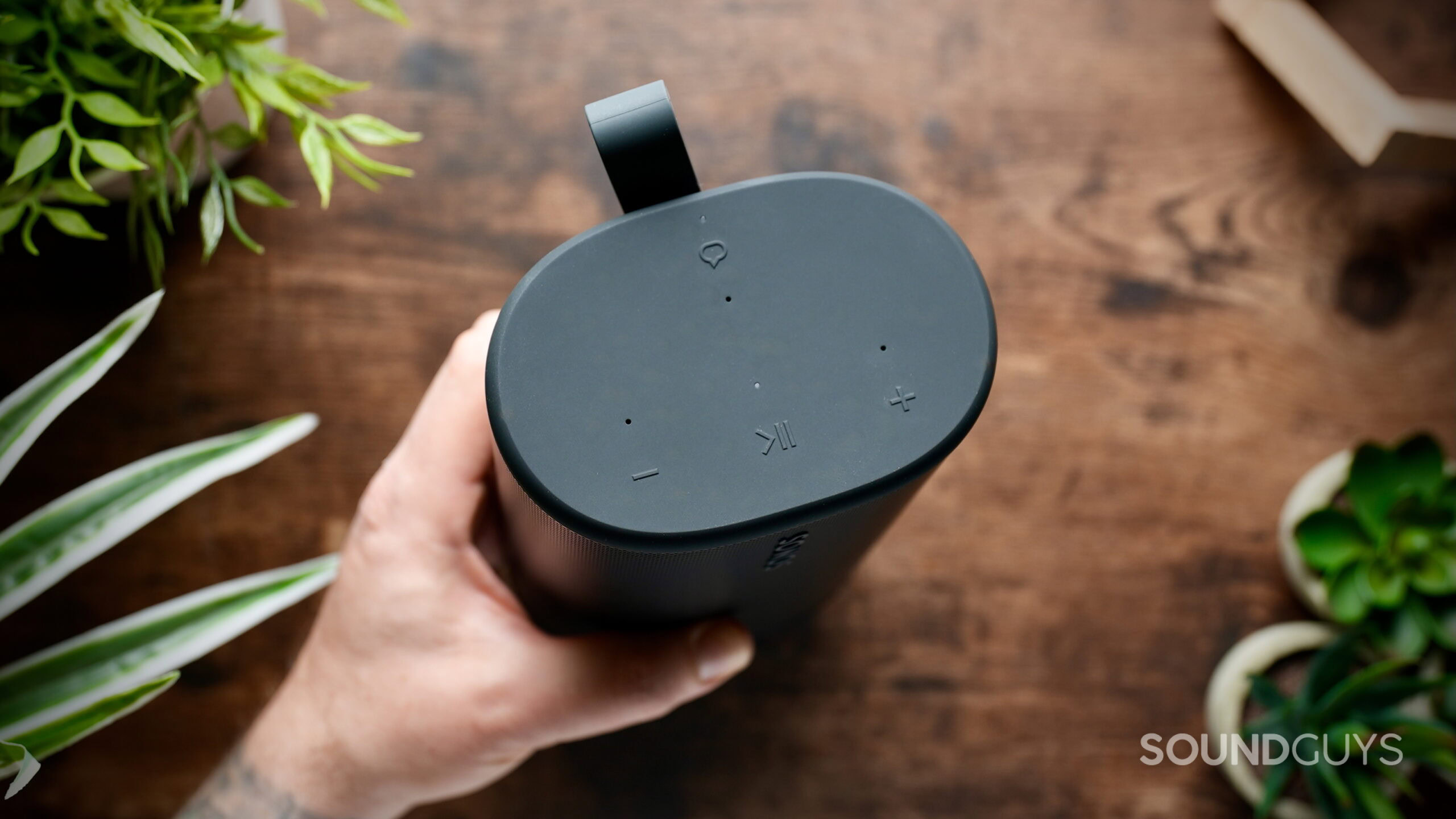 You’ll find some physical controls on the top of the enclosure.
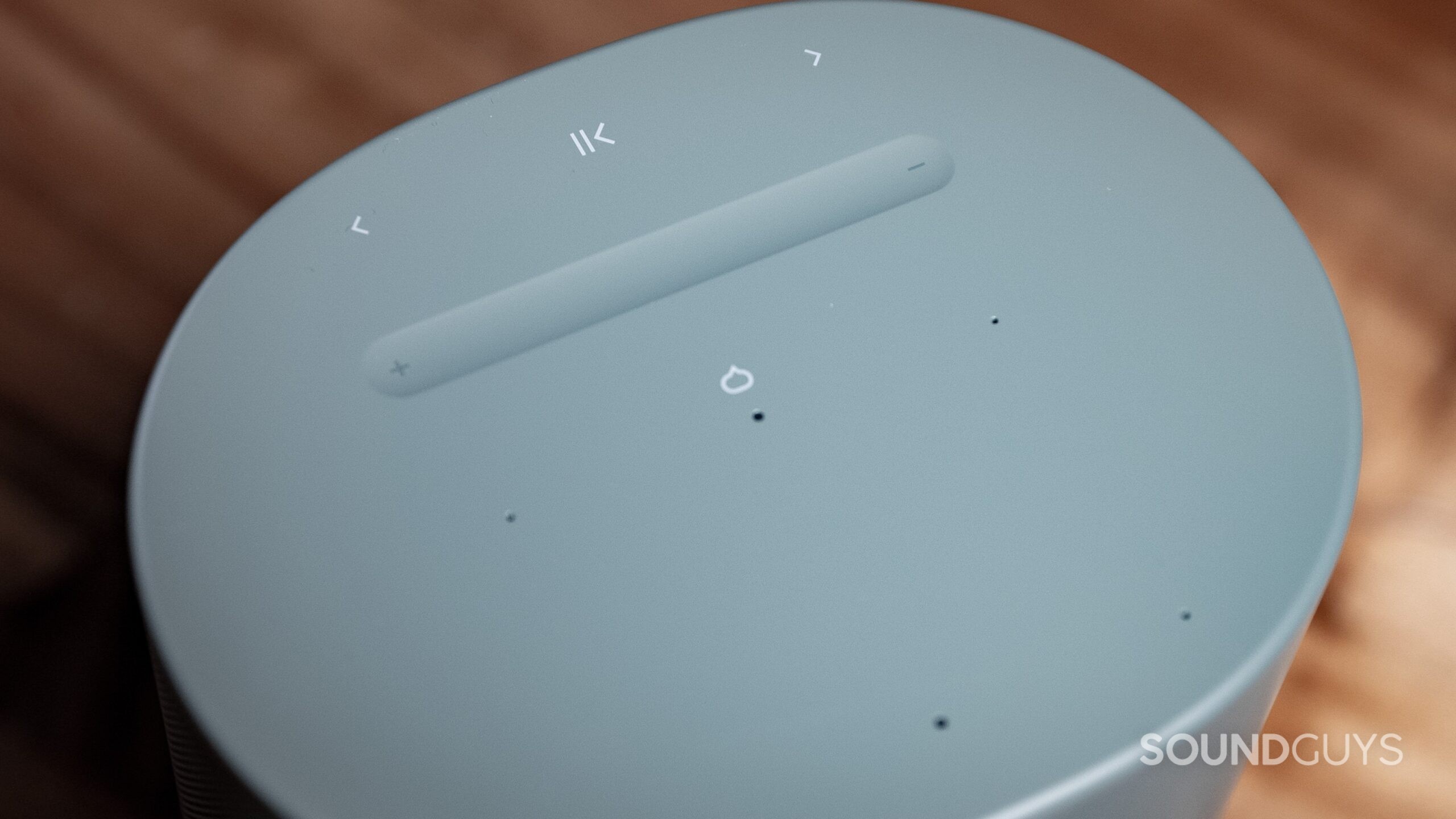 Slide your finger along the indented strip to control your volume.
The Sonos Play and Sonos Move 2 use very similar control layouts, but the Play sticks with more traditional buttons while the Move 2 uses touch controls across more of the top panel.
The Sonos Play has physical controls on the top and back of the speaker. The top handles playback and voice assistant controls, while the back includes dedicated power and Bluetooth buttons. There’s also a physical microphone switch, which is useful if you want to disable the mics without opening the app.
The Sonos Move 2 keeps the rear power, Bluetooth, and microphone controls, but the top is built more around touch input. Instead of physical playback buttons, you get touch controls along with a volume slider that lets you swipe or tap to adjust volume. It works well once you get used to it, though it does feel a little less tactile than the Play.
Like most Sonos speakers, both still rely heavily on the Sonos app for setup, grouping, EQ, and broader settings. So even though you can handle everyday playback directly on the speaker, the full experience still depends on the app.
Does the Sonos Play or the Move 2 have more features?
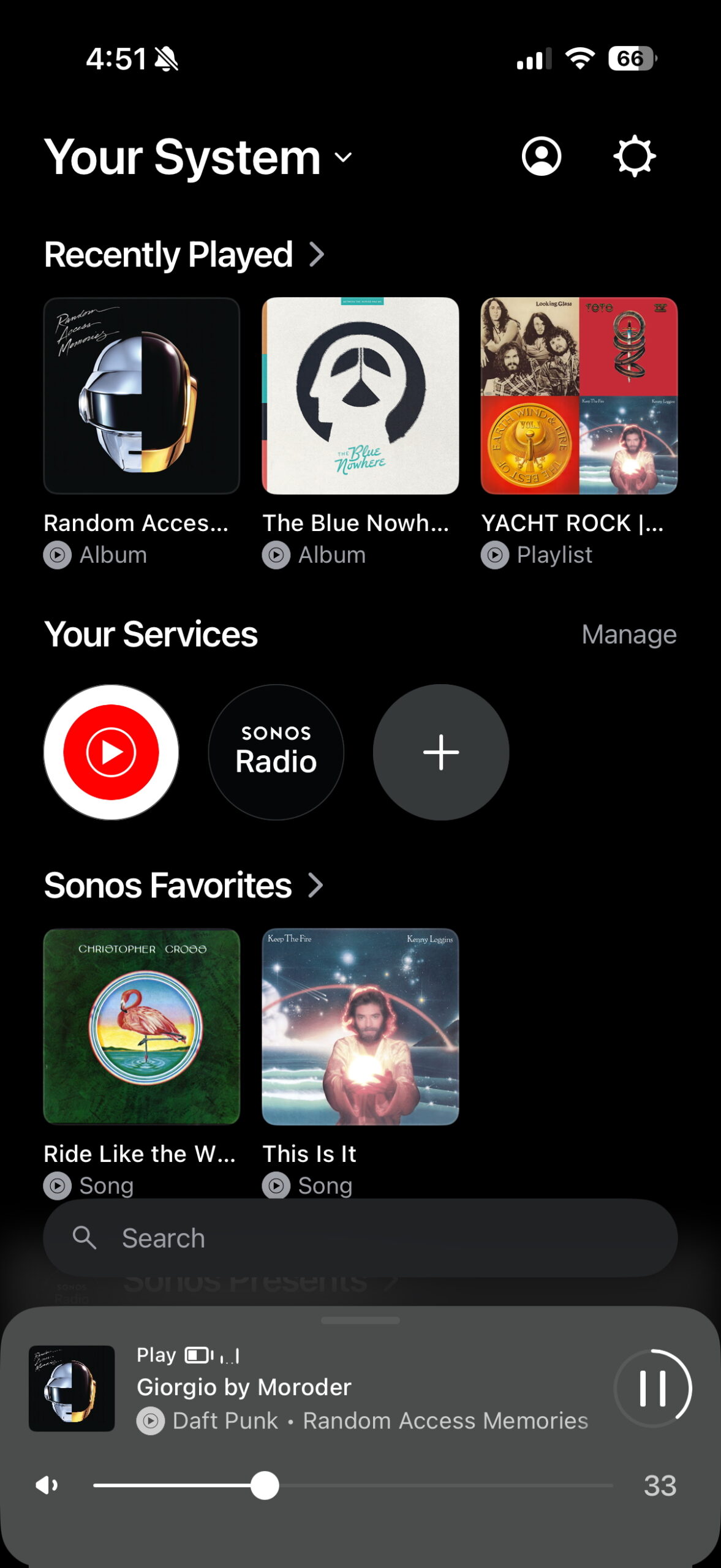 The Sonos app lets you browse music, manage services, and control playback from one place.
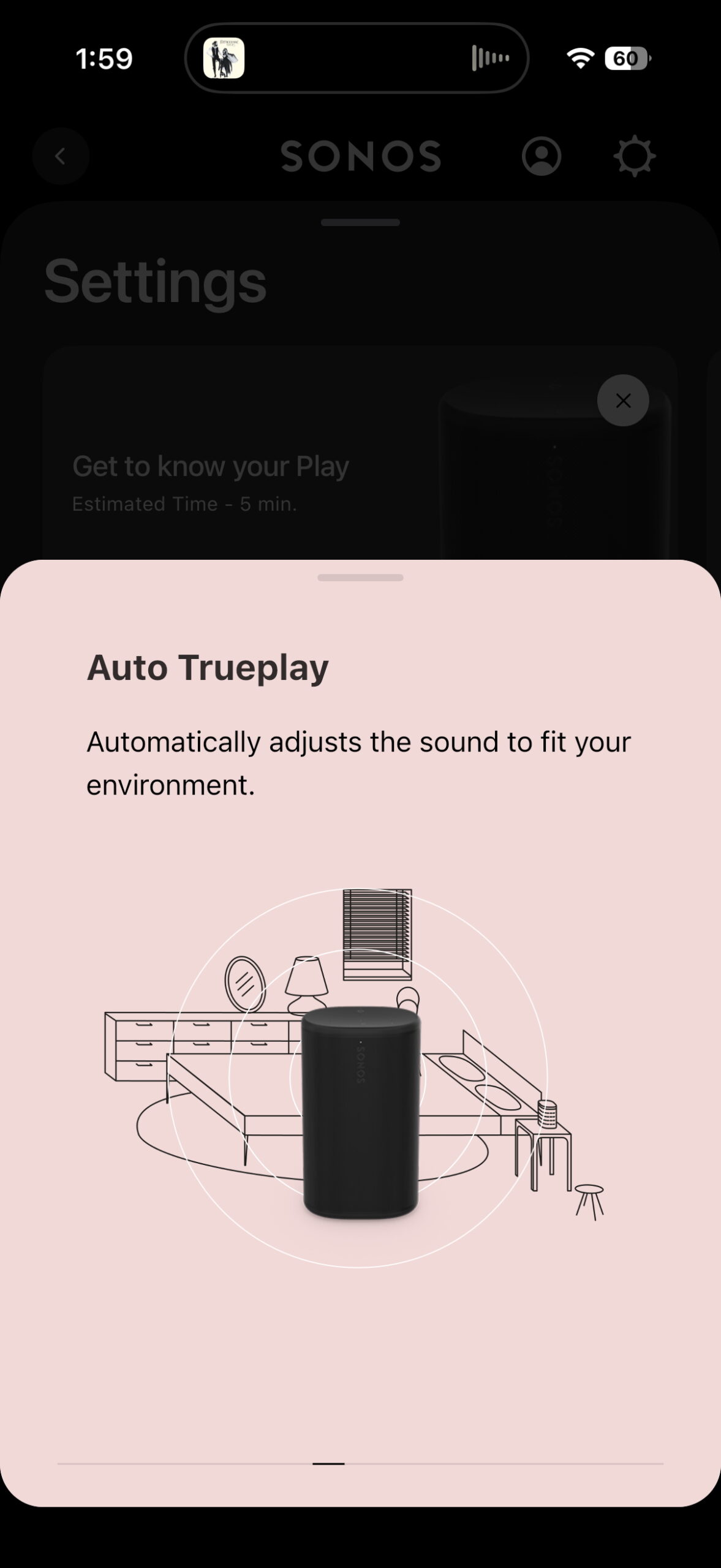 Automatic Trueplay adjusts the sound depending on where the speaker is placed.
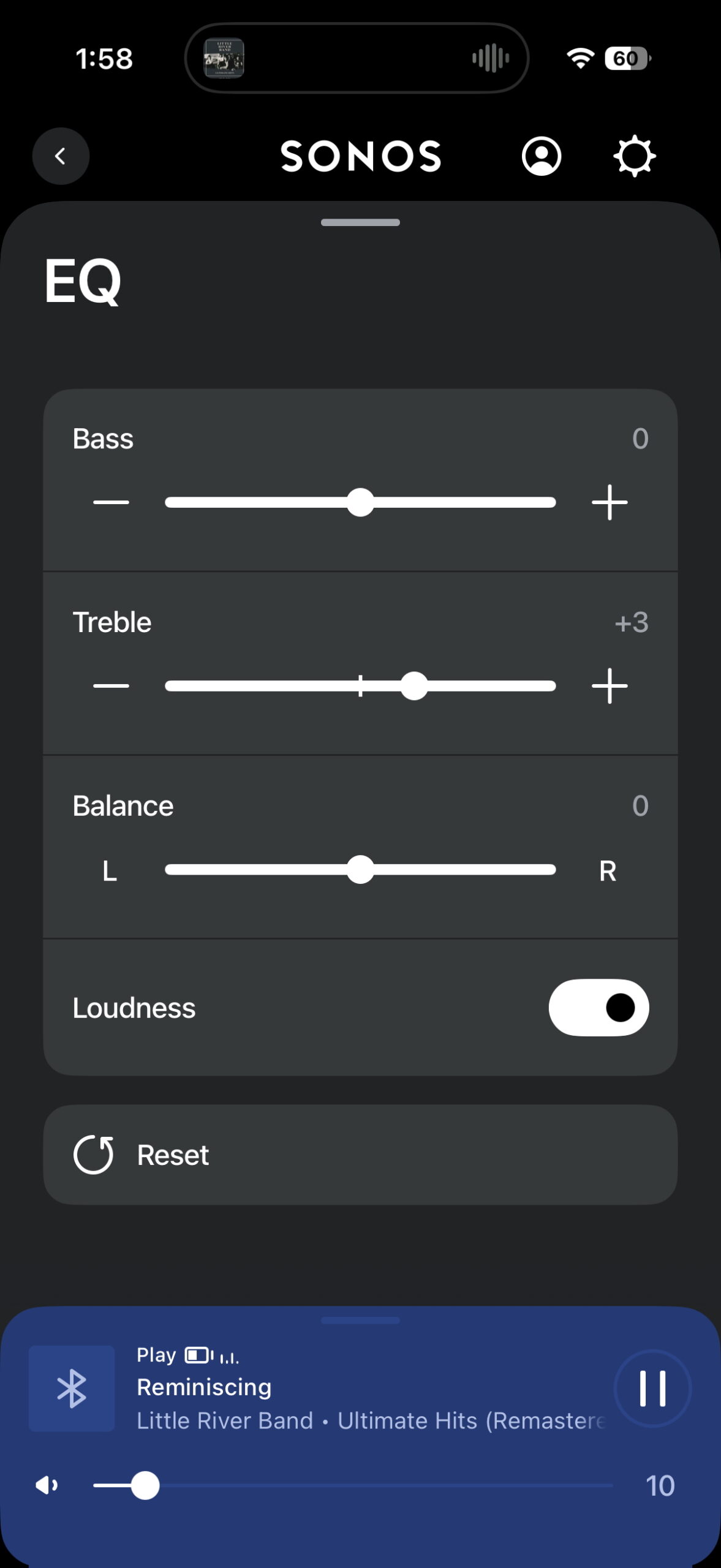 The Sonos app includes EQ controls for bass, treble, balance, and loudness.
The Sonos Play and Sonos Move 2 are very close on features, and both are designed to work best as part of the broader Sonos ecosystem.
Both speakers support Wi-Fi and Bluetooth, work through the Sonos app, and can be grouped with other Sonos speakers for multi-room playback. They also support Apple AirPlay 2, voice assistant features, and stereo pairing over Wi-Fi with a second identical speaker. If you already use Sonos around the house, either one fits into that setup pretty naturally.
The bigger difference is less about what features they have and more about how those features fit the product. The Play feels more like a compact speaker that happens to offer all the usual Sonos benefits, while the Move 2 leans more toward an all-in-one home speaker you can still pick up and move around.
In practice, both handle the same core features well. The choice mostly comes down to whether you want the smaller, more portable option or the larger speaker with more output.
How do the Sonos Play and the Move 2 connect?
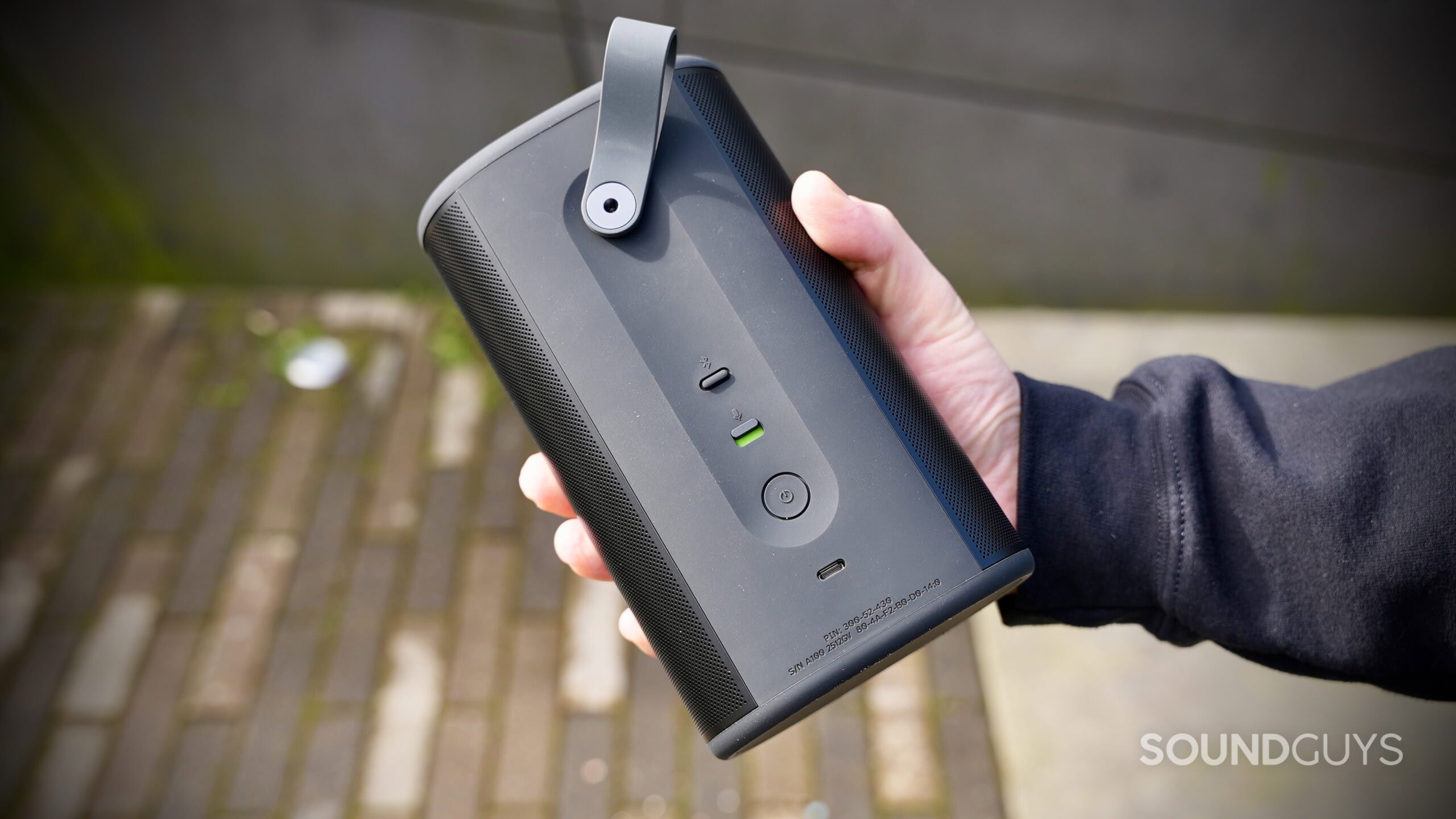 Rear buttons let you toggle Bluetooth, power the speaker, and disable the microphones.
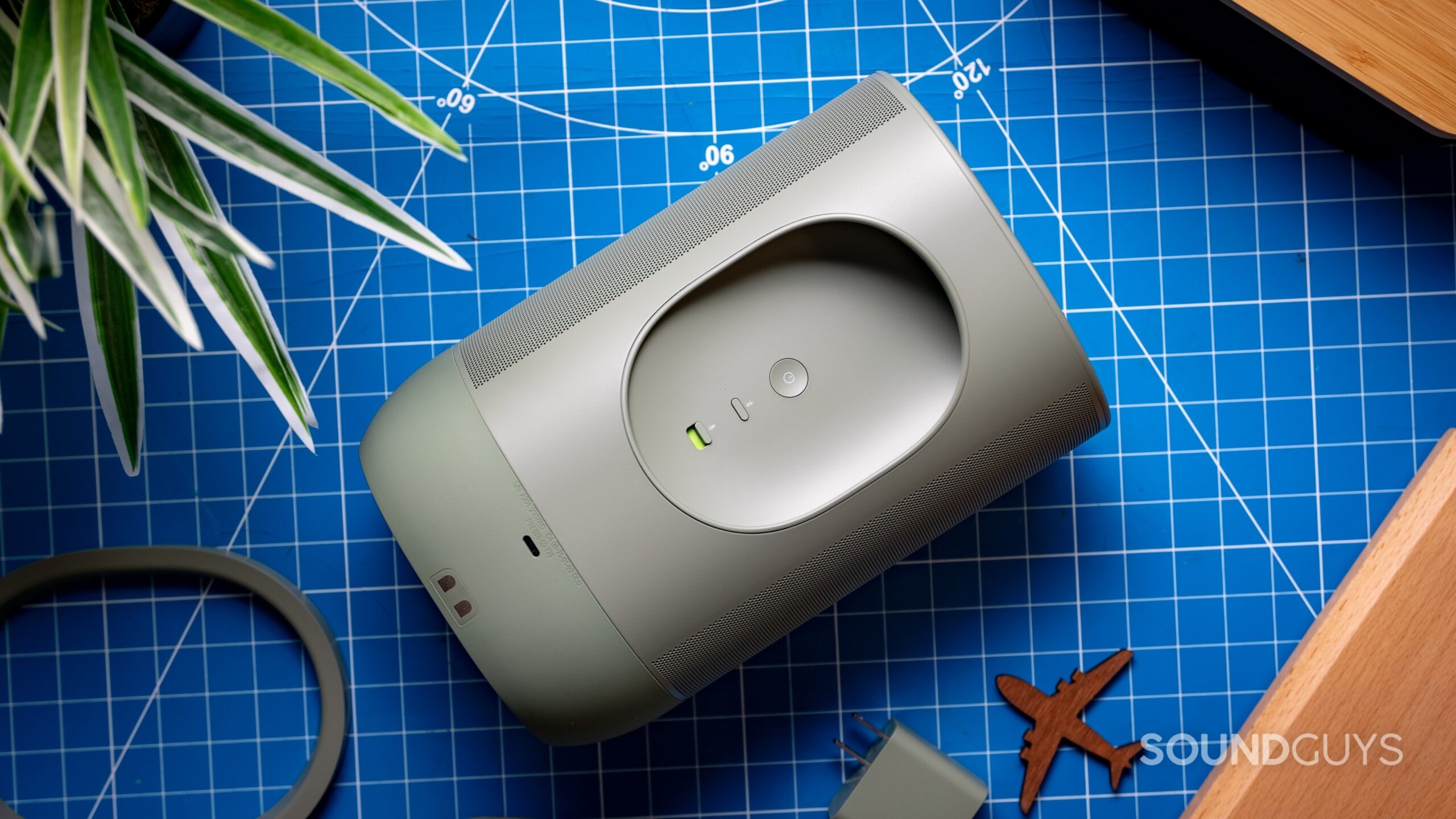 The Move 2 cleverly hides a handle lip towards the top of the speaker above the power button.
The Sonos Play and Sonos Move 2 connect in basically the same ways, and both are designed to do their best work over Wi-Fi rather than Bluetooth.
Each speaker supports Wi-Fi and Bluetooth, along with Apple AirPlay 2 and line-in audio through Sonos’ USB-C adapter. Over Wi-Fi, you can stream directly from services like YouTube Music, Spotify, and Apple Music through the Sonos app without relying on your phone’s Bluetooth connection. That’s a big part of what separates these from more traditional portable speakers.
That also means both speakers depend pretty heavily on Wi-Fi for the full experience. You need a network connection for the Sonos app to handle setup, grouping, and playback across services. Bluetooth still works for quick, simple listening, but it feels more like a backup option than the main way to use either speaker.
In practice, the Play and Move 2 are nearly identical here. Both give you flexibility, but they’re really built around being wireless home speakers first, and portable speakers second.
Is battery life better on the Sonos Play or the Move 2?
Sonos rates both the Play and Move 2 for up to 24 hours of battery life, though figures like that are always best-case estimates.
In reality, you’re much more likely to hit those numbers if you’re listening at moderate volume around the house, not pushing the speaker too hard. If you’re turning the volume up, boosting the bass in the EQ, or playing something dense and aggressive for hours at a time, battery life is naturally going to drop faster on either speaker.
Still, battery life should not be a major issue for most people. Both speakers use a charging dock, so they’re meant to be dropped back into place when you’re done listening rather than constantly run all the way down. As long as you’re using them the way Sonos clearly intends, around the house, patio, or backyard, you probably won’t run into many complaints here.
Does the Sonos Play sound better than the Move 2?
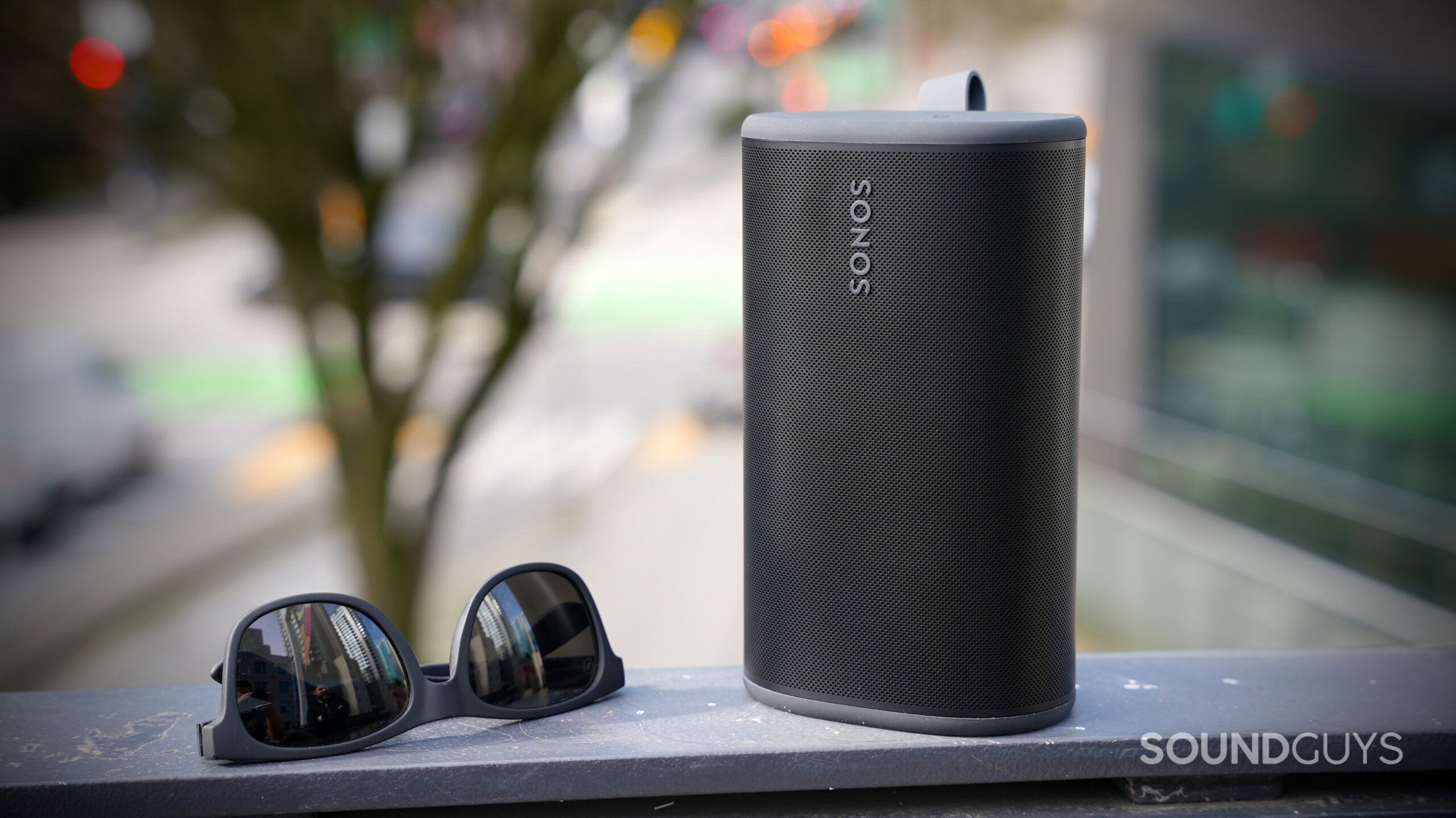 The Sonos Play is IP67 rated.
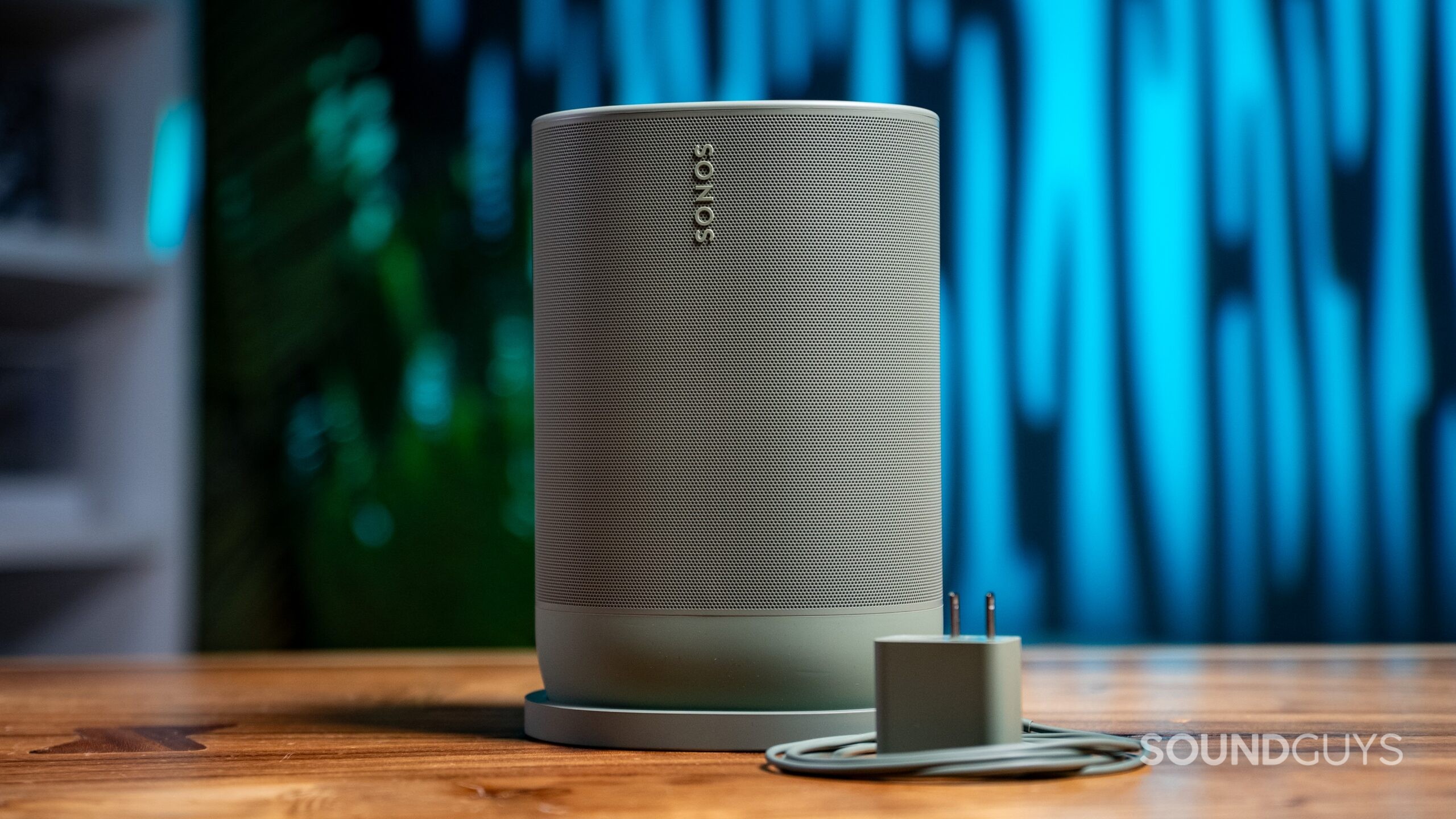 You can charge the Sonos Move 2 while listening to it.
The Sonos Move 2 doesn’t necessarily sound better than the Sonos Play, but it does sound bigger.
Both speakers use a similar driver layout, including dual angled tweeters, so they share a lot of the same sound characteristics. In my testing, both deliver solid clarity with good instrument separation, and it’s easy to pick out individual elements in a mix. That angled tweeter design also helps create a sense of width that makes both speakers sound larger than their size would suggest.
The main difference comes down to output and scale. The Move 2 delivers stronger bass and plays louder, making it a better fit for larger rooms or outdoor spaces. The Play still sounds full, but it’s more comfortable in smaller rooms like a kitchen or bedroom, or for more intimate listening.
That said, both speakers follow a similar Sonos tuning, and the bass can get a little boomy on certain tracks. With bass-heavy music, the low end can start to overpower the rest of the mix, especially at higher volumes. The good news is that you can adjust this in the Sonos app using the basic two-band EQ, so it’s easy to dial things back if needed.
In practice, you’re getting a very similar sound profile from both speakers. The Move 2 just gives you more bass strength and output, while the Play makes more sense for smaller spaces.
Should you get the Sonos Play or the Move 2?
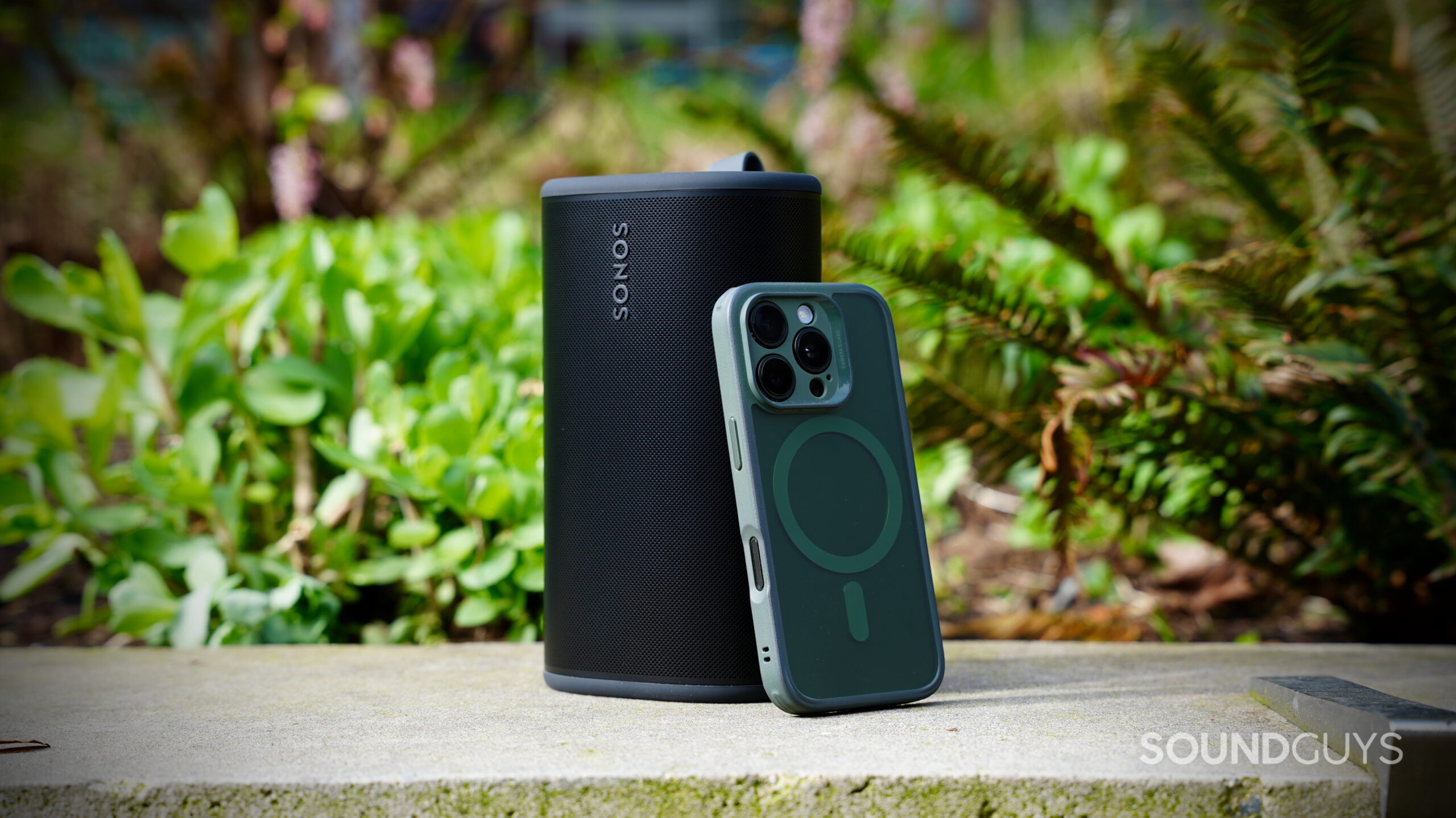 The Sonos Play features an upright design.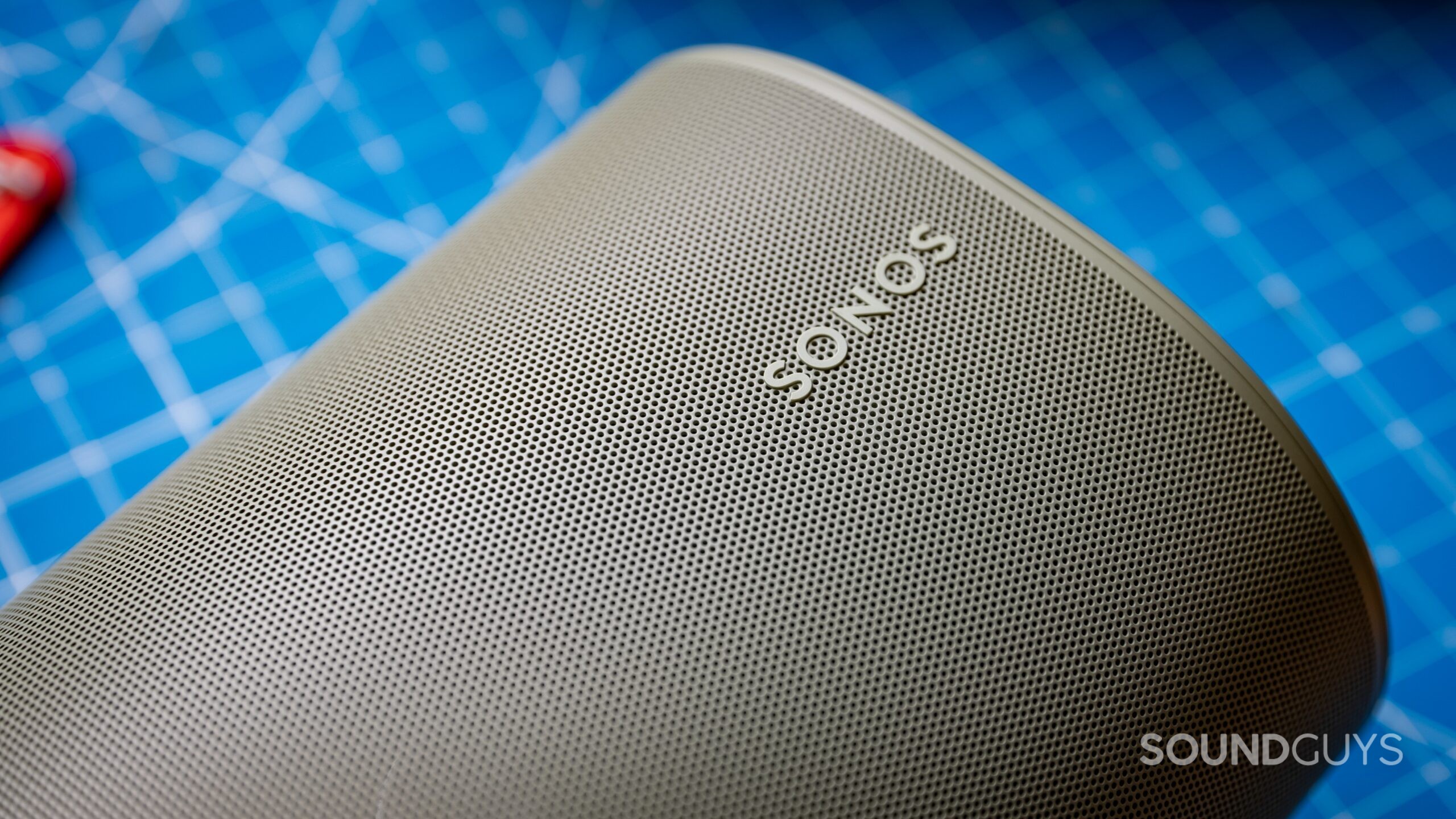
You should get the Sonos Play if portability actually matters to you, but the Move 2 is the better pick if you want bigger sound and don’t mind the extra size.
The Sonos Play is the more practical option for most people. It’s lighter, easier to carry around, and a little more durable with its IP67 rating. It still gives you the full Sonos experience, including Wi-Fi, Bluetooth, AirPlay 2, stereo pairing, app-based streaming, and a charging dock, but in a package that’s easier to live with day to day.
The Sonos Move 2 makes more sense if you want more bass strength, more output, and a speaker that can better fill larger rooms or outdoor spaces. It’s still portable in the sense that you can move it around, but at 3kg, it feels much more like a speaker for the house, patio, or backyard.
Price matters here, too. The Move 2 usually costs around $650, which is a lot for a single speaker. For roughly the same money, you could buy two Sonos Play units and run them in proper stereo over Wi-Fi. That setup will give you better width and a more immersive sound indoors than a single Move 2.
In the end, the Move 2 is basically the bigger version of the Play, but the Play is the one that better delivers on portability. And if you mostly listen at home, two Plays in stereo may actually be the smarter buy.
What should you get instead of the Sonos Play and Move 2?
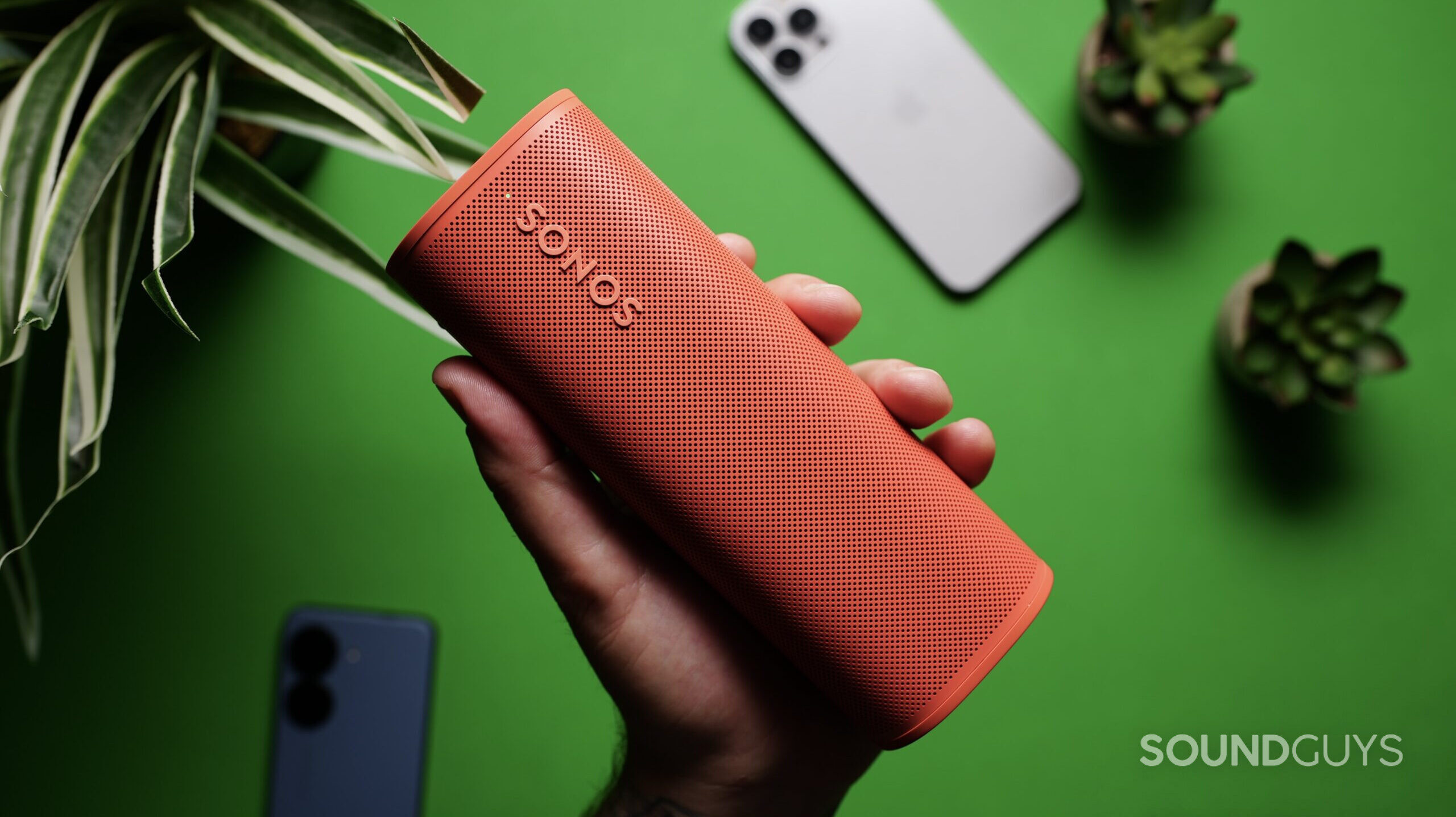 You no longer need to download the Sonos app to use the Roam 2 via Bluetooth.
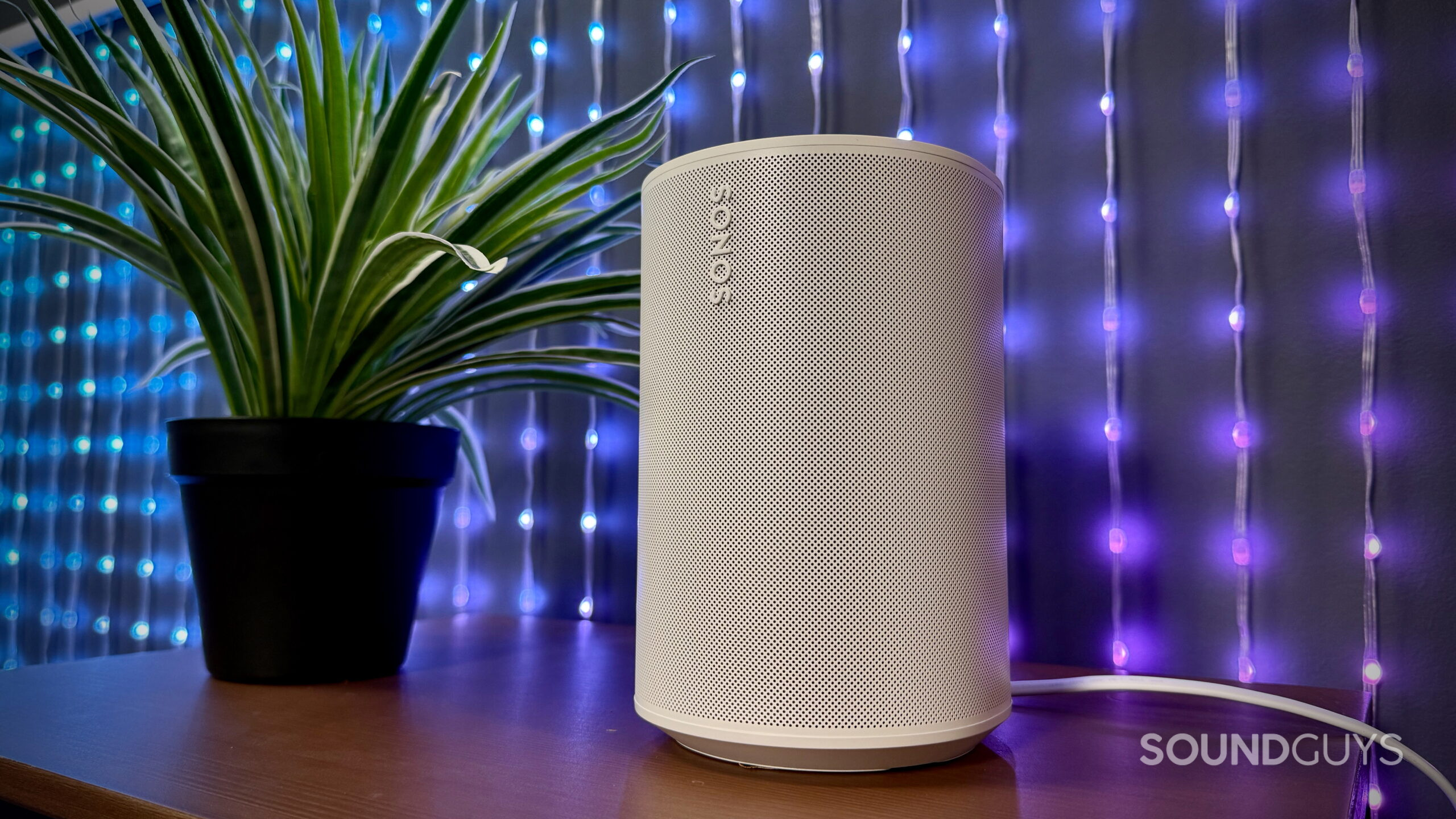 The Sonos Era 100 SL features a clean, minimalist design that fits easily into most home setups.
If neither speaker feels like the right fit, there are a few alternatives depending on what you actually want. If you like the idea of a portable Sonos speaker with Wi-Fi, Bluetooth, and AirPlay 2, but want something even smaller and easier to carry around, the Sonos Roam 2 ($179 at Amazon) makes more sense. It still gives you access to the broader Sonos ecosystem, but in a form factor that makes much more sense to throw in a bag or take on the go.
If you don’t need portability at all and just want a Sonos speaker to use around the house, the Sonos Era 100 SL ($189 at Amazon) is also worth a look. It skips the microphones and voice assistant features, but still gives you the same Wi-Fi-based Sonos experience at a more affordable home-first price.
And if you’re not sold on the whole Sonos ecosystem and just want a really good Bluetooth speaker, the Bose SoundLink Max ($299 at Amazon) is a strong alternative. It doesn’t offer the same Wi-Fi and app-based home speaker experience, but it’s a more traditional portable speaker that still sounds big and makes a lot more sense if you want something for camping, road trips, or more casual outdoor use.
Thank you for being part of our community. Read our Comment Policy before posting.