
The amount of water allocated to farmers in Alberta’s largest irrigation district is back to normal, but after a most-unusual winter.
Warmer temperatures and early snow melt in the southern Rocky Mountains filled reservoirs over the winter months — a round-about schedule that typically sees higher flow in the spring and summer.
Few are complaining in the St. Mary River Irrigation District, where water for crops was strained and readjusted over the last two years.
Now, officials are also holding it up as proof of the need of planned expansions to capture more water when it is available and shore up longer-term supply.
“This was a very good winter to demonstrate that … we are definitely looking at building more water storage,” said David Westwood, the general manager of the district that supplies 200,000 hectares of land that grows potatoes, other cash crops like sugar beets, and wheat between Lethbridge and Medicine Hat.
Westwood informed members this week of a return to pre-2024 supply throughout the region.
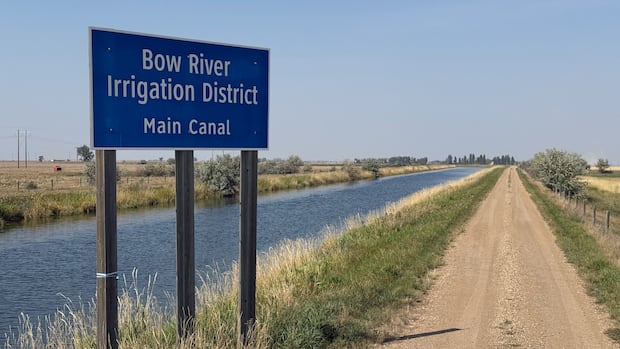
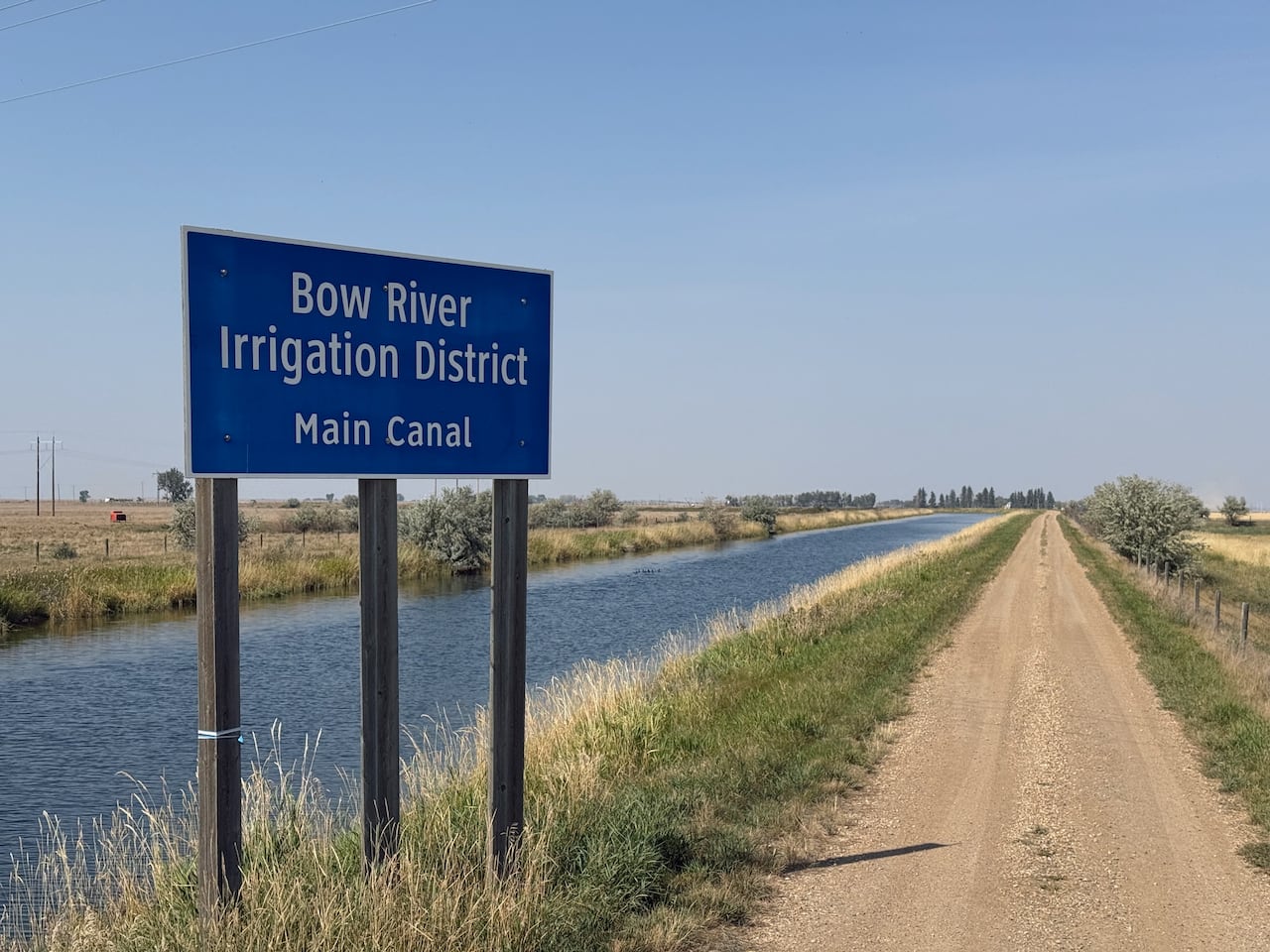 The canal of the Bow River Irrigation District stretches into the distance near Vauxhall, Alta. (Collin Gallant/CBC)
The district cut back supply by one-third as southern Alberta faced a drought crisis made worse by low reservoir levels, and supply was again reduced last year.
Coming into this spring however, administrators are confident they can meet regular targets.
“I don’t know if there’s a defined normal, exactly,” said Westwood. “But definitely this is more, I would say, a common type of allocation that we’ve seen over the last 20 years.”
Most of Alberta’s irrigation districts will announce supply levels, known as allocation, at meetings with members this month.
The SMRID allocation of 14 inches of water per acre — equal to 1.4 million litres — was the district’s standard up to 2024. That year, some irrigation districts, industrial water users and municipalities voluntarily agreed to reduce water usage. The province brokered agreements to address prolonged drought.
At the time, the Oldman Reservoir — the province’s largest — was at historic low.
It is currently more than 80 per cent full this spring, according to a storage summary provided by Alberta Irrigation and Agriculture Ministry.
‘Optimistic’ water supply outlook for Alberta’s irrigation farmers
“There’s a lot of optimism in terms of water supply this year,” said Richard Phillips, the general manager of the Bow River Irrigation District and the chair of the Alberta Irrigation Districts Association.
“Reservoirs are all in really good shape now. I mean, it’s been an interesting winter… It’s a promising start to the year, but rain always makes all the difference.”
Soil moisture is a concern: some areas already have limited or no snow cover on fields, while other regions received more snow and rain than in recent winters.
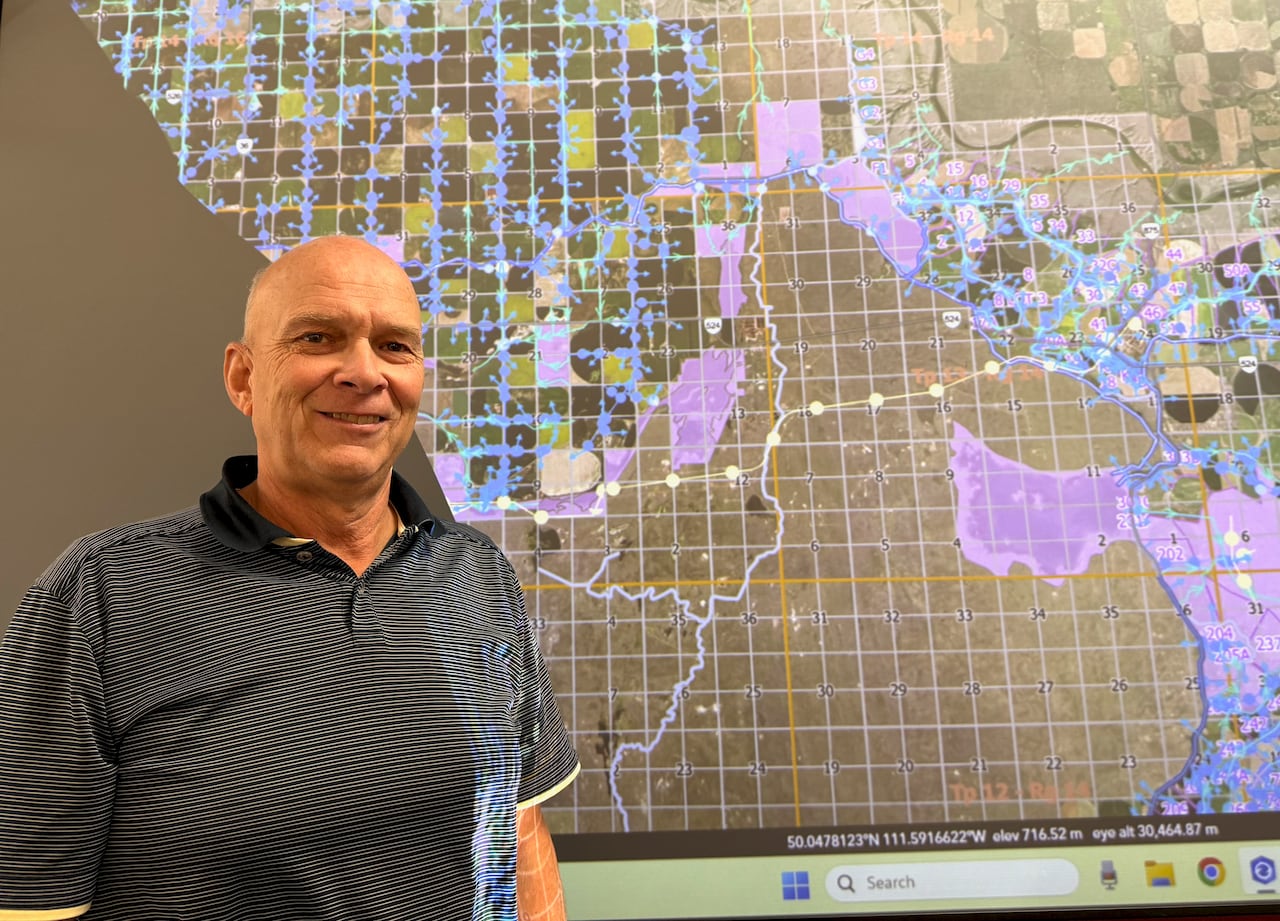 Richard Phillips, general manager of the Bow River Irrigation District, poses in front of a district map at his office in Vauxhall, Alta., on Sept. 9, 2025. (Collin Gallant/CBC)
In the mountains east of Calgary, the snowpack that will feed the Bow River system is at its highest volume in decades, said Phillips.
Further south, a warmer winter caused streams to flow as early as Christmas, according to Phillips, but that was captured in reservoirs.
Districts want to capture much, much more going forward.
Irrigators, province want to increase storage capacity
SMRID, the Eastern Irrigation District, around Brooks, and the Bow River Irrigation District, centred in Vauxhall, are the three largest districts in Alberta, and are all advancing huge reservoir expansions that together would allow them to supply 75,000 more hectares of crop land. Together, it would increase irrigated land in Alberta by more than 10 per cent.
In 2020, districts, the province and the federal Canada Infrastructure Bank announced a three-way, $815-million funding agreement for the projects.
Approved by member plebiscite, they are now undergoing federal impact assessments. Multi-year construction could see them complete by the end of the decade.
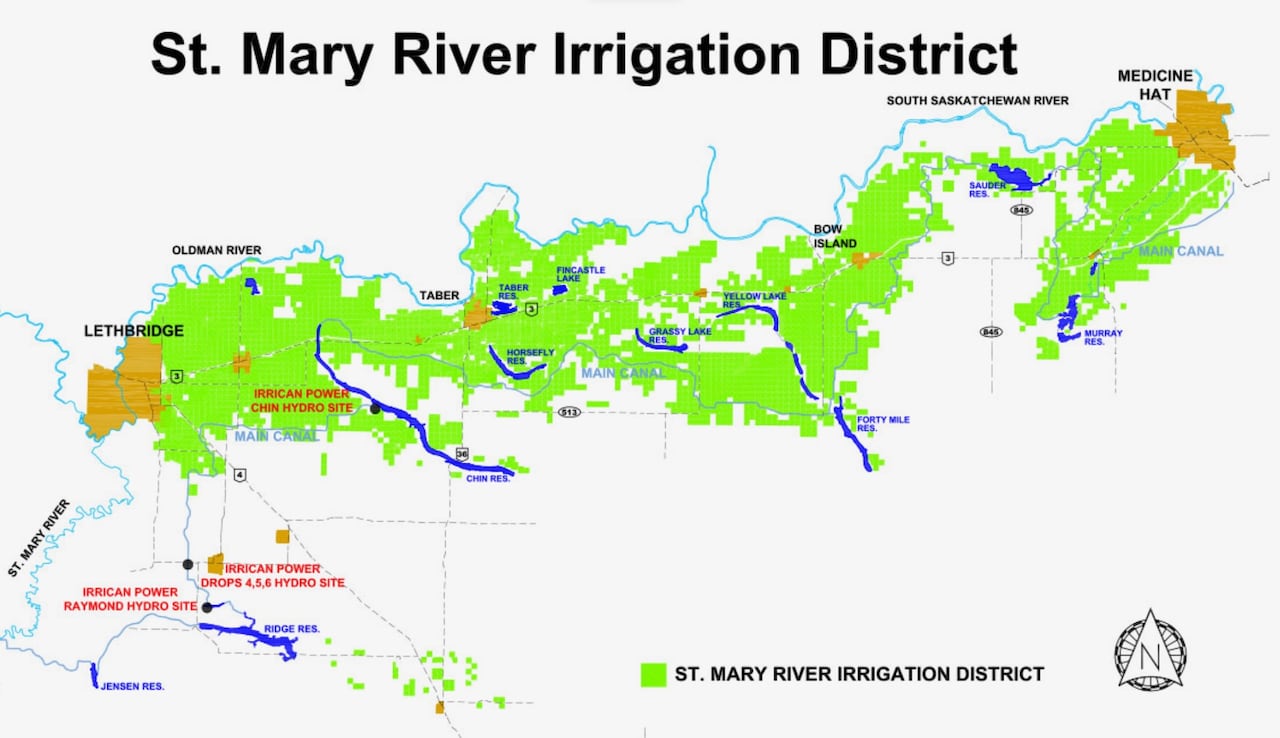 A map of the St. Mary Irrigation District, which provides water for 200,000 hectares of cropland between Lethbridge and Medicine Hat in Southern Alberta. (St. Mary Irrigation District)
“It’s very critical,” said Westwood, whose district plans to expand the Chin Reservoir, south of Taber.
“Depending on climate change, depending on if you have drought cycles … when we do have precipitation available, whether it comes in the form of snow or water, we would love to be able to capture it so we can utilize it judiciously when it’s not as abundant.”
The Eastern and Bow River district would add new reservoirs at Snake Lake, near Bassano, and Dead Horse Coulee, east of Vulcan, respectively.
Concern over water availability, river health
The Alberta Wilderness Association has raised concerns with the expansion plans they say would alter river ecosystems and potentially lead to more intensive farming on unbroken pasture and grassland.
“[Reservoirs] do not solve the issue of having less water available,” Ruiping Luo, a conservation researcher with the group, wrote in an op-ed this week.
LISTEN | How will the snowpack affect Alberta’s rivers this spring?:
Radio Active6:19How will the snowpack affect rivers this spring?
Parts of Alberta will likely get more snow this week, including Edmonton. But as the weather gets warmer, snowpacks will melt. What does that mean for Alberta rivers this summer? John Pomeroy is the director of Global Water Futures Observatories.
Luo argues the benefit of infrastructure would be lost to higher temperatures, reduced glaciers and degraded ecosystems, “all leading to less surface water that can be diverted to reservoirs.”
Alberta’s Agriculture and Irrigation Ministry has said capturing more runoff before it flows out of the province is central to its strategy to support and boost the agriculture sector.
It has also funded feasibility studies for building the proposed Eyremore Reservoir (downstream from the Bassano Dam), more storage on the Belly River (near Cardston), and creating a new irrigation district at Acadia Valley (near Oyen).