Residents sign their name inside wreckage, use wings as a slide and snowmobile track
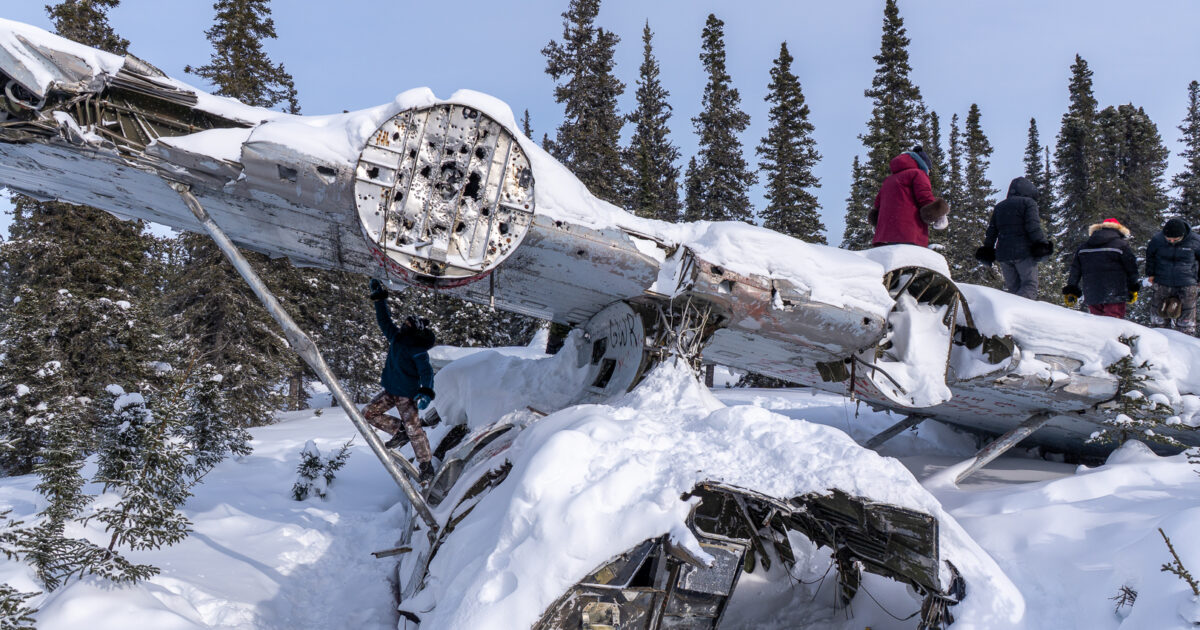
The decades-old wreckage of a plane located two kilometres south of Kuujjuaraapik/Whapmagoostui is not just a crash site — it’s a prime winter hangout for residents of the Inuit and Cree communities.
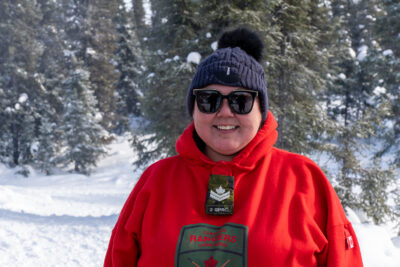
Master Cpl. Minnie Ittoshat has an attachment to the location of the plane crash, as it was a common gathering place for her family. It’s now a weekly trip for her. (Photo by Cedric Gallant)
Getting there in the cold months is easy. A snowmobile trail crossing the Great Whale River leads straight to the site.
There, the remnants of a PBY Catalina is split into three parts. Its engine is flung a few kilometres to the south and the nose is located further ahead on the trail. But the main destination is the middle part of the plane — its wing is angled perfectly for kids to use as a slide. Anyone who is more daring can ride up and down the wreckage on a snowmobile.
The crash was a charter flight that had taken off from the Kuujjuaraapik airport on Sept. 24, 1972, according to the Bureau of Aircraft Accidents Archives.
A propellor problem led the pilot to attempt to return to Kuujjuaraapik for an emergency landing, but other technical problems caused him to overshoot the runway. The airplane stalled, struck trees, and crashed.
There were 16 people on board, including three crew and 13 passengers. Everyone survived.

Today, for Master Cpl. Minnie Ittoshat of the Canadian Rangers, the crash site is a weekly winter destination.
“I go there just to go with my friends because it is obviously awesome,” she said recently in an interview at her office.
The site is also a common destination for youths who take their snowmobiles through Whapmagoostui, cross the river, and follow the trail to the site.
It’s less popular in summer, because the route is far more complex over the flowing water of the Great Whale River.
The tradition goes that first-time visitors to the crash site must sign their name on its inner walls.
Indeed, hundreds upon hundreds of names and dates going back to the 1970s are visible on the wreckage. Ittoshat’s name is written at least nine times.

“It was my brother who first brought me there,” she said. “They told me you have to sign; it is a tradition.”
The site is a peaceful place, said Ittoshat, where she remembers good times spent with her late brother and late parents.
“When we go there, with my family and friends, then maybe because I take them there it is going to be their remembrance of me for them,” she said.
“I just feel better when I go there.”
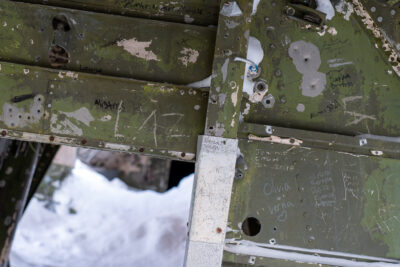
The inner walls of the plane wreckage outside Kuujjuaraapik are marked with the names of countless people who have visited. (Photo by Cedric Gallant)