

Listen to this article
Estimated 3 minutes
The audio version of this article is generated by AI-based technology. Mispronunciations can occur. We are working with our partners to continually review and improve the results.
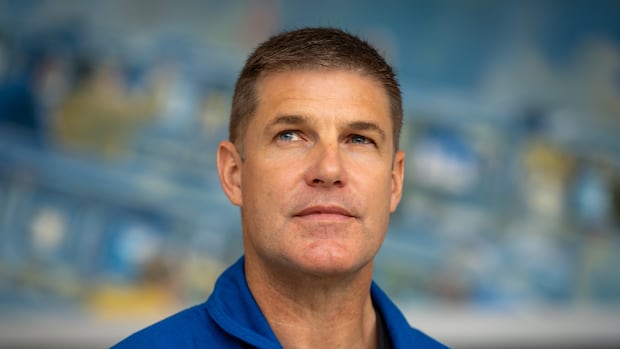
Col. Jeremy Hansen has made Canadian history in the past 48 hours as part of NASA’s Artemis II mission, with more milestones in the coming days.
Overnight, he’ll add another Canadian Space Agency (CSA) first to the list of accomplishments: a live news conference from an area of outer space no other Canadian has ever reached.
Hansen, 50, will speak to reporters live from the Orion spacecraft at 1:10 a.m. ET. The connection will last about 20 minutes, according to the CSA.
“Hansen will share his impressions of the Artemis II mission and … answer questions from Canadian journalists,” the agency said.
CBC News will livestream the news conference.
WATCH | The moment of liftoff: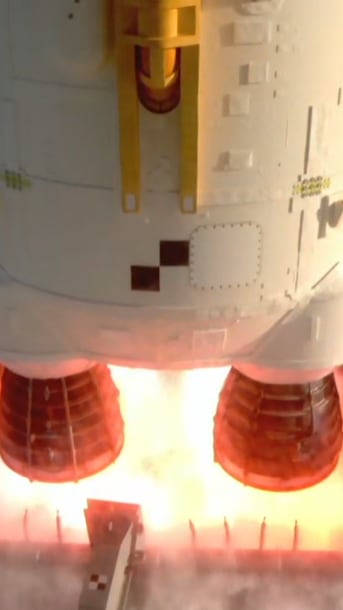
Watch as Artemis II departs Earth
NASA’s Artemis II mission will send the astronauts around the moon and back, farther from Earth than any previous human space flight. Among the crew is Canadian Jeremy Hansen who is set to become the first Canadian to reach deep space.
Hansen and his fellow astronauts — commander Reid Wiseman, pilot Victor Glover and fellow mission specialist Christina Koch — launched from Florida at 6:35 p.m. ET on Wednesday, part of a high-stakes trip around the moon and back. The 10-day flight is the first step in NASA’s broader plan to send humans back to the lunar surface.
Hansen officially became the first Canadian to reach deep space when Artemis II entered high Earth orbit hours after liftoff. The Artemis II mission will eventually send its crew roughly 405,000 kilometres into space — the farthest any humans have ever travelled.
On their first full day in space, the astronauts finished the first of dozens of tests and practised with the cameras they’ll use to take pictures of Earth. They’ve also managed minor issues on board the minivan-sized crew cabin, including a ground issue with communications, a short-lived problem with the only toilet and a Microsoft Outlook glitch for Wiseman.
If the mission continues as planned, the crew will fly around the moon and witness a solar eclipse on the sixth day of their journey. They’re scheduled to splash back down in the Pacific Ocean off the coast of San Diego, Calif., on April 10.
WATCH | What the Artemis II astronauts said ahead of liftoff:
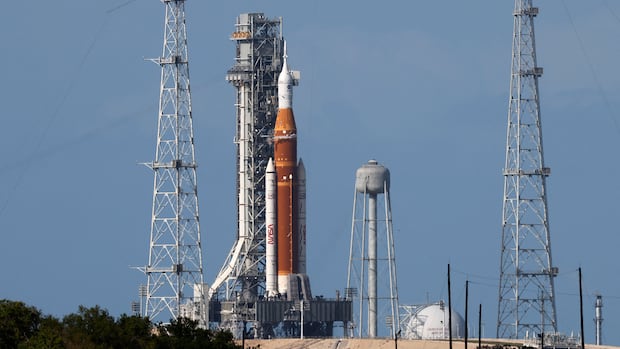
Hear what the Artemis II astronauts said ahead of liftoff
Hear astronauts Victor Glover, Christina Koch and Jeremy Hansen ahead of what NASA launch director Charlie Blackwell-Thompson called a ‘historic’ liftoff.
The mission is the first crewed flight for NASA’s Artemis program, which is the successor to the Apollo era. It’s also the first time astronauts have been to the vicinity of the moon since Apollo 17 in 1972.
NASA hopes the operation will lay the groundwork for its Artemis IV astronauts to land on the south pole of the moon by 2028, beating a planned crewed mission China aims to launch by 2030.