
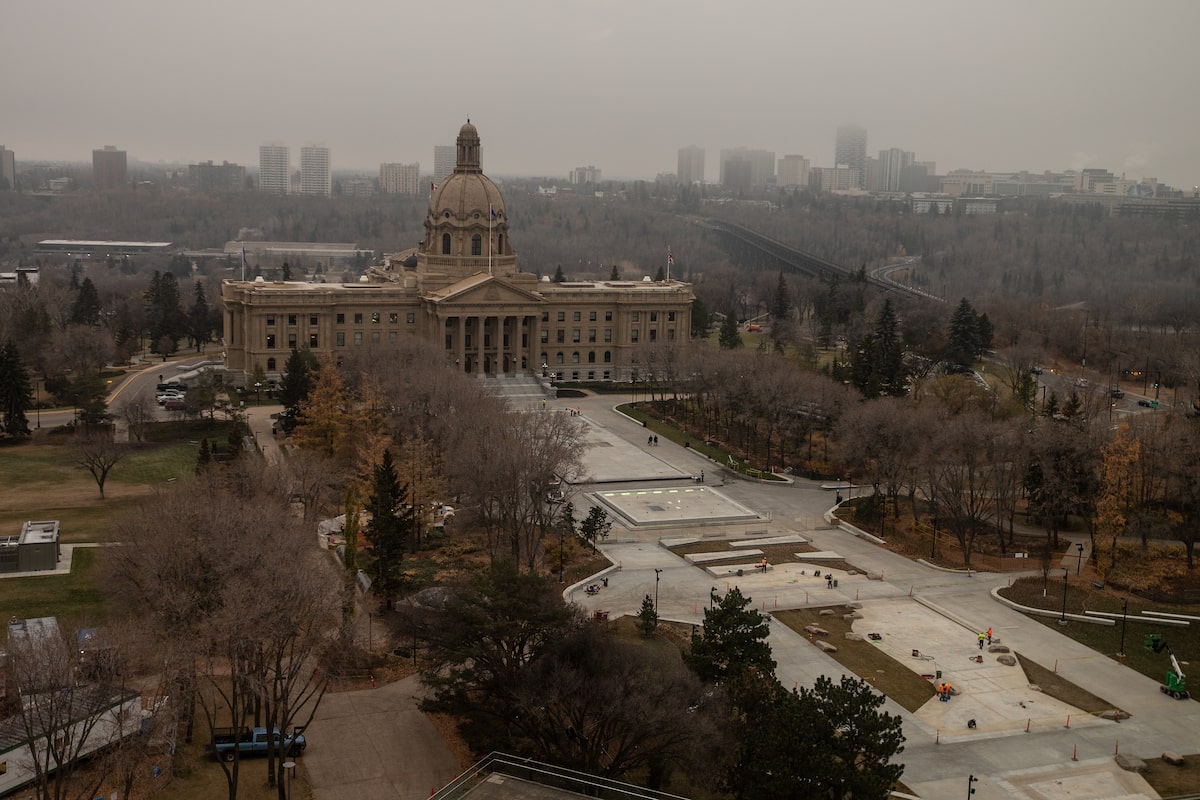
The Alberta Legislature in Edmonton.JASON FRANSON/The Canadian Press
Alberta separatists are making alternative plans to pressure Premier Danielle Smith’s government to call an independence referendum if a judge throws out their current efforts after a multiday hearing next week.
Mitch Sylvestre is organizing an independence petition under Alberta’s Citizen Initiative Act. Mr. Sylvestre’s campaign needs 178,000 signatures to force a constitutional referendum. Earlier this week, Mr. Sylvestre declared organizers had reached that goal, one month ahead of deadline.
Organizers expect their question – “Do you agree that the Province of Alberta should cease to be part of Canada and become an independent state?” – will be added to a planned Oct. 19 referendum on immigration and constitutional matters.
But there is a potential roadblock.
On Tuesday, a judge in the Court of King’s Bench of Alberta is scheduled to oversee a three-day hearing involving a demand by the Sturgeon Lake Cree Nation to shut the separatist campaign down.
The First Nation has sued the provincial and federal governments and the province’s chief electoral officer, saying the separatist petition should be suspended on grounds that separation is impossible without First Nations’ consent.
In recent weeks, independence advocates have implored canvassers to collect as many signatures as possible before April 7, the first day of the hearing.
“The government has given us a path. We’ve taken advantage of that path,” Mr. Sylvestre said in an interview with The Globe and Mail. “We have the signatures.”
But he said his group has a Plan B if the court agrees with the First Nation.
“The government – even if [the courts] put an injunction on this – can call an independence referendum on their own,” said Mr. Sylvestre, who owns a sporting goods and gun store.
Opinion: Alberta’s push for independence is the culmination of decades of poor treatment by Ottawa
Ms. Smith announced in February that Albertans would vote in October on wresting more control over immigration from the federal government and limiting access to education and health care for some newcomers, among other matters.
The likelihood of an independence referendum has been accelerated this year by changes to direct democracy laws implemented by Ms. Smith’s United Conservative Party government.
Last spring, she substantially reduced the number of signatures needed to force a constitutional referendum to nearly 178,000 from about 588,000. The change galvanized the independence movement and a countereffort advocating for Alberta to stay in Canada, among others.
In December, the Alberta government also legislated additional changes to the act that eliminated guardrails for citizen-initiated referendums and stripped several powers from the Chief Electoral Officer.
One of those provisions allows a proposed referendum question to contravene the Canadian Constitution, but it also said the Alberta government wouldn’t be forced to implement the result of a referendum if acting on it would violate the Constitution.
Sturgeon Lake Cree Nation’s current legal challenge is trying to reinstate the rule that a citizen-initiative petition must follow the Constitution, said Orlagh O’Kelly, Sturgeon Lake’s legal counsel.
Opinion: Separatists think independence makes Quebec and Alberta richer. Really?
The First Nation contends that an independence referendum is incompatible with its constitutionally protected treaty rights and would lay the welcome mat to foreign interference.
Ms. O’Kelly said the judge will likely render a decision by May 2, the deadline for signature collection.
Mr. Sylvestre, also a UCP constituency president, said he “can’t pressure the government to do anything.” But he can present his work to it.
“They’re going to make a decision on whether or not the legislation that they passed in order to allow us to do this – and allow citizens to actually have a say in whatever democracy we have here – should be upheld or not.”
Heather Jenkins, spokesperson for Alberta Justice Minister Mickey Amery, said in a statement the government will “wait to see this process play out.”
“As we have said, any current citizen initiative that meets the eligibility requirements and gets the requisite number of signatures will be put on the October 19th referendum ballot.”
Ms. Jenkins did not say whether the government would call an independence referendum if the judge stops Mr. Sylvestre’s petition.
In contrast to Mr. Sylvestre’s petition is former Alberta deputy premier Thomas Lukaszuk’s “Forever Canadian” petition. It asks “Do you agree that Alberta should remain in Canada?”
His question is currently before a legislative committee that will decide whether it should be voted on in the Alberta legislature or in a province-wide referendum.
Ms. Smith has said Mr. Lukaszuk’s conflicting statements on his desire for a referendum have muddied the committee’s ability to make a decision.
The Opposition NDP has said that if the province doesn’t table a report to the legislature by the end of the legislative sitting in mid-May, Mr. Lukaszuk’s petition won’t be tabled until after the October referendum.