
I didn’t expect a kitchen job to change how I see work — but it did.
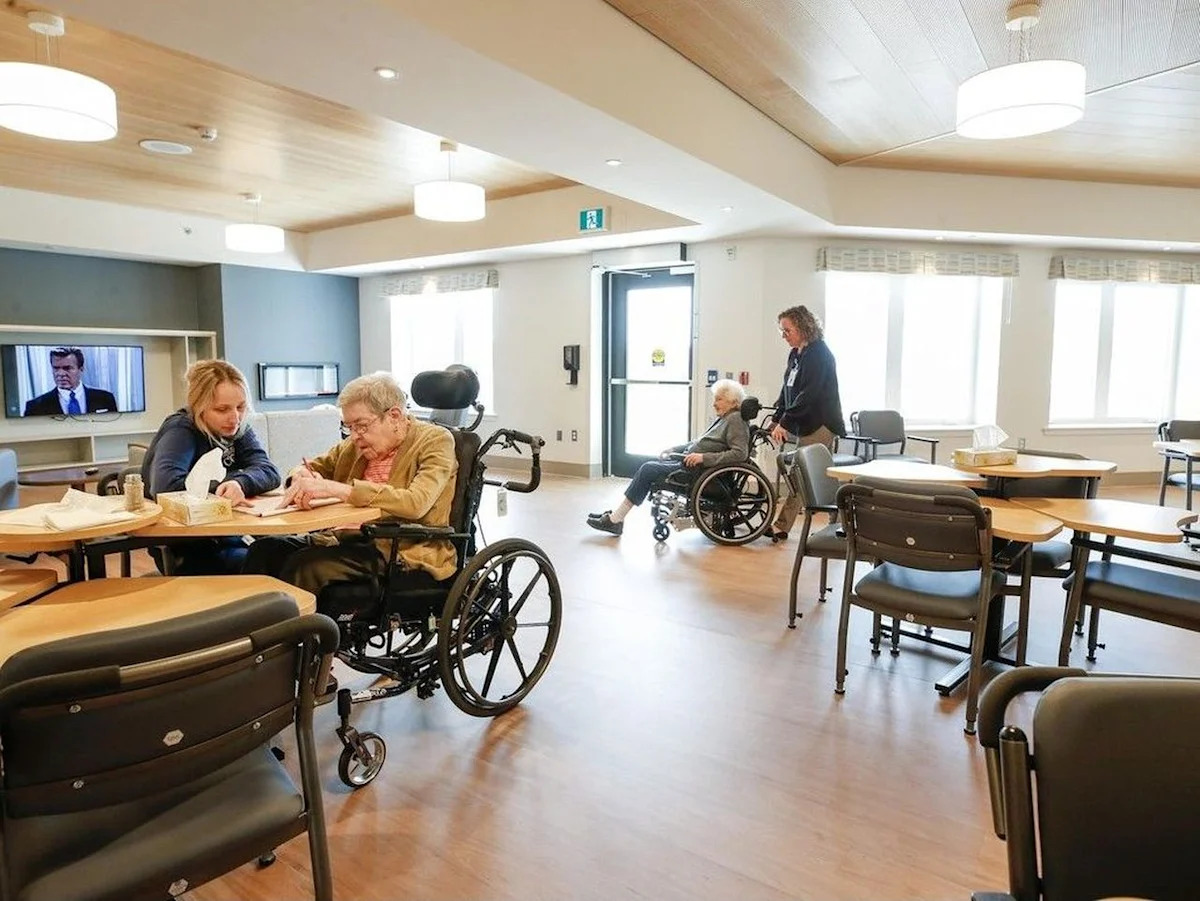
I started in December, after nearly three years out of work. Before that, I had spent more than 15 years in the food industry, much of it in leadership roles. Then I found myself starting again — this time in the kitchen of a long-term care facility in Calgary.
It was one of the most demanding roles I’ve taken on.
There was a moment I felt overwhelmed — not only by the pace and physical demands of the work, but by the adjustment required to begin again in a different environment. It was a level of strain I hadn’t previously experienced in my career.
But I stayed. And over time, something shifted.
In the kitchen, the work is constant. Meals are prepared on schedule. Trays are assembled with care. Dishes move through the same cycle — wash, stack, repeat.
Even as the facility prepares to relocate after more than 30 years, the rhythm hasn’t changed.
Much of this work goes unseen. But it matters every day.
What I came to understand is that this work is not just about tasks. It is about care — expressed through small, repeated actions done well.
Many of the people I worked alongside have been doing this for years, some for decades. You can see that experience in how they move, how they respond under pressure, and how they support each other without being asked.
There is a standard they carry — and they maintain it, no matter how demanding the shift. The kitchen runs because of people like that.
Then there are the residents.
There is a moment, when you serve a meal, when everything slows. A resident looks down at the plate, then back up. Sometimes they smile.
It is brief. But it stays with you.
That is when I began to understand how meaningful this work is.
What started as one of the hardest roles I had taken became one of the most grounding experiences of my life, because even the smallest task can make someone feel cared for, steady and seen.
The facility is not closing permanently — it will relocate. But for many of the staff, it still feels like a loss. Some will not be able to continue because of the distance. And with that, something built over years — relationships, routines, a shared way of working — will not carry over in the same way.
Transitions like this are often described in practical terms. But what disappears is harder to measure. It is the familiarity. The continuity. The quiet understanding that develops over time.
I think about the people behind the scenes — the ones who prepare, clean and repeat the same work every day without recognition. They are rarely visible. But they are essential.
And when places like this change, their contributions are not always carried forward.
More than anything, this is what I want to say: To those working in care environments — especially behind the scenes — you are seen. Your work matters.
And it deserves to be recognized — not only in moments of change, but in the quiet consistency you bring every day.
Rolando Jr. Pepano is the founder of BOYVAULT™, a Calgary-based visual platform documenting overlooked human experiences and cultural memory.