
CBC Saskatchewan’s Creator Network is a place where young digital storytellers from diverse backgrounds can produce original video content to air on CBC and tell stories through their own lens. Get in touch or pitch your own story here.
Growing up in Outlook, Sask., Alejandro Alvarez says he always felt like an ‘other’ because he was one of very few people of colour in the small community, which is about 80 kilometres southwest of Saskatoon.
Alvarez moved to Outlook in 1996 when his mother remarried. Even though she is originally from Chile, the 39-year-old says he never met his family abroad or learned their language.
After high school, he moved to Saskatoon, where he started connecting with a group of underground taggers. He realized art was an emotional outlet, and that ‘writing’ or tagging helped alleviate his anxiety and pain, he says.
The turning point
One night, Alvarez was out tagging with his roommate when police started chasing them. He was able to escape, but his roommate got caught. Soon, police were combing through Alvarez’s bedroom, gathering evidence.
“They took silly things like pencil crayons,” he said. “And then there was the little business card on my corkboard that was from Constable Lee Jones. And all it said was ‘call me.’”
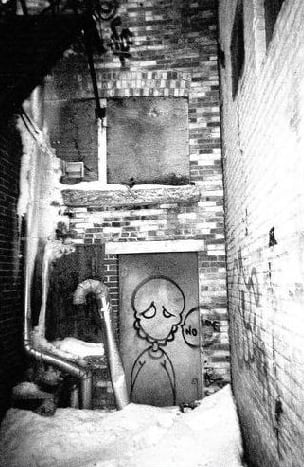 A door in Saskatoon with graffiti on it. Artist Alejandro Alvarez says free walls should be provided for kids to paint so they don’t vandalize pubic property. (Submitted by Alejandro Alvarez)
Jones is no longer with the Saskatoon Police Service, but for many years, he led a team dedicated to fighting graffiti vandalism, which he calls a gateway to other things.
“Often, there’s beef between writers and taggers, and that often results in violence,” Jones says. “Like natural society, we have a mixed bag of offenders that are also involved in other offenses.”
Jones says he appreciates certain graffiti as an art form, but not when it’s defacing someone’s property.
Alvarez did call Jones, and they had a conversation. He confessed to tagging various places the night his roommate was captured.
Unlike theft, where a person can steal multiple things and only face one charge, graffiti is categorized under the Criminal Code of Canada as criminal mischief.
“So every single thing that they could find is its own destruction of property,” Alvarez says.
“I ended up with 80 charges. ”
WATCH | Alejandro Alvarez’s journey from illegal tagger to passionate artist is documented in a film by Jordan Wendzina, Layla Bautista and Nathan Smit for the CBC Creator Network: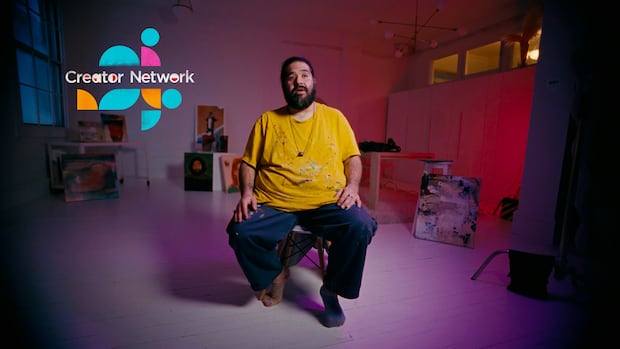
How this artist went from illegal graffiti tagger to art teacher
Alejandro Alvarez’s life as an artist started on the streets of Saskatoon with a graffiti tagging crew. Getting arrested and thrown in jail was the wake-up call he needed to get serious about the craft.
This was the second time he was busted for graffiti, and the volume of charges made it an indictable offence. Prosecutors kept him in jail so they could deal with the amount of evidence against him.
He was behind bars for a week before he was released on bail. It was this experience that set him straight, he says.
“Usually when you get charged, you’re in correctional in the same category. If it’s tax evasion, you’re not stuck with people who are rapists and murderers. In overflow, everyone’s together. So I was there with Terror Squad [gang members] and everyone else.”
Alvarez was convicted and sentenced to probation with a curfew and 80 hours of community service.
Blessing in disguise
He completed most of his community service with a now-defunct organization called SCYAP (the Saskatoon Community Youth Arts Program.) Its mandate was to help marginalized youth get off the streets and overcome addictions and mental health issues through the arts.
The experience allowed him to connect with young people in a way that was natural for him, he says. It also led to him to other opportunities, like being included in a group art exhibition.
At the time, SCYAP provided young people with paid mural opportunities. Alvarez argues cities should provide accessible “free walls” to foster this type of art and reduce vandalism.
He likens it to building skateparks to help prevent damage to public infrastructure from skateboarding.
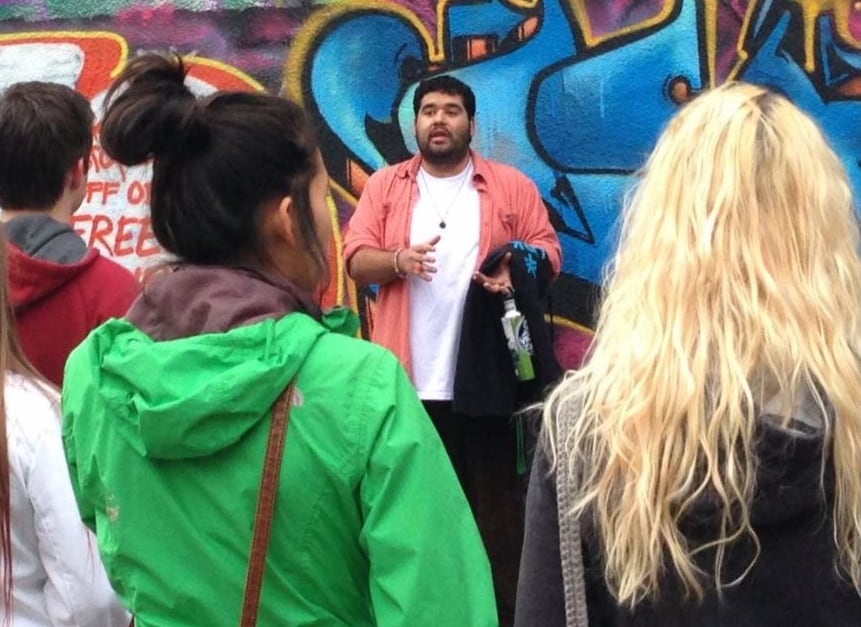 Alejandro Alvarez speaks about public art in front of a group. (Submitted by Alejandro Alvarez)
“Imagine what you could do with a free wall if it’s actually visible to the public,” he muses. ” And people are there working with the time that they have to craft and hone their skills so that it’s not about destruction and vandalism and tagging.”
Jones also has high praise for the work SCYAP did before it closed. He agrees a free wall is a great place for kids to express their artistic side, with one exception.
“If you wanna use your outlet on free walls, totally, but don’t be using the same tag name that you’re using when you’re doing it illegally,” Jones says. “Because it’s really sending a very mixed message. And I know sometimes those in the subculture took issue with my stance, and I get that.”
Alvarez says being thrown in jail for graffiti when he was 19 was a wake-up call. He knew he wanted to create art, only legally. That prompted him to attend the University of Saskatchewan and earn two bachelor’s degrees, in fine art and education.
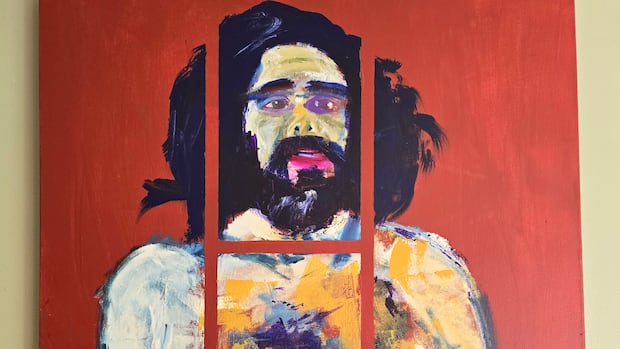
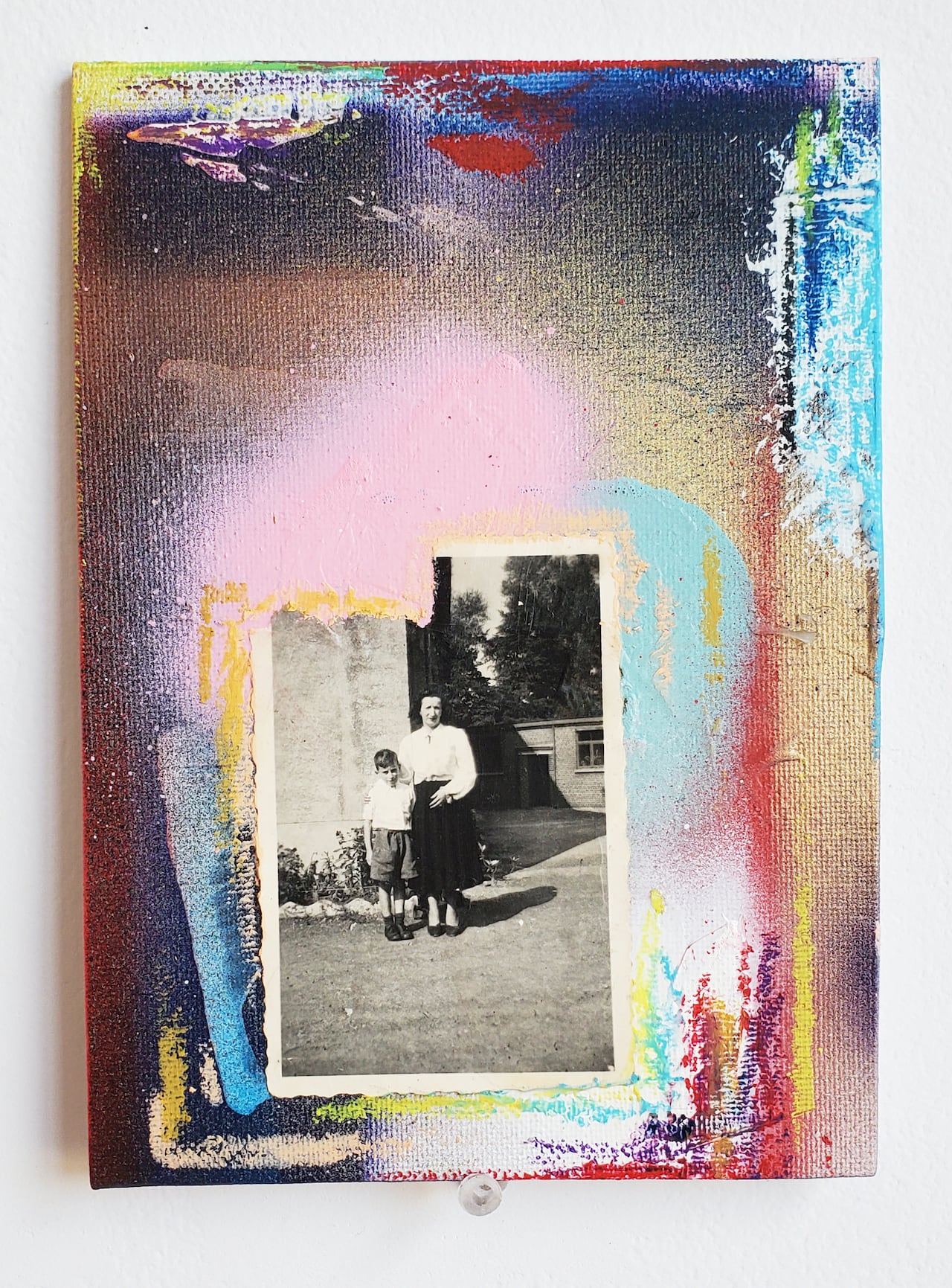 Alejandro Alvarez uses photos and found objects in many of his pieces, including this one called Testament. (Submitted by Alejandro Alvarez)
Still, having a criminal record affected him for years. He believes being honest on job applications hurt his chances of teaching in Saskatchewan, he says.
“Some of those applications gave you a spot to fill out the particulars. And I always did,” he says. “Because I was like, look, like I can connect with some of these other inner-city students. I can do this. I’m teaching art.”
After 10 years, he was able to successfully apply for a record suspension, but it cost him thousands of dollars.
A healing journey
“When I crossed the line of graffiti into art, the very first thing for me is that it was a cathartic process. It was alleviating my pain,” he says.
“This is what I need, this is a coping mechanism.”
Alvarez now lives in Calgary, where he volunteers at an art gallery and an artist centre. He’s also taught art in high schools, and doesn’t shy away from sharing his criminal history. But he tells aspiring graffiti artists, “if you want to do it, do it right, and legally.”
He says his primary goal now is to work with young people in art, or with marginalized youth in general, because he finds it the most fulfilling.
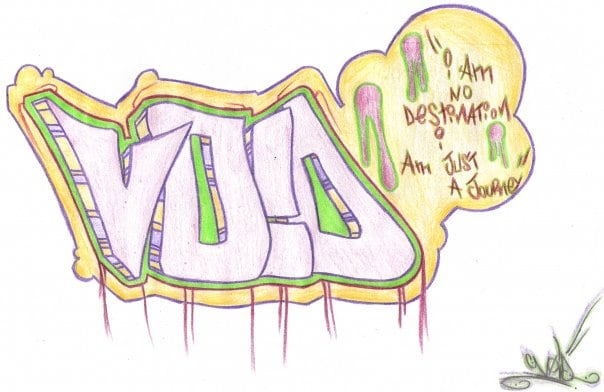 Graffiti by Alejandro Alvarez. He says for him, making art is a journey and more important than the final result. (Alejandro Alvarez)
As for his visual art practice, he says he wants to continue to pursue the craft “with passion and without compromise.”
He creates everything from oil paintings and self-portraits to landscapes, collages using found objects, digital media and photography.
The journey of making something is more important than the final result, he says.
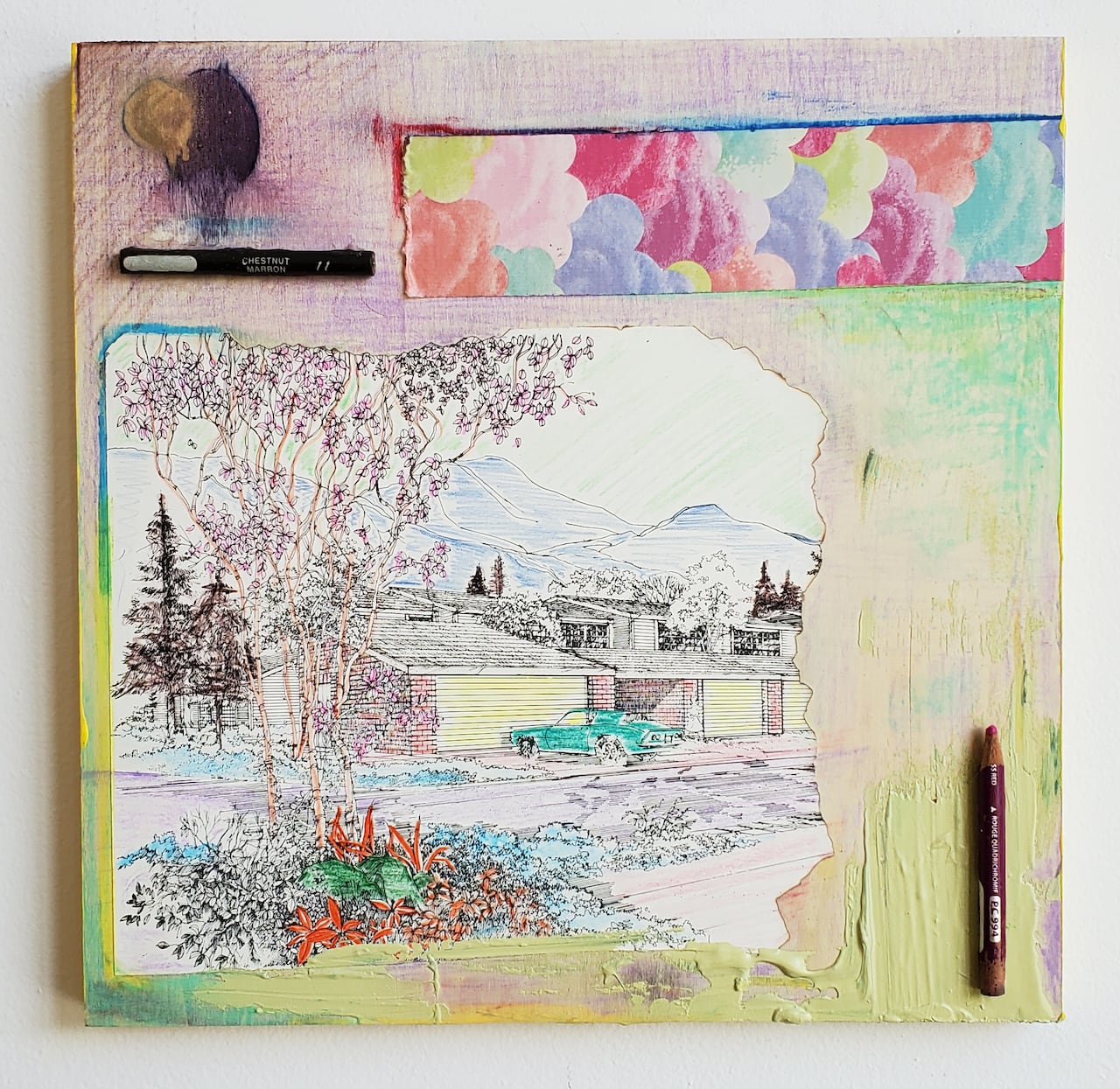 A piece of art by Alejandro Alvarez called Matthew’s Avalanche. (Submitted by Alejandro Alvarez)
It helps him cope with anxiety and stress about mortality and legacy by giving the world ‘evidence’ that he exists.
“Making is making, and making is good,” Alvarez says. “The painting at the end is the evidence of the artwork, but the act of creating is the art.”