
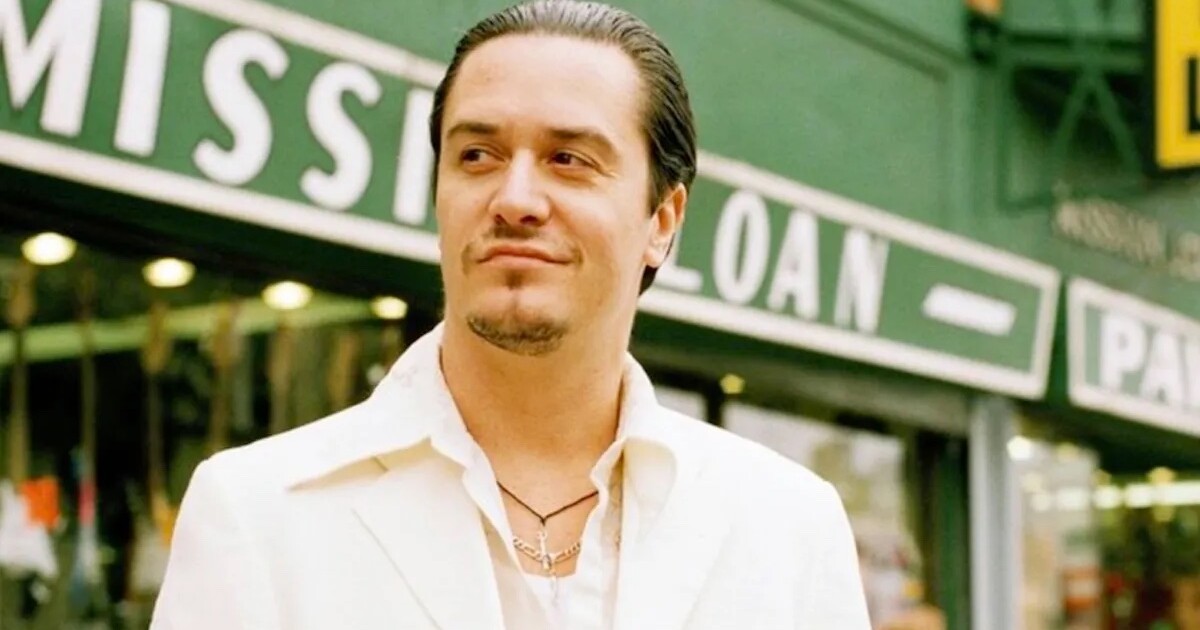
Trying to pin down Mike Patton has always been a losing game.
Frontman of Faith No More, architect of Mr. Bungle, collaborator, shapeshifter, professional curveball thrower. The résumé reads like a dare. So when he links up with the Avett Brothers for what’s being called the AVTT/PTTN record, the question isn’t whether it works. It’s what “works” even means anymore.
Patton doesn’t seem especially concerned with that part. “We didn’t really know how it would land in the world,” he says. “But that is part of the fun… people’s reactions are something you can’t control.”
Control, or the lack of it, ends up being the throughline here. Because for all the talk about collaboration, genre, or expectation, the real story is about letting something exist without over-explaining it. Which is harder than it sounds.
The project didn’t begin with some grand design. It started, like a lot of Patton’s work, through proximity and curiosity. “A lot [of projects] come out of friendships,” he says. “In this case… it was sort of a blossoming friendship.” The twist being they hadn’t even met in person before recording. “There was a real kind of telepathic thing going on.”
Telepathic, but not effortless. Dropping Patton’s voice into the Avett Brothers’ world wasn’t as simple as showing up and doing the Patton thing. “Where the hell do I fit in?” he asks. Not just stylistically, but structurally. “These guys are brothers… they harmonize like angels… there’s blood in there.” Translation: don’t screw it up.
So he doesn’t. Or at least, not in the obvious ways. Instead, he listens. He steps back. He finds space. “Knowing when to button my lip,” he says, which might be the least expected phrase in the Mike Patton catalog. But that restraint is what unlocks the thing neither side saw coming. “It’s a third personality,” he explains. “There’s them and there’s me… and it became its own animal.” Something with all their DNA but not entirely recognizable as any one of them. Which is, of course, the ideal outcome. Even if it makes it harder to describe.
That ambiguity carries into the lyrics, most of which came from Scott Avett. Patton mostly reacts in real time, adding pieces “in the moments.” But what he responds to hits a little too close. “At that particular juncture in my life, his lyrics were almost as if I’d written them,” he says. “It was like… ‘you know everything that’s going on with me.’”
Haunting, he calls it. Not in a gothic sense, but in the way coincidence sometimes feels a little too precise.
That immediacy shapes the entire process. No overthinking. No costume changes. “Everything came really… almost frighteningly organic.” The kind of creative flow that feels like catching something mid-air before it disappears. And once it’s caught, Patton resists the urge to define it. “To me it’s a document,” he says. “A snapshot… of a bunch of guys at a certain place in time.” Meaning comes later. Maybe years later. Or maybe not at all.
“I feel like that is the responsibility of the listener,” he says. “Everyone’s going to experience it differently.” Some in a car. Some live. Some with headphones and a notebook, trying to crack it open like it’s supposed to reveal something definitive. He’s not interested in helping with that part.
What he is interested in is the craft. The nuts and bolts. “What color of wood are we going to use? Are we going to use nails or screws?” It’s a builder’s mentality, less precious than you’d expect for someone with his catalog. The emotion is there, sure, but it’s embedded in the construction, not hovering above it like a thesis statement.
That approach explains how something like “Ox Driver” ends up in the mix, a banjo-driven detour inspired by Appalachian musician Doc Boggs, which Patton then drags through the mud in the best possible way. “I added a lot of grit and grime,” he says, aiming for something “melancholy but also a little bit menacing.” In other words, exactly where you’d expect him to land, even when the surroundings change.
And then there’s the live show. A 30-plus song set pulling from the Avett catalog, Patton’s own back pages, and a handful of covers that will likely mutate from night to night. “It could change… on a night-to-night basis,” he says, which is either exciting or terrifying depending on how much you like predictability. Patton, unsurprisingly, prefers the former.
It helps that he’s coming into this in “touring shape,” fresh off a run with Mr. Bungle, even if he describes that world as “a polar opposite” of what he’s doing now. Different muscles, different emotional registers, same underlying instinct to keep moving forward.
Which brings up the thing he’s been quietly dismantling his entire career: the idea of hierarchy. “I’d never really understood… the concept of a side project,” he says. “That’s assuming there’s a main one. And for me, I really never had one.”
Everything matters. Everything counts. The only difference is how the outside world chooses to label it. So this Avett-Patton record isn’t a detour or an experiment or a curiosity. It’s just another stop in a long line of stops that all carry the same weight, whether anyone’s paying attention or not.
And if it happens to confuse people along the way, all the better. “If I can make someone stop in their tracks,” Patton says, “then I’m a happy boy.”
Watch the full interview above and then check out the video below.