
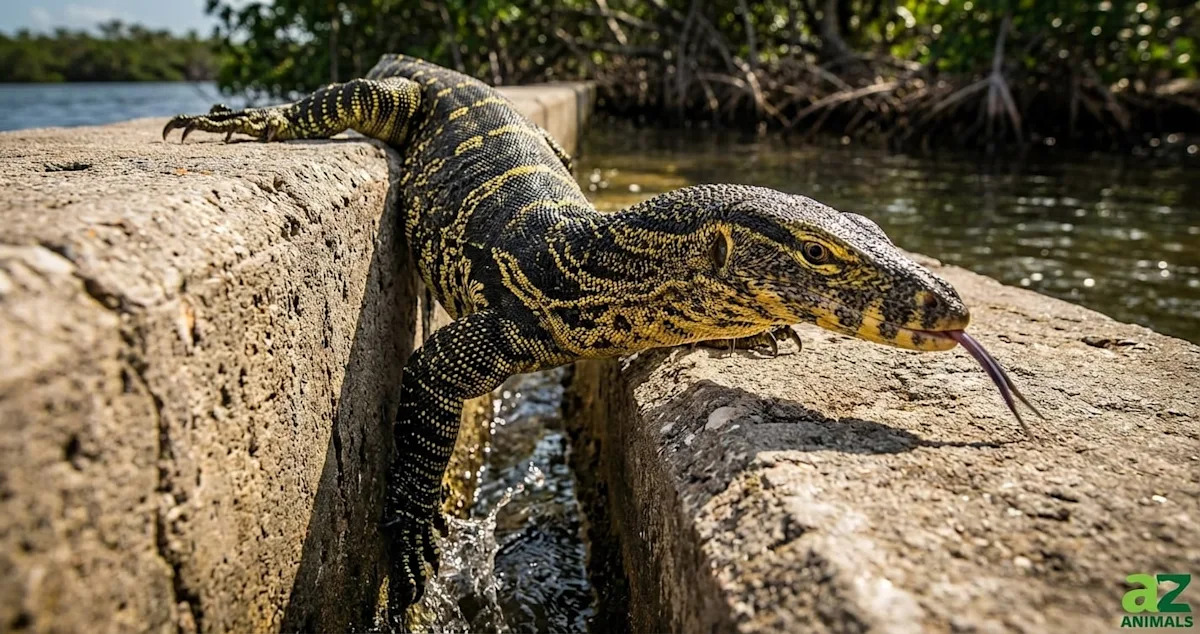
The post How One Hunter Is Battling Florida’s Growing Invasive Reptile Crisis appeared first on A-Z Animals.
Watch the Video
Click here to watch on YouTube
Quick Take
Invasive Nile monitor lizards, introduced through the pet trade, are spreading across Florida and threatening native wildlife and ecosystems.
These large, adaptable predators consume a wide range of animals and can damage infrastructure with their burrowing behavior.
Wildlife officials and hunters are working together to control populations, but eradication remains difficult once they are established.
In this video, a Florida man, the “Python Cowboy,” hunts for invasive species. As he points out, “Here in Florida, we got more than just pythons, iguanas, and New Yorkers. We got Nile monitors and all kinds of other invasive species.” While the Python Cowboy (aka Matt Kimmel) didn’t catch a Nile monitor (Varanus niloticus) on this trip, he and his son eagerly dispense with some other invasive species, such as green iguanas (Iguana iguana).
Nile monitor lizards are a relatively new threat to Florida ecosystems, yet they are considered high-risk. These lizards, native to the Nile River delta in sub-Saharan Africa, were introduced in the 1980s through the pet trade. People began to purchase young monitor lizards from pet stores without realizing that they’d grow into 6.5-foot-long, voracious predators that require a supply of live food. Some individuals even approach 7.5 feet, the length of basketball star Victor Wembanyama.
Monitor lizards that outgrew their adoptive families were often released into the wild. In other instances, monitors escaped from captivity either because of poorly secured cages or hurricane damage. Once monitors enter the waterways, migration is easy. The extensive systems of boating and irrigation canals in Florida provide them with a dispersal network that connects many parts of the state.

The vast waterway system in Florida, such as this Fort Lauderdale canal, allows monitor lizards to disperse.
©jovannig/iStock via Getty Images
(jovannig/iStock via Getty Images)
Monitor lizards encounter ample food sources in Florida ecosystems. Using their sharp claws and toothed jaws, they feed on just about anything. A 2020 study published in the Journal of Herpetology extracted the gut contents of 68 Nile monitor lizards killed in Florida to determine what they were eating. Their diet includes crabs, mussels, wading birds, turtles, snakes, toads, and even juvenile crocodiles. In their native African ecosystems, they’re known to raid nests, eating both eggs and young crocodiles.
Florida species that are already threatened, such as burrowing owls (Athene cunicularia) and gopher tortoises (Gopherus polyphemus) are of particular concern, according to a U.S. Geological Survey report.
During the day, Nile monitors hunt underwater, spending as much as 15 minutes submerged or on land. At night, they sleep either in trees, which they readily climb using their sharp claws, in burrows, or at the water’s surface. Because Nile monitors can travel over land, they’re a menace in a range of habitats, including human environments such as farms, where chickens are easy prey.
“These invasive creatures are notorious for preying on small animals like pets,” said the Python Cowboy in his video. “While they’re just really starting to become a problem where people are seeing them more, and they’re starting to have effects on our native wildlife.”
Nile monitors are also becoming lizards non grata in Florida because they damage infrastructure by digging sizable burrows. Once a monitor has dug in, sidewalks, foundations, seawalls, and canal banks may erode or even collapse.
According to a Florida Fish and Wildlife Commission (FWC) bulletin, “Invasive burrowing reptiles such as Nile monitors have caused millions of dollars of damage to water control structures and roadways in Florida.”
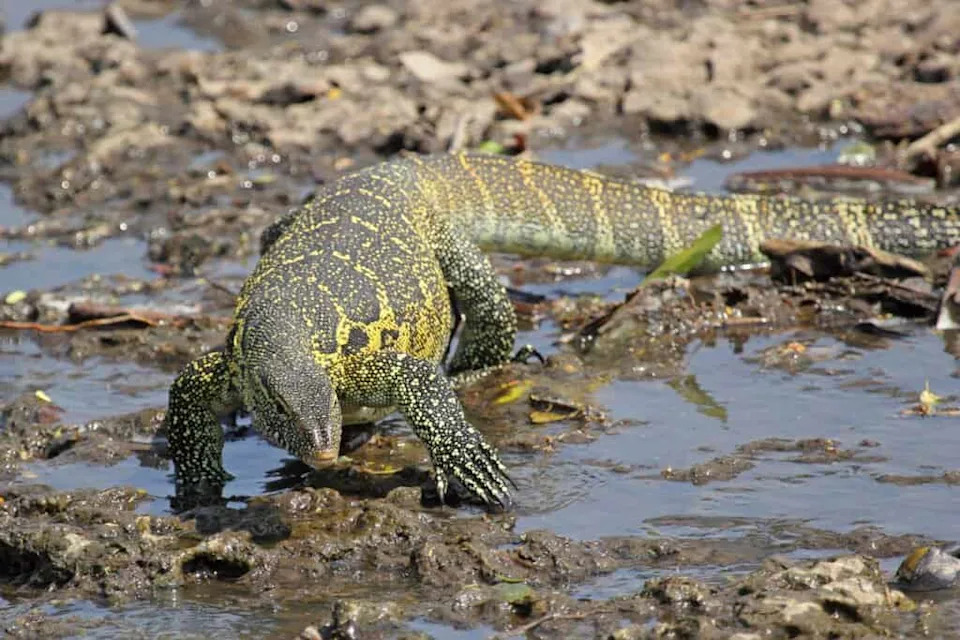
This Nile monitor drinks near a river in its native habitat in Serengeti National Park, Tanzania.
©MattiaATH/Shutterstock.com
(MattiaATH/Shutterstock.com)
You can recognize a Nile monitor by its distinctive rows of yellowish V-shaped stripes or bands of dots running from the neck area down the back. While they look like terrestrial lizards, their vertically flattened tails are a giveaway that Nile monitors spend time in water. The long, muscular tail functions as both a tail fin and a rudder for swimming. You’re most likely to see a Nile monitor during the daytime, when they’re hunting and basking on shorelines. Watch for wrestling matches, in which two male monitor lizards tussle to gain mating opportunities.
Because females are prolific egg layers, Nile monitors spread quickly once they enter ecosystems. Females dig burrows and lay clutches of 12 to 60 eggs every other year, with clutch size increasing as they age and grow larger. Their natural lifespan is unknown, but females mature at two years old and, in captivity, have lived for 20 years, allowing for almost two decades of reproduction.
Breeding populations are established in Lee, Miami-Dade, Palm Beach, and Broward counties, and likely others, since the lizards have been observed in many places across Florida. The first breeding population was detected in Cape Coral, Lee County, in 2004. Then, a 2011 study published in Southeastern Naturalist reported observations of nine individuals in Palm Beach County, including a hatchling and a copulating adult pair, suggesting a breeding population.
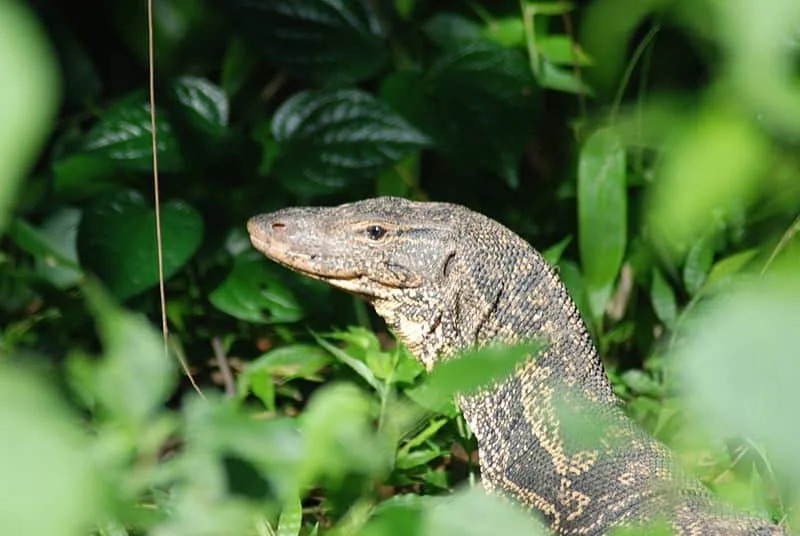
Asian water monitor lizards (
Varanus salvator salvator
) have also been seen in Florida ecosystems.
©Chris Page, CC BY-SA 3.0, via Wikimedia Commons – Original / License
(Chris Page, CC BY-SA 3.0, via Wikimedia Commons)
Other species of monitor lizards, including the Asian water monitor (Varanus salvator) from Southeast Asia and the savannah monitor (Varanus exanthematicus) from parts of Africa, have also been observed in South Florida ecosystems. As of 2026, there is no evidence that these species have established breeding populations in the wild, according to the Florida Fish and Wildlife Commission. Although Florida’s subtropical climate should be conducive to their survival, they may not have reached the critical densities for a breeding population.
Once Nile monitors establish a population, they’re notoriously difficult to eradicate. Since 2020, the Florida Fish and Wildlife Commission (FWC) and its partners (which may not include the Python Cowboy) have continued removal efforts, but the exact number of Nile monitors removed is not publicly reported as of 2026. The FWC conducts regular surveys and removes any Nile monitors; offers rapid responses to reports of Nile monitors; supports research toward better detection and removal techniques; and manages regulations for catching and killing Nile monitors.
In the current regulatory environment, Nile monitors are not protected in Florida except by anti-cruelty law. You can capture and humanely kill a Nile monitor any time of the year, even without a hunting license, if you’re on these lands managed by the Florida Fish and Wildlife Commission (FWC). In a two-step method for “humane killing,” the FWC specifies that the method should result in immediate loss of consciousness for the animal. You can also kill Nile monitors on private lands without a permit, but only with landowner permission. Because of the hazards the lizards present to native ecosystems, there are no bag limits at present. However, it is prohibited to capture and transport live Nile monitors in Florida.
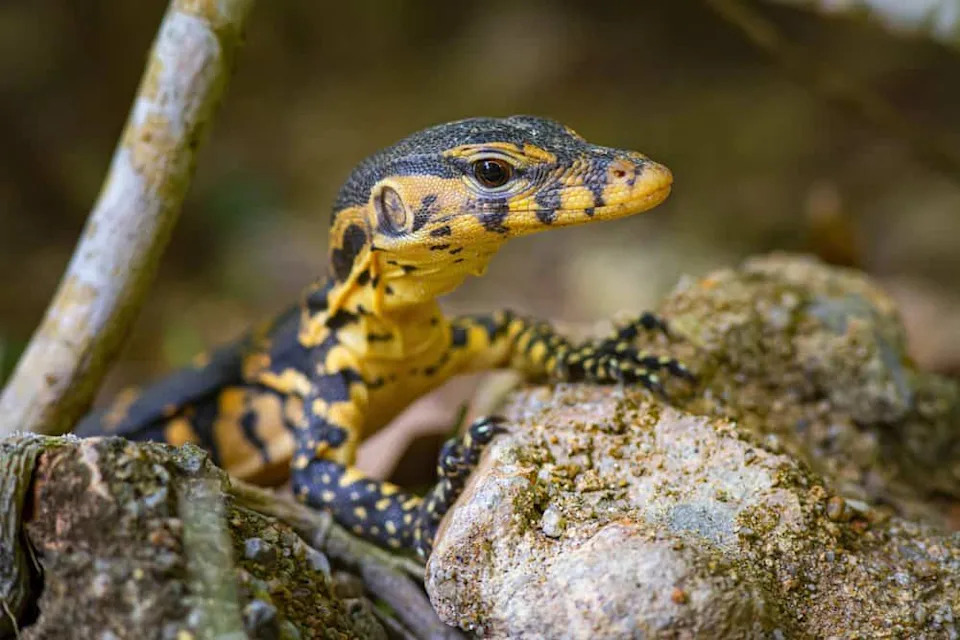
Small, juvenile monitor lizards are sold as pets without suitable warnings about the size they’ll attain.
©Erik_Karits / pixabay – Original / License
(Erik_Karits / pixabay)
So, what if you have a Nile monitor that you no longer want to take care of? The Florida Fish and Wildlife Commission has you covered. Through the Amnesty Program for surrendering non-native pets, you can surrender your monitor lizard without worrying about being fined for releasing it. No questions asked!
If you see a Nile monitor in a Florida ecosystem and do not wish to hunt them like Python Cowboy, you can take a photo, note the location, and file a report online at IveGot1.org. Indeed, the FWC warns against trying to catch them, as you may find yourself bloodied by their sharp claws and teeth. You can compare the appearance of Nile monitors to other Florida lizards using this University of Florida Identification Guide. Just the sheer body size of an adult Nile monitor makes it easily recognizable.
A 2024 study published in Scientific Reports assessed community involvement as a tool for detecting Nile monitors. Over two years, they solicited input from more than 112,000 Floridians regarding invasive species. The outreach resulted in more than 50 reports of non-native lizard sightings submitted to the IveGot1.org website and an invasive species reporting hotline. In comparing outreach methods, the study authors concluded that the best way to engage citizens in invasive species management is to use multiple forms of media, offer education to improve sighting accuracy, and quickly respond to reported sightings.
Getting invasive Nile monitors out of South Florida ecosystems will require a coordinated all-hands-on-deck approach.
Watch the Video
Click here to watch the video.
The post How One Hunter Is Battling Florida’s Growing Invasive Reptile Crisis appeared first on A-Z Animals.